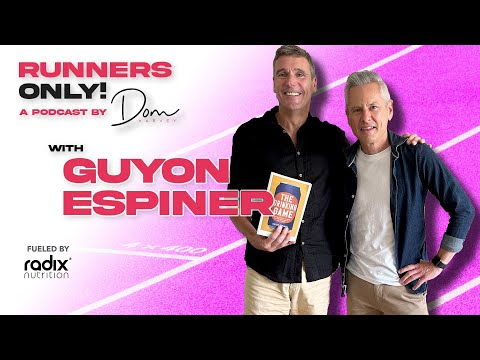
Former All White’s CRAZY Stories from Alcohol-Fuelled Career
Ask about Dom Harvey
Episode Description
Former All Whites goalkeeper Michael Utting sits down with Dom for what could be his most honest interview ever.
From being drunk while representing New Zealand on the world stage to rebuilding his life in sobriety, Mike opens up about the highs, the deep lows, and what redemption really looks like.
Michael reflects on:
Playing against Thierry Henry and Ronaldinho
Getting kicked out of the All Whites after a drunken bender
His battle with alcoholism and multiple relapses
The moment he realised he needed to change - and how he stayed sober
Working with special needs kids and rediscovering purpose
Whether you're a football fan, someone who's faced addiction, or just love a brutally honest story - this one hits hard. ***
Who should be on the podcast next? Message Dom Instagram: @domharveynz Email: [email protected]
If you enjoyed the podcast and would like for your business to sponsor an episode, please email [email protected]
*** Chapters
0:00 – Welcome & why Michael wanted to speak out now 2:40 – Growing up in Wellington & discovering sport 6:50 – Becoming a goalkeeper and the early football years 11:20 – Playing professionally in Australia and South Africa 20:30 – The car crash that broke his neck (and the comeback story) 27:50 – Representing New Zealand at the Confederations Cup 35:00 – Alcohol, addiction & self-destruction 48:00 – Rock bottom moments and fighting back to sobriety 1:02:00 – Working with special-needs kids & finding purpose 1:21:00 – Addressing the media scandals and his side of the story 1:32:00 – Regret, redemption & life lessons 1:47:00 – Sobriety, peace & what really matters now
Read the full transcriptHide the full transcript
- Michael Aring, welcome to my podcast. >> Good day, mate. Good to be here. I've been uh I've been checking you out and
- uh yeah, a lot of fun. You have a lot of fun here, don't you? So, it's uh good to
- be here. >> Thanks. Good to have you here. Yeah. Um a friend of yours has messaged me
- saying, "Oh, you should get Mike Aring on the podcast." And um I I I messaged Why did you want to do a podcast? I uh
- to be honest with you, Dom, I mean I um as you know u you know from from speaking to you before we came on air I
- um I've I've had a bit of bad health over the last 10 years and um and I've had a bit of bad press as well which
- we'll probably touch on and and it and it and it knocked me for six at the time you know and it was really harsh. It
- destroyed business that I had. I work with special needs kids. Uh and so the bad reference I got, you know, from from
- the media basically uh killed my business and and it really put me in a bad light. And um I've sort of taken
- quite a few years now just to just to basically get back to being okay with being me,
- >> you know what I mean? And u and so um Tracy said to me, "Look, Dom does these
- wonderful podcasts. Have a look." So I had a look. I I watched the full uh Christian Cullen one. What a legend.
- What a legend. And I've seen him at a few engagements before in the past. He's a nice guy to chat to and uh and I
- thought, yeah, I'm probably at the stage now where I'm a bit more confident and I'm happy again with life and uh
- >> and get in there, you know, be a bit of fun. We'll have a I'm sure we've got a
- lot of good things to talk about. >> Absolutely. So, who is Michaeling? Is he like a lar, a bad boy, a con man, an
- alcoholic? I used to be I think been described as a likable rogue. I think that would be a nice way
- to describe me. I um I was just a guy who came from nothing in Wellington. You know, I came from a a you know, a broken
- family. We had I was the youngest of four kids and dad left when I was 10 and my mom battled. You know, mom's a nurse
- and um you know, my my outlet I never got in trouble with police or anything like that when I was a kid and my outlet
- was sport. I was uh I was, you know, probably bit better than average at sport and I I took on every sport that I
- was able to and uh I lived in a little street in Nio in Wellington and it was just ideal for for for a breeding ground
- for sports people because me and my mates just used to play cricket or soccer and rugby and uh go home, stay
- home, hide and seek every day. And uh and and another good thing that I when I look back now and uh I used to live
- about 5 km from school which meant walking there and back each day >> barefoot in the snow
- >> mate. Hated it. Hated it you know. But looking back now that gave me a good basis for a uh you know for my fitness
- level >> and it also gave me a determination. you know, you finish a long day at school
- and you're just looking at the top of the hill cuz it's way up a hill where we lived.
- >> You think, I don't want to walk up there, but you do it and you just do the hard yards. And it sort of gave me a
- good a uh a good a good starting point for my uh my sporting career, I suppose. >> Yeah, there's there's so much to unpack.
- I I wasn't aware of like when when we organized this podcast, I wasn't aware of the backstory. I just knew Michael
- Arting, you know, the White Fern, the goalie, um who had a career that was briefer than what I should have been.
- Definitely. >> Um, and then you do some research. Do do you do you just attract chaos?
- >> I seem to. I I think you touch wood. I I won't be getting much more for the for
- the near future, but I uh I um I I think with being a sports person, you you have a lot of free time and
- quite often you associate yourself with other people have free time and they're quite often
- not the most desirable people that you want to be with. And I and I made poor choices in the past, I must admit. And
- um you know it all comes back to haunt you at a later stage in life. I think uh I've never gone out of my way to be to
- be upsetting or upset people and uh >> but uh you know when you're in the public eye with this you know with sport
- um you can attract that you know you attract people's attention and um and as I said I got tred with a bad brush and
- got some poor press but um >> you know all my mates and and people that know me and guys and girls would be
- phoning me up saying I got a call from a reporter you know lovely complimentary and then after three or four minutes
- they started They're trying to get dirt on you and this is a repetitive thing that's happened, you know, and it's
- like, God, I just want to run away and hide. But I mean, it's >> it's life, mate. You know, it's people
- trying to get a story and that. >> Well, yeah, we'll get into some of that. We'll get into some of the good stuff
- first, though. >> Um, yeah. It's like I was saying to you before, these podcasts, I feel like it's
- like the greatest the greatest hits and the greatest shits of someone's life. Like the good and the good and the bad.
- Um, cuz I think we're all flawed human beings in a way, aren't we? Everyone's got some [ __ ] Um, but yeah. Yeah.
- What's it like? like sitting in front of me now as a a man in his 50s to be like
- the the villain in so many other people's stories. You know what I mean? >> 100%. I think um I I I don't need to um
- you know there's there's there's been a few people that have actually um had an agenda out for me, you know, and and uh
- over the years and >> and ex partners or whatever. I'm not I'm not going to get and point the finger
- and name names or anything like there's no point, you know, it's in the past. But uh but yeah, I I didn't do myself
- any favors at times storm, so I left myself up there for really cool and uh and I got it.
- >> Yeah. Yeah. There's a quote from you that I read in an article. Um I believe what goes around comes around. If you're
- a good person, things will happen for you. Are are you a good person? >> Yeah, I think so. I u you know, I'm on a
- sickness benefit now because of my health. Um I had a heart attack just over 18 months ago and actually died and
- was dead physically dead for 29 minutes. >> Uh I was with a client and I actually
- had brought us lunch. We at his house uh one of my special needs boys and uh I collapsed and woke up u well the
- paramedics came. They came like 25 minutes later revived me took me to hospital. Uh, I flatlined four times
- when I was in hospital and I woke up 5 weeks later. I I was in a coma for nearly 5 weeks. Had to learn how to walk
- and and and uh, you know, use cutlery again and all of this stuff. And um, in a way,
- as I said, you know, you've just drawn attention to, I believe in karma, what goes wrong comes wrong. I um I've I've
- gone through some tough times in life, you know, and it sort of grounded me at times. I also broke my neck in a car
- crash and got told I'd never walk again. This was when I was playing over in South Africa.
- >> Um you know, and at the moment I'm just just Yeah, just finally sort of slowed
- down a bit, I think. >> Age. Yeah. No one no one defeats time, right? >> No. No.
- >> I'll tell you what, there's there's a lot to unpack. Uh yeah, the the Yeah. the car crash in South Africa, the heart
- attack, um the bad press, and we we'll get through everything, but >> I thought we'll start with um start with
- the um how you got a name for yourself. So, uh you're a footballer, you're a goalkeeper.
- >> Yeah. Yeah. >> Explain that role. >> Okay. Um being a goalkeeper in New Zealand is is is quite a uh unenviable
- position to be in because >> worst position in that team. I don't know why anyone no one no one no one
- gets into playing football with the dream of being a goalie, right? No, you want to score goals, mate. But I was
- just I couldn't put the ball in the net, so I tried to keep it out of it, you know. But I I uh played a lot of
- cricket, volleyball, uh and I was always good in the slips, you know, with my and
- I did wicket keeping and opened the bat at Wangatai College and Ian Smith, you know, the cricket legend,
- >> he was a Rangai boy, Bruce Sega, another boy, Winton Refer, Shane Rafer. Uh a lot
- of good uh sports people went to that school and uh and I've kept in touch with a lot of these people as well, you
- And um I went in goal basically because I didn't want to run around like the outfield players have to do. And so uh
- maybe trainings would be a bit easier for me. But but I actually found that goalkeepers train harder than anyone
- else. You know, you do do a lot of plyometrics, a lot of power work and u and and it can be a thankless task as
- well. You know, you can go for 89 minutes and have nothing to do and then you're called to do something. If you
- don't do it well, u you know, people are putting pointing the finger at you, you
- know. So it's uh but I like that. I like that. >> Yeah. I can't imagine the weight of
- responsibility like Yeah. How how does it feel when your team loses because you've let a goal in? Obviously, it's
- the team sports and the teams sort of rally around and they don't hold you accountable or responsible, but do you
- hold yourself accountable and responsible when that happens? >> I think it's a mental approach you take
- into a game where you you understand that that's just part and parcel for it. Um, you will make mistakes. Everyone
- makes mistakes. I was I was quite fortunate. I uh it's quite funny. Yeah, I I I when I came when I came back to
- New Zealand, played for the Kings, it was and they were the first New Zealand professional football team and playing
- in the Australian league and uh and I played in the first game and um but I remember you know a few games into the
- season. Uh we had another goalkeeper there who thought he was it, you know, and I was the, you know, the number one
- for the Kiwis as well and and this guy was talking it up and I won't name names, but I mean he was giving it
- large, you know, and saying that he should be given a chance and I pulled my calf muscle uh warming up before we
- played Sydney Olympic at Ericson Stadium one night and it was an awful night. It
- was rainy and it was wet and windy and so I couldn't play and and this guy played and it was the worst conditions
- to make your debut and he and let through three and we lost 3-2 in the last kick of the game and and that was
- one of those like getting back to you know bad situations. So it sort of put him on the back of back burner and as
- soon as I was ready to go back in the game the coach brought me in but uh I think uh
- >> yeah goalkeeping is a confidence thing. you know, if you go in there with confidence and uh do your job, you you
- generally do okay, mate. >> So, was it like a red red hot burning desire to play for the all whites or
- were you just like a natural talent and it just sort of fell into place or >> I I never thought that I don't know
- whether Do you remember the shoot magazines, the football magazines or football monthly? Well, these were
- English uh monthly magazines for the football. They used to come out and they'd get to New Zealand through the
- through the uh you know through the ship post about six months later and we used
- to collect them as kids and in the middle they used to have this you know the center was a uh was a team a team
- lineup each well a team photo each week and I was a big Man United supporter so uh you know I hope there's not too many
- people who hate Man United out there but there seems to be at the moment. Um but
- I um I just started playing in the street. I never thought I'd ever achieve anything other than having fun with my
- mates. It was a way to, you know, just to uh to learn how to learn how to live with other people. M um and um I never
- had visions of grand jur playing at any high level, you know, and uh I remember when I was playing in the Wellington Rep
- and about the under nines, under tens, Dom, and >> we went and played a game at the basin
- reserve and a young Winton roofer was playing for Murma in the National League and he was probably only 18 years old
- and it was before he hit the limelight with the all whites of 82 and that and and I looked at this guy and he was
- amazing. And I looked at the goalkeepers. Wayne Nichols was a goalkeeper there. Miramar legend and and
- also a softball legend. Played softball for New Zealand. He took me under under his wing. He coached our first 11 team
- at Rangai College. Got me involved and then he got me along to uh to Morama trainings on a Tuesday and a Thursday
- afternoon or evening and I just I just developed a love for it. I also had nothing else in my life mate to be
- honest with you. I didn't have uh money. I didn't have wealth. We didn't have a a
- lot going on at home. So, uh it was something to keep me fit, keep me active, and uh a socializing aspect as
- well. Later in life, obviously too much of the socializing aspect possibly, but uh but it was just a really nice way to,
- you know, get to meet people and then later on see the world. So, yeah. >> Yeah. Yeah. Yeah. Yeah. Seeing the
- world. Um by the way, you mentioned Wellington there. You you um were inducted into the Wellington Hall of
- Fame, uh Football Hall of Fame 2017. >> Yeah. That's pretty cool. >> Amazing. I mean, I um yeah, I'm just
- very flattered. I um >> I I was very And I'd love to just draw reference to the family, the Chot, the
- David, Mark, Matthew, and uh Peter Chot. They were still at the Miramar Rangers Club and that's my Wellington club. And
- um it's the only time I played for Wellington or would have um and their mom and dad, Judy and Ian, used to run
- the club basically. they were on the committee and Jude used to look after the four boys and I asked Jude to come
- with me to the induction of Wellington Hall of uh you know football hall of fame but she was she wasn't able to you
- know because of her health but uh that was probably one of my most um proudest moments
- >> cuz I had people friends and you know the football fraternity were there and uh and it was sort of a celebration of
- what I'd achieved and I'm I'm flattered to be in that you know to be in that with the likes of the Winon Roofers and
- Grant Turners. Vaughn Coven and I used to knock around as as teenagers, mate. And uh
- >> he he he he ended up I think before Shane Smeltz broke his record. He was the highest goal scorer for the whites
- for a number of years and and we were just two bloss bucks each in our pocket on a Thursday night and go down to arena
- with Ray John's and get on it and uh >> and and and play football on the weekend. That was our life. We just
- loved it. That's we we lived like we were professional footballers. Uh I wouldn't say in the way we acted all the
- time but but football was our everything and uh and you sort of need that um you
- need that focus a lot of people and I remember talking to Declan Edge who is a very good ex New Zealand all whites
- coach uh sorry player and national league coach and he's coaching overseas now and he said to me um you know did do
- you ever have a backup did you have a backup plan if the football didn't go well and I said no I never did. And he
- goes, "Well, no footballer does, mate." You know, it's everything or nothing, isn't it? You know,
- >> uh cuz if you do have a backup plan sort of thing, well, you've got to you've got
- to get out and uh claws, you know, and uh and footballers are so >> Oh, you've got to be competitive because
- it's a small market >> and and and if you look at the players in, you know, who are playing at the top
- leagues in the world, they're getting paid quite handsomely, >> but they've uh they've earned it, you
- know, they've worked hard for it, you know. >> Yeah. Did you did you earn all right?
- >> I made good money when I was when I was in South Africa. I I played a season in
- Australia before went over to South Africa and what had happened Ian Marshall, rest in peace, he he was ex
- New Zealand coach uh with your whites, he uh he had received a call from a state club in Melbourne and they'd been
- looking for a goalkeeper and I was in New Zealand under 23 goalkeeper. I think I was 21 or 20 at the time and he said,
- "Would you like to go away to Melbourne and play for his team called Sunshine George Cross?" Maltes, absolute nutters.
- They used to fire flares across the pitch. I used to love it. I was in my element, you know, but they were
- absolutely crazy. And and the and the club, they would have two or three thousand to a game and the supporters
- would be fanatical. It was like, you know, this is in Melbourne. It's like we used to call it [ __ ] Ball over there. So
- all the ethnic communities, the Greeks, the Italians, Yuguslavas, Croatians, they all had their club and it was a
- whole identity with the community as well. And people would donate money to the club and they'd spend their weekends
- there. And I got involved with, you know, this the Sunshine George cross team, which that's Maltise. And and I
- lived there with an old guy in his house and, you know, did the six weeks. We got
- into the playoffs, end up losing the semi-final, but I was in love with Australian football cuz it was a step up
- from New Zealand stuff, you know, and uh and then I went and played um I signed for for Melbourne or Melbourne Victory
- as they're called now, but they were called South Melbourne, the Greeks. and I couldn't get a game because I had a
- Greek goalkeeper in goal and his father was one of the sponsors and uh well that's my excuse anyway but uh but I u
- he got he actually got sent off in a game and u so I had three games to sort of prove myself and we won all three I
- concealed one goal but as soon as the guy was over a suspension I got dropped again so at the end of that season uh
- they wanted me to come back and sign for another year and they owed me quite a bit of money about $40,000
- >> um and I said, um, I'm not going to sign for you unless you pay me my money. That's owed to me, you know. And, um,
- and I shouldn't probably say this, but, uh, a lot of these clubs have one books for the for the accountants and another
- books which they keep sort of, you know, >> oh, like a salary cap thing. Okay. >> So, there's I think that's quite common
- in the in the NRL as well. >> M, it used to be huge. >> Maybe not so much anymore.
- >> No, no, not anymore. But don back in those days it was there were a lot of backhanders and people getting you know
- we have a have a sponsor that's a car or something you get a free car that's and
- everything's got to be extremely down the line now but uh but I uh yeah so I end up you know going I I'd finished a
- season they owed me money they weren't going to pay it to me unless I signed another contract. So, I went and
- visited. I flew over to South Africa. I I had $800, I think, and and uh to my name and had a couple of bags of clothes
- and I took my football gear and I went over to visit my father who lives in Durban. He's a Kiwi, but he lives over
- in South Africa and uh flew over there and u trained for his unit. He's a professor in civil engineering and
- university of Natal. So, uh lived with my dad and in Durban was wonderful. I love South Africa and trained with the
- uh university team. They have a team in the second division over there. Um, and after two days, I got a call from a club
- called Ptoria City that's actually uh owned by Emnet Super Sport. Uh, so big sponsor. It's a new new club. Excuse me.
- And they uh wanted to sign me. So I thought, well, you have to sort out this. I'm still on
- the books at this club in Melbourne in Australia. So I had an agent called Peter Alfahaida. uh German guy and uh he
- jumped on a plane with about $170,000 cash on him and he went and paid a uh a transfer fee to me for me in Melbourne,
- got my clearance and then I ended up spending about nine years in South Africa >> and uh
- >> Wow. Yeah. I I didn't I didn't realize your dad was in South Africa. That makes
- makes so much more sense how you ended up over there now. Yeah. What about um culture shocks or standout memories from
- playing in EA? >> I loved it. I live in South Africa. I um >> I've never been there. Everyone goes on
- about how dangerous it is and how you're likely to get carjacked at an intersection.
- >> No. No. That's [ __ ] mate. I mean, it's >> like any place you can find trouble if
- you want. >> Find it. Yeah. Yeah. I mean I mean I I often used to go out and uh when I went
- out with people from the club would you know go out with dignitaries from the club and they'd be packing heat you know
- carrying guns with them and we'd go to nightclubs and you you'd walk into the nightclub and on the left hand side of
- the door there's a lovely lady in a kiosk and u takes your jackets and and ask you to come into the weapon room if
- you've got a gun and hand in your gun >> like a cloak room. Yeah, it's exactly what it is. But it was a big walk-in
- safe. And I used to go to these places and I had a lot of mates who, you know, own clubs and that and rang managed
- clubs. And I used to go on and uh go into the game into the gun rooms or the safes and I was a m you'd see sorn off
- shotguns and machetes and little hand pistols. And I'm thinking, mate, it's like it's something from a 1930s old
- Capone movie or something. But that's how people lived in South Africa. Well, well, that that sounds pretty unsafe to
- me. >> Yeah. No, it is. It is. But I mean, it's um you know, you sort of get accustomed
- to it, you know, you get you get used to I mean, >> you know, you all your windows have
- burglar bars on them and there's razor wire around your property, you know, boundaries and that and u most people
- have a couple of big dogs. We My dad had these three beautiful tanned Great Danes
- and they were huge. And remember one night I went to the local bar and walked home and it was you know after midnight
- so dad had locked the gates and everything and I couldn't get through the gate. I was legless. So, I I fell
- asleep on the driveway and uh and uh in the morning I woke up at 6:30 in the morning and all these people walking,
- you know, past the, you know, the house, the driveway to to work and I had three
- great Danes that had jumped the fence and were lying sleeping with their heads on my chest and over my waist sort of
- thing looking after me and I felt felt like great. >> But, uh yeah, probably a bit of a loose
- unit there, mate. So, doing things I probably shouldn't have been doing. Yeah. >> So yeah, it was um 1995 in South Africa
- where you broke your neck in a car crash. Yeah. Yeah. What was the story with that? What happened there?
- >> I um on a Thursday night we uh we'd had training that morning and um we had a
- big game against Kaiser Chiefs. You know, Kaiser Chiefs and Orlando Pirates are the are the biggest supported clubs
- in Africa or in South Africa. >> And uh so we were playing Chiefs, big game live on TV uh on the on the
- Saturday, Thursday night uh Saturday, Sunday. We were playing Thursday night. Uh I was invited to a uh back in those
- days, Don, because of my lifestyle, the free time I had was often spent in bars drinking beer,
- >> uh because that's what I enjoyed doing at the time. And and you know, and and
- and it was fun. So, a met of mine, Jose Olivera, Portuguese lad. He ran a cantina fiesta, which is a Mexican
- Portuguese type themed restaurant bar. And um on the Thursday night, he's he's funny. I was actually best man at his
- wedding. He and Zola um his his his fiance at the time. Uh I was they invited me to the wedding as best man.
- But um we uh on the Thursday night I got a call at about HA state and they said look you know you've got to come down
- cuz they were moving to Durban from Ptoria to Durban and they said you've got to come down have a couple of drinks
- and I said mate I've got a huge game this weekend I can't it's two days out and they said okay no worries and then
- 15 minutes later there's a knock on my door and there's four of my mates from the bar and uh basically kidnapped me
- and took me back there got on the on the drink you know and and and and I'm an alcoholic so It's uh pretty easy for me
- to, you know, to for them to twist my arm. So, I was always a all or nothing sort of thing. I could I could go
- without alcohol, which I, you know, I haven't had a drink for just on a year now. I don't drink. Um, and you know,
- but today I don't drink. Tomorrow I hope not to as well, but it's about, you know, it's just on a year now that I
- haven't had a drink. Um, but I uh got down there with the guys, got on it. And then uh decided because you do stupid
- things when you're having a few that we'd go to uh uh Sun City which was you know an hour drive away. So well you
- wouldn't know that but yeah it's an hour drive away. So we got in the car to drive to Sun City. I was a passenger in
- a car in the car. Um woke up the next day in hospital and we we had missed a turn off to a petrol station and rolled
- the car apparently five times down a bank. woke up in sort of like of a swamp. Um, luckily uh I I'd cracked my
- skull. I had 47 stitches in my head. Uh, but if I hadn't have cracked my skull that the swelling on my brain, uh, would
- have made me brain dead, uh, because of the, you know, because of the swelling. But because I cracked my skull, it was
- able to, you know, to push it out out and swell without sort of long-term injuries. Um, they took some bone out of
- my hip, put it on my neck. I broke my neck put I had a fusion of the fifth and sixth vertebrae. Uh lost 80% of the
- hearing in my left ear. Uh and just yeah just my father when he came up from Durban to you know see me
- in hospital he couldn't he couldn't recognize me. Um so I uh I did it properly mate. Yeah. And uh I got told
- I'd never walk again but I ended up walking about I think it was 12 weeks later. determined,
- >> bit of a determined guy at times, mate, and uh and driven. And I just decided,
- you know, I wasn't happy with my life anyway. Um although I was getting paid good money to play a professional game,
- which I love doing, I wasn't happy because I just wasn't happy, you know, and and I was doing things like drinking
- excessively and that um womanizing, you know, I wasn't in a relationship. I was never really in a good relationship
- because I was just a dick looking after himself. But I uh how can I put it? I uh I actually
- thought at the time that was probably the best thing that could have happened to me because it sort of made me sort of
- slow down and you know look at where I'm at. And um >> and I I I kept a diary I after after
- this after I started walking again and I had nothing. And I ended up sleeping on
- a mate's couch and u he is a mate of mine who who uh I met you know he had never known me as a footballer but uh we
- used to talk about football. He's a man United supporter. We used to have hours of conversation about the game and and I
- used to tell him that when I used to play this and that and he thought I was full of [ __ ] you know and anyway we
- decided to get fit and uh we got fit together. Uh I lived in a house with I moved into a house with uh he or him and
- his and his wife. His wife's from Swaziland Togo a black lady and she's just beautiful beautiful and Nuku that
- was her sister and they had a she Nuku had a child 5-year-old boy called Wandeli little black dude and uh used to
- take him to school in the mornings and you know pick him up from school afterwards and uh and and I became part
- of their family and Kevin and I got fit and I used to get him you know getting him into the gym and do running. he was
- a big boy and um we decided to start kicking a soccer ball. So we'd go into the park and we'd, you know, if you got
- a soccer ball in South Africa, you've always got to have a game because everyone wants to play, you know, and
- >> so I ended up having to kick around and got super fit and I thought, wow, I'm
- not doing anything with my life, but I've got a plate in my neck with four screws.
- >> Is any chance of me playing any sort of football at any level? And I went back
- to see my neurosurgeon, an African lady in Ptoria, and she said, "Look, I'm I'm shocked with how fit you are." I was
- super fit. I had a body fat percentage of 4% and I was really cut and just as the fittest I'd ever been in my life and
- so I started training again and um and I went back to my old club Super Sport United and I said can I train with you
- guys and the coach there said yeah look we've got the national goalkeeper for South Africa we've got one of the under
- 23 first oh sorry we've got the under23 goalkeeper South Africa and we've got a couple of other guys on our books one
- Perry Suckling who used to play for Crystal Palace in England who's sort of a player coach so we've got our quote of
- goalkeepers, but you're more than welcome to come along, Michael, and and spend some time with the boys and be
- good to see you and and and and get what you can out of it. So, so I went and trained with Super Sport and it's funny,
- Tom, how things have a way of working themselves out, you know, and like we talked earlier about the karma, you
- know, what goes around comes around and so I trained with these guys for about four weeks. I was killing it. I was on I
- was the fittest in the club and and that's from with the outfield play as well. I could run all day. Um anyway,
- they played a game one night and I watched it on a Wednesday night. The goalkeeper got sent off, the guy that
- came on got injured. So, so the next week they had a young guy in goal. Um and on the Thursday,
- uh so they basically only had one goalkeeper and and and and on the Thursday he got injured. So they said,
- "Well, look, we'll give the Kiwi a go." So they they signed me up um on a week- toeek contract. So basically as soon as
- the goalkeepers are back they're going to give me the flick you know. So so I knew that and I said to myself and you
- know the people I living with my you know my family they used to come and watch me and sit in the players lounge
- you know it's Nuku Togo and Kevin and Weli and uh and I said to them guys I get a thousand bucks a week if I play
- and then we get bonuses for winning. If I don't do well they've got an excuse to to get rid of me. So I've got to play
- like a king. So I've got I played 17 games for them and uh and got nine man in the matches. Uh so I played the best
- football I've ever played. Ken Dougal, who was the New Zealand coach at the time, he flew over to see me and it was
- you how it all works out and and he and he pulled me into the uh Confederation's
- Cup squad in in 1999. Uh took me away to Mexico. So Support ended up signing me in a long-term Oh,
- no, no, no, no, no. I went overseas with the New Zealand AllWH whites to Mexico and starred for the AllWhites. Played as
- the number one goalkeeper playing against Brazil and stuff and and I remember in the change room remember
- before the Brazil game we're underneath the ground and you could hear this whoa and it was uh
- it was the Germany USA game. It was Al Cuden Razer. You know I'm thinking Germany USA this is huge. And and we're
- coming out to play against Brazil and we have our team talking. Ken Dougdell sort
- of said, you know, would anyone like to say anything? And Michael, obviously what you've been through with breaking
- your neck and you know, and you know, how how are your how are you how's your head? Uh because you know that there's
- like 70 80,000 people out there. You're going to be busy, mate. We're playing the best team in the world. We're ranked
- 101st of their first. So, how do you feel? I said, are you guys [ __ ] serious? Sorry about the language.
- >> No, it's all right. It's podcast. I said, uh, I said, uh, six months ago, I caught a soccer ball for the first time
- in two years after being told I'd never walk, never play football again. And now
- I'm about to line up with the national anthem of New Zealand with my mates and I'm about to play against Ronaldinho and
- the Brazilian national team in Mexico in front of 70,000 people. Just if we score
- a goal, we'll win. >> Yeah. >> I said, cuz they're not going to score. You know, they ended up beating us 2-0,
- but it was it was no discredit. It's not a bad group. It's >> not disgraceful, is it?
- >> No, it isn't. It isn't. And >> was that was that your first time for the AllHites?
- >> No. No. I'd played for the AllHites earlier. Uh but I'd never played at the level that I was playing now because I'd
- never had it taken away from me and >> you know, you know, you know what I mean? When you've got something and you
- lose, >> I think it's lost forever. >> Yeah. Yeah. So, I I did that. Did played well there. And then uh at the end of
- the tournament, I came back to New Zealand. you know, spent some time with family and friends and my mom down in
- and and in in she's in Grey Town now, but she was in uh in Why Can I So, she was pretty happy with me at the time.
- I've been doing some good for change, so which was nice. And uh and then do you know, have you heard of a guy called
- Bruce Groar? >> No. >> Well, he used to be the Liverpool goalkeeper in the 80s when Liverpool
- were the best. They were the best. They were like the Manchester United of the of the ' 90s. and he played for
- Liverpool when they won European Cups and he played for Zimbabwe and and uh he was a goalkeeper and he he uh was
- coaching in South Africa and he phoned me up and asked me if I'd like to go back to South Africa and play. So and he
- had just taken over the position at my old club. So, uh, after being sort of mucked around with them a bit, cuz when
- I broke my neck, I was meant to get paid 5 million US or 5 million Kiwi dollars as my insurance payout, but there was
- some discrepancy and it wasn't the injury wasn't done on the field. So, they didn't pay it out. So, I was left
- with nothing and the club sort of stitched me up. So, when they asked to sign me again, you know, I I said,
- "Look, yeah, okay, I'll do that." But uh I made them you my agent made them pay me you know quite handsomely.
- >> Um I played played for Super Sport United and won the uh won the goalkeeper of the year in the in
- the league and uh won the FA Cup or the the Bob Super Bowl against Kaiser Cheese
- in front of 100,000 people and got man of the match in that and uh and just things just started flying for me. you
- know, I was just really uh appreciative of being able to have another go at life
- and uh and and play football. >> Yeah. Um Yeah. At your pick, how good do you think you could have been if
- everything had gone right? Like you mentioned before, man, you like could could you have could you have like been
- earning huge money in the UK if you >> Yeah. I do I'm probably uh and thinking back now if I you know the old scenario
- if you if you knew then what you know now, you know, where would you be? Yeah, I uh I I was fortunate to when I went to
- South Africa to train with a guy called Gary Bailey who who works for Super Sport. He owns he runs and owns a uh a
- football show. He covers all the English footballs. He's like huge over there and
- and he used to play for Manchester United who's a goalkeeper there. And >> funny how he was my hero when I was a
- kid growing up, you know. And and then Bruce Grubel, the Liverpool keeper, was another one of my heroes and he he
- signed me. you know, these guys were the best in the world playing my position. And um and they told me, you know, you
- should have been playing in the Premier League. You know, I'm just making that up. They I I never had a mentor. I never
- had anyone to a father figure in my life to to guide me. And I suppose that's why
- I went off the rails so many times and because I never had someone pulling me in. I never had the accountability. I
- never had any sort of u uh just that guidance that grounding >> and I think if I had have had that I
- would have definitely achieved a lot more because at the end of the day I was I was watching these guys on TV remember
- buying the shooting football monthly magazines and you know swapping magazines centerfolds you know football
- team strip you know photos with my mates that was it for me I didn't think it got
- any better than that you know but when when I went overseas and played against, you know, the best players in the world,
- I actually realized, you know, it's not much difference if you if you rate yourself and you put yourself out
- there, you know, and we come from a little place in the South Pacific, but >> you know, we sort of
- we we sort of box above our weight, don't we, at times, Kiwis? And when I got that opportunity, when I finished
- playing football, when I when I got older and cuz when I was younger, playing the game was never really my
- highlight. It was more training because being a goalkeeper, you go on the field and if you make a mistake, you you're in
- the [ __ ] So, I used to really look forward to the final whistle being blown and hopefully I've done well, which, you
- know, generally I would u but um it can be quite daunting as well, you know, being in that position. And it's sort of
- a a fear of failure, I suppose. Um I used to think that if I don't do well, I've got nothing else. You know, that's
- my life. So that fear of failure sort of pushed me to achieve, you know, that makes sense.
- >> Oh, it makes a lot of sense. I've had Sir John Kman on the podcast and he he said the same thing. It's probably
- related to maybe it's related to your mental health. Like he he talked about a game he had in the 80s where he played
- out of his skin and afterwards he's like, "Well, I'm going to be dr dropped tomorrow." Like he he just couldn't see
- it. And it was constant fear. And I suppose it is like in that high performance circle, it's it is like
- that. E it's like you're only as good as your last game. >> Yep. 100%. >> So your last game for the AllHites, so
- that was uh what 2002 >> 2003 went to Confederation Cup in um in uh in France. And
- I never played in the in the buildup, you know, the qualifiers for Mexico Confederations Cup. uh cuz I'd you know
- been I'd broken my neck and I wasn't playing but then I got pulled in when Ken came to South African and watched me
- play a few games and and that was great. >> Uh I'd been dropped from the 2003 uh Confederations Cup games because and
- I didn't play in the in the qualifiers which we hosted in New Zealand. We had a sort of round robin type thing and we
- played Australia and beaten them 1 nil. Ryan Nelson scored uh in the final to go
- to Confederation Cup 2003. I never played in the qualifiers because of disciplinary reasons and we'll get into
- that but uh >> but I uh but I went to the tournament. Uh so what was the question again?
- >> Oh yeah. So just the um yeah the end of your allights career. >> Yeah. So we went to the Confederation
- Cup. Uh first game was against Japan. We lost 3-0 and they just destroyed us. The
- Japanese were great. >> Uh second game was against Colombia and I got man of the match in that game.
- They had a great game. Probably my best game we ever played for New Zealand. although we did lose 3-1. Uh but I it
- was wonderful and I uh was on fire and um and then our last game was against France and
- playing France at the park to France in Paris in front of a full house. They're ranked number one in the world and
- they've got players like Terry Henri, you know, >> just different class, you know. I
- remember when Ken Ken Dale said to the boys before the you know the before the we went out onto the park he said guys
- you know having our team talk in the change room and he said arts you know anything you want to add and I said guys
- you know they're the best team in the world who cares we'll go out there and give them Kiwi you know Kia car be
- strong and giving it all this stuff when we got into the tunnel dom and we're lining up to go out onto the pitch you
- know because the kiwi boys are quite big the French were huge huge. They were all
- these just these they were built like brick [ __ ] houses, you know? They were massive. I thought, give them a bit of
- kiwi, they'll beat the [ __ ] out of us. We had a fight with these boys. And when
- we played against them, it we lost 5-nil. We were losing 3-0 after 19. They scored a couple of goals in injury time.
- So, it's a bit unfair the final result or the score, but but they could have turned it on at any time they wanted to.
- you know, Terry Henri, he and Ronaldo, sorry, Ronaldinho are the two best players that I've played
- against. And >> I've never seen someone with that pace. He was just amazing. And
- you know after the game I swapped shirts with the goalkeeper and we chatted and you know we're in the and I actually got
- drug tested and so I had to go and sit in this drug room with you know people watching me from FIFA and he one of the
- male Sistra who Sra who was the Manchester United left back and he played left back for France and was
- sitting down talking he's telling me about David Beck and we'd been going through all this [ __ ] with Alex Ferguson
- the manager of Man at the time with and this hair dryer a situation where Ferguson had kicked a hair dry and it
- hit Beckham in the head and he cut his head and Beckham ended up leaving and went I think he went to Madrid. We were
- in Madrid then. But but he was telling me all these stories about it and I'm thinking
- mate and I looked at his shin pads and he had his shin pads and it had his his photo on them and then his signature on
- his shin pads and I had these little lotto thing. Your lotto is my sponsor and I'm thinking
- >> like you buy a rebels. >> Yeah. Yeah. Yeah. Exactly. But I'm I'm sitting there thinking
- the gap is so wide, but it's actually so small as well, you know, and I think uh
- you know, you know, if if I had the opportunity to do it all again, I would have done it a
- lot differently, Dom, and >> and uh but but in saying that, I'm I'm extremely grateful for what I did
- achieve. >> So, it seems seems like you're on fire at this point. So, you're playing some
- of the best uh the best football of your career. Um, you said what happened with
- the all whites? >> Well, we just all offfield stuff. >> No, no, no, nothing at all. It was at at
- the end of the tournament. We had a guy called Paul Smallley who was a director of coaching, the English lad, and u and
- I mate, I had no time for him at all. I thought he was a dick and and he just had no personality, you know, and and at
- the end of the tournament um I think about like seven or eight of us got sent u we we we had a meeting at the end of
- the tournament uh the day after we played France and we had a couple of days in Paris um and our uh CEO from New
- Zealand football, Bill McGowan, who's unfortunately passed away a few years back,
- >> he uh he came and spoke to us about the uh the prize money for, you for achieving uh for getting into the
- tournament >> and we got something like a million dollars US and half the half of it was
- going to the players and half of it goes to the you know the football association
- and he and he they still hadn't organized how it was going to be divvied up on you know whether it was all the
- guys that played in the qualifying tournament or the guys that played in the actual tournament itself and I
- didn't play in the qualifiers as I mentioned earlier but I played all the games at the tournament and and there
- was just all this it you basically stood a chance to make either 5,000 is the lowest run of the mill sort of run of
- the ladder or at the top of the ladder you'd make 45,000 >> you know and and it came to me I I I was
- at the bottom because I didn't play in the in the qualifiers um but Bill asked me you know in in
- front of all the boys you know uh what do you what do you think arts and I said and I stood up and I said guys
- six months ago I caught a soccer ball for the first time in two years after being told I'd never walk again, never
- play football again, and I've just played against the best teams in the world. $45,000
- is going to be gone in a year's time if I get given that today. But the memories
- that I'll take away with me for playing on this world stage will be forever embedded in my mind. Uh I don't care
- what I get to play football. I never played for the money. uh and uh you know and that was you know that was it for me
- you know it was just >> such an amazing opportunity and and and I grasp it. >> Oh I thought there was there was a thing
- like um >> oh no sorry getting back to that tournament. Yeah so we we organized that
- so basically that was all good and so it was sorted out in the end. We got a little bit and divvied up and then we
- got we got back to New Zealand and then Paul Smallley had sent these letters out
- to the to eight of the senior players, myself included, saying uh uh sent these emails saying uh like to thank you for
- your uh contribution to New Zealand football. Um you will never be uh basically words were you'll never be
- selected again because you've done your your tenure. um and we'd like you to keep this to yourself and not, you know,
- talk to the press about it or anything like that. And I was going, are you [ __ ] serious, man? It's like, you've
- just kicked us out of the whites after giving you good guys like Chris Jackson who had played 80 times when New Zealand
- got the letter and saying that they no longer required and um and that was how we were treated, which was pretty pretty
- sad. But I think back in those days we uh you know we were still an amateur country you know trying to you know sort
- of run it as professionals and we were struggling. >> Yeah. >> But uh but yeah so there was no scale
- duggery going on or anything like that >> cuz there was um I thought June 30th 2002 you went drinking then the you had
- your whites contract torn up the next day or something. No >> no no. >> I thought I read something online about
- that. No, no. I got I got kicked out of the all whites were in training camp up in Oakuckland. Uh we just been to China
- for for a trip build up before the Confederation's Cup qualifiers. Uh and the night before the game, sorry, we we
- we played down Firmland in in in Wellington as part of our at the West and as part of our buildup, we uh we
- played them down there on a Wednesday night, I think. And I'd come back from South Africa. I was all ready to go. Uh
- after the game, I I'd had a good No, no, sorry. It was the night before the game.
- I went to see my physio and I said to him, um once again, I won't know names, but I said, "Look, I'm really excited.
- We're playing in Wellington tomorrow. Uh and remember, Domin, I'm an alcoholic. I'm an alcoholic." And then and and I I
- said to him, "Look, have you got anything that can help me sleep? I'm so, you know, sort of hyped up about playing
- in front of my own my home town and my friends and family that are going to be there tomorrow. Haven't played in New
- Zealand for 5 years. So, he pulled out a bottle of Conniac and I ended up drinking the whole bottle
- of Conniac and then we uh got onto a bottle of whiskey and I and we drunk 3/4 or 2/3 of that. Uh and then uh woke up
- the next morning in my bed and still still drunk. >> Mhm. We had went down had breakfast uh
- flew down to Wellington played a game man that night I was playing the game and it and it's that fear of failure
- again comes in I'm thinking what have I done and what have I how I've come back to New Zealand and here I am drunk
- playing for New Zealand you know you know my mates and my family's here and that and thinking what sane person would
- do that obviously I wasn't sane I I have mental issues with my drinking and I was
- an alcoholic. I didn't I didn't I didn't think I was at the time because I used to be a binger.
- >> I didn't drink every day of the week. I could have beer in the fridge and not
- touch it and but then when I started I didn't stop and um anyway so two days later um got caught into hang just just
- before we go. So were you um were you still drunk playing? Were you hung over? >> I was drunk. I was still drunk when I
- played. Man, I can't imagine the um I think most people listening to this or watching this would have had that
- moment, you know, anxiety. >> Um and just the the guilt and shame that washes over you. You So you're playing
- playing for the all whites. >> Standing there thinking, "What the [ __ ] am I doing? I'm a [ __ ] loser."
- >> Yeah. Biggest loser in the world. Biggest loser in the world. Who would [ __ ] up this opportunity? You know, me.
- >> U we've got to go back to the Melbourne game when I later on. >> The Melbourne marijuana. We'll get get
- to that story. >> Melbourne Melbourne marijuana. Is that the name of a team over there?
- >> No, no, no. That's that's a that's another topic that I really want to touch on with us. It's it's quite funny.
- You like it. But um yeah, I mean I just I just got slaughtered, you know, but I used to I used to do it often, Dom, you
- know, I used to and and now being sober, you know, and thinking how lovely life is and not having the
- [ __ ] you know, not waking up and wondering who have I phoned, who have I text, what have I done to embarrass
- myself, you know, and you know, not having that over my head at the moment or, you know, touch what it never
- happens again is wonderful, you know, cuz you're living in fear like that. But um
- >> I I I I can see I can see parallels like um I I can I can easily not drink. Um
- but once I start I have I have trouble stopping. >> Yep. Yeah. I don't stop. I I would drink
- u you know I'd go on binges for 5 days. >> You know in South Africa when I wasn't
- when the season had finished I'd go >> I'd go missing for five days. >> Yeah. >> Um
- yeah I think that's probably relatable for a lot of people. A lot of people better relate to that.
- >> Yeah. So, um yeah, the June 30th, 2002 thing with the the Cognac and the uh the
- whiskey. Then there was an Herald article in 2007 um where you say it's been 4 years, 7 months, and 18 days
- since I last had a drink. >> Longest I went without drinking. My uh >> mate, that's a long stint. Why? Yeah.
- When did you start again? You were doing so well. >> I was doing great. My life was
- fantastic. I was playing good football. I was playing for the Kings at the time.
- And and then I met a lady uh who I ended up end up I've only been married once and we have a beautiful child which is
- you know what we got out of it. I have a 15-year-old daughter now 15y old daughter who uh currently not talking to
- dad because she thinks uh her life is just too busy. So I think that's I've been told that's just a 15year-old's
- mentality isn't it? You know but uh but she'll come back when she's certainly but uh but she's my best mate. Uh but I
- um you know I met a lady and uh and we fell in love and we used to have she's Scottish and the Scots like a drink or
- two and her family's a lot of her family out here New Zealand living here as well
- and and we ended up buying a property together. We end up getting married in Royal Tonga. Uh but her family and and
- and she used to say, "God, it' be good if you could just drink because you have so much fun anyway. You know, you're the
- life of the party." And I say, "Well, I don't need to drink then, do I?" And she
- goes, "Yeah, but it would be so much nicer if we could have a drink." And so then we said, "Okay, let's just have two
- drinks then." And like, mate, it's like, you know, I'll have the two drinks, but
- I'm just wanting to sneak in or have another one, you know, and uh and it's it's e it's all or nothing if you're,
- you know, if you're a drinking alcoholic. And um and so having a couple uh you know that was just basically
- opening the uh boom docks again and knowing that it's going to lead to worse things and and it did and it you know in
- the end cost me my marriage and and uh yeah cost me my my I don't know sobriety and uh and my
- sanity I suppose to a certain extent because you know what do you do what do you do these things if they're you know
- the results so negative in your life and you just keep doing it. >> Oh man, how many how many other breaks
- have there been between then and now? Like 2007 and >> Well, now I've just done it just about a
- year. Uh I uh I've never done hard drugs, smoked a pot, you know, as I think quite a few Kiwis have, you know,
- but uh >> I've I've never done hard drugs or anything like that. Uh I have to inject myself cuz I'm a
- diabetic, but I don't know how people can inject drugs into their Oh, it's just scary. I've had a couple of times
- where I've probably been about uh you know, I've gone for months without drinking, but this is, you know, finally
- I'm at the stage now I realize after all the health issues I've had with my heart
- and having a heart cardiac arrest and u you know and I want to I've put on all this weight uh but I'm walking every day
- and I'm sort of I've turned the corner now where I feel like I can get very healthy again and I'm working towards
- that. But I'm doing that, you know, over a long period of time rather than doing
- it all today. >> Yeah. >> So, uh yeah, just just just moving forward, I suppose. And uh and and
- staying off the alcohol for me is is the biggest uh positive in my life these days. It's
- bigger than anything. >> What? I don't think there's too many people in the history of the universe
- that have um quit alcohol and said their life got worse. >> No. Exactly. >> Yeah. Exactly. Yeah. Oh, I mean,
- hindsight, we've talked about hindsight, and it's it's a bit of a pointless game.
- But [ __ ] you think about how different your life would be now if you if you didn't start drinking again after after
- quitting in 2002. >> Yeah. >> You know, >> I mean, look at I look at some of the
- players, you know, the goalkeepers that I've trained with, especially in Australia. I trained with Mark
- Schwarzer, who ended up playing in England for years, who played at Middlesbrough, and Mark Bosnich, who
- played at Manchester United, >> and Steve Maton, who played at West Ham. And these guys that I used to train
- with, I used to think I was as good as them, you know, without being too cocky. You've got to be confident, obviously,
- if you want to achieve. >> Uh but um yeah, it it it I used to get lifts to training when I
- was in Melbourne. Uh I used to get picked up by a guy called who's a year younger than me, a guy called Kevin
- Musket. Now Kevin's now coaching in Saudi Arabia I think or or Japan or something but he played for Australia
- played for Milwall played for a few clubs in in England was renowned as a super hard man. He was he was dirty and
- and uh but he played at the South M uh sorry at first of all at Sunshine George Cross and Maltes club that I went over
- there to first play with then we went to South Melbourne together. Um, I look at
- what he's done and I could have followed the, you know, very easily, I think. >> Uh, but as I said, I didn't have that
- that that direction or that >> that north star or that role I >> Yeah. Does it make you feel sad?
- Well, not really because I I look at what I did achieve >> and for a guy that grew up in Nio, a
- broken home with nothing, >> all my mates used to have bikes and all that and soccer balls and I didn't have
- any of it, you know. I I had no none of these toys and these toys that they had and I was always sort of hanging around
- with them and u you know, so everything I got was like secondhand or anything like that. So to achieve what I achieved
- I think was pretty special. Anyway, >> well what was the um going back to the story before? What's the Melbourne
- marijuana story? >> Marijuana in Melbourne. Mate, I've got to I've got to tell you this one. I I
- went to Melbourne as I said to play for this uh Sunshine George Cross and season
- had finished and I and I go to Melbourne um South Melbourne and they're a Greek club. Okay. basically Greek uh ethnic
- community supports them. And so I um I end up going there and and you allowed three people over the age of 20 to play
- in the under 20s, which is like the reserve team league. So I was playing predominantly for the reserves
- >> and um excuse me, I'll just have some of that. >> Yeah, for sure. >> How you doing? You coping all right? You
- doing all right? >> Yeah. Are we going well? I'm loving it. M really it's really I'm really enjoying
- sharing with you. So thank you. >> Is it um Yeah. Is it uncomfortable talking about this stuff or is it okay?
- >> I'm an open book and uh >> I'm happy to share. I'm happy to share. I think if it can and possibly help
- people as well. >> Yeah, for sure. >> It's it's helping me. >> Yeah. >> Cuz it's pointing my it's pointing my
- thing across which I couldn't speak about before about that stuff >> because it was just [ __ ] But
- >> Well, addiction is a complicated thing, right? >> Yeah. >> It's niggly. Yeah.
- >> Can you back to the Melbourne? >> Yeah. Yes, please. >> So, so we uh we we uh it was cup final
- week and the seniors, you know, the first team, they had qualified for the final. They were playing Melbourne
- night. So, it was two Melbourne clubs playing in the final um at Concord Oval in Melbourne. And there the curtain
- raiser was the under 20 national final. And lo and behold, my under 20 Melbourne
- team had qualified for that. I was a captain actually. And uh and obviously I was 21. I was the oldest guy there
- because I was, you know, whatever. Anyway, so we were meant to be playing the Sydney Sydney Olympic, which is
- another Greek club, uh on the Sunday. We uh we trained on the Thursday night and then afterwards I went to see uh a
- mate of mine, a Dutch guy who uh he lived with a a girlfriend or mate um in Melbourne in the city center sort of
- thing and they had this beautiful house surrounded by these huge walls and just all this beautiful um um you know plant
- life and that and it was amazing set up there and he had these two big he goes you know I've been to the house a few
- times times and I knew her. I didn't really know him but I got to know him and we became friends. His name was Hans
- and he goes, "Hands?" And he goes, "Michael, I want to show you my friend." So he took me out into his backyard and
- we walked around and saw this big compost heap and compost bin and saw these beautiful huge marijuana plants
- and they were both about 10 11t tall. They were huge. And he goes, "I've got a present for you." and he actually took
- me back inside and he gave me this big it was like a you know like a size of a pillowcase full with pot and uh and I
- wasn't a a pot smoker or anything those days I had a dabble every now and again anyway so I said oh okay and he goes
- well let's have some this this is a Thursday night mind you meant to be going home getting ready for this big
- game on the Sunday the addiction side of me comes in again kicks off again so I woke up um you know thinking it was
- Friday morning. It was Sunday morning. >> Oh, >> we had been on it from Thursday night
- and we'd gone through Friday. The only time we left the house was to go to get some takeaways and munchies. Saturday I
- thought, well, we'll have a couple and then I better get home in the afternoon. Obviously, that went out the door.
- Sunday morning, I wake up at 10:00 in the morning. I've got to be at the stadium at 12:00.
- Two hours later, 30,000 people are going to be at this game, you know, and we're
- playing the Colonel Razer for the big game, but still a cup final for the under 20. So, so I drove home, got my
- suit, and put my suit on and drove back into town. Um, I didn't have a cell phone back in those days. That was still
- back in the old days when the walls were the phone was stuck to the wall at home,
- you And u so I I drive to the stadium uh and I'm getting there. It's about 12. It's it's 5 12 or something. I meant to
- be there at 12:00. And uh I think our kickoff was like 1 and then the big game was at 3 or something. Anyway, so I
- arrive there and when I get there I can sort of hear this roar and stuff and uh I'm walking through the to the back of
- the stand sort of thing and there's all the dignity there. you bought your car and you got to have your, you know, your
- your press pass and all that stuff. And I'm thinking, what's going on? Our game was brought forward an hour and a half.
- So, we cooked off at 11:30. So, they've been trying to get in touch with me for days saying, you know, and so I get in
- there, I'm stoned out of my nut, mate. I'm walking in there and I've got shades on. It's hot. It's like 35° in Melbourne
- and sweating like a bloody banjo. And I'm walking in there going, "No, what have I done? I've done it again, you
- [ __ ] idiot." You know, walk in there and all the Greeks go, "Michael, Michael, get in the change room." I go
- to the change room. Uh, whatever on a jack or whatever, the kit man gets me my kid. And so I go to put my kid on. I
- think, "No, I can't even stand up." And so I strip off, jump in the shower, ice cold for 2 minutes, and then Jake comes
- into the shower and he goes, "Michael, you've got to come on. We need you. We need you. You're the leader. You're the
- captain for the boys." And uh so I get my kid on. I go out there and it's like they've played 40 minutes, you know, and
- and it's nil nil and they sub me on with Dom with 5 minutes to go to halftime and
- I'm going, "Oh no, why don't we just wait till the halftime? We're doing well. We don't want to, you know." So
- they sub me on. I go on, I can't even stand up properly, mate. Um, I I I came up for two one-on- ones, you know, like
- one-on-one with his striker. And one he smashed and hit me in the face and gone up. The other one he smashed, hit me in
- the knee. They look like great saves, mate. I'm just trying to stand up, you know, and and I don't go for any
- crosses. When we get a couple of goal kicks, I get the defender to take the goal kicks. I'm an embarrassment. We
- come off at Halime. We scored before Halime, so it's like, yeah. So, we go into the change room at Halime. I'm
- straight into the shower again to have a cold shower and Jack comes in. He goes,
- "Mike, are you okay?" You know, the coach wants to talk and go back out there. I still can't see, mate. I've got
- I'm honestly seeing double. And I'm thinking, >> well, that's probably what smoking pot
- for three, four days non-stop goes, you know, does to you. And um in the end, we
- won 1 nil and and I ended up having quite a good game. I can't remember any of it, you know. And
- >> is it online? Like, have you seen it on YouTube or anything? But uh but but you know afterwards we
- got the cup and all that stuff and and that was just one of the one of the lucky sort of instances where
- I got away with being an absolute dick, you know. >> So you you you tell these stories and
- you you tell them and they and they're very funny stories only only they're not funny like it's it's your life and you
- you have this incredible talent and you're just sort of capitulating. Yeah, >> it's [ __ ] sad in a way. It's tragic.
- >> Well, very sad because you you're waking up and one of the worst Well, there's a lot of
- negatives, but one of the worst things is you, you know, because I because I didn't have any sort of guidance and and
- help and I needed it. Uh, but I never I never found it. I never I never went out
- to find it either. I never never really looked for it, but I needed that help. Um,
- I just used to think, God, I've done it again. You know, >> you know what? I used to often, and I've
- said this a million times to people, what sane person does what I've done? You know,
- >> it's the definition. I think it was Einstein said the definition of madness is doing the same thing over and over
- and expecting a different result. >> But what um yeah, was there a rock bottom moment?
- >> I think um I've had a couple. But when I broke my neck in the car crash, I'd never walk again. That that was one.
- >> Um, but and earlier that night when I, you know, we went down to the, you know,
- to the my mate's restaurant that he was leaving the next day, Jose, and the guy that I was best man at him and his
- elders's wedding. >> U, when I went down there, I had a few drinks and then I said, I've got to go
- home. And I actually had driven down there and I remember now. And I drove home. I drove into a a wall at my flat
- when I got back. So the writing was always already on the wall and then they then I went upstairs and they phoned me
- to say come back down to the pub and I said no. And then they came and got me and then I went out you know to to Sun
- City. It's like what are you do you just >> there was when you when you turn that
- switch it's just there's just no coming back. and uh should have died many times, Dom and uh you know I I think uh
- you know I'm not I'm not a religious man as such but I do believe in a higher power
- >> and uh you know I I believe that I've u >> you know I've been put on this earth to
- do a lot of good for other things. I mean I work with special needs kids which which is my calling.
- >> I love it. I love uh you know being a big brother type thing. I work with, you
- know, male special needs uh individuals and uh you know, the joy I get out of giving back to those people is is cool
- and you become part of the family as well. >> So, I like doing that. I used to go into
- a lot of schools and do reading and >> I've got a lot of photos I could show at some stage, but I used to put on
- Facebook. I used to uh dress up as a superhero like if I'm Batman. I've got these unbelievable uniforms, Batman or
- Darth Vader or uh uh you know Spider-Man uniforms, you know, and you and and I used to go to school and do reading
- >> for for for the youth and that sort of stuff. And I get a kick out of doing that, you know, because it gives me
- feeling that I'm doing something for someone else. So, you know, like getting back to what goes wrong comes around.
- And I sort of think if you do a lot of good things in your life, you know, maybe maybe good things will happen to
- you sort of thing, you know. >> Yeah. >> What about with the um with the alcohol?
- Like how did how did you give up in the times that you've given up? Especially that time in the early 2000s where you
- were sober for like four years or however long it was. >> Did you did you do AA or did you try
- therapy? >> I did AA few times. Um, and uh, >> is it not your thing or >> No, no, I had nothing against IA at all.
- I thought it was wonderful. It's, you know, it's to help people and I used to enjoy going and sharing and a lot of
- people, although it's Alcoholics Anonymous, a lot of people there would know who I was, you know. Um, but I, um,
- what am I thinking now? I'm just thinking I uh I've been pretty resilient I suppose over the years and and
- everything I've achieved honestly I've never been given a handout. So everything I've achieved I've achieved.
- >> And this is just another thing where you know if I want to do well in life it's
- you know I'm I've got no money now but I don't have any debt but I uh I'm I'm happy being by myself now.
- >> Uh I don't think I'm uh uh in a position where I can value a relationship properly because I've got to value
- myself better. And uh yeah, and that's that's pretty much it, I suppose. >> Well, um yeah. Did did you ever ask for
- help or did you just sort of deal with this? >> I went to AA and sort of and did that
- and you meant to do your 12 steps, but Dom, honestly, I just thought, mate, if you don't want to get in [ __ ] don't
- drink. >> So, I just don't drink. >> Yeah. But yeah, addiction's hard though, eh? Because it's more layered and more
- complex than that. Like it'd be easy for people that know you like >> No, no, I disagree.
- >> Do you? >> Yeah, I disagree. I think um you don't want to smoke cigarettes and
- and and and have the appetite, just don't smoke, you know. You got to, you know, I I've I've got to be driven to
- have achieved what I've achieved, you know, and although I might have missed out in certain areas of my life, maybe
- with with the guidance and the probably I'm not mate, I'm not this sharpest taxi
- in the rank sort of thing, you know, the brightest taxi, whatever, but sharpest tool in the shed, whatever. But I uh
- I've always been quite driven, as I said, the you know, the fear of failure and having nothing else to have in your
- life. So, you've got to achieve otherwise you're stuffed. And uh and that's the same with the alcohol I
- suppose you know it's like it's all or nothing. >> I uh I don't like what it's done what I've done to family
- members as far as embarrassed. >> I uh >> have you in what way? >> I'll tell you an example. When I was in
- South Africa my father was married to a lady beautiful lady called Alice Indian lady and lovely lovely and and when I
- used to go and stay with him there was just so much love there. and and we went went down for Christmas one year and uh
- my father didn't know I was a drinker but I went to a Christmas in in Durban in Chhatzwood and it was uh with uh my
- father's wife's his third wife I think he uh Ellis's family in Chatzsworth the Indians and uh beautiful people and the
- they prepare the food and they eat it with their hands and it's just traditional English dishes and uh Indian
- dishes and uh and I want I stayed with him and uh on Christmas day I went into the kitchen to get a lemonade and the
- maid was in there, one of the maids, and she was doing the dishes and I said to her, "Cynthia, you can't do them. You
- know, you're meant to be there out having fun, you know, don't do the dishes. This is Christmas Day. this is
- your day to enjoy, be part of the family, you know, and uh and I saw a bottle of straw rum, so I thought I'd
- have a little, you know, with have a straw rum and um and do the dishes. Uh Dom, I woke up the
- next day and I was at my agent's house >> who lives in Durban. And what I had done, I drunk the whole bottle of straw
- rum and then I'd gone out and I'd abused the whole Christmas day party and I was
- oblivious to it. And >> but I told them they're all racist and they shouldn't be putting a maiden to do
- the dishes on Christmas day when it's her day and I'll do it and you can all get stuffed. And anyway, she uh Alice
- had sclerodma which is a skin pigmentations of the skin change color and skin goes quite hard and you sort of
- go into remission after a couple of years. So she was getting diialysis and having blood transfusions and all that
- stuff. I because of what I did on that day and was basically told to get off. They called my agent. and he came and
- picked me up, woke up on his couch the next day and he and his wife and kids and they said, "Oh god, you've [ __ ] up
- again." And I said, "Oh my god." You know, not what cuz I never I never wanted to upset people. It's the worst
- thing when I did. I've done it again. And you know, it's like, "Oh my god, what have I done? I I'm the most fearful
- person in the world that I've upset you. I hate to upset people and I've done it
- again." And um what happened with Ellis is you know she she was not well and it's meant to go
- into remission and then she gets better. I had a break from them. They had a break from me. Um you know and and like
- 4 months later I get a phone call from my father to say that Alice had passed away and I never
- got to apologize to her. you know, it broke my heart and uh and I said, "Okay, Dad. Well, I'll I'll come down for the
- for the funeral." And he goes, "No, you're not welcome." So, I' I'd done so much damage to that family that I was no
- longer >> part of it. And uh you know, this is another thing. And and I've done that,
- you know, Dom, I've I've done that so many times, you know, and uh not drinking now. I haven't upset one person
- in the year that I have that I haven't been drinking now. >> I haven't upset one person to any, you
- know, to to like I'd done in the past, you know. >> Yeah. >> So, it's why I don't drink.
- >> Yeah. Yeah. I was going to ask what sort of um what sort of a drunk you were,
- like were you a happy drunk or you life at the party? But I I feel like that answer there sort of answers the
- question in a way. >> I sort of go with whatever's going, you know? I mean, I can be the happiest,
- loving, most beautiful person in the world >> and then I can be the biggest pratt
- ever. >> For for someone that's listening to this or watching this that might be battling
- addiction silently, what would your advice be? >> Seek help. >> Seek I go for walks with a with a
- gentleman that's um I live in West Oakland now and I go for walks every two or three days. Walk and talk I call it
- >> with a mate of mine. He's from the Cook Islands and he uh I just met him. I actually go to the cemetery in West
- Oakland and I and I go and have picnics there by myself. It's a nice place to go
- and be at be at ease by yourself and and and a place where you can uh >> just just chill out, you know. And I met
- this guy. He was walking his his baby in the pram and and he said that he's an ex
- pee head, you know, and u >> so we've created a relationship. He he has a partner. She doesn't he doesn't
- live with her because they were both addicts. So, they've got a break, but they've got a little 13-month old baby.
- And uh you know, and part of me being good for myself and part of my treatment is um is sharing with other
- people as well. >> So, if I can help other people, that that that that's for me the best
- medicine. >> Yeah. What what was the catalyst um for giving up this last time a year ago? Uh
- I have a 15year-old daughter 14 at the time that I uh that I want to see grow old. I want to share with her, share the
- love that she shares with me because she is um the most amazing thing in the world, you know, and u but also
- uh just sick of just sick of all this [ __ ] you know? I mean, it's there's nothing worse. Every every day that I
- drunk, every day I would wake up the next morning cuz I used to black out every time I drunk, you know. Obviously,
- it took years to get to that stage, but you know, I would drink I'd be looking for that nice little
- feeling, you know, that you get when you've had a couple. But >> there's that window e
- maybe an hour and 90 minutes. >> Yeah, that's the one, mate. And then you're [ __ ] So, I was always looking
- for that and then I'd just overboard and then I'd wake up the next morning. And the thing is I would wake up
- thinking, what have I done? You know, who have I pissed off today? Who have I who have I called, you know, who have I
- been disgusting to, you know, who have I tried it on with, you know, and uh you know, who who have I abused, you know,
- not so much. No, no. Yeah. Yeah. Abuse is in there. All the bad things. And I'm just being I've never been dishonest
- with anyone in a podcast or a chat, Dom. So, >> you know, I'm so I'm happy to share this
- with you. I uh I I don't want to be like that, you know, and and no one likes to
- no one wants to be like that. No, >> you know, but but unfortunately that's what that's what part of the uh return
- is if you're going to go and be a dick and you can't handle your drink. M >> yeah it's it's rough though because it's
- you do burn a lot of bridges I think when you when you've got an addiction and uh
- >> um you know people should lean into you but I suppose it becomes a point where
- it's like no I've put my ore in that water too many times my hands are washed but if if you treat addiction like an
- illness like cancer you wouldn't say that to a person with cancer like nah he's still got his cancer I've driven
- him to hospital too many times I'm done but I I understand it's way more nuanced
- and complicated than that because um you know you think that the the person with
- the addiction issue should just be able to stop and should just be able to act like a normal decent human being. It's
- tough though. >> So this last time there was no there was no particular moment. You just woke up
- one day and was like no. Well, I I um It's funny you say that because I uh was smart enough
- uh to realize that >> I've been in that position that you're just saying was there a moment
- >> another rock bottom. >> Yeah. I've been in that moment so many times >> that >> I don't want to be in that position
- again. >> So I don't want to go to that moment. So if I don't drink, that moment's not
- going to come up again. if you don't know what I mean, you know, and so so that's I suppose it's growing up, isn't
- it, mate? >> Yeah. >> You know, >> but uh >> it's a scary place to be, you know. It
- really is. >> What sobriety or >> No, no. Being being drunk, you know, and not knowing what what you've done. Um, I
- I I've sort of because I've had that poor press and that and I I got a I got a good wake up that uh it doesn't matter
- if you do a hundred nice things, you know, if you do one bad thing, people are going to draw reference to that more
- than the other other stuff. Uh, >> but that poor press, we'll get to that. That's on the next card.
- >> Yeah. Yeah. So, just >> the controversy card. No, >> that's cool. So, so just
- >> I've cut out I I always used to think um because of my shortfallings, you know,
- uh I've got to help other people, you know, sort of helps me. It's my medicine is by helping other people that helps
- me. But that's actually quite a defeist sort of attitude because if you're always trying
- to put out fires and that sort of stuff, you're not really grasping what you're here for. And that's to
- >> you know you know what I mean? It's like >> yeah just to go along with that. So
- >> I don't know where I'm going with that but >> have you have you have you ever seen a
- therapist or you done any therapy? Like there's got to be a reason that we that you were attracted to drinking in the
- way that you were like like trying to like run away from something or trying to escape from the reality of your life.
- I don't know. >> I think uh yeah definitely get away from [ __ ] you know. Um it it it gives you
- that sort of that heightened, you know, that buzz. Uh quite often sports people get a buzz out of playing sport. Uh and
- they do everything 100 miles an hour, whether it's drinking, partying, or or playing sport
- >> and it's just it's a flow on from that, you know. >> Yeah. >> Well, I hope you never drink again.
- >> Yeah. No, I'm a >> But I I understand it's more complicated than that and you might slip up and
- >> that's fine, too. >> Yeah. I don't I don't I don't I don't want to have a drink again.
- >> Um I uh you know, I value my life. I I I uh I I gave up on life, Tom, a few years
- ago and and thought I've had bad press. I've had [ __ ] My health's been crap. Uh
- my life is you know I didn't achieve what I could have achieved. I've got no money now. I'm broke. I you know what
- I'm alive. >> A mate of mine as I said when I came here today mate of mine committed
- suicide yesterday. You know and uh he's never going to be able to to do what he would if he was still alive now. You
- know I've I've had so many friends that I've known through football and and through life that are no longer here for
- whatever reasons. Um, you know, we I've had friends who have died of AIDS in Africa and I've had friends that have
- been killed in car crashes, friends that have had heart attacks and uh and friends that have taken their own life.
- A lot of sportsmen I know probably about probably about seven or eight mates of mine that have taken their own life
- because they don't have the financial backup and wealth and limelight that they once had anymore and they can't
- deal with that, you know. And uh I uh you know so I've seen all that stuff and and all I can say to you know from where
- I'm sitting is you never get the opportunity again if you take your life. >> You know that's your last act.
- >> Yeah. I mean I I should have died in a car crash when I broke my neck. You know
- I uh I'm lucky to be alive. I had a heart attack and I was dead and then I flatlined four times when I was in a
- coma. You know I should I shouldn't be here. So, you know, come on. You know, look at yourself and think
- >> maybe you should try a little bit harder and be a bit more focused with, >> you know, not trying to end your life.
- >> [ __ ] You You must have been like a just a phenomenal player. I'm just thinking
- of like, so people that are selecting you for a team, they're like, "Oh, yeah, we've got Michaeling, but this is the
- baggage he comes with." And they were still giving you these opportunities regardless. Like, you must have been
- phenomenal. It's funny you say that because uh I I never knew how good I was, you know, and and I think I was
- without being a dick, I think I was a lot better than what I ever thought I was.
- >> I've played the game and you know, you know, you show this confidence cuz that's what you need to as a goalkeeper.
- You need to portray a confident, outgoing cockiness. Yeah, of course you do. >> Uh but um I never, you know, as I said,
- I was always scared, you know. I was always scared. And uh it's it's it's it it's it's interesting
- because yeah, I just I don't so many things could have been different, you know, but uh but they're
- not. >> That's that's the way it goes. >> Yeah. Yeah. It is what it is. E past is
- the past. >> Yeah. I heard in another podcast um Jimmy Car, the comedian of all people
- saying, um yeah, depression is fantastic, isn't he? >> He's he's marvelous. This is a serious
- moment from him. He said um depression is and it's it's very simplified but he said depression is thinking about what's
- already happened. Anxiety is worrying about what's going to happen. Um so you just have to like live in the present as
- much as you can. >> Um right some some of the other controversies and you've talked about this the bad pre bad
- bad press as you've called it. So, in 2018, um, there was a TV and Zed news report where six women said you obtained
- more than $150,000 from them. Um, six is a lot of women. >> Yeah. I uh and and this is 100% honest,
- mate. I um I was uh going through a lot of poor health. Uh and I used to go on dating sites
- >> like Tinder Bumble. >> Tinder and Bumble. Yeah. And uh I went out with uh women um and I'd pay or they
- would pay, whatever, and then I'd say, "Well, I haven't I actually can't afford to, but they would pay." And um and then
- my wife and you know, went through [ __ ] with me and and and I don't want to slag
- off my ex-wife because, you know, I have a beautiful child with her and that, but
- she sort of instigated this, you know, thing for a number of reasons. she wanted to get back at me about and and
- then I don't need to get into that. But to cut a long story short, a reporter rang up me, you know, and
- started saying this and this and this. You've gone out with these women. You've taken money from them and and I said,
- "No, I haven't. You know, I haven't at all. I've uh had people who have paid for me at times, and if I have money,
- I'll pay. I'm I'm the first person to put my hand in my pocket, and if I go out with a group of people, I used to do
- it all the time. I've got nothing to show for it now because I used to spend my money on all my mates, my guys and
- girlfriends and that and uh and all that stuff. But then it's interesting when someone um
- basically what it was is they went out to get dirt on me and and as I said before, Dom, I think I had I had mates
- phone me up saying, "I've had a reporter phone me up trying to get information about you. Have you have you done
- anything?" and and my ex-wife said it was uh money that we lost on a house because we she put money into buying a
- house for us. I didn't have any money to put down as a deposit. So, when we sold
- the house, we ended up losing a h 100red grand. Uh we bought in Teino. Do you know where that is?
- >> Takino? No. Where is that? >> It's the middle of nowhere, mate. So, we bought a house in the Ward in W Pukar
- out that way, central Hawks Bay. Didn't work out. But we ended up losing, you know,und whatever grand.
- >> So I have nothing to show for this money that apparently of but that's you know
- it's >> it's it's not going to be a story unless that something's >> Yeah. >> And and like and my lawyer said we could
- we could do these people for defamation. If I was such a bad people say you should be locked up. If I'd been such a
- bad person and done such awful things then surely they would have held me accountable and I would have had to pay
- for it. But there was no story other than this. And then when they rang me up to fact fact check stuff and I said,
- "What do you just do whatever you want to do? Why? Whatever you want to write for because you're going to do it
- anyway." >> You know, people that know me and, you know, and care for me and love me, they
- know what I'm like anyway. And uh >> you know, a as I get older, like um the older I get, the realize the less I
- know. And I understand that things are never black and white. Like there's always this gray area. But um when
- there's six women coming at you, that's that's a big number. >> Yeah. Yeah. Yeah. No, it was basically
- just um there was one lady when I when I started working for Idea Services, which
- works with uh special needs kids. Um I was seeing down a masters and and she lent me 500 bucks, you know, to to to to
- just, you know, buy food. And when I was in my moved into the flat, I gave it to
- her when I got my first pay. M >> but she was one of the people that you know said that I owed her money and and
- it felt for me or to a lot of my friends I haven't seen these these stories by the way I never looked at them and and
- my mom and that you know it it it damaged relationships with family and friends and brought shame on our family
- you know and people were really disappointed my grandmother was old school you know and and it and it and it
- was and and it nearly killed me um but I um I I feel like I was hung out to dry and
- just 90% of everything was just [ __ ] >> Uh but whatever I wanted to come back with was
- not going to get me any joy anyway. So I just accepted. But like I said, six women. I went out I went out with more
- than six women, mate. But uh one was my wife, one was this lady. and and they were just I I honestly didn't feel as if
- I ripped off anyone to be honest. >> What do you think it is? Why did they all have an act to grind then? Were you
- drinking at the time and it was just like messy relationships or >> pretty much?
- >> Yeah. Yeah. You know, sort of being a womanizer, I suppose, when you're you're going out with someone
- having and having fun and realizing that's actually not what you want. uh and that person sort of oh well you know
- I put a lot of into this and you haven't returned the favor sort of thing as far
- as uh you don't want me and uh >> you know so I'll have a crack at you and get back at you in some some form or
- other you know >> so so but that figure that they took about 150,000 so say >> blown away
- >> absolutely blown I've never had any >> so no loans or anything so is it like you maybe you were living with them and
- you weren't paying rent or something so they work out a a Oh, no. I wasn't living with any of these women. I had
- >> one lady that was in there um lady that I lived with in in uh Levin. I I paid
- for her to live with me and and her daughter also. And I paid for a trip one one year. We went away with friends and
- I paid for her and her daughter to to go to Bali. He went to Bali for 3 weeks and
- uh at the end of our relationship when we split up um she reckoned that she had a had a bill for $4,000 on a on a credit
- card and she wanted me to pay for it. >> And I said to her, "Wait a minute, what
- about all the money I've spent?" So it's like, you know, >> yeah, I just think anyone that's
- listening to this will will think you must have to be the unluckiest [ __ ] alive then if if none if if none of this
- is true and you got these >> Well, no. Well, it's, >> don't get me wrong, it's not like they
- haven't spent money on me, but I've done the same thing. >> I'm just not asking for a return for it.
- It's like, Dom, I'll go out with you tonight, mate. We'll go and we'll get on the turfs and I'll I'll shout you
- tonight. You can shout me next time. M >> you know it's like I got I I really feel
- as if I got a uh you know a bad hand dealt to me and uh and but that sells stories and you know I was speaking to
- Dennis Katanos you know there guy a good friend of mine who you know who's a commentator on Sky and etc etc
- and he said to me he saw that documentary or that that article about me and it was awful. He said it was,
- "Oh, I felt so sorry for you." But he said, "Uh, I I've I've uh seen where reporters have
- interviewed someone and then their interview and the questions they asked have been totally changed round to to
- make out that your ex whatever, you know, and and I and I just felt like I uh I didn't get a fair sort of crack of
- the whip sort of thing." I think that's um yeah part of the reason for the international rise of like podcasting in
- recent years just because um the mainstream media they have their sort of agenda or their narrative and that's
- what they want to follow. >> Yeah. >> So they might um ask you for your side of the story but they've already got the
- story >> Yeah. >> sort of narrated or the angle they want to go with. >> Yeah. 100%. And that's that's I mean but
- I've seen it in sport all my life where I've you know I've seen reports on games
- that I've been at and watched >> and the reporters done a report on the game and I'm thinking what game were you
- at you know so >> so there was another story in 2018 same year um about your relationship with an
- 85year-old livein woman. >> Oh my gosh that's love it to bits u a lady called Patty
- and >> so how old were you at the time? So 2018, so seven years ago. So you're 48.
- >> Yeah. Yeah. Yeah. >> 48. So she's 85. Yeah. Yeah. >> Yeah. Patty um lives in Levin. Her her
- husband had passed away. Um so I I was selling real estate in living at the time. So she used to get my I used to
- have these two special needs, a couple that used to each month my uh my zone they would go and you know I do a
- newsletter. It was pretty I used to put a menu and have a interview someone you know in the local community and you know
- I used to love it you know but I was probably ridiculously poor at doing it but I used to have a thousand flyers
- each month that would be handed out by these friends um um each month and and and I hund sorry a thousand households
- and basically selling me as a real estate agent and uh and having a bit of a newsletter to go with it just to give
- something to read. And um and this lady called Patty phoned me up and said, "Michael, my husband's passed away. Uh
- you know, would you like to come and chat to me about my house, what I should do with it?" Patty was 35 years older
- than me. And from the first day I met her, fell in love with her as as like a mother
- type figure. And and she sort of, you know, used to tell me about her ex-husband used to be a boxer. English
- guy came after these two little dogs. And I used to I ended up telling her to keep her house. She's got a beautiful
- home. It's lovely here. Don't don't sell it. Just, you know, just you know, you're here. You've been here for the
- last 50 years. You know, stick it. But we became great mates. So when I left Levven, even when I was in Levven, I
- used to go and eat with her, she'd come around to my flat. I'd go around and see
- her. Um that person who did this this interview or this story tried to imply that uh that I uh
- she tried to imply that I was having a physical relationship with Patty. And I said to her, she's like my mom, you
- know, that's that's sick, you know. And uh oh, it's just just ridiculous [ __ ] you know.
- >> Patty, when I was really unwell, Patty helped me financially. She gave me $8,000 in total.
- >> Uh and that was to to say, I just want to help you. And uh I never gave it back
- to her. >> We were best mates. I used to go and stay with her at Christmas and New
- Year's and and she would come and stay at my place. Uh, and we were just like a, you know, like a son and mom type
- thing, you know, and that and that was it. Uh, but her family cut cut me off because they didn't like
- that we'd become so close and Patty was always on about me and that sort of stuff. And they that was that that was
- basically that they they approached after seeing the article the first article >> they approached a reporter and said oh
- he's taken money from this old lady part of our family. >> Yeah. In the article um it said um uh
- records showed she transferred nearly $20,000 to uting over the last couple of years.
- >> Yeah. It was nowhere near that. Yeah. But uh but she she she helped me and uh
- and if it wasn't for her, Dom, I'd be on the street, you know. >> I wasn't I was I was selling real
- estate. You don't get paid if you don't sell. And >> I spent about in the space of two years
- I I had like over 20 stays in hospital with my heart issues and that. So Patty was my lifesaver.
- >> She was cool. We And I've got no bones about telling people that. >> Yeah. Is she Is she still alive now or
- she passed away? She's down in she's in a home now. She's she's got dementia or dementia coming on. Um so they put her
- in a home and the family have basically said I can't have anything to do with her. She phoned me for months. She used
- to and I used to always love chatting to her and that but then I said to her I can't we can't
- >> just not you know like I said before I've cut out a lot of people in my life uh because of
- the you know the [ __ ] that came with it you know I I love Patty to bits I love I
- still love her to bits uh but uh but yeah that's >> Do you regret taking even if she was she
- was offering it or almost forcing it do you regret taking the money from her? >> I do. Yeah, definitely now because but
- at the time I I I >> I had nothing. She wanted me to live with her as well like she's going just
- you can move into my flat or into one of the rooms and I said I don't want to do
- that but uh >> but we had a relation she was my best mate. She was actually my best mate for
- years and >> and it and it it broke my heart to have to you know sort of close a door on our
- relationship because we were >> we were best friends. We used to play back gaming together and go for walks
- and >> walk the dogs and >> Yeah. I suppose um like for me sitting here and I suppose anyone watching this
- or listening to this will feel the same way. My mom's in her 70s. She's she's still sharp as attack, but if she formed
- a relationship with a with a young dude, >> I' i'd want to keep a close eye on it
- and but I think I'd be okay with it cuz I know my mom can make her own decisions. But as soon as like financial
- transactions were taking place, that's when I'd be like, "Okay, something's not quite right here." Do you know what I
- mean? >> Yeah. No, I I totally understand where you're coming from. Um and and and just
- to just answer like I just did. >> Yeah. >> Patty helped me out financially. >> She was able to help me out and she
- wanted to and and I didn't I didn't say oh yeah give me money or anything like that.
- >> But when I was in a hospital and she came to see me and she said look you know how you going to pay you when I
- said I don't know that. She goes let me help you. >> And she was in a position where she
- could help me. I couldn't help myself. >> And and she was my mate. >> I would have done the same. I've helped
- so many people in the past. I'm not going to ask for anything back in return, but but I'm being honest with
- you. She uh >> I love Patty to bits. You know, we had a relationship that was like a a you know,
- mother son >> and uh and and she helped me when I was going through tough times and
- >> and if I and if she hadn't have helped me, then I ended up would have been on
- the street, you know. So, I'm very fortunate to have had that the love and support from her.
- >> But, uh I hated the way other people try to know sort of uh they were reporter
- that did the article tried to uh to make it a you know a lot sort of negative I suppose. Yeah.
- >> I'm not sure the right words but uh >> but there was just a lot of love there
- you know. So, I I miss Patty today to be fair. >> So, you're 55 now. Yeah. Um the rest of
- your life, how do you how do you hope that's going to look or how do you think that's going to look?
- >> I think um I uh the visions of grandeur that I once had are probably behind me
- now. But I uh I just happy to be alive, you know, as I said. Lucky to be alive. >> Yeah. Very lucky. and and as I said
- before, the experiences and the people that I've that I've met and had, you know, in my
- sport and just getting around the world and that, you know, let lets me tell a story like I've spoken to you about
- today. And uh >> so I'm extremely lucky. Um if I die tomorrow, you know, touch what
- I won't, but uh >> I'd be very thankful for the life I've had. >> Yeah. I um I still keep in touch with
- mates that I grew up with at Noyo and you know when I was a >> 5-year-old kid and that I'm still match
- with the you know the guys I grew up with in school and that and they were still in Wellington and you know and
- it's amazing because you know they've got the families and the picket fence and that sort of stuff and I sort of
- envy them for having that cuz I never had that you know it's what you don't have you always wanted and but I uh
- I'm just quite content now. Even though I haven't got the wealth or the, you know, and I've had some poor press and
- I've had a lot of [ __ ] I've also had a wonderful life as well. >> And I just think it's been appreciative
- of, you know, of what what I have achieved. >> Um, I love people more than anything
- else, Dom. And >> yeah, >> you know, I still keep in touch with, you know, my Facebook. I've got, you
- know, nearly 5,000 friends and or acquaintances, but, you know, I'm still mates with people I played football with
- in Africa and, >> you know, and I know that I want to get get over there in the next couple years
- when my health is better, visit my father and and visit friends that are that I've got relationships with that
- started working together and they will last a lifetime now. So, pretty lucky, you know, and it's pretty cool.
- >> Yeah. and your mental health these days. How's that? >> Yeah. No, good. Good. I um I I I've
- never been diagnosed officially, but I think I do have AD ADHD. A lot of people have mentioned that. I
- I um how can I as far as relationships go? Um I think I'm better just being by myself
- now. You know, I've sort of >> you you there's um you often need to work on yourself before you're ready to
- let someone else in. Maybe there's work that you've been like neglecting for years that and now's the
- time to do that. >> Well, I think a lot of that's got to do with u people with that that have
- issues. >> They look at uh and you find this a lot in rehab. You'll find a lot of people in
- Alcoholics Anonymous or or NA Narcotics Anonymous. they'll side with other uh uh
- addicts, you know, and um it's probably the last thing that they say you should do because, you know, two people who
- both have a have a have a problem shouldn't be working together to sort of to to sort it out.
- >> I um but often they do. I uh you know what getting back to what I was saying before about what I've achieved and you
- know and and sport and that in life it's really you know providing obviously Patty helped me financially for a time
- so I value that but um most of the stuff I've done in my life it's it's all been on my own back
- >> you know and that's that's generally what we're going to >> you know we'll get out what we put in
- anyway in general but uh >> yeah I just just just happy to be me, you know, just
- just I don't know what tomorrow brings, but >> I rather than thinking about tomorrow or
- yesterday, >> I'm quite happy in the now. Just thinking about today, what's good for me
- today like you know this morning I woke up woke up and I was a bit didn't have a
- great sleep because of my friend passing you know committing suicide and >> but I was really excited about coming
- and speaking to you. >> Were you Yeah. Were you nervous or just excited? I'm not nervous at all, mate.
- And uh I tell you, you like I said going back to that Brazil game, you know, before the Brazil game and coach goes,
- "Do you want to say anything?" And I remember in the toilets and Chris Zorich, our captain was I think he was
- throwing up in the toilet next to me. I couldn't see him with cubicles and I said to him, "Who's that?" He goes,
- "Zoro." He goes, "Arts." I go, "What man?" He goes, "You're going to have to be bloody fantastic today, mate." And I
- said, "Mate, I just played football for the first time in two years the other day." You know, how lucky am I to be
- here, you know? It's like, go and enjoy yourself, you know? You know, that sort of things.
- >> Yeah. So, I had um you know, Sir Steve Hansen, the old black coach. >> Yeah. Lovely guy.
- >> I had him on the podcast recently and he's got a he's got a theory and um the
- more I think about it, I think it's true that a person's um greatest strength is
- also their greatest weakness. >> Um yeah. What do you think yours would be? What? Greatest strength or greatest
- weakness? >> Well, he he reckons they often the same thing. >> Uh actually, yeah, you Yeah, I've never
- thought of this, but uh I think my greatest strength is my uh my people skills. >> I u I love to help people. Uh and that
- and you know, we do these things, you know, people say you help people for you, not for the you're not getting
- anything out of it. I get a reward out of it by helping people. It's my medicine. And uh that's probably my uh
- biggest uh positive. >> But like you just said, that can work as a negative because when people when you
- when you when you give a little bit, >> they can take advantage of you. >> Exactly. And when you are and when
- you're not continuing to uh they might be upset with you for that, you know, if that makes sense.
- >> Yeah. No, it does make sense. What Well, what would you have said? What would you
- have said your biggest weakness or your biggest flaw is or your worst habit? Well, I think my my my biggest weakness
- is probably uh is giving too much of myself and and I do get upset when people don't I mean
- I'm the sort of guy that uh if he says he's going to phone you, he'll phone you.
- >> I like to be on the phone talking to mates and giving someone a call and saying, "How's your day going?" and
- checking up on people. >> Uh so, so I like that. Um, I don't like it when people sort of take and don't
- give back, >> you know, and and I always and I actually get I probably get a bit
- despondent when they do that. >> I uh >> Yeah, that that that's probably where I'm at with that, I suppose. If that
- makes sense. >> Yeah, that makes perfect sense. I'm probably much the same. Like I think my
- uh greatest strength, if it's also my greatest weakness, would be being a people pleaser.
- >> Yeah. You know, it's a really good thing, but then it's like Yeah. You can get taken advantage of. Well, Dom, the
- one thing, yeah, you can because >> it didn't matter, like I said before, about the doing the the 100 nice things
- and one negative thing. People are going to harp on about the negative, you know,
- and unfortunately that's that's life. I mean, I spoke to um what's the cricket's
- name? Jesse Ryder a few years ago and I said to him, "Jesse, you're a few years younger than me, but your career sort of
- sort of emulates mine to a certain degree because Jesse, after having a chat with him and, you know, learning a
- bit about him, he's just a good guy. like to get on the piss and play a bit of cricket, you know, but uh
- expectations of him were so much different because of his ability as a cricketer and that was too much for him
- to sort of take on and and and and to live up to and he just didn't want to. >> You know, not everyone wants to go and
- be a role model. You know, I was someone who >> wanted to be seen to be doing the right
- thing and do the right thing to everyone or for everyone. Uh but I didn't always achieve that. I
- know. Yeah. Do you um do you still have whatifs about your football career or not? Really?
- >> Yeah. Yeah. Big time. Big time. I uh and that's basically, you know, I used to think that we were from a
- different world. You know, we're from New Zealand, which is a, you know, little speck in the South Pacific. Uh,
- and there's no way that I'll ever have the opportunity to achieve what those guys are achieving,
- you know, just, you know, never never. >> But, um, >> you just don't allow yourself to dream
- that way. >> Yeah. I can't play professional football. I'm never going to play for
- New Zealand. That sort of stuff. But, you know, things are achievable. But, but you need if you've got no one
- telling you that, like my, it's funny. I was talking to my mate Jeff Martin. He and he's in Wellington and he's got a
- family and lives in about a stone throw from where we grew up. So he's never really moved up. He's got the wife and
- he's an accountant. And I said to him once said, "Mate, this is probably, you know, in the last couple years." I said,
- "Did without sounding like a dick, but did you guys think I was going to be any good?" And he goes, "All of us, our
- mates, it's like you were the freak, you know? We all knew you were great." And I
- said, "Wouldn't you [ __ ] tell me? Oh, you wouldn't have listened at that age anyway, would you?
- >> I don't know. But not maybe, maybe maybe not. But no one ever told me that >> you you could be really good.
- >> Do you think it was like easy come easy go with talent? >> Uh people ask me that, you know, it's like
- and you know, you having a talent, you you can't be a great player without talent.
- >> Doesn't matter how hard you work. If you don't have the have the talent, you're
- not going to do it. You know, you've got to have the you know, the other stuff that goes with it. hand eye
- coordination. Yeah. Natural coordination, all that stuff. >> Yeah. So, so you need that. So,
- >> that's only going to get you so far though, right? >> Yeah. Exactly. I mean, I also,
- you know, as much as I say I was a bit of a slacker and I used to get on the piss and that sort of stuff, mate. I
- trained harder than anyone, you know. I I trained really hard and uh you know be
- doing you know thousand situps at a training session that sort of stuff and busting my guts and doing running doing
- doggy sprints and that sort of stuff and doing extra stuff and plyometrics and that sort of stuff. So although I think
- I probably underachieved, I still worked bloody hard. You know, you have to to to
- get to that level I got to. >> Um but uh but as I said in the you a few times now, my biggest uh
- disappointment is that I u and and and I believe that everything happens for a reason, you know. So this is how it was
- meant to go. So all the good and the bad that I've been through, that's how I was
- meant to go anyway. You can change those things by acting in certain ways, but generally your life will be planned out.
- You know, the doors will open in certain ways for you. But I uh but I Oh, what am
- I saying? I just I don't know. Just if I'd had someone supporting me, I think I would have been
- a lot different. And I and I've seen a lot of people in sport and and life that have achieved
- um I had a mate of mine who who used to play for Wellington cricket and I thought he was a pretty average
- sportsman but he was the captain of our cricket first 11 at school and he was the captain of the rep team soccer and
- his dad was a big gun you know in business and so he got all these sort of uh backhanders I suppose to help him get
- uh uh to a certain level but That's as far as he could go because he didn't have the rest, you know. I was lucky
- that I had that little bit of icing on top. >> Uh >> that X factor. >> Yeah. Yeah. Yeah. So, yeah.
- >> What about regrets? >> U Yeah. Just a lot of things I I don't so much have regrets as far as um
- I can't change what's what's happened, you know. I don't if I could I would have. Yeah. I would have done a lot of
- things different. >> I would have made a lot of choices uh different choices and u but uh but but I
- don't regret what I've done because it's given me the uh well that it's given me
- the opportunity to sit down with you today because of the choices I've made. >> When was the last time you cried?
- >> Uh I cried this morning actually. >> Oh about you mate. >> Yeah. >> Yeah. Yeah. Oh, mate. I'm a shocker when
- it when it comes to movies. Um, >> I'll cry. I'll cry. If I don't fall asleep, I'll cry normally.
- >> I norally one or the other. >> I normally Yeah, cuz working with special needs kids. I often go to the
- movies with them and uh we're normally watching something which are, >> you know, PG5 sort of thing, you know,
- and uh and uh >> some of those Pixar movies are very emotional. >> Yeah. >> Like the the the old man and the boy in
- the house with the balloons and up. >> Oh, yeah. I know. >> That gets me going every time.
- But I but I um >> m I'm a big softy, you know. you know, my my uh the worst the worst thing about
- that stuff, you know, with the the bad press and and this is something that I really want to let let you know about is
- I've got big shoulders and as much as it hurt me uh and and and it did really scar me emotionally,
- >> uh just the thought of what it did to my my family and that that for me is crushing. M
- >> my grandmother's my grandmother was married a couple of times and she put two husbands, you know, in the ground
- and and she was old school. I went to visit her one day and she's like 80 years old and I've gone down to Christ
- Church to visit her in the winter and uh she's out the back her, you know, her husband's in the side in front of the
- fire and she's out the back chopping wood. >> She's 80 years old, you know, she's
- amazing. >> That's goals. That's what you want to be. But she uh but I but I uh I let her
- down, >> you know, and uh that that for me is a heartbreaker as well. >> How how close are you? If you had to put
- a number on it, like between 1 and 10 or one and 100 or whatever, how close are you to being the best version of
- yourself, you know, mental mentally, spiritually, physically? >> Um I think um in certain areas I'm I'm
- I'm I'm doing very well. Uh, one of those has just been uh my uh my grounding now. I'm a lot more grounded.
- I uh It's funny when you've got lots of money and you've got all these things and all these doors that can open and
- all these people wanting a bit of you and the phone never stops, you think you, you know, you know, unbeatable. And
- but when I get to where I am now after being through all this [ __ ] I realize that uh you know that the the the best
- version of me is just a watered down uh humble uh I can still tell the stories on that
- and think gosh, you know, I'm lucky to be here. But but I uh my biggest joy is is watching my daughter. You know, she's
- my uh she's just the most amazing thing I've ever imagined having in my life. >> Yeah.
- >> And uh you know, I coach kids still out at West Oakland and and that's a huge
- buzz for me, >> but just being you know, just just not having the highs and lows now
- is probably the best thing for me now. So, in a way, >> keeping keeping things at a smooth five
- out of 10. >> Yeah. Not having the dramas is huge for me now. And >> and uh >> you know, I've I've I've I've been
- everything I've done has been uh and everything that's happened to me has been my doing. So, don't get me wrong,
- all the good things that came my way have been my doing, but all the bad things have been my my doing as well.
- >> Uh to a lesser extent. Uh I feel that uh you know I could have done a lot of things a lot differently
- >> but that's life. So now just uh and as far as like where am I at now with you
- know with with how much of me is is a positive. I uh going for walks with my addict friend is a positive.
- Coming home at night and having a quiet night. You know I I go to bed early now because I just normally get on my phone
- and watch a bit of YouTube. play some marjon on loan and and just and just have a really really easy going
- distance, you know. Yeah. I don't go out. I don't go out at all. >> Well, it seems like in the in in a past
- life you were attracted to the chaos and it it didn't serve you well. >> Well, I think it's I think what it was,
- Dom, is um more than anything was this loneliness. You know, I think >> you know, when you're lonely and you're
- playing sport and you've got lots of money and uh you know, the people that you know, the hangers on and that sort
- of stuff aren't probably good for you. You know, it's funny guy. I uh I'm still mates with a girlfriend that I had in
- South Africa. We used to go to church together on a Sunday to one of these big happy clappy churches. We used to have
- these flags and I can't even remember what denomination it was. But we used to go and and pray and and jump around and
- I only went because I met her, you know, it was beautiful and I thought, well, play my cards right and keep going to
- church. I might get a date and we ended up going out for a while and then I left
- South Africa and didn't go back. But she contacted me years later probably about
- 10 years ago and we're still good mates, you know. So, as I said before about, you know, people and relationships, I've
- been pretty lucky with with what the sports given me. >> Yeah. >> Are you someone you'd want to go and
- have a coffee with? >> Uh, let me put that. Are you Are you proud of yourself? >> Yeah, I am. Yeah.
- >> Although I've been through [ __ ] Um, and I've it nearly killed me. I nearly felt
- I should take my own life. Then I thought, well, if I take my own life, who's missing out on me?
- >> And first and foremost is my daughter. Uh my family. Um I've had [ __ ] in my life. So all I can
- do is is today try to be cool guy and try to be a nice guy and supportive and loving and uh and then do the same
- tomorrow. And if I can eliminate the things that hinder that that opportunity like the drinking and that
- >> then I'm doing okay, you know. I think now a thing a big thing for me is not expecting too much, you know. And uh
- >> and the little things in in life are are worth a lot. >> Well, thanks for the chat today. Um it's
- been almost two hours. Um people can listen to this or watch this and they'll make their own mind up about you. Um,
- but I find if you have a conversation with that sort of length of time with someone, like it's it's hard to hide the
- real person. >> Yeah. >> Yeah. I hope it's been okay. I mean, I think Yeah, I've been I've been I've
- really enjoyed it today. Thank you. >> Yeah, it's been great. I hope it's been Yeah, I'm sure some of the stuff hasn't
- been nice to reflect on, but um hopefully some of it has been awesome as well. >> Yeah. Well, well, people, a couple of
- friends, uh, said to me, look, you know, make sure you have a chat with Dom and say, you don't want to talk about this,
- you don't want to talk about that, cuz that's in the past. You don't want to bring it up. And I said, but that's he
- wants to talk about my life, so that's part of my life. So, >> you know, I can't be, you know, all
- flowers and lovely perfume and all that sort of stuff. It's, >> oh, that's not life. That's not life.
- >> No. >> Um, yeah. And I think, um, >> yeah, people appreciate that. People appreciate that vulnerability and that
- honesty. >> Thank you. Um, yeah. So, thanks for being here today. >> Good, man. >> And, um, yeah, good luck with the
- sobriety. >> Yeah. Yeah. >> Day by day, mate. Day by day. >> Good on you, mate. >> Yeah.
- >> Appreciate it. >> Cheers, Mike. >> Good, man. Thanks.
Brief Summary
Michael Aring discusses his sports career, addiction struggles, health issues, and the impact of bad press on his life.
Key points
- Life-Changing Heart Attack. Michael recounts the harrowing experience of his heart attack and the aftermath.
- Induction into Hall of Fame. Michael reflects on his induction into the Wellington Football Hall of Fame and its significance.
- A Life-Changing Injury. Michael reflects on the car crash that nearly ended his career, but ultimately led to his comeback.
- A New Beginning. Michael's journey back to football culminates in a triumphant return to the field.
- Valuing Memories Over Money. Reflecting on the importance of memories from playing at the world stage over monetary rewards.
- Life After Alcohol. Discussing the impact of sobriety on life and mental health.
Episode highlights
- Life-Changing Heart AttackMichael recounts the harrowing experience of his heart attack and the aftermath.“I was dead physically dead for 29 minutes.”5:54Oct 21, 2025
- Induction into Hall of FameMichael reflects on his induction into the Wellington Football Hall of Fame and its significance.“That was probably one of my most proudest moments.”13:10Oct 21, 2025
- A Life-Changing InjuryMichael reflects on the car crash that nearly ended his career, but ultimately led to his comeback.“I got told I’d never walk again but I ended up walking about 12 weeks later.”24:40Oct 21, 2025
- A New BeginningMichael's journey back to football culminates in a triumphant return to the field.“I won the goalkeeper of the year in the league.”32:32Oct 21, 2025
- Valuing Memories Over MoneyReflecting on the importance of memories from playing at the world stage over monetary rewards.“The memories that I’ll take away will be forever embedded in my mind.”42:13Oct 21, 2025
- Life After AlcoholDiscussing the impact of sobriety on life and mental health.“I don’t think there’s too many people in the history of the universe that have quit alcohol and said their life got worse.”51:23Oct 21, 2025
- The Turning PointMichael shares the moment he realized he needed to change after a tragic incident.“I think I’ve had a couple. But when I broke my neck in the car crash.”1:01:51Oct 21, 2025
- The Struggle with AddictionA candid discussion about the challenges of sobriety and the impact of addiction on relationships.“If I can help other people, that’s for me the best medicine.”1:11:36Oct 21, 2025