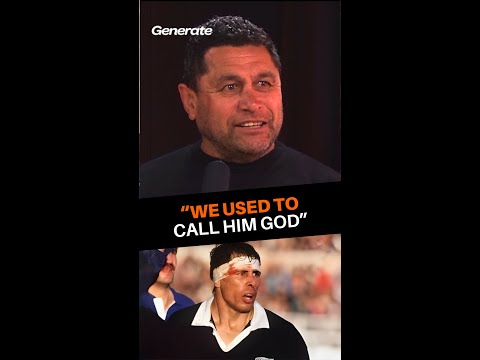
Grant Fox on All Blacks Legacy, Fatherhood & Ryan Fox’s Golfing Rise
Ask about Dom Harvey
Episode Description
In the history of rugby in New Zealand there have been a total of 1,223 All Blacks.
Of that elite group, a much smaller number go on to be known as All Black legends.
GRANT FOX most definitely has legend status- he is a genuine New Zealand rugby icon.
He wore the number 10 jersey and is considered one of the greatest goal kickers of all time.
He was part of the team that won the first ever Rugby World Cup in 1987.
When he retired as a player, his involvement with the sport continued in the roles of coach, broadcaster and All Black selector.
He is also the dad to one of the world’s top golfers.
In this brutally honest and wide-ranging conversation, the man known as “Foxy” opens-up like never before.
I think, and hope, this will be one of those conversations that leaves a lasting impact.
Thanks to Generate for sponsoring this episode.
What do you see yourself doing in retirement? Think as ambitious as you like! Moving to the beach? Exploring the world flying business class? Splitting your year between NZ and somewhere else? Chasing summers? Or maybe just staying local and spending more time with friends and family?
Whatever your dream, there’s one big question: how much will it cost?- that’s why choosing a KiwiSaver provider with strong long-term performance matters.
Generate is an award-winning KiwiSaver provider with a track record of delivering strong long-term returns. You can check out their latest returns for yourself on their website. Because the choices you make today will shape the retirement you’ll have tomorrow.
Start planning now—Book a chat with an adviser at
The issuer of the scheme is Generate Management Limited.
To see their Product disclosure statement go to their website. Past performance does not guarantee future returns.
**The views, thoughts and opinions expressed in this podcast belong solely to the host and guests and may not reflect the views of the show sponsors**
CHAPTERS
0:00 Who is Grant Fox? 15:50 Early Years and Family 25:30 Remembering the Great Martin Crow 40:50 The Start of His All Blacks Career 56:20 His First World Cup 1:12:00 The 1991 World Cup and Becoming Public Enemy #1 1:18:30 Media & Public Criticism 1:36:15 Getting an MBE 1:40:00 Relationship with Rugby Now 1:49:50 Final Reflections
Read the full transcriptHide the full transcript
- Oh, good. You're here. Come on. This is the center of performance. Whenever there's a top performance in New
- Zealand, it all comes from here. That's Lisa Carrington. She's been doing that for days. That's the boys who got the
- hole in one in to Finn. How's the performance going? Top tier. Nice. This is our generate room.
- In here, you'll find our top performers helping Kiwis maximize their Kiwi Saver investments. Get in here, Finn.
- Maximize. Generate. putting performance first. Grant Fox, welcome to my podcast. Nice
- to be here, Dom. Mate, it's an honor to have you. I've done so much um researched. I tracked down this book
- from a secondhand bookshop in in Vicagle of all places. That's from a dump bin in
- the bookshop, right? The game, the gold, the grant fox. When was the last time you saw your book? H I can't remember.
- There is I've got one at home, but that was um published in 1992. M and I I found this book as well on my bookcase
- at home. Uh Martin Crow Raw, your good friend, and you wrote the forward to that book. So I've researched um I've
- researched hard. This is going to be a great chat. First of all, um where do you think your place is in New Zealand
- Rugby? Like do you see yourself as one of the goats? No. And I don't I don't see a place um that's for other people
- to judge, not for me. Um, you know, I was lucky enough to be able to play a game I loved and represent my country at
- it and have have a long career, had a lot of fun, you achieved a lot. Um, and that's still part of my history. I
- can't, you know, you can't rub that out. And that's, you know, it's a nice part of history to to fall back on and
- remember. Um, but other people will judge where where I sit. Um, and that, you know, and if you talk to all the
- other players, I think they'll be exactly the same. They don't really care about that. It's just it's a fascinating
- game other people want to play. um in the media ranking and all that sort of stuff. Um I'm not interested in in that
- sort of stuff. You know, other people can have their judgments for me. Um privilege um helped me get where I am
- today. Um but it's just that's just part of my life story cuz I I know you're from what I've um researched. I know
- you're a bit of a technopobe, which is so am I. I'm I call myself a boomer. I'm not a boomer, but I've got big boomer
- energy. But um you must be familiar with some aspects of AI and chat GPT. I've heard of chat GPT. Um, and I've only
- ever used it once and I didn't use it. Um, my CEO in Australia asked me to write a bio for a new group of investors
- and I don't have a bio, right? So, I'm just that's not happening. So, I got him a colleague at work to go to chat GPT to
- research and when I read I thought hell I was bloody good, wasn't I? It was so full of bloody nonsense. But
- to be fair, I used it and cut and pasted it because it was a because I just I'm not I'm not worried about that stuff.
- But this guy, he was insisting I did it. So I used the technology. Only time I've
- used it will never use it again. But it was an interesting exercise to go through and go, "Okay, where they where
- do they get that from and as I said, it painted me a lot better than I ever was." So anytime you need an ego
- booster. Yeah, I know. Go to chat GBT. So, I typed into chat GPT um you know who is the greatest uh all black number
- 10 of all time and um uh it came up with an answer. It said this is a highly debated topic among New Zealand rugby
- fans, but most discussions typically include these standouts and um I've got five names here. Who do you think who do
- you think they would be? Uh Daniel. Mhm. Uh Andrew. Yes. Um God, are you going to
- test my memory here? Um, uh, I'm trying to think you played for a long time and it So, give me a hint.
- Predates how era. Okay, I'll tell you what. You're you're on the list. You're on the top five. Okay. So, I'm missing
- You're the oldest on the list. Yeah. Am I? I'm the oldest on the list. Okay. So,
- it's more recent. So, you got Mertz, Carter, yourself. Yeah. All right. I don't I'm not I haven't I haven't been
- in the rugby scene for a while, so I'm trying to And my memor is failing. I'm trying to remember. You have to help me.
- Okay. Bod, of course, and Richie Manga. Oh, of course. Okay. Yeah. Okay. What What do you think of that list? It's a
- privilege to be on that list. Um, but it's hard to judge the modern day player against guys who've in the past because,
- you know, what about some of our greats in the past? Um, you know, Douggee Bruce, Wayne Smith, um, didn't play as
- many tests as a guy play plays nowadays and probably in many ways a whole lot less media noise around it, not social
- media, a whole lot of different things. So uh and with the the game the game the
- skill set involved in the game now hasn't changed since the game was amended. You know kick run pass tackle
- in no particular order that's the game and how you how you how you you know how you get accumulate your points tries and
- penalties and conversions drop goals nothing's changed but the structure of the game has changed and these guys play
- a lot of testing you know they're playing 13 14 15 tests a year now um you know when I start when I finished I
- think we got to 10 um but before that it was um maybe six or seven. Yeah. Um, and
- in the older days, some years there wouldn't be an all black team playing test matches, so it's very hard to make
- comparisons. You mentioned um Wayne Smith in that in that in that breath just before um Sir
- Wayne Smith, the man known as the professor. Um I read a story in part of my research. Did he clean your boots for
- you once or offer to clean your Yep, he did. That's true. Um so Fiji 1984 was my
- first tour. So end of the domestic season, I got picked for a short tour to Fiji. Um Smithy was the incumbent 10 and
- and I was the new guy picked. Um and on my first game um he was not in we weren't rooming. Oh, we may have been
- rooming together. I can't quite remember but he might have been. He just came down and offered to clean my boots. Um
- and that wasn't an uncommon thing for players to do to help the new person. So an incumbent senior experienced person
- would come along and help induct the new guy and just give them every every little bit of assistance they could.
- That's the all black way of doing things. So So he he was like higher than you on the line. Of course he was. cuz
- he was the incumbent. So he was absolutely I was the new boy my first tour and there there wasn't an official
- test. There was a test against Fiji but not not recorded as an official test match. Um but I always clean my own
- boots. I had a routine, right? So I always wash my laces the night before, took them out, wash them all, you know,
- hung them to dry. Um I on match day morning, I' i'd use Nugget Nugget, not the liquid, the proper one. And I' I'd
- wash and clean my boots and you know, because the boots we practice in were the boots we played in in those days. um
- because it's was just comfortable to do that. Um so I was I so I declined smoking only because it was part of my
- routine and I I'd always done that. I find that a fascinating story because I suppose I always have this perception of
- almost um under the 2025 lens it probably could be called sort of like bullying or the hierarchy seniority
- thing in the back. Yeah, there is still I mean when when look when I they will still have a backseat of the bus, right?
- and and and um so there is I mean look it's it's a more um uh historical hierarchical structure but um it's not
- the way I mean it would have been tougher in the old days compared to the lens we look at things nowadays right
- but there will still be the senior guys down the back of the bus and when you you're in the orats long enough and
- luckily I was I graduated eventually at the end of my career to the back seat which was a was a great privilege but
- the backseat of the bus really was we traveled a lot on buses in those days they didn't do it so much nowadays Um,
- but it was really an in-house disciplinary thing that was just dealt with things that were more to do with,
- you know, if a guy had transgressed uh, you know, an expected set of behaviors perhaps off the field, you answered to
- the back seat. I mean if it was really serious it got to management but we tried to do a lot of this stuff because
- that's about peer group peer group pressure because the judgment of your peers is pretty harsh and you know there
- was a a certain um there was a brutality is the wrong word but we we were brutally honest with each other and that
- that related to anything to do with how how the all blacks conducted themselves which lent itself into how we played. Um
- and so the backseat had an important function but it wasn't above anything else. It was just part of um it was just
- part of the culture in those days. It still is, but it probably may not perform the quite the same function, but
- to some degree a little bit cuz I um Christian Cullen on the podcast last year and he talked about how he made the
- All Blacks and a lot of the senior guys like wouldn't talk to him and then he played his first test and I think he's
- got three tries and then he thought, "Oh, maybe they'll talk to me now." He was still a bit like sort of
- standoffish. He's like, "What do I have to do to prove myself?" But the fact that you were talking about Smithy like
- offering to clean your boots, it's it says a lot. Yeah. But that but that was the way it was, you know. I mean, I can
- remember as a senior player when Simon Mannis came away to France in 1990 as he was young. He's about 18 or 19 Max was.
- And it was, you know, I'd always remember what Smithy um had, how he had behaved towards me. So that was, you
- know, my job with sign. But you als you also don't want to be overbearing. You got to be really careful that you don't
- try and model them to you. they've got to be their own authentic self. Um, but it was just sort of part of, you know,
- of the All Black way of doing things. So, um, and I would say that's been going on since the All Black started. I
- don't think this is anything new, man. I'm so excited to have you here. There's so much to talk about. Um, yeah,
- I mean, you you're just a man that's seen and done at all when it comes to rugby. Do do you have any memorabilia at
- home? Like, have you got a pork room, a games room? I have a games room, but there's um there's a few photographs up
- on it that we've collected over the years that um a lot of them would say montages of the all black 87 team that
- people did and that was commercial stuff, but as part of that negotiation that Robin did, all the players got one.
- I've got one from Oakland in the Oakland Ran Fully Shield era. Um and some other
- um you know, other bits and pieces. Um I've got I've got jerseys of every team I played against. Um I'm not allowed to
- put them up. Maybe one day, but I've I've still got them. They're tucked away. Not allowed. No, no. my wife
- didn't well they they'd fill up a fair bit of a wall but um I tell you what though there's one particular cuz I'm
- not sure anyone else um would have the set because some of these teams don't exist anymore but I have a set of uh of
- New Zealand representative jerseys that go New Zealand school boys um New Zealand Colts New Zealand juniors um New
- Zealand universities and the New Zealand All Blacks. Um not sure I'm not sure the
- varsity team plays anymore. Um, we have an under 20's team, so we don't have an under 21 and under 23 team, which was
- Colts and juniors. So, that's a particular set I'm I'm immensely proud of. What does life look like these days
- for Grant Fox? Um, I am still working. Um, I run a business called Monster Vision. Won't go into the detail, but
- it's um we're deeply involved in in in sport in this country. Um, you know, a little bit of community um you know,
- council work, concert work. Um, and you know, I'm a father and grandfather um with um, you know, apart from Ryan who's
- probably more, you know, more widely known. We have a a younger we have a daughter who's younger than Ryan who
- lives just down the road from us with three littleies. It's just a great joy. So that's, you know, life and I try and
- be at home on the weekends, work Monday to Friday. Um, not too hard and um, try and get a game of golf in if I can. And
- you go, I play off about five now, I think. But I haven't played in ages cuz I had a I've had um I got a niggly knee
- and I've just had carpal tunnel surgery. So I'm falling apart and I've just heard
- a rotator cuff. So yeah, life's age catching up, Dom. Um and I I'm very keen to get back cuz I enjoy golf for the
- social aspect and the competitive to be honest because a handicap system allows you to play against people with
- different abilities and you can have a game cuz golf's unique like that. I don't know any other game where I can
- play against someone who's way better or way worse and at the end of it we could
- be all square based on the handicap system. So it's who's really buying the beers at the end of the day we play for.
- So yeah, it it is fair but you still know deep down you're getting your ass kicked by a better player. Oh yeah.
- Yeah. But but the golfers understand the golfers understand how many shots have I
- got on this cuz always how how many have I given you today? You I've got to make
- six up before on the next guy. And so you you consciously know what's going on because the competitive instinct doesn't
- leave you. Yeah. Yeah. Yeah. you still because I I had your son Ryan on the podcast a couple of years ago and we we
- talked about you and your relationship with him in quite great detail and he told a story about the first time that
- he beat you in golf and and he said you didn't talk to him for like a couple of days afterwards. Yeah, I can't remember
- exactly. It happened. There's no doubt it happened and it probably when he was about 15 and it would have been the last
- time I got near him. Um, and look, I I I still have a competitive uh fire, but it's dullled with age, right? Because
- I', it's a reality is, and particularly when it comes to golf, um, or any other,
- you know, be it tennis or thing, which I don't play nowadays, got a bugged wrist,
- but um, it's just um, I can't hit the ball as far, so I can't be as competitive, right? And you just got to
- come to a realization that I can't do what I used to do, except the aging process. the handicap system will take
- care of that because it'll keep going out and I can still have a game against him. You know what? If I play with him
- now, which is very rare, I mean, he's going to give me at least 10 shots. Maybe probably No, I wish it was nine, I
- might beat him, but um no, but but you know, he's got to play off about a plus eight and you know, he'll give me five
- or six shots. So, what is that 13 or 14? So, yeah, it's surreal really from a a Kiwi perspective. like you I mean you're
- too close to it to probably see this but you know one of the great All Blacks of
- all time has a son and the son's now like in the top 100 or top 50 or whatever of world golf rankings like
- it's it's crazy. So his entire life he was probably played with the I don't know if stigma is the word of being
- Grant Fox's son and now you're Ryan Fox's dad. It's quite something quite poetic about it. Well I mean that's nice
- of you to say. I mean I I I mean I stopped playing rugby when Ryan was six, right? I was 31 which is young to retire
- but I was run it was amid days. I was running a business and had a young family and I wanted to be there when
- Ryan started. Um because I think you know um one of the most important things being a parent is showing up, right? You
- got to I mean how do you spell love to your kids? T I M E. And um so someone said that to me a long long time ago. My
- parents um you know did that with us growing up on a farm. They were always took us to sport all the time engaged in
- coaching our teams you know. Um, Adele's parents were the same with, you know, um, with with, um, Adele and her brother
- Greg. So, um, I understand that mindset and I think it's critically important. So, for me, retiring for a number of
- reasons, but family was was a critical one to spend time and all you wanted Ry Ryan probably he he didn't know at that
- time. It wasn't until later on when he started playing at a higher level like first 15 rugby or first 11 cricket that
- there was perhaps a link um that they said well this is you know this is bloody Grant Fox's boy now I'm his dad
- so that that's completely flipped on its head which I I like because it means he's carved carved his own career but
- all he did was just you know he chased a dream you know that's all he did and he
- was lucky that um you know at the end of the day he's achieved that dream because
- not everyone gets to do it but I think setting yourself a goal and striving to achieve something's really important.
- Um, and you know, he he's been able to do it on a pretty big stage, which is, you know, which I'm I'm so pleased for
- him because I know cuz having played sport in elite level myself, I know the work involved, you know, and all the
- pressures associated. And Ryan's been able to deal with all of that um, and still get to the point he's got to um,
- you know, rewarding for him and his family, but also, you know, for Adele and I. M are there when you watch him
- play like on on TV or in in real life like are there um parts of you that you can see in him like if he the way he
- acts after he's had a bad shot or mannerisms and things like that? Oh look I I can see more of I mean Ry Ryan and I
- think in temperament is more like Adele than me outwardly. I think inwardly he's
- more like me. He's just pretty more he's he's better at hiding it than I am. Um,
- so I know deep down he has a fierce competitive desire. Um, you know, he wants he wants to do well. Um, doesn't
- always happen. Um, I think he's um, and look, he at times he struggled to deal with what I'd call frustration from not
- getting out of it what he wants, which is not matching the work he's put in. Been there, done that, understand that.
- Not easy. Um, you know, that's just that is a hard thing to work your way through. But, you know, I I think um you
- my wife was um a good tennis player. Um you know, grew up in a sporty family. Um
- played hockey at school. Um so, Adele understands the sporting environment, having a dad away a lot. Um a dad
- involved. Um so, you know, there's a blend of everything in there that I can see in Ryan. Yeah. Um should we go back
- to the early years? Yep. Okay. So, you're from um a farm in Tatanaki. uh born in New Plymouth but but left when
- when I was two to um um a Wetto just outside of Pataradoo. Yeah. Out of Patu. So a little place called Tiotu which was
- Tiotu was um a school in a garage. That's all it was. Wow. Oh like a tiny rural school. A tiny rural school and a
- garage. That's all it was. So there wasn't even the first 15. Not enough kids. No. No. So there wasn't even a
- local school there as such that we all went. There was four primary schools in PU at the time and I went to one of
- those schools and and um this is where you you built some like makeshift my father did. Yeah. So I mean I think that
- came out of um well my father played rugby um you know for um Okado where in the Tanaki and also for Taro Athletic
- when we moved to Peteru and you know he was a South Wata rep so I was sort of what you call a minor minor union rep.
- He was a fullback goal kicker in the old torpedo life flat style kick with your toe. Um, so you know, we'd been around a
- rugby environment, you know, as little club rooms after games, all that sort of stuff. So we were very familiar with,
- you know, that's what you did in rural communities. That's how you how people put at the tennis club up the road, the
- cricket club. My mother played net ball. So that was all just part of, you know,
- the upbringing. Um, but I love kicking a rubby ball. Always was fascinated by that. Although we had a soccer ball, I'd
- kick it around. And I used to build um and put on the front lawn two battens and a bit of 31 a little goalpost and
- that's what I'd practice kicking when I was very young. Um but I think probably some as I got older and maybe too many
- broken windows. The old man decided that he'd get a couple of big 18t panelized bloody posts. Um it might have been
- taller than that with a with a um uh a galvanized bloody pipe crossbar. Put it in the front paddic. Well, there you go.
- You won't broke won't break any windows down here and I had a lot more room. So that so he built those. And they were
- put in the front paddic. Parallels with you and Dan Carter in that, eh? They had
- a paddic out the front with a goal post in and Yeah. Yeah. was kicking until dark. Were you one of three three two
- younger brothers? Yeah. [ __ ] And Yeah. Because um me and my brother, we used to
- we lived in a residential house in Palmer North. We played cricket on the driveway all the time. Glass used to be
- so thin. We used to always have a smashed window in the house. Yeah. No double glazing either. Not in those
- days. Yeah. Yeah. Yeah. And I mean I like I used to really enjoy playing tennis. played cricket as well, but we
- had a big we had a brick house. One of the walls on the on the as the concrete driveway came around to where the garage
- was a big concrete area. One of the walls was no windows completely brick. So that was that was my bloody, you
- know, my back wall buddy hidden. I think used to drive cuz the kitchen was in behind that. I used to drive my mother
- mad. She was trying to cook in the kitchen. I'm pounding this bloody tennis ball with a tennis rack or a pad of
- tennis bat. But, you know, we just grew up in that environment, you know. Um um sport was always a big part of of of you
- know, what our family did. So your parents just send you outside and play until it's dark and then you come in for
- dinner time. Yeah. I mean we had 300 acres to run around on too. So you know we had motorbikes and Land Rovers and
- you know so and at a very young age we were you know we were we were taught to drive machinery. Um you know I can
- remember my younger brother and I we got to a stage and I was still at primary school but I include the intermediate
- years cuz that's what it was in those days. I mean we put a whole paddic of hay in by ourselves. mowed it, turned
- it, bailed it, had some help picking it up. But he let, you know, a 12-year-old and a and an 11 year old go and do that
- because we would that's what, you know, God farm kids, farm and kids and occupational self safety and health
- might have a problem with that nowadays, you know, I was driving a Land Rover at
- seven. I mean, that's just what we did in those days. And I was lucky enough with, you know, the upbringing was, you
- know, um, teach and give responsibility and let you make mistakes. Don't women cuddle you and say don't do that, don't
- do that. You actually had to learn by making your own mistakes. Long as it wasn't going to injure yourself too much
- or injure something else or break too many things or crash Land Rovers or whatever. That's the that's the
- environment we were brought up in. Some sometimes an injury is a good lesson. Yes. So So when when you were a kid in
- um in the the Wetto Paddock kicking the ball, who were you who were you pretending to be? Strange. Well, so when
- I when I before the goalpost came up, um Brian Williams was my idol, which didn't
- didn't marry me match with me, I should say, because, you know, small little skinny white kid and Beg this big big
- big big thigh Polyn. Yeah. Yeah. Who was, you know, a number of years older than me, but I just
- remember watching him in 1970 and, you know, on the TV plant in South Africa just resonated. So, um, BG was, you
- know, BG was my hero. And so, you know, um, um, black pants and a black rugby jersey that that, you know, we had at
- home and got one of my mother's sheets and cut it up and asked her to put a number, whatever number BG was at the
- time. It varied a little bit, but 13 was one I seem to remember. And so, that's you you'd run around, I'd get two of the
- neighbors kids over. So, we play two on two in the front paddic in the pouring rain and mud everywhere. Um but but from
- a goal kicking point of view, the real thing that resonated with me was Barry John from the 71 Lions because I was at
- a very young age, you know, trying to tow hack in bare feet, which wasn't good for a young kid in the cold white cattle
- winters. Um and I saw this guy kicking very well using his instep round the corner and my first thought was that
- that won't hurt my hurt my toes. So that's when I adopted it and and um because my father was a goal kicker,
- there was some encouragement there. Um, and as I said, I just, you know, I just like I like kicking a rabial. It didn't
- have to be just goal kicking, but that's where the sort of my first memories of round the corner. Um, like, okay,
- that'll work. Um, and then just, you know, kept working hard from there. And by the time you got to secondary school
- age, were you were you really really good? Is that why you were sent to Oakland Grammar or? No, no, not not the
- reason sent to grammar at all. I mean, I'd played um um in in subun stuff and also the the roll of Mills, which sadly
- doesn't exist anymore. I played for white cattle rangers. Um so selected that was sort of the first taste of you
- know representative football though it was gi form too in those days. Um but the local high school was Petarian Wayne
- Smith had been there um a guy called Benny Savage was there too. He was another 58 who was in the first 58 in
- the first New Zealand schools team in 1978. Benny Savage was a was the first 5'8. So um it was just an interesting
- bit of um history that um Smithy, Benny, Benny unfortunately didn't go on but you
- know out of came these three guys who played you know 5'8 reasonably well um but my
- parents just believed in education so um I don't know the story properly but John
- Graham was a headmaster um you know one of Bob's older brother Jim lived in Lichfield which was close by and my
- parents knew them so maybe there was some contact there. I'm summising here cuz I actually haven't ever discussed
- the story but got accepted into grand grammar that my parents applied and I went to Tib's house as a border and um
- just part of the way you immerse yourself in a school of what was 1,200 in those days when I arrived as a farm
- kid I knew one person that's all I mean I was just I I was lonely uh out of my depth um hated it um I remember going
- home for the first holiday at Easter that year so this is 1976 and I got home. Um, so on the Gibson Motors bus,
- get out of the railway station, get on the bus, go down to Para, get picked up, get taken home. I went and got on the
- motorbike and drove to the top of the hill where the wool shed was and just listen to the silence and bulled my eyes
- out cuz I did not want to go back at all. But, you know, that wasn't an option and um, obviously it was the
- right decision. Um, what was it just like homesickness? Yeah, because I was I was a farm kid. Got brought up in a
- little community. So, you go into an environment where you know there was 60 I think there was 60 borders in those. I
- didn't know any of them, so I had to get to know them. You know, there's a little
- bit of Tom Brown School Days to some degree. Minor stuff compared to what you'd read in the book, but it was still
- a little Oh, just Yeah. a little bit of bullying in that as you know, if you read Tom Brown School Days, remember
- what that was like? Um, it was a story about that. And so, there was a little bit of that hierarchical, you know, turd
- former. Yeah. Turd formers and all that sort of stuff. So, not not overtly bad, but a bit foreign. Um, so your boarding
- school was I was talking to my brother-in-law about this the other day. He went to St. pans silver stream in in
- the 90s and uh he's a he's a sleep talker. He got caned once for for talking after lights out. Yeah. I mean
- Yeah. I mean we had corporal punishment in those days. I got caned once at school cuz I asked for it instead of
- detention so I could go to rugby practice. Um it hurt too. Um so but but you know that choice and was all about
- education. The sport thing wasn't part of my parents um thought process. I'm pretty sure about that. But also, you
- know, though great believers in leadership like I am and you know, Sir John Graham was a headmaster, revered,
- great leader. Um, you know, Grammar had a great reputation. That was that was the place to go. Yeah, you had some
- great role models there. Um, Sir Graham Henry, he was your coach for a time there. Um, my old recctor from Palmer
- Boys High. Yeah, Simsy was there. So, Simsy coached the first 11 I played in. Yeah. Mark Greatbatch, he was in Yeah,
- Patty was a year behind me. Yeah. Yeah. And so, I played first 11 cricket with him, too. Yep. Incredible. God, he's one
- of my favorite fielders. This seems like a lame thing to say, but I loved watching him feel. Oh, yeah. No, he
- could play bi. Yeah. Yeah. And he's competitive, too. Like he, you know, I'm pretty sure he played a year of first
- team rugby. I think the year I was in the my last year he might have played second 15 rugby. He was, as I said, a
- year behind. He was a fiercely competitive man, too. Yeah. And and Martin Cro, you you guys were when did
- you guys meet? Beginning of 1976, right? Beginning of the school year. Um, two guys who didn't know each other sit sat
- on a pew in the assembly hall and got talking. and we just had a um we just found a
- common bond. Um I'm going to get emotional talking about him because I always do. Um but um we just developed a
- great friendship and but it was a friendship based on a more of a mutual interest in in sport. Um you know he was
- obviously known as a cricketer but he was talented at so many other sports and I was the guy that was eventually going
- to forge you know a career as a rugby player. Um, so it just developed a great friendship that didn't that didn't last
- long enough because sadly he died at age 53. Yeah. You you've you've done very few
- podcasts, but um you I've heard whenever um the late Martin Craig gets born up, you do get emotional. Have you have you
- always been an emotional guy? You find this is happening with age? Um more with age, I think. You know, some sometimes
- it doesn't doesn't take much to see, what am I got? What have I got to tear for? you know, or I'm talking about
- something and all a sudden just catch me like it does with Marty. It something just it just catches me. I don't it
- doesn't feel like it's there and then something just triggered and catches me. So, I'm probably a bit more emotional
- than um I give, you know, I'd like to think I'm I'm relatively level, but I just get caught occasionally and Marty's
- one who catches it just catches me all the time. I I I think it's I'm probably projecting
- here, but like when from my perspective when I die, like my my biggest fear would probably be there's there's the
- FOMO thing of what you're going to miss out on, but also you don't want to be forgotten. And so the fact that you
- reflect on this friend of yours and you get emotional like a decade or whatever it is after his death. Um speaks a lot
- about him and the and what he meant to you, which I think is so cool. Yeah. Yeah. I mean, he was um a very special
- man. um very talented man, a very um emotional man who works hard on his sleeve and at times it got him in
- trouble too, you know, and the world we live in nowadays, it's like you you say one thing that is authentic and think
- that someone will take it the wrong way and the way the whole media thing works nowadays, it doesn't take much for much
- of a pile on. And I think sometimes people get remembered more fondly and and more for their greatness when when
- they're not here. And that's the sad thing because it took Marty to pass in some ways for people to really
- understand his greatness. I think he was given enough credit but not quite enough. It wasn't until he was what here
- here and you could reflect. Um I mean I remember a few things. I won't be longwinded here but um you know it's a
- long podcast. You can be as long as at Marty's funeral service you know um and well planned out in advance because he
- knew it was going to happen. So you know his favorite color was orange. So the coffin was orange and all of this sort
- of stuff. But um when you we first arrived and sat in there playing on a screen was his his hundred at Lords his
- last 100 in test match rugby which happened to Lords and that's when his knee was gam um and Lords was hallowed
- turf for him just the majesty of this man batting is just was amazing. And um Jeff his brother stood up and
- started capping. the whole service stood and started clapping cuz this man was a
- genius. Um, and one other, you know, we were brash school boys and when we finished school we had a little bet and
- I think that's documented um about who who would play the most test matches for their country and their chosen sport.
- So, they're just brash, arrogant school boys. Um, you know, Marty won that battle um obviously cuz he he played 76
- tests I think and I played um 46 or thereabouts. You've probably got the number. I won't have the number exactly
- right, but um but when Marty um retired and he he was putting a book out um um I
- took a a signed all black jersey, my jersey to him cuz that was sort of like well you won buddy and he returned um a
- pencil drawing of Lords that says to Foxy we both won. Pretty special. Where is that? In the games room on the
- wall. Well, you made the New Zealand Hall of Fame in 99 and he was two years behind
- you. So, that's a win for Foxy. Yeah. Yeah. Well, we both won, as you said. We both won. Were you um Yeah. As as school
- boys, you seem like very different personality types as in that you you know, you you were kind of stoic. He was
- more sort of like vulnerable, heart on your sleeve type of person. Did you you you clash or as school boys? No. No, we
- didn't. Um look, I stated um his place a lot. You know, we we got each term there, three term years, we got three
- three weekends out. Most of those weekends I'd go to his place or another another good friend called David Maroy.
- And you know, we Marty and I always was involved in something. We used to play cricket um with dice using and score
- through cuz it just Marty Marty had a game that you threw numbers and how you get wickets and how you score fours and
- sixes. We would play this. That's how we we did with dice, two dice and do it or
- we'd play cricket in the hallway with a little miniature bat and a and a squash ball so we didn't break anything. And we
- were always up to something like that. Um you know at school together we we entered the the the tennis champs at
- school, the doubles champs, the juniors and the seniors and you know made the finals of both of them um you know in
- our sort of fourth form year and our seventh form year. So that was just we were fiercely competitive and that's how
- talented he was. um you know to the to the point I mean I still remember this really vividly um
- and I played was lucky enough to play one term in the first 11 while Marty was still it's the first time I was seventh
- form year um and I had throwdowns with Marty um every Friday became a ritual get to the nets have throwdowns so three
- weekends in a row when we did this little ritual one day he got 140 odd um and then the next week got five
- wickets and then the following Saturday got 240 odd like this this was the genius of this man and and I had a I had
- a front row seat um just so talented um you know then we played a bit of golf in
- the se form together and stuff like that so we just you know we we we we hung out
- together I went to his first time he played for um I think he was playing for Oakland
- and my memory fails me a bit here big one day game when the West Indies were here it actually could have been New
- Zealand I'm not sure um and sadly that day he got duck cuz I was just getting into my seat and I missed it. But I
- didn't Yeah, that all happens. The best of us um don't always get what we want. But yeah, so I mean there's lot I'm
- getting a bit I'm rambling a bit now, but there are just so many good memories. The saddest one of all for me
- is a bit at the end because you know we talked about playing a lot more golf together. Um drinking red wine together,
- just socializing, you know, and he had found real he'd found his his soulmate in Lraine. They just didn't get enough
- time together. Um very very sad. um where where you know Marty is um as I said he was emotional and you
- know at times is a bit of a tormented soul but that was his also if you people who are geniuses often have these sort
- of characteristics I reckon and that's just Marty was and just when he found some real peace and happiness he gets
- cancer and doesn't doesn't live long enough it's not fair I I feel like he was sort of a man before his time you
- know like he he was sort of misunderstood by the New Zealand public there's even a chapter the book that you
- wrote the forward too raw, which I flicked through the other day. Like there's a chapter in there where he even
- addresses um like rumors or innuendo about him being like gay, which is so perfect. It was like the you know, yeah,
- that's because because he and Jeff had a manager who was gay, right? So people draw a long bow here. I mean, I know he
- wasn't gay. So um and to be honest, it wouldn't have mattered if he was. Who cares? Yeah. Um that's what he says in
- the book. Yeah. Who cares? No one else's business. Um but that's where that line.
- But that was you know that I mean it's just I guess to some point as time passes and you know different parts of
- society evolve and develop or whatever and sometimes not for the better you know and if I look at the media nowadays
- in terms of how things are done there's a lot more opinion stuff and a lot more platforms than there is actually hard
- fact and when in the old days didn't have any choice because technology didn't allow all this stuff so you had
- to deal more or less in in hard facts and opinion was less part of But I guess there was less competition
- in those days compared to what there is now too. So I mean it is what it is. But
- we've also tal just got to take things with a grain of salt because just because there's something in the media
- does it mean it's true? No it doesn't. I think that's what the level of mistrust
- in mainstream media has never been higher than what it is now you know people you read something and you're
- like is this true or not? Yeah. And and I'm you know I don't I don't to be honest consume a lot of mainstream
- media. I don't consume a lot of media nowadays cuz at times it can just make you you read it and go oh god really. So
- you better just I got better things to do than get worked up about that sort of stuff. So best to avoid it. Yeah. A
- couple couple more on um your your friend Martin Craig before we move on. So um that that bet you made in the the
- final year of school. Were you both sort of like hot ticket guys at that at that
- point as in were you both on the radar for like national I mean I played for New Zealand schools that year.
- and I'm not sure I don't think they had a New Zealand schools cricket team. They
- may have, but it was just very clear about Marty's talent. He was already playing for Aland as a school boy. You
- know, he got picked straight, you know, pretty quickly out of school for um for New Zealand. So, it his his talent was
- obvious, right? It was he was always destined to get to where, you know, he got to. And I mean, in a funny way, were
- you as well? Not necessarily. You went a I don't reckon I was. I mean, I I was um
- I was driven like Marty. Um I think it was clear Marty always had an X factor of talent. I don't re I had an X act of
- talent. I had a good hand eye coordination and um perhaps you know a reasonable brain from a tactical point
- of view. But you know I wasn't a very big kid. I had to work hard and I was happy to work hard. um and you know got
- lucky enough to be associated with Graeme Henry at school and then for university um initially and then you
- know John Hartz led me for Aland and I won't won't litigate the rest of it but um you know lucky to play you know be
- coached by him at at a young age um but also playing good teams you know you're more likely to get promoted if you're
- playing in good teams that that win and win championships it's just it's just easier and I'm not saying it should be
- that way it's just a fact of life so you you get noticed a little bit more, get a
- bit more bit get a bit more coverage and therefore come to you know the people's
- attention a little bit more. Um nowadays there's a lot more technology around this. So you you've possibly got a
- better chance cuz the coaches can dive into all a whole and all this all the analytics now that we didn't have when I
- was playing. VHS was how they did it. Yeah. And um you just about and chopped Martin's finger off when I did. I did
- know about this. I did. Yeah. No, we were my my parents would were in Kiwi fruit by this stage of many kiwi for a
- long time at school and I used to go down and spend the summers down there. Um and Marty I remember Marty came down
- for a a few days with us. Um and we were working on the orchard printing shelter
- belts with a and I was on the chainsaw standing on the back deck of of our ute and you know Marty was sort of pointing
- out this one is saying which oh [ __ ] took a chunk took a chunk out of his finger. Um, you know, just the blade did
- not a little not not a lot of damage. It just took a leak nick out of it. Very lucky. But yeah, very lucky. But then I
- reckon after that he could swing the ball more because his finger was a bit deformed. You did him a favor. I did him
- a favor. Can you remember the last conversation you had? Um, when you do the forward to his book, Raw, you talk
- about how you'd had some like long phone conversations. So, he was still around then. Yeah. For hours at a time. Yeah.
- The last one. No, I don't. I mean my memory doesn't work very well like that to be honest but I do remember you know
- um um just time I mean I have one vivid memory of an afternoon spent at his place when Keith Quinn was there um cuz
- he was a good friend of Keith Quinn as you know the rugby commentator lovely man Quinny um and we just you know um I
- don't know we just sat in the backyard and we drunk red wine and we ate and we laughed and
- you know um I was one of the lucky ones that was sort of included um and you know as Marty was getting ill to be able
- to you know just um ring up mate you okay can I come and see you um cuz it you know he to it was hard to let
- everyone in you know it was going to be impossible cuz there was just so many so
- for his own well-being he had to restrict that and so as a guy called Dave Morris who was the head boy um in
- 1980 and Marty was the deputy head boy they were very close as as I was close to to Marty and and Dave and I have we
- still connect Dave and I quite a lot. Um so we were a couple of the lucky ones who Marty led in and it was a it was as
- sad as it was it was a privilege you know to go through that journey with him and I still remember exactly where I was
- when Dave rung me and said he's gone you know it's like he'd gone in for resppite and I just thought okay it's
- resppite care um and into into hospice. I just thought it was respite care cuz that's what I was told. But clearly it
- was more than that. I hadn't thought anything of it. Just he's Lraine needs a break. And it wasn't it.
- That was that was the end. Yeah. It's it's unfair. And I Well, life's not fair. We know that. Life's
- not fair. But, you know, that was the that was the card he was dealt sadly. And um can't change it. And as you get
- older, it sort of just crystallizes the fact that, you know, we've all here for a limited time. I mean, you had you've
- had this thing recently and Doc Mayhew. Yeah, I know. Just sort of crystallizes that just how precious. Yeah. And you
- also know when you get to my stage of life, they like we laugh that we're all getting in sniper rally now, but we go
- to far more far more funerals and weddings. So, it's just a sign. Look, at the end of the day, um, you know, we
- don't consider 70 or even 80 that old nowadays, you know, and once upon a time it was like, oh, that's not bad. We
- don't consider it nowadays at all. And again, um, I heard a saying relatively recently that getting old's a privilege.
- You know, we moan and groan about falling apart and I'm feel like I'm falling apart at the moment, but but
- getting old's a privilege because not everyone gets to do it. 100%. So, you know, as much as you might have some
- ailments and, you know, things that are niggling and annoying you, wow, you know, I'm we're still here. It's better
- than the alternative. Better than the alternative. Yeah. Hey, um, thanks for sharing that stuff about Martin. Yeah.
- Great New Zealander. Like you look at T20 now. He was kind of like the cricket max. Yeah. Invented a thing called
- Cricket Max. That was I thought it was a bit wacky at the time. Yeah. Yeah. And and but he, you know, he was working at
- Sky and he got Sky TV to back and my again I don't know all the detail, but I he was a pioneer of things in many ways
- and I reckon he was the guy and I'm going to credit him with him regardless that that he's he pioneered what
- eventually became T20. M through cricket max he was innovative you know he cared
- so deeply but he wanted this game to evolve and grow and become more appealing and you know he I guess he
- understood that well test match cricket's the pinnacle you know at the end of the day trying to engage an
- audience you know when you can go five days and not get not get a result is not easy so how do we you know and how do we
- package something up that works in three hours for broadcast that people can consume for three hours and make it
- exciting and you know bring some other innovative things into it. So, hello. Here's Cricket Max.
- Can we go back to your All Black career? Yep. Yeah. Okay. So, do you remember the
- moment you became an all black? Yep. I remember the moment the team was announced. Yeah. Did you have like a
- probables possibles trial? No. No. Not Not for Fiji. No. No. That was just picked at the end of the NPC
- um in 1984. Right. So, you were playing for the the mighty Oakland team. Yeah. Yeah. Well, that was 1982. So, we'd won
- the championship that year, but the NPC had started in its current form um or as
- a proper NPC championship in 1976. Oakland hadn't despite being the biggest population hadn't won it. So, you know,
- John Hart became coach in 1982. Uh you know, we won that. Sorry, I became 1984. Sorry, I'm getting ahead of myself. Um I
- So, um 82, we played well and won it. 83 um you know, we hadn't won it. Um 84 we
- won it again. I'm pretty sure of that. again my memory but Aland had yeah we had because we had had a good season
- we'd been pretty pretty dominant um you know on the back of that I'd had a pretty good year the jungle drums were
- beating that you know I was likely to get picked alongside Wayne Smith um I have a feeling Ian Dunn who was the guy
- who was with the um the some of these understudying 83 lines was injured so that that opened a bit of a door um I
- can't remember exactly but I think that was the case um and they just you don't get didn't get a phone call you just
- just heard it on the Yeah. So, I was gathered around the radio. I think it was at 2 I'm pretty sure it was 2:00 on
- a Sunday afternoon. I was with a D at a mom and dad's house and their name was read out.
- [ __ ] What's that moment like? Oh, yeah. I mean, it's surreal. It's I mean, it's
- what you know, it was the it was the boyhood dream you strive towards. You don't towards you don't you don't really
- know. The jungle drums were beating. So, you you sit there with a certain amount
- of, you know, confidence, I guess, that yep, on the back of what's happened. um you know um there's a there's a
- reasonable chance but there also a chance you won't. So just because there there is a degree of confident doesn't
- mean you're not sitting there with your belly bloody churning cuz mine was. the nerves would would jingle and so um and
- so it was you know I mean great um euphoria but also a great sense of relief but the journey about to start
- the relief bits go finally made it but you haven't made it it's only you just started another journey you know so um
- and I you know clearly for me I didn't want to be picked and have one tour and stop I wanted to you know even though I
- hadn't been in the team it's you know with its history you want to be part of it so I just wanted this to you know
- this is the start of something I want to last for a while and how intimidating is
- that so the the position you're in number 10, you're sort of like um controlling the flow of the game in a
- way. Um yet you're you know you're the new kid on the block by these senior players. How [ __ ] intimidating is
- that? Um I well I see I don't look at it like like that. I mean that was just part of my job. I got picked um um
- because um I was deemed to be um you know good enough by the selectors um part of my job and with with Oakland I
- ran the cutter. I you know I dealt the cards. So that's and it's still to this day traditionally number 10 does that.
- So that hasn't it's probably always been the same. So that was just part of what
- my role was and so I was I was used to it not intimidated by it at all. Yes, it was going to be up a level from what
- would been and it was going to be you know um faster, more physical um you know more demanding mentally because it
- was going to be harder to plot your way around a little bit. But again you just dial into what the team's trying to
- achieve. get into the game plan, you know, use a bit of intuition, understanding, you know, the pictures
- you're painting and what back what what we call a backfield looks like. Um, and so I didn't I don't think it was
- daunting. I I I thought it was a great challenge, but not not daunted by it. Not that I can recall anyway. Oh, a lot
- of the team members were probably your Oakland teammates anyway, right? Uh, yeah, not so many days, but a few. Yeah.
- Yeah, there was a lot in the 87 World Cup team. Again, a lot of guys, but no, there was a few. But but you know the
- other guys we played against so we knew them anyway you know and look it's funny
- how you're fierce competitors when you play against each other proincially like you wanna you want to win and sometimes
- with the bigger boys it gets a little bit more you know they getting very physical against each other but the all
- the all blacks brings you together so all of those things are you know if there's been an incident that one guy's
- clocked you um and at the time you're annoyed when you go the all black you just laugh about that so um you know we
- just it just bring you just come together and the um The first game you played for was that was that in
- Argentina and no first test was in Argentina. First test was in Argentina. First game in Fiji in ' 84. First game
- in Fiji in ' 84. Yeah. What what's that like putting the jersey on? You used to been um really anxious pregame, right?
- Like Yeah. I got nervous, right? Because nervous means you're ready in my view. if you if there wasn't anything going on
- from a um the nervous system um a nervous system wasn't I mean I think at times depending on form nervous the
- nervous system can create doubt but if you're in form it creates excitement because if you don't get it you're not
- ready so that's how I always judged if I wasn't sitting in the bus you know or in
- the dressing room before with a couple of dry reaches I thought well am I ready for this or not now I learned that over
- time um because preparation is the key to success so you know if you've done your work yeah you okay I'm ready
- whatever they're going to throw at me. Um, what what we're trying to achieve, you know, I'm ready for that and I know
- my mates are too. Did the the premature vomiting stop after I didn't vomit. I didn't vomit. No, not really. I mean, it
- was I mean, dry reach and look, it wasn't a permanent like it would just be a couple of times where the nerves would
- just get a little bit and so I'd have to go and it was a dry reach, right? And it
- would just like one big like a big yawn and done, right? So, vomiting, no, didn't never get to that. And it wasn't
- every game, right? Um, you know, some games it's you can't you can't be the top of the mountain all the time. You're
- going to fluctuate a little bit. It's just you cannot you mentally just can't do it. The best sports people in the
- world don't win every time they play cuz sometimes they're just not where they'd
- like to be. And you can't peak every time. I mean, realistically, I reckon you can peak about 10% of the time you
- play. You can be at maximum, you know, maximum level. Um, so some games more than others got you depending on I guess
- the magnitude of the game and and how you prepared for that. Um, but dry reaching wasn't uncommon for me.
- Yeah, it was completely different um time then mid 80s to what it is now like in the team there were there were cops,
- farmers, truck drivers. Um, yeah. What did what did an average week look like? Week of a test. Well, we were together
- we we were together in the test, right? So the week of a test was different than
- playing for pro provincial rugby. But provincial rugby was um train Tuesday night, Thursday night um play Saturday
- and for the most part we were probably in a hotel on the Friday night um and if you're traveling you are together so but
- you travel on a Friday um fly hotel play um you know come home Sunday um um and you know we had our own training
- programs during the week that were so our own resource but hook touching and um touching with guys like Jim Blair
- making sure that on the Monday or the Sunday our recovery you know Monday and Wednesday, you know what? Our own
- programs, especially designated programs, because we weren't together as a team. For an all black, you assembled
- you. In the old days, they used to assemble on a at earliest a Wednesday, but sometimes Thursday to play. By the
- time I got to the All Blacks, it was more like a Monday. But and so it was it was like being together professionally
- because we weren't at work. This was our job for the week even though we weren't
- we weren't paid for it. So the the all black all black weeks test weeks changed a bit because of you know the team
- wasn't together very often spend much time together so you needed a few days it's still the all blacks still nowadays
- get the least amount of prep time of any of the teams that play the super rugby teams get the best run at this on terms
- of preseason leading in the NPC teams get more than the all blacks but but not as much as super rugby team the all
- blacks get the least of all you know they go into a big test match and you've effectively you're lucky if you got a
- week right so it's it's and you know so that's That's sometimes the bit that's forgotten when the expectation of the
- All Blacks. And by the way, I don't want this to change, but you've often got you
- spend the less time together of any of the teams you play with, play for. Did you Were you guys doing weights back
- then? Not gym at all. No, not until Jim Blair came along, right? Um um and you know, weights was a small part of what I
- I did. not not an awful lot, but more of it um was about plyometric work on boxes
- and hopping and jumping, you know, um to to get explosiveness in um um but in the
- early days just running roads. We just ran roads. That's what we did. And at training, they'd try and throw a few
- henny mullers in and you know what we'd call down and ups, you know, little short sprints and go down, do a press
- up, turn around, come. So very primitive stuff in those days that we didn't know
- any better, right? So it was a lot of aerobic based more than, you know, strength-based. Nowadays it's it's a
- blend of everything and diet. We didn't diet didn't what was diet? We didn't know. We didn't know. You one of your
- heroes um BG Super Williams I had him on the podcast and he talked about like the
- tours in the 70s how they'd um like have a big steak for breakfast and first half
- of the game he said he'd be like burping up steak and stuff and then uh you the body would digest it and the second half
- you start to get the energy from you only you only knew what you knew, right? That's what so that's what you go on.
- Um, I mean mine mine used to be baked beans, eggs. Um, I might have had fries and bacon I
- think was my and a certain time before the game. That was my that was and we played in the afternoon remember mostly.
- So it was a pre-match meal probably um between five and six hours before the game. Now these guys eat much closer to
- the game um than than what what um what we used to. But again, they've got all the science around it. M we didn't have
- any of it in those days. Yeah, it's quite cool when you look back. It's pretty cool, eh? They're cool
- stories. Yeah, they are. But but again, it's it's just you know what you know. I
- mean, the guys who played, you know, you sit with Ian Kpatrick and things at times and they got different stories
- again. It's just different eras cuz um you know the the the society was different. Um you know, the way they
- were judged was different. You know, how often nowadays do we see behaviors of the past that were considered okay
- looked through the lens of today are not okay yet we want to litigate them. Well,
- I don't think that's particularly fair. Depending on what it is, of course, but um you know, it's just like, well, you
- know, times have changed. So, you know, what happened back then, you know, it just it is it was it was what it was,
- right? And okay, might we mightn't like it nowadays, but back then, what you know, if you didn't have an issue with
- it at the time, eh, it's you just compare it. Yeah, you can't compare it, right? And by today's lens on certain
- things, you can see, yeah, okay, it wasn't this, but again, you only only know what you know, and at certain
- times, you only know what you know. And as you grow and evolve and learn and things change, well, and you adapt,
- okay, well, Mia, maybe that wasn't, you know, wasn't quite so good, but but it wasn't considered at the time. And so,
- you don't judge yourself that way. Yeah. Anyway, I don't want to get deep and meaningful on this. Oh, no. No, I like
- it. It's one one thing I like I admire about you greatly like how you you will put your neck out and speak your mind
- about things when a lot of the time it's easier just to just well in today in today's world it's easier to shut up now
- I don't do this to be honest I have shut myself off right I mean I don't long form podcasts are fine and I this is
- only my third one I've done but it's simply because you get a chance to have a proper conversation and get context
- around it unless someone decides to clip this for their own end but um um so you
- just anyway I so I just I got better things to So I'm just saying I don't the world we live in it's so easy to get you
- I mean poke your head above the parabet boom they lop it off easy easy easy you know and maybe a cowardly way is I don't
- want to be part of that I did that once upon a time um I'm at a time of life now
- with grandchildren and you know wanting to spend more time at home that I just it's not what I want not what I want to
- be part of don't eat it not your circus not your monkeys um so we're so we're leading up to the 87 World Cup but
- before then there was the Cavaliers tour I'm um I I'm I'm 52, but I don't even remember the backstory with this. What's
- the What's the story with the Oh, there been there have been So, we were due to tour as an all black team in 1985. An
- all black team had been picked. I got picked in that team. And, you know, for for at that period, and I'd still argue
- nowadays, they are the our great foes, our great friends, but our great foes. The history's enormous, right? Um, you
- know, it took us till 1996 to win a series in South Africa, and they've been going on for, you know, 1921, I think,
- was the first time we went to South Africa. Um, or they might have come here. I can't remember which way round.
- um we were picked and then a couple of um uh university club lawyers who was a club I belong to um took an injunction
- out against the New Zealand rugby union and um the tour was stopped by a high court judge called Ted Thomas I think um
- and so that tour was scrapped and so you know a rebel tour was put together the next year because there's a lot of us
- who felt unjustly denied because we just you know there's a lot of people who still want to link sport and politics. I
- don't draw that link at all. I understand how people want to do it but we because they were thinking by going
- to play in South Africa we were condoning a part of I can't think of anyone there wouldn't have been in our
- team who condoned it at all but we just wanted to play sport against our foes we
- didn't want to be pawns in a bigger game right so um we just want to get on so that's there was a great frustration
- from the group and so I think only David Kirk and John Cen from the original select selected group didn't go of 30
- and so that was April 1986 I think we went on that tour because I genuinely thought at the time, I may never get the
- chance to play against the Spring Box as an All Black, but I want to play them. We knew um that we were likely to be
- banned. Um we knew the risks involved. Um but for me, I just wanted to test myself as a rugby player in this against
- the great foe who I'd watch growing up who we could never beat in their in their backyard. That was and I want and
- grow and became a better rugby. I believe I came back a better rugby player. I don't want to get into the
- political side of things cuz it wasn't in my not so it wasn't in my head not you know people trying to suggest um if
- we did things how we were thinking and therefore judge us on that they they don't know us they don't know what we
- think was was there any sort of riff between the players that went and say Kirk and Kerwin for not I don't look I
- mean with with I think there might have been with Kirky um more with perhaps um you know the late great Andy Hayden a
- little bit um overtly. I didn't I I either I didn't see it or I can't remember it. I'm not trying to um ignore
- the question, but I genu genuinely can't. Um Kirky might have, you know, perhaps, you know, um made some comments
- publicly where I think maybe JK didn't and, you know, maybe um with Kirky's, you know, um um value system, his
- values, it might have rubbed a couple of guys up the wrong way. Kirk is entitled
- to his views and his opinions and his beliefs. Um that might have played out a little bit, but again I can't I can't
- remember it. Um 40 years ago and yeah and look that's in that's in the past, right? Um um I but I genuinely
- believe as we lead into the 87 thing that that that helped mold the great team that started in 1987. How so?
- Because a whole lot of because um a number of us were banned and we didn't you got like a two two two test span
- right two test span um so a whole new team had to be picked so a whole lot of players got exposed um to all black test
- rugby who wouldn't have got an opportunity otherwise right because if that would in 85 largely um you know
- through 86 and 87 a lot of the group would have been similar so you exposed a whole lot more players to that and the
- baby blats were ultimately successful right because they weren't expected to be Um and and out of that it was a wider
- pool of players to pick from and with Brian Lore, John Hart and Alex Wy they picked a blend of what had been the
- older guys, established guys and some of the baby blacks and I generally think that out of that we got we got two
- things. one is um you know a very well selected team because I got you know some really good players were exposed
- and deserve to be included and secondly there you know there was adversity for the game in New Zealand um and we had
- also lost a test series to Australia in 1986 at home so that was adversity also as well as you know the background stuff
- with the Cavaliers so you learn more from adversity than success so out of that that those two things the adversity
- um and um the wider the talent pool that ultimately got whittleled down to a 26 strong playing group for the World Cup.
- They they were the they were well wasn't the reason, but they were the su they were the seeds of success. So yeah, the
- 1987 Rugby World Cup, the first ever Rugby World Cup y um which the All Blacks won. I I I believe there was no
- sort of hype around it like when the tournament started. No, I don't I don't recall and again this is my memory not
- being not being great for something that happened how many years ago now? 30 30 whatever
- is better. Yeah, you're better at math than me. Um but yeah, I mean I'm pretty sure it was Friday the um 20th of May.
- Um and someone will prove me wrong here. Um 1987 we played Italy um to open the World Cup with a half full Eden Park. No
- one knew what to expect. You know, World Cup World Cup was something that I understand was pretty strongly driven by
- the Southern Hemisphere nations that ultimately got a support from one or two northern hemisphere nations who I don't
- think were for the idea at all. But anyway, um it got through and it was started and you know it was meandering
- along to be perfectly honest. Um you know we were beating Italy but not by much. It was a muddling sort of first
- half. The first try was a penalty try. Michael Jones scored the first real try. And I've said this often and I am going
- to say it again that what I think still what lit the World Cup is JK's try. That
- was you you set him up. You No, I just passed. Kirky passed it to me and I passed it to JK. That's all it was.
- Right. A good pass. Um but you know 70 odd meters out and away he went. Right. And it would just it lit it up I reckon.
- But it all but we ultimately put 70 on Italy. So I think that that started to build that you know okay maybe we've got
- something here in this team and maybe this event's a little bit more than what we thought it was. So it built
- throughout the tournament and you know obviously we got through it through pool play through finals play got to the
- final beat France in the final um and look where look where the World Cup is now in the Pantheon World events. I mean
- it's about the number three most watched sort of world this style of event in the
- world as I understand. So it's or third or fourth. So it's come a long way. Yeah, it's crazy. So you win the the
- inaugural one in ' 87. Like there's no way of knowing. We'll get to 91 soon because you were like the villain of 91
- after all blacks didn't win. But who would have thought it would be like 2011 before we finally won another one. It's
- I know it's a long time between Yeah, it is. I mean it just shows you how hard they win. I know All Blacks I think at
- every World Cup um up until um 2011 had probably gone in as favorites, right? uh
- and hadn't won since 1987 just shows you how hard they are to win because when you play a seasonl long you know um uh
- tournament that you know like a super rugby thing that culminates later on and you got a whole lot of games you can
- handles handle a loss of two or three um um world cup even a loss and pool play can be terminal um and certainly losing
- a final series is terminal so if you have one bad day at the office you're done and sadly for the All Blacks that
- was a bit of a trend that that plagued them until we got it right in 2011. And even in 2011, you know, I'd still argue
- we weren't the best team in the final. We were the best team at the tournament. We just weren't the best team on the
- day, but we found a way to win. Um, and that had come out of the adversity of of
- um 2007 because Richie in particular, as you know, a young leader in 2007, but a
- very experienced leader in 2011, he knew how to navigate that. him and you know the the senior guys around knew how to
- navigate those tense bloody last sort of 10 or 15 minutes. They knew how to do it
- and not not um 2007 they didn't know how to do it. So again out of adversity you
- learn. Yeah 100% you do. Um so the 87 World Cup did you guys go were you bulleted? You you based at the
- Panamu for the most part right? Uh no we traveled we traveled so Panamu was the Oakland base. We we played games in
- Wellington and we played games in Christ Church. What was the bulleting thing? Was it was that just like It was after
- Argent It was after Argentina and Wellington and pool play and um um Brian Lahore something he had organized. We
- didn't know about it. So the little little place called Paninoa um I'm pretty sure I'm right here the late
- great Sir Brian Lahore. He just his way of keeping us grounded, right? And so we
- go to this community hall. We had no idea we're going to be billeted. You know, it was just like we thought it was
- a community event. Good idea. Get in the rural community. Next one this week comes in. Well, Fox and Shelfford you
- were with. Oh, okay. What's this about? And so, I think it was only for a couple
- of nights, but it was just it was a master stroke by um BJ, you know, just to, you know, to to maybe just take us
- away from the pressure of the tournament environment, living in each other's pockets in a hotel, give us a taste of,
- you know, real Kiwi country lifestyle. Take our mind off for a bit before we gathered again for an assault on the
- finals. So, so you were staying in like just a house with a family. Yeah. Again,
- I can't exactly remember, but yeah, and I'm pretty sure it was Buck and I were billeted together. Um, it's funny
- enough, my first billet um wasn't um was going back to 1975 in the Roller Mills tournament in Otra Honga and I stayed
- with the Kudson family. So, I can remember that, but I can't remember the fan we stayed at in the W rapper. They
- will know who they are, but um yeah, I just Yeah. Anyway, just the way my brain works sometimes or doesn't work. Yeah.
- Well, it's g these stories, it's a long time ago. long time ago, but there were,
- you know, if there were some kids in that household, like imagine the impact that had on had on them. Like, you know,
- growing up, I guess. So, but I'd grown up on a farm, so I loved it, you know, and Buck was a Navy man, right? So, you
- know, I mean, farming was easy, the farm life. We probably went out and helped them feed out hay in that, too. I'm
- pretty pretty sure we did, but I can't exactly remember. But it was again it was just a master stroke of psychology
- from from Brian Lor just to change the frame a little bit to get us set for you know for a run at the finals. Can you
- imagine that now like having a having a Barrett or a severe staying at your house for a couple of days like it's
- just and the problem the problem is nowadays you probably have a media camp on your
- doorstep too if that happens. So you you you wouldn't do that nowadays. There's a
- lot the profile of these guys cuz the way the media is nowadays in some ways is they're a bit more exposed than we
- were. You know, it was mainstream media in our days. Um and we worked and so I think there was a certain degree of well
- you are um you know you're just like us in many ways. Nowadays I think that people feel a bit more ownership and
- it's the wrong word. I put it inverted commas but because these guys earn their living out of playing the game they feel
- maybe they've got a bit more say and a bit more ownership of it. I don't believe that at all, but I do think
- that's part of the way some people think sometimes, right? You're earning some of
- your wages come from me buying a ticket. And I don't think that's that's right. But you know, maybe I've got that wrong,
- but you know, I just sort of feel at times these guys live in a hell of a fishbowl nowadays. It's you know, I mean
- um we had a lot of fun um touring and these guys, modern day guys don't know any different either. So they're having
- just as much fun. They just didn't they their funds different than what ours was
- doing different things, right? Um yeah, a lot of that is probably they're aware of the danger they can get get into with
- alcohol, but a lot of it's the iPhone's a bigger thing, social media, cameras everywhere, right? Well, I wonder if
- part of it is the professionalism angle as well. Like um yeah, someone like Ruben Love who takes his fitness
- incredibly seriously. Like I wonder if he's sure. Yeah, but we had guys did it. It just wasn't in the public arena. It
- wasn't a forum for a ride and we didn't have Instagram or bloody whatever Tik Tok or that to display all that. him,
- you know, we we weren't earning money off our own our own image rights or whatever. It was it's just a different
- time. I'm not passing judgment. It's just different. Yeah, it was a good time, eh? Well,
- again, you only know what you know. You only know what you know. So, where do we
- learn from the guys who gone before us, right? So, you only know what you know. I mean, you know what we did in those
- days, I mean, how many how much beer we used to consume after games, you'd sort of frown upon nowadays, but you only
- know what you know. Yeah. you know, and and to be honest, the media couldn't we couldn't get in trouble with the media
- because we played daytime footy. They'd fold and and or you know, um their stories. They'd be coming a beer with
- us, you know. It wouldn't necessarily be it wouldn't be in the team room. It might be at a pub down the road from and
- with some locals, you know, that was just that's the way it was. Yeah. Yeah. There's changes that happen over
- over time for good, but also things that get lost, which is kind of I mean I mean
- not everything that happened nowadays is better than it was in the old days, but
- it is what it is. Yeah. Who who was um who were your best friends and your favorite roommates at that time? Oh, I
- don't remember favorite room. We used to get roommed with I mean most often paired with a half peak but but but a
- lot but other times not. So I don't remember. I just I mean I'd like to think that I got on well with everybody.
- I was intense. I knew that it was the way that I prepared and played and by nature I'm that. I'm not I'm not the
- practical joker like Alan Whitten was and not many of the guys were but you know my I had an intensity about the way
- I went about things. I think the guys knew and understood that. um and gave you space because we all knew we all had
- our own foables and we all had a common goal on what we were trying to achieve and we gave each other space to to do it
- the way that we thought was best for ourselves that could contribute to the team. So I don't recall, you know, um um
- you know, favorite roommates or anything like that. They they changed off often enough. And that was good for the team
- dynamic, too, you know, to make sure you're mixed up. And you know, one thing I think that used to happen is if we
- had, you know, the if there was an option of different floors, the guys who weren't playing in particular, like you
- take a big touring group in those days, we only had six reserves. the the the rest who were the dirty dirty who were
- the other nine of us put down the other end of the hotel and kept away because that was a license to have a bit of fun
- for a few days still train hard but have a bit of fun because we weren't playing.
- Um so yeah again just things were different then they are now. What about the most um underrated player of your
- era? Oh again I don't don't sort of think of things like this Dom at all um to be honest. I mean, everyone um
- um who you you play with were good enough to be selected by a coach who believed in them. And you know, like all
- all like know all people who play sport in elite level. Um they're all there for
- a reason. They're good enough. Are some better than others? Yes. That cream usually rises to the top. Um you know,
- we're talking in the studio. you know it you can identifying X factor talent um I
- think is not that hard to do but the X factor talent that then maximizes that are the ones that work hardest so you
- maximize your your extraordinary talents with a work ethic and then you get your
- Tiger Woods your Roger Federers your Martin Crows right that's what you get a whole lot of other people carve out good
- careers and they're good enough to win occasionally you know a random will win a PJ tour event or random's unfair word
- but or a tennis tournament, but they're good enough and they have their day in the sun, but they're just not as
- consistent because they don't quite have the talent. They might have the work ethic, but not quite the talent. That's
- what sets them apart, right? So, we have a lot of guys who, you know, they'd have
- an outstanding game and then they'd still play well, but not be recognized as such in another game. Still doing
- their job very well, but just not having that one and one, you know, that 10% of
- a game I talked about earlier about how when you're absolutely at your peak. M it's just it's it's the nature of it's
- the nature of high level sport. Yeah. We were talking earlier pre-podcast about um Michael Jordan and the Last Dance
- documentary series on Netflix. Phenomenal. You very different sports um and different eras. But um you you must
- have been in some Michael Jordan situations in in the respect that you know the game has won or lost depending
- on your boot. Yeah. Not very often but occasionally. Um I mean most lucky enough that a lot of teams I played in
- you know were dominant enough of the time that and um that I was very rarely in a situation at the end of a game I
- had to kick a goal to win. It did happen but but um not that often or because you
- were dominant you'd you know I'd kick well as well as a team scoring tries during the game that at the end of the
- game there was not an issue because we we were winning comfortably enough. Um and you know yes I succeeded at times I
- was in that situation. I failed at times too. Um, how was that for you? I there's
- two things. There's two of them I remember both at opposite ends of the spectrum. So, obviously, you know, the
- um the 93 lines where I'd um um had kicked the goal to win a game at was then Lancaster Park, but I also missed
- I'd say go back a year earlier the 1992 tour to Australia, the All Black. So, they were the world champions in ' 91.
- We were rebuilding. They were an established world champion team and playing like it too. And we had a three
- test series in Australia. Then in the first test I had a goal kick. I'm not sure whether whether it was in the last
- five or you know five or six minutes. You know it was a testy kick for me and those you guys can kick them from that
- distance easy nowadays but it was a testy kick. I missed it and we lost by a point and I was distraught afterwards
- like absolutely cuz the winning of that game was in my hands and um you know but
- I had a team come round me um JK in particular came pick me up because I still remember vividly going and sitting
- in the showers on my own. I didn't want to talk to anybody. I was just pissed off. Um cuz I felt I'd let them down cuz
- kicking goals is my job. But JK on the bus rescued me. And then in the in the in the team room after we had the old
- court session, everyone knows understands what went on though those days. Lori Mains came to me. He was a
- coach and he he he said, "This is not your fault." Um so that picked me up, you know. Then we then we lost the
- second test by two points and won the third by three. still even though we lost it, I still think the best test
- series I ever that I was part of, lucky enough to be part of that, you know, they were good side Australia. We were
- rebuilding. Um, we scored the same number of tries, penalties, conversions, dropped goals, except they won the first
- test by one, the second by two, and we won the third by three. But out of that, I've still got some great mates, you
- know, when Ryan won the other day, first guy on the phone, Nick Far Jones. Wow. You know, yeah. So, Australian legend.
- Yeah. Yeah. Absolutely. You know, great man. Far. So um you know the the the friendships we developed out of that are
- still very strong. That's um yeah those messages like um Sir JK and Lori Mains like releasing you
- from the guilt did Yeah. Did that but that but that was that was about team. Yeah. Right. And that was about a mate
- hurting and and um that's what good mates do and good and good teams do you know because the nature of um of um
- doesn't matter what level you play at and when you are when you are playing for a result because there is a winner
- and a loser or sometimes you draw but winner and a loser well um you're going to experience highs but you're going to
- have lows too you know and that's just the nature of you put yourself out there and want to do it it's not all bear and
- skittles you don't always get what you want and you got to learn to to cope with um um and be gracious about defeat,
- but learn from it and try and get better from it. So, the the 1999 1991 Rugby World Cup,
- so there's the 871, which we won. By the way, you scored a drop goal 14 minutes into the final. Y um the 1991 Rugby
- World Cup, I' I've forgotten all about this. I'm guessing a lot of people listening or watching this would have as
- well, but um reading your book, which what what year did your book come out? 92. Okay. So this was very very So this
- is a year later and fresh at the time. Um yeah you you were like um public enemy number one like you were you were
- like a a villain. Yeah. Didn't play very well and I and I I was playing on an injury. Um but there was a lot I mean
- the team our team we' had a great period from 87 through to um 1991 sorry 1990. Uh we had won uh 23 tests in
- a row um with uh one draw. It's still a record I think in those days we played touring games and there was 50 games
- undefeated in a row. Um and a very senior experienced group but you know there were some of us starting to
- struggle a bit um and we were still selected um because we still had a great desire to be there but you know we
- probably weren't where we needed to be. I had injured a um uh we toured Argentina earlier before the World Cup
- and id injured um a muscle a sort of stomach muscle attached to the pubic bone that I' the pubic bone's joined by
- a piece of cartilage and I'd severed that and so my pelvis was unstable and so it was a it was I was really battling
- um I was often told at the time that this will take 12 months to heal and you can't play well that wasn't an option
- for me so I just I worked my way through with a lot of treatment 3 days a week on
- a massage table with a guy called George Duncan. Um, you know, I played in sort of neoprene bloody um, like wets suit
- shorts, like undies, trying to get blood into there and get it warm. I mean, it was just I couldn't practice like I
- wanted to cuz it hurt like bloody hell. The benefit of hindsight, I should have taken myself out, right? And nowadays,
- you would. Um, but, you know, I got picked and I didn't play very well, you know. Um, the team was struggling. Um,
- we had the, you know, Alex was the coach. um you know um he was John Hart was put with him. I still believe there
- are made an error here. They still both great coaches in their own right. Um but
- um they should have either endorsed Alex or sacked him. Mhm. May rest in peace. But um they didn't. They put them
- together. Two very different people, two very good coaches, but just completely different approaches. So that behind the
- scenes I don't think helped at all. Um and the team was struggling. and we played against an Aussie team that was
- on the up and on the day they deserved to beat us and they did did comfortably. I still remember that day that we had
- struggled in the tournament. We got to a semi and thought okay we we can still do
- this and I can remember we had a a calling system and it was always towards me towards Michael Jones or Alan went um
- and AJ was gone by then. Um Michael mainly so where the where's the ball going to be? Where what channel are we
- attacking? So Michael knew as he pulled his head out where he was going so he could you know get a head start. And
- when I think back now, the calling system was so basic that anyone who was listening could pick it up. Well, Simon
- Pivan could pick it up. So, everyone's like, Po, how the hell are you there? He deciphered our code system. So, we just
- battled, right? And talk about radar was still relatively in its infancy. And, you know, Gary was the captain, so he
- wasn't popular either. So, we coped it. Um, and you know, coping it for performance is fine, but some of it I
- think went beyond performance. Um, and got personal. I mean, you know, Dom, when it gets to a point when you've got
- a um a four-year-old son who's not unaware of what's going on around him, who's saying to my wife, "What's daddy
- done wrong?" You know, it's not right. You know, the kid, they shouldn't be that, you know, that shouldn't be going
- performance. Yes. Other judgments um you know, just went a bit far. Yeah. Yeah. How do you when you reflect on that now
- like it's a long time ago but like does it does does it bring it back up and make you feel angry or is it a sense of
- No, it doesn't. No, no, no. Because I've consigned that to the past. But but what
- is interesting is that that to be I generally felt I just I don't need this in my life. I'm going to retire. But I
- didn't want to make the decision while I was emotional because I was I was you know very upset that you know that we
- hadn't achieved what we set out to do. upset with myself. Um, you know, pissed off with, you know, the narrative that
- was out there that was, you know, more than what it needed to be. I got there was going to get some. I just thought it
- was more than what it needed to be. Um, and people put themselves in my shoes. They I defy them to feel any different.
- It's easier when you when you're loading the gun and pulling the bullets if you're the one firing the shot. If
- you're the one at the other end, it's a different scenario. Um, so I then decided I'm not going to let I love this
- game. I want to play with my mates. I'm not going to let that the the naysayers beat me and I'm going to I want to keep
- playing. Uh cuz the decision for me was partly about if I had if I had to play one year, I had to play two years
- because the Lions were coming in 93. And my thought was, well, to be fair to the
- All Blacks, if I'm good enough and they want me, I've got to commit for two years. I can't just do one. they need to
- start the be building the new 58, have the new 58 ready to go by the time I stop if I'm still good enough to be
- picked. Um, so that was part of and I'm I'm glad I did that. Um, and the funny thing is now we talked about it even in
- your introduction. So no, no one's remembering the negative stuff at 91 are they? Yes, we know about it, but the
- memory, your judgment now is very different, you know, whereas back at that time that's like they're they're at
- you. Nowadays with time passing and the career as a whole as opposed to an isolated pocket, the jud the lens is
- different. Yeah. So again, I'd cleanly forgotten about this, but then reading reading your book, I've got a passage
- here. This is um a part of your book, a chapter that was written by Adele. Adele, who it's the first chapter of the
- book. Yeah. Yeah. Which um you can tell she's emotional about it when she's when
- she's writing. like it's um it's an angry chapter. Um and it's actually heartbreaking to read as well. Our son
- Ryan is five. He loves to hold a ball of any shape or a bat or racket. But may he never have to tolerate such
- criticism as has come his father's way. And may he never indulge in it at the expense of others. I think you've done
- well. He hasn't. Right. That's that's right. Um that too will be part of his education. Uh he has heard comments on
- radio and they have bewildered him. He asks, "Why do they say that about daddy? What did daddy do wrong?"
- That's when you know it's wrong. It's devastating. That's wrong. Um how do you deal with this? Um I mean,
- I'd argue it's all it's worse nowadays, too, because we just had talkback radio and mainstream media out. What do I got
- to deal with? And I don't I mean my my promise if someone um and there's a lot and Adele also said
- there's a lot that went on behind the scenes away from the Rabie Field in terms of you know giving time to with
- others who are less fortunate than you. You talked about that your the impact that you had on um a sick young boy and
- also some elderly people. Yeah. So um but that's just No one wants to know about that though in the media do they?
- No not really. No. Um, and not but if we don't tell them about it, they're not to
- know. So, not I won't blame it's their fault. The only thing I would say is that, you know, it happens today. I, you
- know, there's a lot of talk about where social media fits now and how negative it can be. I just hide the hate the fact
- that a whole lot of people hide behind pseudonyms, right, and handles. If you want to you want to do it, you got to my
- law I'd make is your real name's got to be on it. M put your real name on it and
- see if you're prepared to say the same things because then we know who you are properly and we can respond properly.
- But if you hide behind a mask, well, everyone can be brave behind a maskless. It's gutless, right? So that's it. And
- then and and you know, we did get letters that weren't signed, right? Cuz that was that was a landscape. That was
- the landscape in those days, right? Be people who didn't sign letters. You know, if someone wanted to rip rip me
- and but was prepared to put a name and address so I could respond if I wanted to, fine. Without an address and without
- a name, gutless. Yeah. Adele talked about that while while Grant was still in Britain for the World Cup, a letter
- was sent to him care of New Zealand Rugby Union and it was passed on to me. It contained a newspaper clipping and
- scrolled around it were derogatory comments uh clearly designed to hurt. That's outrageous. I just I can't
- understand the mentality of some people, right? you know, I mean, these people have got to think back to their own
- lives and think, well, mate may, you know, at times I didn't get everything I wanted and I didn't achieve and but
- yeah, okay, we're not we're not we were an escape for some people, I guess, because, you know, um and the All
- Black's history and legacy got a lot to do with it. I wouldn't change it for quits, right? Because the expectations
- are enormous. No bigger than what the team put on themselves. In fact, the team's expectations are bigger and I
- don't want that ever to change. Just at times you got to think there's a human being on the end of this and they have a
- family and they have parents, right? And if the boot was on the other foot, what's the saying? Treat treat unto
- others treat treat others as you want to be treated or something. All right. So I
- just think you certain principles you should live by and I think that's one of them. Yeah. And it was it was around
- this time and I I I again didn't know anything about this until the book but um there was like a big like nationwide
- rumor about you and Buck Shelfford having a fight. Yeah. Never had laughable. Never. With all due respect,
- I'd waste you, right? You You think I'd be dumb enough to take him on, right? I mean, you know, we It was And look,
- again, I don't remember this that vividly. It was a long time ago now, but you know, it was a game um was it
- Scotland? No, it wasn't. Oh, it might have been Scotland. And um and the game had I think we' won, but it hadn't gone
- that well. And you know, Buck made a comment about about um he's you know, asked by media and his
- response was a typical direct buck comment about you know me being the general in the eyes and ears and it
- wasn't complimentary but it wasn't meant to be derogatory either it was just a statement of fact and he would have been
- right but all of a sudden this is like there's fisty cuffs I mean it never happened but that rumor still persists
- to this day right that it's still it's it's rubbish and Buck would Buck would confirm that it did not happen right and
- and look he got you know he got dropped and he clearly wasn't happy about it and
- um Um and and with some people that resonates to this day. You see, it's like, well, so you got to got to let
- things go. The the sad thing at all of that is that look, Buck was a great leader and a great player, right? Um and
- didn't lose as an all black captain. Um and and was, you know, a great statesman
- for our game. What's often lost in this? Who was the next number eight? Zenzan Brookke. M well I mean I felt sorry for
- Zen in this period too because he wasn't getting the recognition he deserved for
- being a very a number of a very different skill set um but an emerging talent going on to become a great player
- that we could all see. So I felt a bit sorry for Zinn in this narrative because he just he didn't get the recognism that
- he he deserved. It was all on Buck and I get that but it was just you know Zinny
- did all right. He had a hell of a career. Yeah. Yeah. Yeah. Exactly. Um yeah, but it must have been hard and and
- yeah, the whole I I I do um remember the bring back Buck campaign. It became like
- what you'd call a meme. You still see it occasionally, which in a funny way is great. I mean, you know, I mean, as I
- said, I mean, I I mean, I don't see Buck that often. And and you know, a lot of us I mean, we got a group together to go
- down to Al Alex's memorial service, right? And you know, um um Grizz dropped Buck, right? Um, and it was, you know,
- it wasn't, um, you know, there would, it wasn't easy at the time. It's probably the wrong word, but I'll use that. But
- when I circulate the boys an email saying, "Hey guys, we all played with them." You know, the group was, you
- know, I'd like to go down. You want to come? Well, within a heartbeat, bang, bang, they come back. Buck is one of
- them. Yep. I'm in. Right. And so you you you wouldn't I mean, that's just the man, right? That's who the man is,
- right? So a group of us went, eight of us went down, right, to go and um honor Alex because we had had great success
- with him. Great time. He was our all black coach. Um sadly not with us anymore. He had had a private uh a
- private family um service. Um but at Glen Mark and it was cool, you know, go down went and we got all black manager
- at the time uh with Alex, a guy called John Sturgeon. Sturgeis nearly 90. He was in a hospital in Christ Church and
- so groupers went and saw Sturgey um which we love that man and so he was you know there were tears when we everyone
- saw each other and then we went out to Glenmark where most of us had never been. So that was pretty cool to go out
- the Glen Mark rugby club and you know see some old players that we you know like Warrick Taylor and Victor Simpson
- and you know John Mills and John Bucken and guys like that we'd played Donnie Hayes was there. Um it's just great to
- catch up with those guys in a you know situation that you know we wish Alex was still with us but you know that time
- comes to us all and it was a great way to you know remember Alex and honor him and then for for some of us to have a
- yarn we hadn't seen each other in years. Oh how good during that period in um ' 91 92 like
- how was your mental health in that period? Uh fine I think. Yeah. I mean, if I think back now, judged by today's
- standards, I they might have classed me as depressed, but I don't remember that at all. Um, you know, I was a I was a
- farm boy, bought up, you know, bought up to be a bit staunch in that area. Um, what was the time, wasn't it? It was
- hard. Yeah. Just hard enough. Yeah. No, no, to be honest, I played I played all my career with John Cuban. I didn't see
- them his mental health issues. Not once was a witness that I could say, I got a mate who's struggling, which is more on
- me than him. Um, but I never noticed it. And yet look look at the stories that you know JK and he's changed mental
- health for men in this country. That's why God has kned not for his services to rugby though deserved it for that for
- his services to mental health because he made it okay for men to be vulnerable in a big way. You've had him on the
- podcast. I've talked about him to numerous other people. Like I can't imagine how terrifying it was for him to
- speak publicly about it when he did cuz I mean it's he he set the platform now where it's very easy for men to talk
- about vulnerability. So we talk in the old black now we talk about vulnerability right because
- vulnerability is a strength not a weakness right but we were all meant to be staunch that was way bought up
- actually you need help ask for help it's not a weakness I mean I can remember um
- and look um JK is probably the former player I talk to most nowadays right um but um when he became blues coach we
- we've both got houses at W Beach and the surf club had rung and they for fundraiser over Chris has wanted to set
- up a little function and they asked me would I come and speak I said, "Well, yeah, but me alone's not enough." Um,
- and I only do question and answer. I don't do sort of keynote speaking. So, I'll ring I'll ring JK because if we get
- the both of us, it might work. So, I rang JK. He said, "Yeah, mate. No problem." So, I said to Surf Club
- president, you know, we need an MC. We need SP we need the microphone, need it all set up properly, so that would work
- in the room. We're in the surf club anyway. JK drives down as he's a head coach. He drives down um and the Blues
- would turn up and no MC. There is a speaker in that, but there's no MC and I'm I don't like doing this stuff. JK
- said, "Foxy, I got this." So, he gets up on stage. We're in Chief's country, right? And his blues gear. And he just
- said, "How like my kit?" Well, everyone laughed. And um anyway, we just we talked rugby off the floor for about 40
- minutes and then had a wee break and then came back and JK did a mental health thing. I told you for the next 40
- minutes he just talked let people ask questions and talk you it was unbelievable what I saw him do um you
- know to a point guy a guy asked a question and JK said mate are you okay cuz I can see you're hurting for so
- while we'd had 40 minutes of laughter we had 40 minutes of deathly quiet it was remarkable um how the response was in
- this room and he's got better and better at it but I just I I was witness to it that day and thought wow Um, and look
- what he's done for, as I said, for for men's mental health in this country. Yeah. Did he tell Did he tell the
- incredible story he tells about um the Iceman, Michael Jones? So, they you were probably on the same
- tour. So, they were in Argentina. Yeah. Staying staying on this I think the seventh floor he said of some hotel and
- he was contemplating like just diving up the Sorry. I heard this recently. I heard this recently. Yeah. It might have
- been It might have been um on your podcast. He did. It was a podcast I heard him on. one of the new one talked
- about jumping jumping out window. Yeah, I only heard that recently. Yeah. Yeah. And Sir Michael Jones was on the bed
- next to him. They were rooming at the time and just out of the blue um he just said um JK, you've got a good heart.
- Yeah. And um that's what stopped him in that moment and kept him going for the next one. It's powerful stuff. Yeah, it
- is really incredible. Yeah. What was What was he like? Are you still in touch with Sir Michael? Yeah, occasionally. I
- mean, when Ryan won the other day, the Iceman, there's a text comes from the Iceman. So again, I mean, he's a busy
- man, right? Um, and we're all busy with our own families and our own lives. Um, but we've all got each other's numbers
- and so it's not, you know, as I said, I mean, I ring JK regularly. Um, Gary Witten, Wrigley, Joe Stanley. Um, um,
- JK, AJ, Joe. Yeah, those guys. They're regular ones, right? Ben McCall's got an email circular going. He regularly keeps
- in touch with the boys. Terry, right, we saw recently, but Terry's been overseas
- for a long time, but is back now, you know, caught up with Stevia McDall. I mean just you know nothing changes you
- know nothing changes but we just all got all got our busy lives but um so it's cool it's cool because that that that
- closeness is through a shared experience and a bond created from those experiences um and you know we're all
- you know and we got a lot more to talk about we don't talk about rugby we all talk about family you know because we
- all sort of know what each other's doing in that regard and you know a lot of us
- are grandparents now so you know that's the great joy we can talk about our and kids. We're not talking about footy
- anymore. So, well, I suppose when you get to if you're lucky enough, privileged enough to get to this stage
- of life, you realize what's important and you know what, reminiscing is is fun. Um, but yeah, it's not No, I mean,
- it is fun, but it's not. I mean, life end of the day. You know, the family is the most important thing in your life.
- Um and that's you know one of the reasons that you know ultimately the key reason I stepped away from being
- involved with the All Blacks. Um in 20202 I think that's right. Um where I had um yeah I'm trying to work this out now.
- 2019 20. Yeah 22 it was. um I stepped away because I just been I'd had 40 years of the game at first class level
- um playing done some you know media work television work um sele coaching selecting with the odd little break in
- between but it was just time you know with grandkids you know how to spell love to your kids t same for the
- grandkids so just you know and for a dal who I'd taken up so much of her time over 40 years and we've been together
- you know we've been married for 40 years it was just and my I just want to be at
- home I'm happy I'm happy at home go to our beach house, work around home, play with the grandkids, you know, it's it's
- simple, but there's just so much reward out of that. Jeez, why beach must be like a hot bed of ex all blacks. It is.
- It is. It's a real hot Gatlin's got a place there, doesn't he? Getty's had a place there. Smithy lives there, right?
- Mills has got a place there. Graham Pervvis has brought not that long ago, but Pervy's actually a valley boy by
- lives in Wellington, but a Tims Valley Boy by by birth. Um um I've seen uh who else is around there now? Um get I mean
- Kevin Schuler was there for a while not there anymore. Um Jeff Hines has got a place there. Remember him played for
- Wetto. Um All Black at age 19 from number seven. Hines is there. Um there's a great little bar there um that Bryce
- Beavenon who's a former um Oakland player and varsity player who's um was a prop and Bryce's done various things but
- he's just set up a little bar in the main street um and it hums. It absolutely harms. And Brycy just turns
- up to work in jandles, shorts, t-shirt, and an apron. Um, spends probably more time drinking with the patrons. And you
- you just got a bit of chalkboard on the bar and your your bloody your tabs there. You chalk it up. Oh, that'll be
- 50 bucks. I mean, it's it's hilarious. It's absolutely But we all we all But often you've seen I've been in there,
- you know, with JK Smithy, Joe, Jeff Hines, me, Millsy, all in the bar together. It's just Oh, I tell you who's
- Bryce Lawrence, the former referee's got a place there. Uh Stevie Dolman. So, um
- the the not Stevie Dolman. Um James Dolman, the referee, right? He's got a place. Well, his parents got a
- place there. So, it's not just the players. There's some some color referees got places there, too. Good.
- That's good. That's a great great place. Hey, so in in 1994, you were on I I watched this the other day on um there's
- a website called NZ on screen. Um, you were on the greatest reality show of all time, This Is Your Life. Um, yeah. When
- was the last time you watched that? Uh, just recently, actually. Did you? Why? Because, um, um, we' had lunch in the
- December. Dave Morrison and I with with Lorraine, you know, um, Marty's partner.
- Um, and we we try and catch up with Lorraine at least a couple of times a year. um hadn't always worked, but um
- we'd got together at lunch and when um within a day of that, Lraine just sent a link through. So that's and cuz Marty
- was was part of that as well. So I just clicked the phone and Adele and I we just sat we sat on the couch and watched
- it. I hadn't I I don't think I'd rewatched it. I can remember one Christmas we had a lot of people around,
- my family around and some others, and this is in the VHS days. Um and Nadal had um um put um the VHS on. I don't
- know how this happened. The kids might have been funnering through and found the tape and plucked it on. And there
- was a lot of people who hadn't seen it. And by this I mean there was probably 15
- or 16 people at our place. And the these kids they just and a lot of them kids just sat down and watched it because
- they they hadn't seen it. They didn't really know about it. So which was nice, right? It's a nice memory to have, you
- know, big surprise. Um um but yeah, a privilege to to be to be recognized that way. Yeah. And it's um I mean you're one
- of an elect group of New Zealanders that got to be a guest on that show. It's like due to costs involved and other
- logistics. It's never going to happen again, but it's a wonderful format of a show. Did you Was it honestly a
- surprise? Yeah, for me it was. How How can you I had no idea. I honestly had it was Well, so as I understand it, there's
- a lot goes on behind the scenes, right? cuz they need um they need um my you know need information from people. So a
- lot of people get talked about and they they are sworn to secrecy. Adele was obviously talked to and she was sworn to
- secrecy. Um I mean and I remember this now but at the time an ad had come on TV about it and and and Adele would be
- saying to Ryan um change your channel, change your channel. And now it sort of I should have worked it out but I didn't
- at the time. So Ryan Ryan was in on it, but as a four-year-old, it's like I know
- what was it, 94, four, seven, seveny old, right? Um, how do you do this? Um Um, Adele's mom
- and dad knew about it because they were initially going to look after the kids while Adele was on stage. So all of it
- was all Clanderstein and I knew nothing. I genuinely knew nothing. So when Bob Parker came and stood beside me was a
- big surprise cuz I just thought it was a rubby function to honor, you know, a good or all those guys that got
- together. But there wasn't there was something else sitting behind it. Do you still have the book? The actual This is
- your life. Yeah, I don't I will have it because I've got a lot of that at home. It'll be tucked away somewhere. It
- doesn't have front and center. I don't It's not how generally our household works, but it's tucked in there
- somewhere. Yeah, I can get that about the the household. You mentioned something before about Adele not letting
- you hang up. I think she'd be more relaxed about it now, but she didn't want necessarily this taken up, right?
- But yeah, we have talked more recently about doing it, but I probably won't get round to it. I'm probably just happy
- where it is. And you know, I think in time that'll be a handme-down that maybe it'll be more the grandkids will will
- like it more that when they're at at an age where they can perhaps reconcile this be more important to them. Yeah.
- You also your memories they generally sit in here, don't they? Yeah. Well, here and here.
- Um and then the um the MBE in 1995, member of British Empire. Yeah. It was a huge honor. Yeah. Huge honor. Yeah. um
- you know um get a you get a letter asking someone obviously work behind the scenes to nominate you and you go
- through a process and lucky and know I didn't know about any of that you just get a letter that you've been nominated
- and you know do you accept and then you do you accept and then you get then you go to you know and then um um the
- ceremony at government house down in Wellington so we went down my mother came down as well as Adele so that was a
- really neat time another neat time that happened is my father-in-law the late MV
- Wallace also got it um he's been passed for a while now, but MV wasn't well enough at the time when it happened. So,
- we held a function at our home and the governor general came. Sylvia Cartrite came to our home um and um MV got his
- ceremony done at home with all a lot of his old cricket mates and friends and cousins and our family was a really neat
- I can't remember the year exactly, but it was while MV was still alive, but just not well enough healthwise to
- actually get on a plane and go to Wellington. Yeah. Did those did those things in '94
- and '95 so this is your life and then the MBA did that sort of like remove the sting from a couple of years earlier the
- sting had gone I mean not even thinking about that you know I mean that's you know um as I said in the start when you
- play play oh it's like a lot of things in life right but you I mean it's it's ups and downs it's not always up you're
- going to have downs I had periods where it wasn't so good and but more periods where it was good so um um but that
- because you're not competing anymore. That's it does go and you you don't forget but you just park them away and
- you know I guess you choose not to bloom and remember unless someone like you brings them up but anyway
- sorry. Yeah. So then um Jeez. Yeah. You've been so generous with your time. I just turned the air con on and No
- problem. How you going? You right? Yeah. Good. Do you enjoy reflecting or just on
- some aspects of it and not some aspects of it or I don't mind having a yard. Right. It's bloody great. You're a dream
- guest for me. Well, we don't get we're at an age now where we don't get this opportunity very often. So, um I mean
- it's not it's not this is the only I don't even class this as media. We were talking before we did we did this that
- um I just don't engage anymore because it's other people's turn and you know um the world we live in, you know, why why
- would you put yourself at risk now because just the way it is. Um you know, particularly if you've got a strong
- opinion, you're going to get, you know, you're going to get a whole lot of people who, you know, want to lop your
- head off here. Um but this is good because it's long form and it's just a yarn, right? and and it generally is
- reminiscing which is cuz it's not we don't don't it's not how we live you know we live in the present with family
- and work and you know um yeah other opportunities we might get you know like D and I going to travel to see Ryan play
- occasionally and that sort of stuff it's all part so the other stuff just sort of
- gets gets parked up but it's part of your history so it's there and very occasionally you get the get the chance
- to have a yarn about it. Yeah. Yes. So after playing you you you dabbled in coaching for a bit eh? Yeah. That was
- quite successful, right? Assistant coach. You almost Did you roll your eyes then or No, it was Yeah, I didn't really
- I didn't I fell in I didn't want to coach, right? Um I didn't because it was not something I chose. I I was running a
- business and you know, I'd chosen to stop because Ryan was six and I need to be around and I was running a business
- and it was time for the All Blacks, right? And I needed to be at home more. So, there was a number of factors that
- went into my retirement decision at the end of 1993. Um but it was just um what was the question again? Oh, just
- touching upon your coaching. So you coach. Yeah. Sorry. Yeah. So So yeah, so what? Yeah, I started with Oakland in
- 1999 coaching. So I'd stopped playing not that long. Um but I um Oakland was seeking a new coach. Um and I was rung
- by the CEO and asked to apply. Hadn't even thought about it, but I was I running a business and thought I this
- will take a bit of time, but I can make the time and this team's struggling and it's a team I love cuz I', you know, had
- a lot of success with it. And you know, Ego says, "Yeah, I think I can help." So
- I put my name for went to an interview process thought the interview had gone pretty well and then got run by the CEO
- and said oh would you consider being assistant coach? I said well it's not the job I applied for. I said who's a
- head coach? He said a guy called Wayne Peac. I knew Wayne not very well. I said well before I commit I need to talk to
- Wayne because I need to understand how we're going to gel. So it became very apparent um that it was going to work.
- So Wayne and I got together and you know we had the champ we won the championship
- in 1999 first year together. We had a good side though. We had a lot of experienced
- guys. So I think we played that we we played off that pretty well. You know 2000 and 2001 we struggled but made the
- semi-finals each year but got beaten in the semi-finals as we started to have to
- rebuild a little bit and then a fellow called Henry all of a sudden became available and um come back from Wales
- and wanted wanted a job and wanted to help and um Wayne was you know never felt threatened by someone just said we
- you know he was asked and yep absolutely we can use this man. We won the championship in 2002 and 2003. Would we
- have won it without Graeme? Don't know, you know. But did we win it with him? Yes, we did. Right. So, um, no doubt
- that was the pedigree of the man and how good he was. But, yeah. So, you know, three years out of five, we won
- championships. So, it wasn't bad. In between that had a year with the Blues and 2002.
- And I wasn't really I wasn't um NPC Oakland was a team I love. The Blues wasn't I never played for the Blues even
- though it was our region. So it wasn't that, you know, that didn't motivate me and it was just and that was a rugby
- circus on the road. That's the way I thought of it. The NPC get home a lot. It was a lot less demanding. You know,
- at that time you're going to have to be committed for seven months of the year. But Rain encouraged me to apply for um
- an assistant coach's role and just said, "You just got to show you're ambitious."
- And I said, "Well, I don't really want to do it." He said, "Well, you just got to show you won't get it." Well, I got
- it cuz Peter Sloan said, "Foxy, I want you." Oh, what can I do? I applied, but I couldn't say no. I'm like Sloan is a
- good I was a good man and a good coach, you know, and it was like but you know um I
- um I just it was too hard, right? Too demanding on the family and all of that. So it was just like I told Sloan at the
- end of it, this is, you know, it's not you mate, it's not the team, it's nothing. It's just from a lifestyle
- point of view, this just doesn't work. And um so I stepped aside and one of the guys who took my role was Graeme Henry
- the next year and they won it in 20 2003 you know so I I didn't I didn't want to
- go coaching I sort of got fell into it got asked um wanted to help um but it was relatively shortlived and when I
- gave it up it was in I remember walking with Graeme Henry we were I'm pretty sure we were playing Northland in 2003
- on Eden Park morning walkth through on Saturday and I was walking out of the changing room onto the field with Ted. I
- said to Ted, I said, "Um, mate, I'm going to I'm giving this up." And he said, "Um, doesn't surprise me."
- I thought not the answer. I thought I thought, you know, I thought he'd say, you know, why do you want to do that?
- Um, but he said, no, it doesn't surprise me. I said, why do you say that, Ted? He
- said, "My experience is that the guys who played at a high level like you did and when and go where you've got control
- and then go coaching where at times you sit up there in the box and you don't have control, you've done everything you
- can, but there's not much you can do from that point. It's a real struggle cuz you your influence is more as a
- player on the field." He was dead right. I I struggle with that emotion. I I understood the emotional roller coaster,
- but I struggled it where I couldn't be in the middle of it trying to influence it. You'd say as a coach you can, but
- you do everything that you believe is right to prepare your team. Go and sit in the box and you'd sit there suddenly
- think think what the f is going on. We didn't train this during the week. And I just I struggled with that and and look,
- the time was too too much. Anyway, it was time it was just time to go. Are you are you Some might say uh you're a
- control freak. Uh well, yeah, maybe maybe my my wife would probably suggest that sometimes,
- but um no. Um, I mean, I'm more a perfectionist and a control freak, I think. You know, I sort of maybe I have
- a certain way of doing things and I expect everything to be done that way around, you know, um, and that and the
- outcome you get the outcome. Well, you don't always get the outcome you want as I've talked about numerous times. So,
- and I just I needed to get off the emotional roller coaster and in life that was too hard, you know. I like to
- live life just drifting along a little hill in a valley rather than a mountain in the canyon, you know. So, um, yeah,
- it was just, yeah, time to get off the roller coaster. Did you coach Jonah over that time at all? No. No. Jonah started
- in '94, right? Um, yeah. God, he was amazing. E, I every time anyone that has anything to
- do with rugies on the podcast, I ask him about Jonah just in case there's a story
- there. I I don't have a story with Jonah other than, you know, when you find out
- his medical history um, and think about how how that hindered him, but how good he was with it. Imagine what it would
- have been like if he was completely healthy. Frig, that would have been scary. Yeah. Like unbelievably scary.
- How good he could He was great anyway. There was more in him if he if his health was 100% which it wasn't. Wow.
- Think about that. Yeah. For such a small part of his career, he was firing on all
- cylinders. E Well, I don't know that he ever fired on all cylinders. I think the
- health thing was pretty evident from the start. um but kept from us because John
- Major was his doctor who you know who who looked after Jonah and you know the medical ethics determined privacy and
- and and Doc honored that. Um but yeah, you find out all these years later about how much Jonah was hampered by it and
- but how good he was with it. Well, it's mindboggling how good he ultimately could have been. Doc Mayheu, there's
- another one we lost recently. I know. Too many. Too young. 70. Far too young. Yeah. Um on then your next biggest role
- was the um selector. You were a selector from like 2012 for like 10 years uh to the middle of 2022 11 and a half years.
- That's a that's a long stint. You obviously enjoyed it and yeah I did. I mean it was again not something I was
- looking just came out of the blue again. Still remember exactly where I was when
- Steve rang me as he was applying for the All Black job and and just saying you know Foxy Shag and I you know I knew
- Steven not a hell of a well. Not bad impression by the way. Um and he just said mate I'd love you to be an all
- black selector independent all black selector. And I was just blown away because not a phone call I expected.
- Anyway, we just I went home and asked Adele and she said, "Well, you know, you love this team, don't you?" And I said,
- "I do." And she said, "Well, way you go." Um, and I had a real belief in Steve. Um, you know, what Graeme had
- told me and that there was a a real belief. And anyway, um, I fell into it. Um, was, you know, sort of had eight
- years with him, you know, winning a World Cup in 2015, you know, getting beaten in a semi-final in 2019. So, it
- sort of mirrored my career in a way. Um and then you know I was stepping away um
- after Japan because it was just time the team needed new blood and um I thought they needed new blood and
- and that but you know Fos um Fos rang me when he was a preferred candidate and I'd told Fos that you know he'd asked me
- if I get the job mate you know would you come there I said no mate but it's not about you it's just about where I'm at
- in life and I think the team needs a change and anyway um Fos ry and said mate um I'm the preferred candidate and
- I need your help for a year cuz he wanted Joe Smith and you discussion and Joe were fruitful in terms of Joe would
- be available at some point. We thought it would only be a year. Well, it turned into two and a half and Fos just didn't
- want to put he wanted he believed in the independence of a select. He just didn't
- want to put someone else in for a year and then when Joe comes on just a guy have a year and get so it was like we
- have some continuity and I love Foster bits good man. Um, and so I just I I carried on until finally he got Joe and
- what a difference Joe made, you know, as a man he wanted all the way through and
- and and um anyway um nearly won a World Cup. Should have won a World Cup. Yeah. Well, as a man that's played played so
- much rugby at the top level and then, you know, been involved in coaching for a little bit and then selecting like can
- how do you watch a game now? Like I don't watch much. No. No. I mean, you watch it and enjoy it or if you watch it
- again. Yeah. And I and I mean I I get um uh you get I get um um uh passionate about the teams I you know that mean
- more to me. Um and you say you ride that high and low and get frustrated when things aren't going right. What's that
- like All Blacks All? Yeah. Yeah. Blues, right? Um but I can watch you and I learned with the All Blacks as you watch
- dispassionately. So even the team you support you just you know when you're in that role you've got to be completely
- neutral and dispassionate. So I'd learned how to I think do that pretty well. But I don't I don't watch enough a
- lot now. One, I don't have much control of the TV remote at home. But um but you
- know, it's just it's not that I don't care and I don't love it and and that I just I don't want my time taken up by
- it. You know, yes, when the All Blacks play, I'll certainly be watching live. Will I go to the test? Maybe. You know,
- I get invited along a bit now. I don't go. I live a long way out of town, a place called Beachland. So, you know,
- that in itself is a mission. You know, it's it's it's a good half day by the time we, you know, leave and go and turn
- around doing anything. It's just I I'm a homebody now. I'm happy to be home. You
- know, Adele doesn't want to come anyway. So I don't, you know, otherwise leaving
- her on her own. Um so go we'll go down to a mate's place and watch a game, have have a have a bourbon or a whiskey or a
- rum, you know. So um you know, so again, I'm not much of a theater go now, but after 40 years of the game taking up a
- lot of time, um my choice to take that time, too, by the way. Um I'm just, you know, I'm I'm stepping back.
- Yeah. And you seem happy and I'm happy. Yeah. Yeah. Very. I mean everything. Do I have regrets or anything? Regrets?
- Yeah. You probably have a few. Um, can I change them though? So there's no point
- dwelling on them. Um, what would what would they be if you had to cherry? You don't want to go there? No, not really.
- I mean I look I was you know I I I guess you know the back end of my career I mean I was always demanding of myself
- and so the way the teams we played and we were demanding of each of each other. I mean, people would still laugh with
- the way and some of the names I mentioned earlier, the way we tr we pushed each other, like it it was it's
- like these guys aren't friends. Like, we were seriously brutal. Um, but when we walked off the white paint, it stopped.
- So, people couldn't never figure that out. It was always about getting better. And so, I became, you know, I was part
- of that group being very demanding. And I guess some other players that came in from time to time, you know, didn't
- react as well to that. Um, I just wasn't probably wasn't emotionally aware enough
- to understand it. Or maybe one of my mates didn't say to me, "Hey, mate, you know, well, that guy, you can't do that.
- You got to be a little softer with him." I just probably didn't recognize it because I was a little bit more black
- and white. So, if I have some regrets, it was be it would be around just maybe being a little bit too demanding. Um um
- I think at the times of players we work with we help make better um but um and look those players um there's only one
- or two of them I don't you know when I bump into them we never talk about things like that but if I have and I'm
- not going to name names but probably that's the one thing I think back because the number one rule of
- management is to treat people properly. Now, while I wasn't management, I was playing and maybe my motive was right to
- help push them to get better so the team gets better. Maybe the way I went about
- it was just okay, didn't recognize that you can't treat everyone the same. Whereas the environment I grew up in,
- that's what we did. That's what we did. We didn't spend that much time together,
- so we just that's the way and but we were great mates. We could let that go. Maybe some players found that a little
- bit harder to let go than others. So, again, not litigating names. It was probably the one thing I think would I
- do that a bit differently? probably. Well, I think I think that's a as a man in his 60s, I think that's a nice regret
- to have because it means you've evolved and you know, you've maybe softened a bit or changed as a person. Yeah. Well,
- I didn't I didn't learn that the number one rule of management is to treat people properly until much later when I
- Graeme Henry talk about it um you know at a speech I was sitting at and he spoke this I thought actually that
- resonates. So, what's your relationship with vulnerability like now? Like there's been a couple of points on the
- podcast where you've got emotional talking about um yeah the late Martin Crowe, but have you got like a good
- inner circle of friends and some people you can talk to about about serious stuff? Um yep. Let your walls down. Uh
- yep. But I don't I mean generally I'm very satisfied with where I'm at. So I don't those conversations don't happen.
- But I know you know I know Adele's sort of you know at times might have been worried about
- you're a bit shortteered. um you know you're a bit stressed um what's going on and I'm sort of not that keen to talk
- about it but she she has rung JK a couple of times and then I'll get my mate call me you okay buddy n I've
- probably had that a couple of times to be honest so it's not it's not really but that's you know but we have you know
- when when when um things happen in people's lives the good things we all yep well done bud you
- know grandkids ringing congratulation or achievement or something but at At the same time when something happens because
- we're at the time of life where deaths are happening around us of family members and they're all people we knew
- we're all in touch with each other. Um so I mean I at the moment I you know life for me is just trundling along.
- It's not even hills and valleys now. It's a nice little bling nice little flat plane with a little little bloody
- little hump you got to go down and up. Um so yeah just yeah I mean I'm again I'm you know I think I'm fortunate you
- know got a good family around me. made a very good choice in terms of who I partner with for life. I'd like to think
- Adele made a good choice, too, but that's for her to judge. Um, get her on. Got, you know, good good mates, good
- parental support. We got, you know, in in our little community in Beach has got good mates in Beachlands. Um, so yeah,
- just I said, you know, life's life's good. Yeah, it's neat like seeing this um this book, The Game, the Gold, which
- came out, you know, in the early 90s and the photos of Adele in the way that she
- talks about you and then watching her on the, you know, the the episode of This Is Your Life. Yeah, you married right.
- Hey, you did good. I I think it was one of the most important decisions you make
- in your life to be honest. We don't always get that right either. Um but you know, um we you know, I'd like to think
- we're very happily married. We've raised a good family, got you, as I said, got grandkids. All the family's doing well.
- So, you know, um they've got good support networks and friends around them and you know, my daughter's deeply
- involved in the community there and the, you know, the local play center and and
- that sort of thing. So, yeah, it's just um life's good. What What are you most afraid of at this stage of life? Missing
- out. Um so, um and so this is about death because happens to us all, you know, we
- all have a time on this earth and eventually I mean, I hope I got a lot of time left and I'm not worried about
- death. I'm worried about missing out. Yeah. The FOMO. Yeah. The the the kids, the grandkids. I'd love to see, you
- know, the um the grandkids grow and blossom and start playing sport and, you know, if we're lucky enough to be, you
- know, still around when they get married, all of those things, you know, that that's what I guess I'm not not so
- much afraid. I'd be sad to miss it. Not so much afraid to miss it. Yeah. Um because at the end of the day, I guess,
- you know, I'm a bit of fatalist around this when you know death is final and you don't know about it. That's what's
- left behind. You don't you're not aware of because they're dealing with it, but the one who's died is not here anymore.
- Um so you you see that enough and so you say, well, that's the bit you'd be sad about and sad about missing out more
- time. But you know, we all don't have we all have a length we'll be here and that'll be determined at some stage in
- the future. That's the That's the certainty for all of us, eh? Like we're all going to go and um when birth,
- death, and taxes. Oh, taxes. A lot of taxes. A lot of taxes. But you never know. You never
- know when your time's up. But for most of us, it's a lot less than what we want. That's it. Yeah, I guess. So,
- yeah. Yeah, I guess. So, I I suppose it's part of it depends on what your health's like towards the end. Cuz if
- you're getting to a point where, you know, life's not good, you know, I know, you know, maybe your choice would be if
- I had a choice, I'd like, you know, to not have to suffer this anymore, you know, if you're healthy enough, well and
- good. But we again, um, you know, that's in the future. We don't know how all that's going to the way I'm feeling at
- the moment. God, knees and bling wrists and I'm bloody. Yeah. You want to be like Sir Gra Henry like I see him
- marching around him and Ray when they go for like brisk 10 km walk. Yeah, I walk.
- I mean, I walk the dogs six mornings a week, right? That's part of my routine. Get out of bed and walk the dogs, right,
- for an hour, nearly an hour each day, but I got a knee replacement that's due to go again. I'm getting that done in
- July. So, it'll set me back for a bit, but it'll actually push me forward when I get through the rehab because at the
- moment it's a bit niggly and slowing me down and um can't do quite what I want to do, but
- you know, I'll get that fixed soon. You you getting still get recognized a bit in public? What do people talk to you
- about? They talk to you about the old rugby stuff or about Ryan. Yeah. Okay. Yeah. Which is cool. I love that. Um do
- Yeah. Yeah. Yeah. I mean, look, if I'm walking the supermarket aisle and the All Blacks have just played a test, you
- might get someone who who will stop you or someone you'll bump into, right? Um, but it's more about if you know about
- about Ryan, which is which is great. That's so cool. And what about legacy? Is that something you think about at
- all? Like how you want to be remembered? Um, how would I want to be remembered? Um,
- look, I just I I mean, the rugby side doesn't bother me. It's actually I want to make sure that that um when you're
- not here from a family point of view that you remembered you know I'm a good husband, I'm a good dad, I'm a good
- granddad that the family will remember you with great fondness because you gave time and you cared and you gave love and
- that's the legacy for me. You know, the sport thing, yeah, nice. But I'm not, you know,
- if if the family had blown up and I had rugby, I'd be terribly sad. As I said, I'm happy. Um, you know, life's good and
- that's because, right, you know, because of family um not because of the rugby. I reckon that's a great place to end it.
- It's um Yeah, that's No, that's wonderful. That's really profound. You know what I like about about this cuz we
- didn't we didn't prepare anything. So, I had no heads up on the questions. So, it
- becomes you just go where you want to go. That's what I like about long form and it doesn't have to be on a
- particular topic. And so you get surprised with questions that I don't I mean couple of the lines at the end I
- don't think I've ever been asked before. So it makes you think about what's important. Yeah. Okay. Well there's
- another I've been cutting some as we go. Like there's there's a lot that we didn't
- talk about the rugby stuff like Oakland's incredible unbeaten run and but on the big scheme of things as
- you've just said none of that's sort of really important. There's um there's there's there's one thing that I do ask
- a lot of my guests towards the end. So I had this guy I don't expect you to know
- the name this I had this guy Doo Allen on the podcast part of team New Zealand um multisport races done some adventure
- races with Richie Mccor. Yes. Okay. Yeah. Yeah. I know what you're talking about. And he he said they um during one
- of those um crazy adventure races in the middle of the night. Richie came up with
- like a game for all the teammates to play and it was um what three words would you like Oh yeah, I know this
- game. It's not a game. It's like yeah I know this game. what what three words would you like your friends or family to
- be saying at at your funeral? And I I've asked this to a lot of guests and I've thought about it more and more over the
- time. And it's um it's actually a good way to reverse engineer your life because if you know what those words
- are, then you can start living in a way that's going to increase the chance. This is a this is a question that Steve
- used to use when you when trying to help a player um you'd say, well, how this is about how your peers.
- So, if the player had three words, what three words do you think they would use?
- So, how would you describe yourself in three words? And then what what do you think your peers would say? It's an
- interesting thing to get alignment, right? Because that's about self-awareness. Yes. Because if it's not
- aligned, you're not you don't have your self-awareness about about what your peers think. So that's sort of very
- strongly used in in an all black environment. Um and you've just hit me with this. I haven't actually I haven't
- actually really thought about it, but um you know, I mean um the one of the words
- would be loyal, right? I'd like to be I'd like to think that I'm loyal to to friends and family. um um uh loyal,
- caring probably mirrors a little bit. Um look, and in the end of the day, another
- word that probably a lot of my my contempt would say is driven. Mhm. Right. Um I mean um I remember watching
- Richie's um chasing great and I when I'm watching LA um the last dance the Jordan
- thing there's one word that resonates with these guys cuz this is again we talked earlier about what sets the very
- best apart well there is a drive in them that is it is at a different level than
- the rest and Richie McCall had that cuz that's a for me is right and I remember in the um watching the Jordan thing And
- he was asked a similar question and I said to my wife, I know the word he's going to use. He's going to say driven.
- And look, within about three words, three third word of the sentence, the word driven came out cuz you could see
- it in him. And I'd like to think that that that I'm driven, but driven wasn't just about around sport, you know, was
- around, you know, you build you build a business to help, you got to work, you got to earn a crust, you got to look
- after your family. um and and driven around family to you know make sure you you know you you you you you
- have a good family, you know, you you're driven to be do the good things around family life to raise a good family to
- set the right boundaries and values and all of that sort of thing. Um so yeah, probably you know loyal, caring and
- driven. Three great words. Yeah. Driven to be the best version of yourself. Yeah. And as I said, it's not just about
- the rate. It wasn't just about the about the sport. Yeah. Yeah. Great words. Are you proud of yourself? Yeah. And I'm
- proud of what's around me. Um, you know, especially family, but proud of proud of
- mates, good mates, you know, proud of what I achieved in footy. Proud of what um I've achieved. I've been in the
- business I'm in. It's morphed a little bit through some shareholding changes and and a merger, but I started in
- January 1986 and I'm still in the same business more or less. So again, I'm proud of we've built something that um
- you know um has been good for my family, but good, you know, I'd like to think good for the employees that work for us
- and look looks after their family. You know, proud proud of um proud of um you know, the the family that's around me
- that um you know, I've been part of helping create and um you know, I think that you know, family life is good.
- Awesome. By the way, I don't think Brian's sitting around waiting for an inheritance. I think he's all right.
- might be wanting one from him. No, no. I mean, look at the end of the day, the money's a byproduct of success, isn't
- it? But, um, you know, he's doing he's doing well, but you know, we were in the US recently. The market's enormous.
- Like, and that's, you know, I I heard Greg Forin talk about it on an interview um recently with um and I think it was
- with Mike Hosking, I think. I can't quite remember, but talked about, you know, the he ran Walmart now running in
- New Zealand. big businesses. But the difference is and he talked about this is what's one of what's our biggest
- challenge? Scale or lack of it. It's a real challenge here. You know, there's just we like being a small little
- country, but it creates some enormous challenges because we have a lack of scale. And when you go to America and
- see the scale of 350 million vers 5 million and the and the market that that it's in and the value it generates out
- of media, that's why these guys have all these big salaries and play for big money because they're just in a market
- that just it's just not. And it is what it is. But you know um scale a lack of scale is a real challenge for this
- country. Hey, I really appreciate you being here today. Oh, my pleasure. Been fun. It's
- been Yeah. Has it been fun? Yeah, it has been fun. Yeah, you took took me a couple of places I I wasn't expecting,
- but that's okay. Oh, what like what was that? No, getting into the family and I drove that a bit to be fair, but you
- know, um I knew the Marty Crow thing had come out would come out, so I try and prepare for that, but it still gets me.
- Um, and you know, we didn't cover it that much rugby, which is cool because I'm quite happy for that to be, you
- know, that's part of history. Can't change it, consign to, proud of it. Um, but you know, um, I retired in 1993, so
- that's a long time ago. Well, it's been a wonderful career and a a wonderful life and I can't thank you enough for
- coming on the podcast. Actually, I think this is the first father and son Oh, really? I've had on the the podcast.
- Yeah. Ryan Grant. Oh, that's nice. I really appreciate it. You're a great man, Grandpa. Cheers. Cheers, Dom. Thank
- you.
Brief Summary
Grant Fox discusses his rugby career, family values, and the evolution of mental health awareness in sports.
Key points
- The All Black Way. Grant Fox shares insights into the culture and hierarchy of the All Blacks.
- Family First. Grant Fox discusses the importance of family and being present for his children.
- Emotional Reflection on Friendship. The bond between two friends, one of whom has passed away, is deeply felt. 'We just developed a great friendship.'
- The Legacy of Martin. A tribute to Martin Craig's impact on cricket and innovation in the sport.
- The Evolution of Rugby Training. Training has evolved from primitive aerobic methods to a blend of science and diet.
- The 1987 Rugby World Cup Journey. The All Blacks faced adversity leading up to their first World Cup victory.
Episode highlights
- The All Black WayGrant Fox shares insights into the culture and hierarchy of the All Blacks.“That's the All Black way of doing things.”5:49Jun 28, 2025
- Family FirstGrant Fox discusses the importance of family and being present for his children.“How do you spell love to your kids? T I M E.”13:45Jun 28, 2025
- Emotional Reflection on FriendshipThe bond between two friends, one of whom has passed away, is deeply felt. 'We just developed a great friendship.'“We just developed a great friendship.”26:10Jun 28, 2025
- The Legacy of MartinA tribute to Martin Craig's impact on cricket and innovation in the sport.“He pioneered what eventually became T20.”40:50Jun 28, 2025
- The Evolution of Rugby TrainingTraining has evolved from primitive aerobic methods to a blend of science and diet.“We didn’t know what was diet?”50:11Jun 28, 2025
- The 1987 Rugby World Cup JourneyThe All Blacks faced adversity leading up to their first World Cup victory.“Out of adversity, you learn more than from success.”57:45Jun 28, 2025
- Billeted with Kiwi FamiliesThe All Blacks experienced community life during the World Cup, grounding them before finals.“It was just a master stroke by BJ.”1:02:17Jun 28, 2025
- The Weight of ExpectationsDiscussing the immense pressure athletes face from fans and media.“There's a human being on the end of this and they have a family.”1:21:30Jun 28, 2025