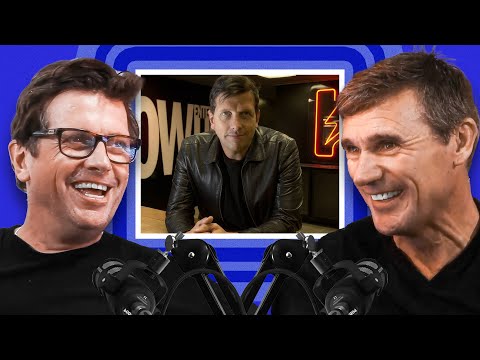
He Never Does Podcasts! The Full Mark Sainsbury Story
Ask about Dom Harvey
Episode Description
Mark Sainsbury has been part of the NZ media landscape for as long as you can remember. For 5 years he was the host of a nightly 7pm show on TV1 called Close up. This was at a time when prime time free to air TV still commanded a huge audience.
And this is “Sainso’s” first ever long form podcast! It’s a very wide-ranging conversation:
* We talk about his iconic moustache, of course. * His best stories about working with Sir Paul Holmes. * Memories of the 1981 Springbok tour * Why him and Paul Henry have a strained relationship. * Getting publicly dumped from prime-time TV. * Why Paul Henry publicly criticized him. * His friendship with Sir Edmund Hillary. * Men’s health. Ageing. And the weirdness of having one of the country’s most familiar faces.
Mark is funny, self-deprecating, brutally honest, and full of stories that could only come from someone who has lived such a full life.
***
Massive thanks to my long-term podcast sponsor, Generate.
We’ve all got that one mate who’s convinced they’ve worked out how to beat the market, usually with a lot of confidence and no actual expertise. So, here's your reminder not to get caught up in the noise and trust the real investment experts at Generate.
I sat down with a Generate KiwiSaver adviser when they came on as sponsor in 2023, and it was one of those conversations that made me think, why didn’t I do this earlier?
A Generate adviser can help you figure out what fund type is best suited to your KiwiSaver goals.
Start planning now—Book a no cost chat with an adviser at generatekiwisaver.co.nz/dom
The issuer of the scheme is Generate Investment Management Limited. To see their PDS and Financial Advice Provider info see generatekiwisaver.co.nz/disclosures.
Past performance does not guarantee future returns. And remember, I’m not a financial adviser, so this is just general information. I recommend getting expert advice before making any financial decisions.
Listen via Apple Music: https://rebrand.ly/RunnersOnly_Apple Listen via Spotify: https://rebrand.ly/RunnersOnly_Spotify
Who should be on the podcast next? Message Dom Instagram: @domharveynz Email: [email protected]
If you enjoyed the podcast and would like for your business to sponsor an episode, please email [email protected]
Read the full transcriptHide the full transcript
- Journalists usually the worst people. >> What did the TV and Z newsroom look like
- 45 years ago? 46 years ago. Smoking type. >> Oh, yeah. Yeah. Yeah. Yeah. Smoking.
- There was Ashtrays. Smoking was compulsory. >> When When you look back at that young
- version of yourself, what do you admire about him? And what makes you cringe? >> Oh, jeepers. Jeepers. There are all
- sorts of things that make you cringe. We also stole a bus one night. It always amazed me how better you live when
- you're poor than when you're actually earning money. >> You're like um an ambassador and a
- spokesperson for Men's Health. >> Yeah. I'm the director of it now. Men die from preventable diseases, you know,
- so we've got to do something to stop that. >> What are your thoughts on the current
- state of um New Zealand media? >> Oh, well, it's just Oh, good. You're here. Come on. This is
- the center of performance. Whenever there's a top performance in New Zealand, it all comes from here. That's
- Lisa Carrington. She's been doing that for days. That's the boys who got the Holland one in To.
- >> He did it again. Hey Finn, how's the performance going? >> Top tier. >> Nice. This is our generate room. In here
- you'll find our top performers helping Kiwis maximize their Kiwi Saver investments. Get in here Finn.
- >> Maximize. Generate. >> Putting performance first. >> Mark Sainsbury Sainzo. Welcome to my
- podcast. >> Thanks, Dom. >> This is really, really exciting for me. >> Well, I thought it would be.
- Well, we just went to the the coffee store next door and uh you shouted me a coffee and I don't know if you're um
- aware of this, but um even though you you haven't been on TV on a nightly basis for a long time, people still like
- look at you like like you've got a face that they know from somewhere. >> Yeah. Yeah. And of course it still got
- it be interesting if I shaved the mo off whether you would still get that. But yeah, um it tends to be a sort of
- generational when the worst thing is on you'll be out somewhere and you know you
- got a m going, "Oh, you must remember Mark. he was on TV and they're going, "Oh, you know, trying to be sort of, you
- know, I got no idea who that guy is, you know." Um, but yeah, so we it was I worked for TV and Zed for a long time
- and it was great fun. >> It really was good fun. >> You see, you spent decades getting the
- truth out of other people. How how comfortable are you when someone like me tries to get the truth out of you?
- >> It's always funny. I mean, it's always when the boots on their other foot, it
- never is. Um, journalists usually are the worst people. Some love it. Some will talk about themselves sort of
- endlessly. Um, yeah, it's you get used to asking other people questions and not so much taking them yourself
- >> cuz from what I can gather, this is your first ever long form podcast interview.
- There there's a few bits and pieces online like things you've done with Duncan Garner, things you've done with
- Matt and Jerry on Holdi, but but nothing. Well, I always and when I was in the job, when I got the the the
- close-up gig, um, and I'd worked up with Paul Holmes when Paul was there. Yeah, but everything centered around Paul, you
- know, the reporters were sort of like secondass citizens and the thing. And I always thought if I was ever there, I
- want to be more, you know, not, you know, have to grab all the limelight yourself. You want to try and share the
- love. Um, I also avoided doing any interviews or publicity stuff and everything like that, which everyone
- people used to get paid for doing it back in those days, some of them. But I was always of the view that if you
- didn't push yourself and your family out there, if your kids got into some kind of [ __ ] you could say, "Look, hey, I've
- never used them. They've never been part of the deal. So, you know, piss off. Don't don't try and you know, but but if
- you're out there hawking yourself and your family story and look, Mark at home with the kids and Mark home and all this
- sort of stuff, then you bring it on." So that's that's why so I always tried to sort of take a bit of a step back and it
- was a bit I suppose of the oldfashioned thing. you weren't the story. Even though that slot, that 7:00 slot became
- personality focused. Um, it was really was more about other people, you know. Did that sound sincere?
- >> It No, it it's makes perfect sense as well cuz it seems like a double-edged sword. You can't you can't have it you
- can't control the you can't control the narrative when it suits you. You can't do like a a fluff piece for Women's Day
- and then if your kid gets done for drunk driving, say, "Actually, I don't want this in the news."
- >> Yeah. The next thing you get is the old line you used to be. Now, we're going to
- be doing the story with or without you. >> Yeah. >> So, you were 69 now, 17 later this year.
- >> Yeah. Yeah. >> How are you? How's the health? >> Oh, health is actually pretty good. Um,
- I've lost weight over the last few years. >> You're looking lean. >> Yeah. But I keep running into and I've
- been lean for a while, but I keep running into people who haven't seen me in ages. You're right. Um, you know, and
- you could see that you could say you know exactly what they're thinking. And I always go, well, I've got to give a
- little page if we could. If you could start filling that up, it'd be really appreciated.
- >> You What did you do? Cuz um yeah, there was a couple of pieces online I read and
- you've lost like 15 or 20 kilos a couple years ago. >> Yeah. Yeah. But at over probably 18
- months or so, you know, it wasn't sort of it wasn't sort of went on some big dramatic thing or whatever. I was on um
- you know at that stage I think I was pre-diabetic or type 2 diabetic. I had I was on um blood pressure meds and I
- thought I got to do something. So cut back on the piss basically. So I I love a drink but you know it maybe two nights
- a week max you know um but it's not regimented but just conscious of of that and smaller meals was we used to eat
- just and I love food and all that stuff so that was that was the genesis of it and just gradually over time and um yeah
- but it's yeah I still get you know it's funny isn't it? Oh, we preferred you when you were fatter.
- >> Cuz you're like um an ambassador and a spokesperson for Men's Health. >> Yeah, I'm the director of it. Now,
- there's a mate of mine called Timmy Green and he was working for these Aussies who were running it about Deb
- Bale New Zealand and and he said, "Look, we got to keep this thing going." So, he
- and I run it and it's just an awareness campaign. We don't rattle a tin. It's not about money. So, I mean, we keep the
- thing afloat. I mean, the master builders have have sponsored it since the beginning because construction and
- industry, major health issues, suicide, all sorts of things. So, they're really serious about it. So, we keep it going.
- We call on mates, you know, like Jeremy Wells. I mean, you know, you're going to
- be up next, Dom. You know, we'll twist their arm and that's what we use to sort of just get publicity over that one
- week. And the whole idea is look, men die from preventable diseases, you know, so we've got to do something to stop
- that. So things like heart disease, suicide, suicide is one of the biggest, you know, preventable killers of men.
- Um, so it's that sort of stuff. So it's purely an awareness campaign. And if we can persuade just a few guys just to
- make little changes. We don't lecture, but small changes. And on our website, men'shealthweek.co.nz,
- we've got this thing called watch your score. And you can go on and do watch your score and check and and it's just
- all sorts of prompts. That's our centerpiece. So yeah, we're just um we're just trying to encourage guys.
- That's what it's about because the health stats from men are pretty bad. You know, men live four years less than
- women do. Maybe they want to. Who knows? But but and the other thing is if you're
- Mari, you've got a one and a Mari male has a one in two chance of qualifying for the pension
- >> because they die under 65. 48% die under 65. >> Genetics or lifestyle factors or both?
- >> There was lifestyle factors. There's all sorts of things. I mean, and environmental factors. There's just the
- fact that it's access to a doctor. See, a lot of the stuff people I was talking to someone who you've had on on your
- show, Scott Beard, >> he got cancer three times. So, what saved him? He went to a doctor.
- >> He went to a doctor instead of taking the concrete pill. And a lot of guys, I
- don't need to go along. Oh, yeah. Whatever. This, you know, no good comes from going to the doctor. Um, so that's
- a that's a big big factor. Or accessibility. Not everyone like you and I can afford to go to a doctor or has
- access to one. Yeah. So instead of getting down I can hear what people say. Oh well they're all at the KFC you know
- they deserve it. No we got to look there's a problem figure out how we can solve it rather than looking at who's to
- blame. >> So that's us. >> And um so you've had a hip replacement. >> Yeah. When was that?
- >> Well see this is an interesting thing. The hip replacement that was a couple of
- years ago and um I tell you I don't wish that on anyone. It would just but should
- we be walk along you'd stumble. I was at a mate's birthday party. Um, he had a 64th. He's a big Beatles fan, you know,
- and so he had a 64th birthday party. >> Oh, will you still need me? Will you still And guy called Keith Ke Keith
- Tanic and Katherine Bon. I was down south and I remember coming walk along to their deck hip went tripped on the
- deck and could see everyone go sainsbury pissed again, you know, and all that. You'd be walking down the road and you
- it was and the pain. So >> this was pre or post operation pre. So you go along to these things. Now,
- here's an interesting tale. You go along to this clinic, you see, which is the, you know, orthopedic clinic at the
- hospital. And I thought, now before I go, I'm going to pay to go and see a specialist, so I know what's going on. I
- go and see this guy called Peter Deain. He says, "Yep, well, you got this. You'll go to this clinic and you have no
- chance of getting it done." Oh, thanks, Peter. He says, "Look, I'm not trying to
- be mean, but there'll be a hundred people presenting worse than you. You need to come and see someone like me and
- go private." I said, "Well, I've got no insurance. I'm not going private. I'm going to have a crack at this." So I go
- along to the clinic. Who's running it? Peter Deain. And he says, "I told you it's not looking good." Anyway, so I go
- through, get this letter saying, "You recently went to the uh orthopedic clinic for a hip replacement. Your
- surgeons recommended you for surgery. You know, you would benefit from the surgery, but we run a priority system,
- and unfortunately, you don't make the cut." Okay, fair enough. All right. Then came the boat that just pissed me off.
- We suggest recommend you go back to your GP and look at alternative providers including private.
- What the [ __ ] >> you're telling me? You the state are telling me I should go and pay for it
- myself. That's what you're saying. Now I I I can understand it the priority thing
- and all that sort of stuff. But when they started saying go and pay for it yourself. I thought I was so pissed off.
- I thought about going public then. Oh, it looks like you're just trying to leverage your way up the queue, you
- know. So I was sitting on a plane going up to Aland and I look across the aisle.
- Oh, who's that? The leader of the Labour Party is is Andrew. They also was the health minister at the time. How you
- going? Says Andrew. I said, "Oh, yeah, not bad." I said, "Um, I need a hip replacement, but apart from that, oh
- well, of course we put in lots of elective, you know, post and da da da." I said, look, yeah, I've got no problem
- with that. and look I but you know what really pissed me off was getting a letter from the DHB who they were
- dismantling at the time uh to say that they're um uh go and pay for it yourself what I'd like to see that letter I said
- look the reason I never didn't send it to begin with is I don't want this used as some kind of leverage you know no I
- want to see it so I forward them the letter next I get a call another clinic appointment there was a vacancy you know
- for the next because basically what they do is those who don't make the cut, they
- wipe the list. So there's no waiting list. See, so have you've made the cut, wipe the list, your doctor has to refer
- you again. So um I get this u then get this letter from the um from the uh DHB um sort of saying, "Oh, we have this
- policy of da da and this is why we do it, etc., etc." Which which I knew that, you know, and um I'd written to them
- saying, you know, is this now part of the the furniture? do are we now expected you know that's privatization
- etc etc etc anyway they came back with all those things the priority system is fair I said get all that get all that
- I'm just asking you what is a DHB doing writing to a person punter asking them to pay is that is that appropriate and
- then meanwhile it's gone to that copy to minister you know and um then I get a call saying oh no there's a gap at the
- next one you know which my doctor was going to try and get me onto I go along there everything had changed everything
- had changed there there was a different surgeon there Oh, oh, you look terrible.
- You know, don't really I don't think I'm that much different from last time. Oh,
- no, no, this is terrible and whatever. Go home. Next thing I get this letter, you have been selected
- a priority treatment. Eh, >> and I thought, you know, this really pisses me off because some other old
- codger is there waiting to get a hip thing. He's going to get jumped over by me only because I've got some possible
- clout and they don't want to pick a fight. And these people don't. They don't have that leverage. And I thought,
- [ __ ] what do I do here? And then I thought, God, I desperately want to get this thing done. I'm just I went and got
- it done. And even better, it was done in a private hospital. >> But it's um Yeah, it's shocking though
- that it's the case of the squeaky wheel getting >> It's exactly that. But I tell you, after
- I had it done, I realized how much pain I had been in because we do minimize. I just couldn't believe how great this
- thing was, >> you know. >> And you just learn to live with the discomfort, I guess.
- >> Yeah. >> And how's your mental health been? How's everything been on the inside? me help
- pretty good. Pretty good. This year I tell you I had a I had a bit of a this year I was thinking
- >> you know because one of the things we always say if you're not if you're worried about yourself or whatever go
- and see someone >> and this year I tell you because Wellington's just been so hard and sort
- of work drying up and just all one thing after another blew up the engine on here. Here's here's a third first world
- problem for you. Blew up the engine on my Aston Martin. >> Oh I I heard about this somewhere in
- Patardoo of all places. No, Bari. The head blew the head gasket. Well, no. We thought we' blown the head gasket. That
- one's a false alarm. Then it blew. It was just Anyway, >> by the way, an old Aston Martin.
- >> Look, it's a DB7, the cheapest Aston Martin you could buy. You know, >> cuz you're a car guy. Ess what other
- cars have you got? >> Well, I had a a Bentley Cornesh convertible, which old man Fletcher had
- brand new. It was the very first one made. It's what there was only I think of this particular type 21 I think ever
- in the world. I love that car. Max um you know Frank Sonatra had one, Liam Gallagha had one, you know, everyone had
- one and um but I sold that to some South African guy who was taken over there. >> Um and but my the car I've got that I
- never sell because I've still got the book at home 1963 observer book of cars cuz I came from a family of six boys and
- we all had out this book our favorite car and mine was the 1963 Lincoln Continental four-door convertible. It
- was the same car Kennedy was assassinated in which was a stretched version. Suicide doors at the back.
- >> Um but at that time it was the only four-door convertible. And I wanted one of Ever since I was a kid and um just
- before I took over on started done closeup. I found one in um in Montana and Whitefish Montana from a guy called
- Larry Funk and it was his father-in-law's car. It done 56,000 miles. It was the perfect year. It was
- the last year with the curved side windows, you know, all this sort of thing. It ticked every box. I bought it
- practically sight unseen >> and I would never sell it because I' just it's a car. I still got the the
- book, still got the car. >> Incredible. >> I should have kept the Bentley as an investment probably was a Bentley would
- have been a better thing to keep. But no, this thing this was the my car since I was 7 years old. you know,
- >> we have you got a big garage at home or >> I I Well, we built a we built a double
- garage at the back of our house after I'd got my redundancy and um we um I should have made it bigger. I mean, it
- was it's funny, you know, you just I just underestimated it. But now I've got some storage out in Upperhat. I sort of
- keep it in during the winter, but I just like to use it all the time. Even though
- it's a 7 liter V8 that does about 12 miles to the gallon, you know, you've just got to, you know, people say, "What
- is what's the mileage?" to go. Well, I've never actually checked really to be honest because what's the point, you
- know, it's not going to be good. >> So, you either want to drive it or you don't, you know.
- >> Yeah. And you've got it for the right reasons. >> Yeah. >> It's it's I've got friends that are
- collectors of different things and they'll they'll never take say the sneakers out of the box and it's like
- the point. >> I get it. Well, see, it's like toys, you know, because um I love the things I
- also collect Phantom comics and I've been collecting that since I was a kid. I love the Phantom. Like the idea of the
- Phantom is always good, but toys, you look at toy, anything, it's got to be in the box, you know? You think, "Oh,
- what's the point?" The first thing you want to do when you get something is rip that open and sort of have a play with
- it, you know. >> Yeah. Hey, when did the mustache become part of your identity? >> It's funny. I Well, I grew a mustache,
- you know, I'm talking about in the ' 70s, and I shaved it off once, and my girlfriend at the time, well, she's now
- my wife, said, "Grow it back." So, I've had this unreved since about 1978, probably.
- >> Incredible. So, the mustache is almost 50 years old. >> Yeah. Yeah. Yeah. >> The same same style, same
- >> Yeah. Yeah. It sort of got it gradually got bigger and um but it was always the
- same style. I think it was called the General, I think, original, whatever. But, um you know, and and and they went
- in and it's funny because this this has survived the facicissitudes of fashion as they came in and out. You know, you
- look like a 70s porn star one minute, you know, then all that stuff, you know, but stuff it, you know, it was sort of I
- always remember those words, grow it back. >> So, you'll never get rid of it. You
- you'll die with it on >> probably. Who knows? Who knows? I mean, the other thing is it' be a great way to
- disappear, wouldn't it? You know, after you've done the bank robbery, you just shave star shop, get a toupe, and no
- one's ever going to find you ever again. But you must have had a lot of pressure
- over the years like from Movember campaigners and things to >> that used to drive you know every I
- dreaded Movember every every year phone WOULD RING HEY MARK IT'S SO AND SO HERE FROM some PR company you know or some
- radio station WE'VE GOT THIS GREAT IDEA YOU KNOW for Movember I thought let me guess you know and so I'd always say
- look I'm sorry I'm contractually obliged not to shave it off because it's going to cause every problem for the for the
- all the publicity photos and everything like that which did happen once with Richard Long. He went off for the
- holidays, had done all the publicity photos for the for the next year and he shaved this mustache off. They had to
- fly everyone back to do it again. >> Yeah. So, you mentioned your wife before being a fan of your mustache. So, that's
- Ramona. Yeah. >> Um she still works as a lawyer. >> Yeah. Yeah. Yeah. So, she's got a
- practice out in Kernie. Ramona Rash at Law. Um she does a lot of elder care. She's really good with that's huge
- growth. sort of, you know, enduring powers of attorneys and estates and that sort of stuff. But she's really good
- with people. That's her thing. That's a feedback. I mean, I get this from, you know, clients who say, "Oh, we love your
- wife. You know, she's so fantastic." >> But it's tough, you know, and just doing
- running a business even in in Wellington is tough, you know, for everyone. >> But that's a successful partnership.
- Hey, how long have you guys been married? >> Um, we got married in 1984. >> 84. Oh, my math is terrible. That's like
- 40 43 years. >> Yeah. Yeah. 42. Yeah. Yeah. Yeah. >> Yeah. It's incredible. >> I mean, it's had its ups and downs. I
- mean, I went to the UK for three years. >> Yeah. >> As a Europe correspondent. Well, she had
- she had a law practice. So, >> yeah. When your kids were quite young, too, like like primary school age.
- >> Yeah. As they remind me. >> Yeah. When you abandoned us, dad, >> we'll get to that later. Yeah. That's
- Arabella and Hunter who are late 30s now. >> Yeah. >> Yeah. >> So, you and your wife, no plans to
- retire, slow down. >> Well, can't afford to yet. >> Yeah. Oh, really? Oh, look, you know,
- it's sort of I like to keep keep working. I enjoy working. I like doing things, you know. Um, and you know,
- Ramona kept wanting me to do a podcast. I said, "What? That just look, you know,
- like those buddy wannabes like Dom, you know, that just no no high end." Um, but I mean that's
- everything's changed, hasn't it? That whole media landscape has changed. You know, we used to rely before, oh god, if
- we have not with a network or something like that. Nowadays, you know, if you got the right mix and you got the right
- juice, you'll do what you've done. You can make a huge success out of it. >> There's no no gatekeepers anymore. And
- and the um yeah, the barrier to entry was always like the transmitters or the frequencies, whatever. Now,
- >> but go to rock shop, buy 1,500 or JB High, buy 1,500 bucks worth of gear and you can get started.
- >> I mean, I bought one of those um road podcasters just for, you know, doing some stuff for the men's health week.
- But >> great piece of kit. >> Yeah. So, but but I had to get a young person in to sort
- of tune it up. Then realized I could look online. I did manage to master it, but some of that stuff, you know, you
- feel just like, oh my god. >> Are you How are you with um like tech? >> Oh, yeah. Some stuff some some I'm not
- bad with some stuff that tell you what drives me insane at the moment is they change all the settings on mail, you
- know. So, hang on. I've sent you an email. I can't find it. It's on primary, not on all mail. and it's just adjusted
- this stuff and or they stack all the emails under each other and going where's this thing?
- >> Oh my god, I'm the same. I'm I'm staring at my future self. >> It's terrible. I feel like I'm getting
- left behind. >> Great to see you. But the thing is AI is going to save us all, you know, so it'll
- do it all for us, you know, >> before the machines march in, you know. >> That's this is a great opening. This is
- going to be a great chat. I'm super excited about this. There's a lot to unpack. Um, first of all, earliest
- memories. Who who still calls you Greg? Does anyone call me >> No, no, no. And and and I was never see
- my oldest brother bead was Christopher bead. Then John was Robert John. Paul actually was Paul Thomas and I'm Gregory
- Mark, but always meant to be called Mark. I don't know what my parents were thinking, but you know, they had this
- they had this sort of weird idea about it. Um >> it's always been Mark then. >> So it's always been Mark.
- >> And where were you in the birth order? >> Fourth. >> Fourth. Um how did you know whose
- toothbrush was who? >> Yeah, I know. Well, we didn't like to brush our teeth, you know. You just
- ignore that. I mean, that we grew up, you're probably too young for this, but the the the school dental nurse, you
- know. Oh, >> the murder house. >> The murder house. There's still I always remember the nuns went this Catholic
- primary school and they write up a you knew this what this this is the people are going to have to go to the dentist
- that afternoon and you'd be sitting there, please, please, please don't make it me. Don't make it me. Don't make it
- me. And you go down to the murder house and it's just when you think about it and you look at all these things where
- they have, you know, survivors of different, you know, cruel treatments by the government can sue. Since when
- they're bringing in kids and drilling into their nerves without anesthetic was considered a good idea, you know, it was
- so painful. >> It was just so painful and you just dreaded going and um yeah, it was
- >> I think I think I got the uh so you you're born in 56. I was born in 73. I think I got the tail end of it, but the
- uh the gentle nurse would come into a classroom and you'd sit there dreading that it was your name.
- >> Not me. Not me. I know. I know. >> That's wild. >> The only the only good thing I remember
- was, you know, was you get these quite bucksome ones would sort of press up press up on your neck, you know, as
- they're sort of doing this thing. So, there's this strange mix of youthful not quite what's going on here thoughts and
- pain, you know. So, it's a surprise we didn't all become sort of say massochists.
- So, how many brothers did you share a bedroom with? >> Uh, no, usually just two of us to a
- room, >> right? >> Um, >> so a four bedroomedroom house. >> No, we had a three Oh, well, hang on.
- Yes, yes, yes, we did. But it started off um they moved into the house in Heratonga when I was born and then they
- had two more kids and so they had to add an extension on out the back. Really funny. It's Bair Street Heratonga and I
- went past there the other day. I was going out to um for all things a class reunion. That's a bit freaky. People you
- haven't seen in over 50 years. Um went out to this thing and I went out to the old house and the house had been
- straightened up, pushed down to the back of the section and six town houses built
- on the front lawn. >> Wow. >> And it's sort of quite, >> you know, it was that was my whole life.
- It's the only house I lived in, you know. >> So, >> how many bathrooms in the house? Was
- there >> one? No shower, only a bath. >> Wow. >> Bags bags first or second go at the
- bath. >> What was um Yeah. Shared bath water. Was did it go oldest to youngest or youngest
- oldest? Yeah. Oldest. >> Not that it mattered for you. You're in the middle. >> Yeah. Yeah. But it's Yeah. Yeah. It's It
- was, you know, it was um Lord of the Flies, you know, when it comes to the bar. >> Yeah.
- >> I was thinking about that the other day cuz it was I'm I'm one of four and I think it was um I can't remember if it
- was oldest to youngest, youngest oldest, but um was it a money saving? Was water
- expensive or was it a a convenience thing? >> Well, no. Well, there was a limit to
- because you had the old hot water heater, you know, and eventually it's going to run out, you know. So, probably
- pour one bath, maybe two baths. you've done the you've done the cylinder, you know, and there's nothing whereas you
- turn on the tap hoping it. No, it's cold. The hot water's coming out cold. You can't heat it up. Or mom would boil
- a jug and bring in, you know, a jug of hot water into the bath, you know. And I remember going around to one of my best
- mates, Mike, heating around to his house >> and they HAD A SHOWER. WOW. YOU KNOW,
- THIS THING HAD THE OLD TOPLESS, YOU KNOW, WITH the big dial on it. >> Oh, this was sophisticated.
- >> But, you know, that was it. >> What was the most trouble you got him? Were you a bad kid or a good kid?
- >> Neutral. >> Yeah, look, we didn't get into we didn't get into much. I mean, the whole idea
- was just don't get caught, you know. >> Um, and uh same as sort of at school. Um, you know, the worst I think just
- trying to think of the worst trouble we got in school at St. Pats, you know, with the old mad caning Mars priests.
- Um, and the weird thing was my uncle was provincial of the order at one stage, you know.
- >> Wow. >> But there are very strange, very strange mob. I remember having a conversation
- with them once. I think it was my parents 50th wedding anniversary we had at my place and there was a couple of
- old priests there and >> oh it's terrible this business that's going on with the church. This is where
- you know they're exposing all the pedophile priest. Back in our day it was just dealt with you know. Yeah that's
- the problem. That's the problem. You know you tell send the priest one school who had been interfering who's packed up
- and sent off to Pakistan. Oh yeah good one. >> Problem solved. >> Problem solved.
- >> So um after school you you went to university. You studied law and dropped. When did you drop out?
- >> Uh must have been my third year. Um >> Oh, really? Third year? >> Yeah. At the start and I'd got into
- student politics, you know, stood for the the exec and all that sort of stuff. Um but then and then left and went
- driving buses cuz I thought get a bit of >> Yeah. Why did you quit? Why'd you quit
- uni? >> Uh >> were you bored? You just decided it wasn't your thing? >> Yeah. No, I quite liked it. I can't
- think what it was just like yeah I want to do something or I was broke or just decided to go and do something else come
- back to it. So I went >> that would have been a bit So you would have gone to the states in Mexico to um
- drive buses and be a bar manager in the like early '7s. >> Yeah. Yeah. Went no went to went to um
- went to the went to states in 78. >> Right. Oh late '7s. >> Yeah. So I'd been driving buses and and
- I was the bar manager at Barrett's Hotel for a while. That was an interesting That was an interesting time because
- that was a big student pub and and uh and f you're the manager say oh trouble down in the public bar. Oh my god. But
- we had the bounces you and the best time of all I had a guy called Jeff Rackley who was a New Zealand boxing champion
- and they'd say trouble in the bar upstairs. So you go walking up he's behind you and you were fearless because
- you knew whatever happens you just take one step to the left, one step back and in comes Jeff, you know. So because you
- are fearless, people pick up on it. So you'd come in and say, "Right, you guys out of here. You've had enough." And
- they'd know, "Oh, he's he's not scared. He's not worried. He's there's nothing."
- It's amazing. They go never ever Jeff never ever had to actually do anything. There mere presence there. And it
- affected how you present and it's all about your body language and everything like that. That was half the thing.
- >> So that was sort of that was sort of quite fun days. And then sort of um yeah, headed off headed off on the bit
- of travel. What >> what did that role teach you about human behavior? It told us I mean one of the things is
- never judge you yeah never judge people for a start I mean you always some of the people you come and you think are
- going to be the worst or is going to be trouble quite often it's not >> and sometimes the people you least
- suspect the quiet ones can be the ones who are causing issues you know and you know and just trying to be reasonable
- most people if you're reasonable with them you get a result you know others you take a step to the left and one step
- back you know >> yeah I had Sir Steve Hansen on the last year and we talked about his his time as
- a police officer and and he said that the the big lesson he got is to go into a confrontation at a two out of 10 cuz
- you can escalate up but you can't escalate down. >> So yeah, it's interesting. Um the bus driving stunt um was it like
- Kentucky were you were you >> No, but but but no, this is at the Wellington with the big reds and um I
- got sacked in the end because I missed a Sunday shift or something like that but
- whatever. I'd also crashed one of their buses. We also stole a bus one night um after I left there. We went to a
- >> because you knew where the key was. >> Well, there were no keys. This is the thing. There's a handle on the side and
- we went to this Miss Wellington. This is terrible. Miss Wellington contest. This
- was years before hooked up and a friend of mine was um was in the Miss Wellington contest and she said, "Oh,
- would I escort one of the contestants there?" Anyway, that um that became quite interesting. Anyway, we get there
- on the night and um myself and a mate, we just did a runner. I mean, because they all all got so petty and all this
- sort of stuff and for whatever reason, we we shot through and we're walking back going back to Kelvin and we go and
- he said, "You know how to get these buses going?" "Yeah, yeah, yeah, yeah." So, we went and get this thing, get into
- it. We I had a white dinner jacket with a pink carnation, the whole thing. And we start driving back in this bus and
- it's like 1:00 in the morning, you know, driving through town and we get to and I'm thinking, [ __ ] we're going to get
- like, you know, we're going to get caught here, you know, got up the terrace and the paranoia is just getting
- too much at that stage. So you and you got to stall them to stop them. So put it in gear, put on the handbrake,
- buses going like this. We leap out, run up the cable car track and sort of back to and I remember lying in bed thinking,
- "Oh my god, when it runs out of diesel, the compression and the brake cylinder is going to go and this thing is going
- to start, you know, careering down the terrace, wiping out some family on their way to church, you know,
- >> and I just thought, you know, how you get and never heard a thing about it and
- I'd maybe drove taxis and he said he oh yeah, they were talking about it on the radio course cuz they didn't want any
- publicity because they want people to know how easy it was, you know, but >> God, we were close." When you when you
- look back at that young version of yourself, what do you admire about him and what makes you cringe?
- >> Oh, jeepers. Jeepers. There are all sorts of things that make you cringe. It's I guess the things that make you
- cringe the most is is things where you might have been cruel or unkind to someone. You think back and oh, I didn't
- need to do or say that. You know, I was too smart or you hurt someone's feelings.
- >> We went to this here's the thing. We went to the school reunion, the class of
- 1970 from St. Pat Silver Street and there's about 70 odd of us and some of them you hadn't seen over 50 years. Had
- no idea. The the guys who organized it had this genius idea. You wore a um a lanyard with your third form picture on
- it and your name underneath, you know. Anyway, and all these emails were going backwards and forwards. And there was
- one from a guy I knew who I used to hang out with when we were primary school and
- then the first couple years at Silverstream called Robert Leming. He'd been um he had been um his father's a
- doctor. I moved to the States anyway and he said, "Oh, sorry. I can't be there."
- And hooked in or something or other. And then lobs in with and Mark Sainsbury, I'll never forgive you for telling me
- that my teeth were going to rot one day and I was been paranoid about them ever since. And so, oh my god. Talk about not
- dealing with issues. And so I I put in a reply saying, "Well, you got me to thank
- for you. You're having great teeth now then, haven't you know, and uh but it's funny how things you can just hang on to
- things or whether it was Yeah, but it was just obviously it was still in his memory.
- >> Yeah. >> And how those things can sort of hang there, you know, >> they can define someone's life in a way.
- >> Yeah. I always remember sitting there next to a guy called Ross Patterson who
- had he's a lovely guy, Ross, but he had had very fine white hair and was always immaculate. And this priest wanted up
- and stood next to him reading something from a book and started playing with his
- hair and going all that's that's normal. You know, yeah, sure thing. You know, he
- was the same priest who was supposed to take us for sex education. And he came and he wrote on the blackboard, penis,
- vagina. Now, a man has a and a woman has a See, he would never actually say the words and we're all going, "Where's this
- going?" you know, >> dear. And his name was Bar Head. >> Oh my god. Wow. >> So, um, after the, um, the the, um, bus
- driving stunt and the the bar stuff, you return to New Zealand and you go back to
- studying journalism. >> Well, yeah, I was going to go back to uni. So, that was the idea. Go back go
- back, finish off the degree. And I didn't want to be a poor student. It always amazed me how better you lived
- when you were poor than when you're actually earning money. You know, when you were student, we used to go skiing.
- We used to out to the pubs. We'd be doing things. I mean, mind you, you'd be working part-time and stuff, but that
- balance seemed to be much better. Then you sort of once you start taking on responsibilities and things, you don't
- seem to have that same latitude. So, I was thinking, I want to do something. I had this vague idea. I could go and work
- for NZPA at night and sort of fund my, you know, universities. >> What's NZPA? >> New Zealand Press Association. And they
- were like, they were like AP or whatever. They were the the Journal of Record. They would cover everything and
- they were a subscription service. All the papers got it from them. So they didn't get to a select committee, NZPA
- would have been there. You know, if they didn't get to this, NZPA would have done
- it, you know. So it was that sort of thing like Reuters or same sort of thing. Um so anyway, that that was the
- idea. So I went and applied myself and this mate Mike Keing, we went he came with us, we both applied
- >> and but it was like there was about 400 people applying for this course. I'd have been more.
- >> I got in, he didn't. Um and then before the end of the course I applied for this
- job out of Avalon as a um as a researcher and I turn up out there and there's one of those sort of panel you
- know things four people sitting there you know and anyway they go through it blah blah blah blah and I thought oh I
- haven't got much of a chance here then they say okay if you were working here what's a story you'd pitch up for us
- today and we've just done this thing as part of the course we ran the local paper and we've just done this sort of
- big feature and don't forget this is 1980 and unemployment is huge. And people were seriously talking about there will
- never be full employment again. We'll be down to, you know, Britain was doing the
- 3-day week and it's going to be we've got to get used to the fact there won't be full-time employment. So, our pitch
- on this this thing we did was do we need to start training ourselves for leisure?
- You know, we're going to have to start train not just for work, but for how we're dealing with our leisure time. So,
- I said that this be my idea and they all start looking each other. that I thought, "Oh, that's a be a dud."
- >> And they said, "We've just commissioned that exact story this morning." >> Wow.
- >> Yeah. And I would never nailed it. >> Yeah. I would never have got that job if
- id applied for it the next year or the year after. There were PhD people and whatever, but it was once you were in
- >> that was it. And TV and Zed was a fantastic place because you could jump from department to department and do
- different things and you learned of all these amazing people. I had a brilliant time there. You know
- >> what did the TV and Z newsroom look like 45 years ago, 46 years ago. Smoking type.
- >> Oh yeah. Yeah. Yeah. Yeah. Yeah. Smoking. In fact, we had the old film cans. And when I first started there in
- the news, we were still using single double a single system film. So 16 mil film which had a mag stripe on the side.
- So that recorded the sound and the film went onto the Wow. But you imagine as it
- goes through a projector, there's a gap between the image that's being captured by the lens and the sound that's being
- captured by the sound thing. The sound thing's down here. So when they're aligned, you'll get it in sync. But this
- much has to go through the gate before your first picture. So that's why you get you get a lot of people doing what
- they call gold fishing. Anyway, it it was it was it was pretty crude. It was pretty crude, but it was fantastic. But
- there was ashtrays. Smoking was compulsory. Um there's a guy Bill Knight there who hated smoking. He got told
- where he could go. Um in fact I did a story on the last day of smoking in um in the office.
- >> When when was that? Can you remember the year? >> Oh would it have been 199? No, hang on. I was I was working on
- homes. >> So was it when I came back from Yeah, it must been I think it was late 90s,
- >> right? Wow, that's crazy. >> Early 2000s. Yeah, it was when Helen Clark was health minister.
- >> So, it must have been after 1999. >> Um, but yeah, it was um and those days we could just have fun, you know, we
- could just do what we liked. So, we went out and you know, we we we went to some
- restaurant and and we made out that I was the I was from um the business round table trying to sort of um you know, you
- know, now vouchers for children. Let's adopt out the babies from those solo moms and sell them to rich people and
- all this sort of stuff. And we're ordering all this food at this restaurant. Now, who's having the
- salmon? You know, and we it was just it was just craziness. And we did this thing and the
- next day and we just took the piss out of him. And we had myself, my cousin Bernie Atkins, who's gone I'm afraid,
- but we were doing this thing where we're throwing out bread, you know, and then they did the cutaway, the reverse, and
- there were these pensioners grabbing us, throwing it, you know. This was just the
- next day I was having a coffee outside Bowen Street and the Salvation Army guy walks past and goes, "Thank you so much
- for what you did last night >> because it was all that sort of every was just so obsessed with the
- >> you know it was all sort of the the free market and everything." >> Oh, when Oh, was this pre87?
- >> Yeah. >> Yeah. Yeah. Yeah. The crash of 87. When when did you stop smoking? Were you a
- BIG SMOKER? >> YEAH. NOT A big smoker, but a committed smoker. I mean I never used to smoke
- before midday but you know >> you have your boundaries >> but yeah you had my boundaries but you
- know but I was never when I free reach out for one first thing in the morning but get on the piss. I mean that was
- something I remember we'd be we'll be at um >> um Brassie flip and we sending the
- waiter or the waitress off down the road to get more [ __ ] you know. Yeah. That's after half them had a joint
- down in the car park before it even started, you know. >> Was it was it was it hard quitting? I've
- never smoked myself, but uh >> um well, the terrible thing was it wasn't. I mean, you could sort of you
- always tell yourself you can do it. Um but it's um and then vaping you replace it with a you know I still vape a bit
- now >> and that's almost worse because it's too easy and you can do it anywhere and you
- didn't have the you know before you had to go outside and there was punctuation you know especially when Bill Rolston
- was was here but everyone was around at the smoking area but you know you go out
- you'd have a [ __ ] you'd put it out and you go inside nowadays people go out sit
- there and they can just sit there and sit there and sit there and sit there and sit there and it you know that sort
- of Um, but it's it is one of the best things you can do. I mean, it still amazes me that people who, you know, are
- really intelligent and smart still don't, you know, why do you smoke? You know, it's bad for you.
- You know, it's likely to cause cancer, you know, but you still do it. >> Yeah. I suppose it's the same as alcohol
- as well. It's like al alcohol causes a lot of cancers, but, you know, we still do it.
- >> Yeah. But what it gets me is you'll get some report that says um yeah it's um one glass of wine a day
- is good for you. You know another one says yeah and I've always wanted to do this thing where you got all these
- things and you did the lot. So I'm going to take one glass of wine for this. I'm
- going to do this for this and I'm supposed to take this for this. All these things are told to do. It's like
- that guy did that living like Oprah, you know, he tried to see if he could actually follow her advice on every
- single thing >> and because it's just it's just absolutely nuts, >> you know. So, um, really early on in
- your career at TV and Zed, um, was the Spring Bark Tour in 1981. You you sort of broke the story.
- >> Well, that that was this was really weird. So, I started out, okay, TV and Zed um, started there. I started there
- in 1981 and our research done. They wanted to do this thing behind the barricades with the box. So, we wanted
- when the team came in, we could sort of get, you know, get alongside them as he was used to say and and see it from
- their perspective. So I'm ringing this guy and these are the days you had to yes hello operator I'd like to make a
- persontoperson transfer charge call to you know um Stalin Bosch South Africa and you'd ring this guy Clen Professor
- Clson who was the manager of the team so I'm there going look we'd like to do this and we like to do this and chat
- chat and meanwhile the whole debate over the tour was going on. Then they finally
- hit their head, yes, we know it's just the agitators and the communists who don't want us to come, you know, all
- this sort of stuff. And I thought, do you have any idea what's going on over here? Anyway, Moldun once they had said
- to the rugby union, okay, you go back, have one last think about it. Whatever you decide to do, we will support you.
- We'll support the rule of law. Anyway, it was like a revolving door. The the old rugby board goes into the room
- straight out again. We've had the vote. Um, yeah, it's going ahead. So, I ring this guy once again, da da da, person to
- person. and you chat to all the operators along the way, you know, and get hold of this guy and I said, "Oh,
- you would have heard the news." "Yeah, what news is that?" I said, "Well, they've confirmed the tour." "Oh,
- that's" and I'm thinking, "How weird is this?" You know, there some researcher from a TV show in New Zealand is telling
- the manager of the South African team that the the tour is on in the end. So anyway, he did come over and we we we
- were trying to get some get some stuff going, but there was a 60 Minutes crew over at the same time, a guy called
- George [ __ ] who was quite a sort of famous reporter in his day. >> And they were just a slick actor, old 60
- Minutes, you know, they flew everywhere, business class, too, you know, and all this stuff. And they had a full crews
- and and we were helping them and I'd give them the briefing and stuff and I watched what they did. They were they
- were just absolutely brilliant. I saw this guy during one of the protests and the police guy's got this guy in a
- headlock and George is down there with the mic. What's this man being arrested for, officer? You know,
- and the other one which was the greatest line I've ever seen because of that pull. They got an interview with their
- Tobias. The altbias was a cape colored. He was the first non-white player ready to play for the all black sort of to
- come out to New Zealand and they're trumpeting this as the great breakthrough in sort of race relations
- in South Africa. So he got this interview with him and so you sealed in their piece. It was like a tight frame
- of of this guy and he says at one point George Nene says um Errol there's a sign
- outside of the protesters says Errol Tobias Uncle Tom. What do you think that means? Oh no, stop that. And then you
- have suddenly hear this voice. Stop that. Stop that. And then the cameraman just pulls out to a wide shot that
- behind the stand in Gisbon as they're getting everybody else is getting on the bus. I've got this quick interview and
- standing with them. I think it was Bob Stewart or one of the rugby guys. No, you can't be asking that. You cannot.
- Yeah, D. We're going to stop this right now. And George [ __ ] turns around to him and says, "This man's a human
- being." >> Wow. You know, it was just Anyway, but they scooped them off and put them on
- the bus. But I just love the way they operated. They they turn anything into >> But that was a real eye opener that
- because we went to the press conference and at the press conference, the deal was rugby writers get first crack. You
- know, well, you don't look that strong in the three quarters. uh you know da da da all this sort of stuff and blah blah
- blah backwards and forwards backwards and then stopped and then it was like then the tsunami started when you went
- to South Africa there was two to Australia last year there WERE THREE PEOPLE DIED JUST YEAH YOU'RE EXPECTING
- blood on your hands this thing everyone just climbed in George Nus there was a guy called a Williams who was an
- assistant manager who's a cape colored and he said to A Williams Mr. Williams, why are you in New Zealand? You can
- travel on the same bus, eat in the same restaurant, stay in the same hotel as the rest of your team, but you can't do
- that at home in South Africa. Oh, you know, many things have changed in South Africa. We're moving on. Well, unless
- the Group Areas Act 1944 has been repealed overnight. I suggest that's not true. And they just ripped into them.
- Ripped into them, you And I thought, "Oh, this is that because all it was international media, everyone was there,
- you know, and you know, there was a stain stain on us, I think, that tour." >> What was your stance at the time?
- >> I I was Andy, but you had to remain neutral. And we were told if we got involved in any protesting, we'll be
- sacked. So when they had to So went to Gisbon, came back, and when they had the test down at Wellington, myself, my mate
- Mike Keing and Ramona, we thought, "Bugger, we're going to go down." So we get our helmets on. So we get along get
- along. There's this big match being formed. Get along in the middle. Get in there. Yeah, this is perfect. Good. And
- we're sitting there. And then this guy comes down, stops just past me here. Line behind us. Everyone turn around. So
- everyone turns around here. They march off. We're now at the back. That's all right then. Okay, everyone
- turn around. We're now at the front of this thing. I'm just thinking I do not want to be here. Anyway, we marched up
- and down. I think we were just a decoy thing but I wanted to make you know but if if if you've been seen or whatever in
- theory would we would have been sacked >> but that's always but it's always a thing I mean journalism you you always
- had your own personal view on things. The job is being able to keep that separate from what you do
- professionally. >> Yeah. >> You know I used to argue with with Junan Garner and Guy Esper about this. They
- wouldn't vote. So we're not going to vote in the election that way. No one can accuse us of being biased. Well you
- still could be biased. I mean you still have your opinions. Not voting doesn't change it, you know. Doesn't mean you
- still don't think those things. You should vote. Everyone should vote in my view.
- >> But but it's um it's, you know, it's you've got to be able to separate that out from what you do professionally.
- >> Those two names you just mentioned. I've had both those guys on the podcast before me.
- >> Yeah. Dun. I know where I stand now. >> Duncan and Guy on. And I've um just recently had Barry Soaper on.
- >> So you you left >> I worked for Barry. >> Yeah. You left TV in the late ' 80s to
- work with um independent radio. >> Yeah. No one did that. No one left TV was no there was that hierarchy that TV
- was that everyone wanted to be on TV no matter what they said. TV was the because you always got you got
- preference with everything you know chasing talent whatever TV you know it was a big mind you people didn't want to
- talk TV was the last place they're going to go you know there was that >> um TV had was a bigger audience it was
- more glamorous. >> Yeah it was it was the glamour with it. >> Why did you leave TV to go to radio?
- >> Because I just sort of got bored. I was doing stuff and I thought I was doing it
- reasonably well. I just wanted a challenge. Wouldn't mind being over at Parliament and it seemed a good idea and
- no one went from TV to radio. So I went over. So I stayed with Barry for a year.
- Love Barry. >> You stayed with him like you were flatting together. >> No, no, no, no, no. Stay.
- >> You know, I love Barry. Great guy, but he was a prick to work for. No. >> Was this in his bow tie era?
- >> Yes, in the bow tie era. He had his scams going. He'd met someone in South America who's trying to import silk ties
- and it was just insane. just insane. >> He's he's he's like you, though. He's great great company.
- >> Oh, yeah. Great record, >> too. And and look, and he's and a lot of those rough edges have been sort of, you
- know, reared off. And Heather just I love the way Heather just deals to come on. There's no fear or favor given
- there. >> Yeah. So, you were there for a year, independent radio news, and then um
- >> back to TV. >> Back to TV. And is this when the Home Show started? >> Like in ' 89?
- >> Yeah. 89 The Home Show started. >> Were you there from the beginning? >> Yeah. Yeah.
- >> Oh, [ __ ] Where where were you when the um the infamous opening uh >> I was in I was in Wellington and um and
- yeah the phones just went nuts and all this sort of stuff and it was all the how could he be so rude to an overseas
- visitor. What? What? Yeah, it was it was it was a really tell was an interesting thing
- there because as when it started it really was you got a lot of calls from people. I've got nowhere else to go. And
- I remember this woman rang me up one day >> and um she said, "Look, I'm desperate.
- I've got nowhere else to go. I don't know if you can help me, >> but I've got a son who's had glue. It
- just been terrible. And the terrible thing is, you know, we we're getting this age. We can't afford the medicines
- anymore. you know, we don't buy lotto tickets or do anything like that, you know, but the worst thing is and the
- smell, I can't even hug my kid. The smell is so bad. And she said, "We finally, you know, we got into, you
- know, get it done and they went into hospital and I thought, last, this is going to be great." And after the
- procedure, the nurse came out and said, "Look, put these drops into his left ear
- every 3 days." Left ear. It's his right ear that's the one that's infected. Oh, I'm sorry. We're going have to put you
- back on the end of the waiting list again. So, not only have they cocked it up, did the wrong ear back at the end of
- the queue. Um, I rang someone, as you do, I knew who had been at Parliament, who was the comms for, you know,
- Wellington District Health Board or whatever it was in those days. And I could just hear this guy, oh my god. You
- know, just there was this disaster. Excuse me. Then about 10 minutes, maybe half an hour later,
- phone rings. It's this woman again. I can't believe what you've done. and I booked him in for tomorrow, you know,
- and we could have I thought, well, we go and pretend we haven't had that conversation and build it up and do the
- whole thing, but I just thought great, we've achieved something, you know, she's got that thing that that that she
- wanted and we're not going to have to put her through the public thing. And they would have probably kicked my ass
- if they knew I could have done something. But that was the power of it back in those days. And it was
- fantastic, you know. >> It was just it used then it used to become fair go, >> which everyone I still Hey, hey, fair
- go, fair go. I've never worked with Fair. Never worked for Fair in my life. >> Oh, they're just getting you confused
- with Kevin Mill being a watchdog on TV. >> Other white bald guys with beards and
- mustaches, you know. >> Did you ever um get a bollocking from Paul? >> Uh only when he thought I'd used to go
- out with his girlfriend at one stage. He was funny. Paul, you know, he was um he Yeah, he was look, he was a genius.
- He was an absolute he was an absolute genius. fatally fought. I I remember once we were we'd been staying at a
- hotel in Wellington down for a job. We're in this cafe across from the Continental and it was when the smoking
- ban had come in and he just lit up a cigarette in the middle of the restaurant and we're saying Paul you
- can't smoke and the guy's running over with an astray you know come on but you know I'm just going to do it. I mean THE
- THING WAS CROWDED and that was the thing was like and people sort of quite kind of quite like that. you know, you can do
- you're so famous and whatever. You can do whatever you like. You know, it's like Trump, you know, I could shoot
- someone and that is an avenue and no one's going to do it. >> Just zero [ __ ] given.
- >> Yeah. Yeah. Yeah. >> What What do you think um as someone that um they had a front row seat, his
- greatest strengths and greatest weaknesses were? >> Uh his empathy and his he could relate
- to anyone. He could relate to anyone. That was his big thing. Empathy and relatability, you know.
- >> Did he give you any advice that stuck with you? >> Um it was funny. I remember I remember
- our mutual friend Mariana Hearn, one of the greatest producers in TV, said to me
- Paul was always really upset that I never rang him for advice when I when I you know ended up in that in that slot.
- >> But it was a weird sort of thing. you sort of I mean I could have done I suppose but you sort of
- >> you're trying to make your own way if you know what I mean you know >> but he's um yeah he was he just he just
- he just had the touch and people warm to him >> you know and he and he knew the right
- thing to do one of my favorite things I ever did was we had a producer in one day Bernie Griffin says oh Bill and
- Kenny Ball are coming to town are you know oh yeah look you know Jeffrey Trump Palmer who was prime minister at the
- time plays a trumpet. You know, we can get a jam session going. Anyway, anyway, he persisted. Next
- thing, the producer rings me from Oakland. Yeah, this is a great idea. We're going to do it. Paul's coming
- down. You need to produce and direct it, you know. So, we hide a limo, go out to,
- you know, some tatty stretch falcon or something. We go out to the airport and we pick up them up and we take them to
- parliament where we arrange to meet Jeffrey. I still can't believe we got this thing done. And there was a tour
- party of school girls. We got them just just to mob the car as these guys arrive. Bill and Kenny Bull don't know
- what's hitting them. And as they get out of the car, there's a and they look up and they're on the
- balcony of the beehive. It's Jeffrey Palmer with a trumpet and we queued them all up. We got a camera up there. Stay
- there. I'll come down and get you. So anyway, we go through this thing. They get up there and they start this jam
- session and um and uh in the middle of it the phone rings, you know, and Chief go,
- "Oh, that was Bob Hawk trying to get hold of me." And Paul says, "I hate you told him to ring back." I did, actually.
- And on we went and then we got this thing. I think it's one of the greatest cinematic shots I've ever done. We got
- them to do a conga line around the outside of the beehive windows and all black and in silhouette. There's Jeffrey
- Palmer, you recognize straight away with the East Island head. You recognize Akil. And then there's this demented
- Paul Holmes dancing along behind it. You know, he could pick up, he knew how to pick up and things straight away, you
- know. >> But um Palmer's office who who wanted to do this because they wanted to dispel
- the myth of boring Jeffrey and no fun Jeffrey. Totally wrong thing they they did because what it did it it just made
- him look like everyone else. You know, they like the fact he was boring, didn't do anything, he was Mr. Reliable, Mr.
- And after Longie, that's exactly what everyone wanted. And now they they they blame me for his downfall.
- >> Um, so, uh, 1991 when you were still on the home show, is that when you connected with Sir Edmund Hillary?
- >> Yeah. Yeah. It was it was it was a funny thing. Tom Scott is a good good mate of
- mine, cartoonist, writer, playwright, book writer. He said to me he had met Ed going over to Australia for something
- being America's Cup or something or other said oh you know he had a great chat with him and you know as he um and
- as he always used to say he was on the plane with Ed just strapped himself to the wing and sort of flew over that way
- you know sitting out in the elements. So he said oh look I'm going to go to I'm going to go over to research this this
- this film or documentary I want to make in Nepal. ad goes over every year and with his suitcase dispensing the rupees
- to all his projects literally you should come too you know so I picked this up the TV and say oh look he's getting on
- now he's in he's in his 70s you know he's done these amazing things we should go over and do this thing and
- anyway they and yeah you know he could drop any minute you know okay yeah they agreed to it and so um we went over most
- extraordinary trip of my life if I just on every single level it was just extraordinary cat do we got in It was
- just like something out of the Tinton comics, you know, it was just insane. And um and we were staying in this hotel
- called the Shangar. And I was convinced that, you know, this is just slavery conditions. That dorman,
- I've never come into the hotel or left the hotel without seeing him there. He must work 24 hours a day. It took us
- about 3 years of traveling there before I realized he was a twin. Oh, they had two of them.
- So we but we got over there we got over to Ed and he had this party of people with him. All right. And they were all
- big donors. So what used to happen he'd go over you'd get up into Lla which is that airport you sent which is carved
- into it's like a cliff face almost and that would start your way as you work your way towards Everest. And he would
- go over there every year and um and he'd take this big suitcase and he go to the
- different schools and here's the money you need for the this and here's the money you need for that and da da da da.
- So, so we all had to sort of, you know, we had the king's helicopter to fly us in, you know. Um, so and that got
- delayed because of weather. Um, so in the meantime, we filmed the the the yogi or the fakia, you know, doing the things
- and um and I'll never forget the immortal words of the interpreter are trying to work out what he's saying as
- he's gesturing and pointing this big pile of rocks. He say yes. He say he can lift. Yes, he can lift. He say he can
- lift with his what? His penis. Oh yeah, yeah, yeah. We we wouldn't mind having a look at that, you know, and
- think, what is going to happen here? Like, is he going to wedge it underneath or something? I mean, what is going on?
- So, for the record, he tied his little loin cloth round and made a loop and he squatted down, grabbed the head, then
- stood up, and you could hear this thing creek as these rocks are going backwards
- and forwards. I sent it back on I sent it back on the satellite to New Zealand when with all
- the stuff of Ed nearly dying, but Paul Cutler wasn't wearing it, THEY COULD RUN IT AND THEY HAD THIS LATE NIGHT SHOW,
- but it's Yeah, that was so that was just the start. This is just the beginning for this trip. And then you get up and
- it's just so amazing. And the and and the people the sherper people because the sherpers are are you know a
- particular group of people as opposed as opposed to there's the porter porter was the job
- you carry the gear up and sometimes shorters but they are different. They're usually the guides, the climbing guides.
- And it was just I mean that whole thing was just one of those magical trips. But
- these mad people who came with it. There was there was Zeke who was Ed's ran the
- US operation who was a Canadian but a former grid iron player. Um there was this um there was a woman who'd married
- successfully about six times and was incredibly rich and she was a big sponsor. Um there was a guy whose father
- um had t his father had invented extruded aluminium furniture and tempex u Ted and Ted ran the extruded aluminium
- furniture side of things but he was a bit out there on the spectrum would say these days and then there was another
- guy who was an independent wealth manager whose main clients were the salt guitar and Ted.
- >> Wow. >> So wherever Ted went his wealth manager wasn't far behind. Uh there was another
- guy who was an expert on Anne Ran and he's going he kept trying you need to film me and put me on TV here and warn
- about the perils of communism because they're about to have their first elections in 40 years. This it was just
- insane this whole thing that was going down there and um and then there's a guy called Alex Tilly. Alex Tilly had been a
- cler or a clerk a cler in a insurance company in Canada and he invented this thing called the tilly hat which is a
- bit like the swand dry here became a Canadian went fishing had a tilly hat made him filthy rich sponsored put a lot
- of money into the um into the Himalayan foundation Ed Hillary's one and so he was over on this trip so this was the
- payoff he had a whistle that could be heard 16 km away he had a pack that converted into a deck chair. He had a
- sleeping bag that became both a survival suit and a raft, you know, he had all these bloody things, you know, and a
- 17-year-old daughter who was on the trip who that was just insane. We're in the thing at night and she starts talking
- about losing her virginity and just going, "Well, your father a your father's here and b we don't really want
- to be hearing all this nonsense as well." This thing was just it was insane. And I was going to do a whole
- separate piece. I was going to get Tom to do like a verbal pin pen portrait of them all. It was just like this this
- ship of fools, you know, and then he'd got altitude sickness. Altitude sickness, you know, the guy literally
- you can see just about see Everest and and he's getting altitude sickness. >> The irony
- >> and gibberish. So they sent the Canadians all off to continue where they were going to be going and looking at
- the various sites and we just thought he was going to be okay. And that's when that night there were there was a clinic
- and doctors in this little village which he had set up and they that's why they tested his they put these things in your
- finger they tell how much blood you how much oxygen you're absor absorbing and they said it's basically him standing on
- Everest. That's that's how that's how much air he's getting or oxygen he's getting. And they had cylinders and the
- oxygen cylinders but the respirators that bits didn't fit the tank things. It was like these were French and these
- were American. So we went out to the shed and they had all these different step down things for doing the plumbing.
- And so we made this sort of tree which could sort of connect it up and we're in this room and Ed's lying there sort of
- you know semi conscious and oxygen mask on and it's running out his sdar the guy
- organized all his expeditions whose whose village we were at. He had marched off into the night to the Japanese hotel
- up the valley where they pumped oxygen into the room so the clients didn't pass out when they landed in on a on a on a
- you know on a plane. And um so he disappeared. This is going on. And we were just really worried and and I'm
- also thinking I've got a camera and a crew in the next room. This is probably the biggest story you're ever going to
- come across. What do you do? You know, well >> we actually we're now in broadness.
- We're helping. So, I'm not going to get the camera out to try and get let's get some shots of Ed dying. You know, cross
- your Well, you know, I mean, of course, I mean, you thought it through. >> So, anyway, so we're sitting there and
- he's um and he's lying there and this is going on and um at one stage though, he
- goes, I want to piss, right? I want to piss. I want to piss. Which is a good sign because if you if you're actually,
- you know, urinating, it means your system is working. >> Okay. Um, so we sort of set him up and
- we're sort of looking around. What is that? There on the shelf, I kid you not, is an empty Edmmond's
- shortterrise baking powder tin. And I said to Tom Scott, I'm holding the tin. And so we had to get him up, fish it
- out, get it done, you know. And then I said, "Now I reckon we start taking the black mold PICTURES NOW, TOM.
- AND AND ED STARTED LAUGHING and again we thought he's going to come right. It's a
- really really really good sign. So we got through that night and we came out the next day. It was the weather had
- been plagged in. We couldn't get him out and finally there was a break in the weather. The king sent his helicopter
- in. The king who then got um wiped out by his son in a cra in a palace massacre. Um he sent the helicopter in
- and but we're taking Ed and we still all the all the footage is still there. Tom
- and I on one side, me on the other helping Ed. And this old dude, you know, from the village, one of the village
- elders came out. He looked about hundred and he came out and he grabbed Ed's hand
- and suddenly he was just like Ed was lighter than air. It was just like didn't need us. He just walked him
- along. It was just one of the most incredible things I've seen. Anyway, we got him onto the helicopter, got him out
- back to Catmand do. Within about sort of 12 hours, he was just back to normal. >> Came right. Was that the beginning of um
- It It seemed like an old friendship. >> It was. It was. And and so we did several more trips after that in back
- when they used to catch up with him and he they always used to ring, oh, I've had a call from someone wanting to do
- Yeah. Yeah. Well, I'll look after it, Ed. And the cameraman um Allan who's just a lovely, lovely, lovely man,
- >> he would get he he he would get calls all the time. He go and film stuff for them because his phone number was in the
- phone book, of course. Yeah. This is a great thing. You get these calls from CNN and oh, look, we want to get hold of
- our sir admin Hillary. I say, well, you do know. >> Oh, look, I can look after this
- difficult difficult task. Yeah. So we and whenever we were in Oakland, we always used to go around and see him and
- do things and and hang out. So yeah, so we became we became friends >> and he was just a lovely guy. He's a
- fantastic. >> What sort of things did you talk about? >> Anything, >> right? >> Anything. I mean you you'd talk about
- current stuff. Um I mean we often would have questions and things would come up and say, "Hey, what about this guy? What
- do you reckon?" Um I remember one day when when we're in Nepal and again up at the in the same in Kundi and this guy
- called Mark Bashier called in and he was going to climb Everest. People then tried because you can't
- Yeah. It's been climbed. Ed did it. Yeah. Ed Ed intensive did it. But so they're going to climb without oxygen or
- they're going to climb in one day or they're going to climb da da da or next thing I'm going to walk backwards up the
- mountain. You know the first all this stuff. This guy was going to be the first guy to do Everest and Lotsy. So if
- you look at Everest, it sets like that and then there's a little there's another mountain next to it to do both
- peaks in one day. So to do that, he got to the top just before midnight and then
- soon as it was midnight, climb in the dark. Great. Get over and he's going to be that's what he's going to be doing.
- So they doing all this sort of mate and he just he would carry nothing. He'd be literally just about being in shorts,
- but he'd have some chocolate bars and stuff like that. And uh yeah, and met and through him met lots of um lots of
- interesting people. Um Beck Weathers, the guy who um was left for dead on Everest.
- >> Wow. >> And survived. Extraordinary story. Read his thing. But yeah. Oh, it was it was
- funny. I mean like little bit because you think all of this is this is the go of my bad head. All of this is um he
- must have I could just about do you was only a couple more strokes of the old iceax or something like that. So you'd
- heard the story been to so many functions he'd always be asked what was it like as if you know he had never
- thought about it before. Um but he but then he come out with gems. I remember he told me he had a piss on the top of
- the mountain. That was one of the things he did. But no no because his job everyone had jobs in the climbing party.
- His was to was to melt the ice to get be able to drink it. He had to melt that was his job. So it melted all these ice
- to get so much water. And again, it comes back to that hydration. If you could have a piss on the top, it meant
- you were hydrating. And that was a really, really good sign. But he never just about got dumped from it because
- originally um before um um they changed it. They changed the lead of the expedition. A guy called Shipton
- was going to be doing it, Eric Shipton, and he did the exploratory thing. That's
- our Ed Mums. He was over there with some New Zealand climbers doing just other other mountains and they get don't know
- how they got a telegram so from Shipton saying hey look two of you can come and join us for this wreck he we're doing
- and then they were so impressed by Ed that um he was on the he was going to be on the team um but the the organizers
- the Royal Geographical Society you didn't think you know shifted wanted to small team wanted something bigger so
- John Hunt was brought in ex Army and he got no no if you're going to be on this trip you must be here for the whole
- preparation so Ed you're off the bus and these two guys who were on it who were who who are doing the experimental
- oxygen equipment and said, "We've been there. We know what's involved. It's ice climbing. None of us have any any we
- don't have any experience in ice climbing. The Kiwis do. If he's not coming, we're not coming." And Hunt had
- to change his mind. And I was never aware of that. And um and yeah, so uh and I took Ed and and Hunt um we tried a
- chopper and went up to Ting Bosch, which is this Buddhist monastery on the on the
- path to Everest, most significant Buddhist monastery in in Nepal. And that was them together. It was probably the
- last would been the last time that ever the two of them being able to see Everest and and look back on it, you
- know. >> So that's incredible. >> It was extraordinary. I mean, it was the whole thing was extraordinary. the Times
- reporter James Morris who was who who you know was there because it was sponsored by the Times and they had the
- exclusive but when they got the story back to London um the next morning was the coronation they gave it to all the
- media so all the papers came out coronation gift you know um but but James Morris uh extraordinary and I
- wanted him to for this doco I did on Ed because but there was just one slight sort of continuity thing you had to deal
- with James Morris in the 7s went off to Casablanca and had a sex change and became Jan Morris who was a
- celebrated travel essay and and historian read Pax Brtanicus and various books on Madrid and Seville and various
- other things. Yeah, but you got a slight you got all this footage you shot film up there for the whole thing and put a
- film out. There's the intrepid reporter from the Times and he's wandering along literally in the safari suit and the big
- bloody pen the big pith helmet and then you got to go and now we've got this sweet little old lady with pearls and a
- perm living in Oxford and had to had to try and find a way of just getting from one to the other
- because she was such great talent. >> So um I I never had the privilege of um like meeting Siri and Hillary but he he
- seemed to have this sort of manner about him. Did did he have that sort of manner
- about him or once you got to know him on a personal level or helped him piss into
- a tin did the manner sort of uh >> but he still look he a he was a big unit he was a he had a commanding sort of
- presence you know and the thing and he was literally you know until you got to know him he was a man of few words you
- know he was what we all would want to be we all want to be Ed Hillary wouldn't we
- just do it by action no bloody small talk just get out there and do it you know no fuss no bother and that's what
- he was like but he was a very thoughtful guy he had a great sense of humor as well, you know, and he was just he was
- sort of good company and to that that was part of the thing that why it worked so well because it was same with Tom.
- Tom and became very very good friends. Um we would give them [ __ ] you know, because everyone there's that tennis
- even thorns over them. Oh, you know, and we go, "God, Ed, you've climbed this once and you've made a bloody FORTUNE
- OUT OF IT. THIS GUY OVER here has done it 12 times. You're a fraud." You know, and he'd love it, you know. He'd really
- like that because no one used to, you know, and uh it was just it was just absolutely crazy.
- >> Have you met anyone else with the same sort of like mana or presence? You meet
- heaps of cool people. >> Yeah. Um no, he was certainly one. Oh, look, I tell you meet, you know, you
- meet someone like Willie Epiato and something they've got something to them again, but it's just that quiet they can
- see unproposing, but you think >> like like just a stoicism just gets on with it.
- >> Yeah. All those SAS guys, you look at them and think I can take you. Actually,
- no. I know. No, I couldn't. Even if you had your arms tied behind your back. >> So, yeah, he passed away in 2008 and you
- became like the family spokesperson for the >> Oh, I was driving up in my Lincoln
- Continental four-door convertible with the roof down with a mate with me who's in a wheelchair, you know, and we're
- coming up and we're going to go and have dinner with Ed that night and catch up >> cuz he he was unwell. He was
- >> Well, he had been I'd seen him a few weeks earlier and he was in bed and he wasn't great. and Hunter, my son, and
- Ramona and I had called in and saw him and he was still very chatty, but he's obviously getting, you know, was getting
- there. Um, and so anyway, so we were driving up and I get this phone call finally I've been out of contact. Oh,
- we're desperate. Where are you? You know, we need you up here. Head's died. D, can you ring? So I rang the family
- and but then they said, "We'll send a chopper. Pick you up." And yeah, I said, "What about the car?" And I said, "Look,
- I've got something else in the I'll just keep driving. It's going to be easier."
- and I had a um sort of a New Town t-shirt on and a hat and my sunnies and shorts and I pull up in this car to
- head's place and then expected to read the family statement as I'm sitting there and anyway that look if it makes
- it easier for them. So I basically had to take care of that but then did the the funeral Simon Delow and I did the
- you know did did the commentary on it. >> What an honor. >> Yeah, it was an honor. It was an honor.
- It was good and also it's because after the things was I could recognize and a lot of the people coming. So there's
- this whole different subset of people you know he had people like Murray Jones who's also passed away who wore shorts
- 20 u you know 247 365 days of the year lived down some of those hardy you know nuggety guys you know
- >> do you remember your last conversation with Siri? Well, that was a bit I had stopped him to see him. So, we had quite
- a long chat, you know, and Hunter was there as well and talking about different things and Yeah. And he was in
- good >> Yeah, it was funny because I can remember them coming to our school as a
- kid, you know, he was this he was this guy, you know, that >> he had such a, you know, he had such a
- sort of a reputation, but then to suddenly and so I'd really hadn't had anything and we went around and met them
- before we went, you know, and we'd all seem to and that was the thing. If you got on and you had to pass June's gaze
- as well, June Hillary, his wife, the second wife. Um, you know, if you get and June, a lot of people June for
- control. No, June was like the gatekeeper. She had his interests because Ed would sort of get caught up
- and be somewhere and supposed to be going to something. Oh, I'm tired. No, June. No, it they would have been
- waiting all day. They know you need to just even stop in. So, she was great and she protected him a lot ways.
- >> Um, >> oh, yeah. Didn't he lose his first wife and daughter in a plane crash? Oh, that
- was tra. Well, that airport I'm telling you about, they were sort of building that which is built on the side of a
- cliff. And his wife and daughter, it was the apple of his eye, was supposed to fly in and join them. And the plane,
- they had like pins you put in the flaps to stop them when it's parked up, moved up and have ribbons. And someone had
- pinched the ribbons. Pilots still should have checked, but he got into the plane,
- took off, no flaps, came down, it happened to have hit the ground, explosion all over. And Ed said to me,
- he was sitting there not doing this thing and he saw a helicopter coming in. He said, "This is not good." And anyway,
- his um his uh Liz Hol was used to write mountain scene and she was the chronicle
- used to chronicle all the Everest climbs known since then. She hopped off and he
- knew it was then it was something was really bad and he just say, "Look, your wife and daughter been killed. You got
- to come back and identify the bodies." Oh my god. >> So he had to get on this plane and fly
- back and deal with that. And he went into, as you'd imagine, just an absolute he was depressed for a couple of years,
- >> you know, on and he was on anti-depressants. He was, you know, he was just trying to, you know, wipe
- everything out. >> And I think June saved him. I mean, June sort of came into his life in June, you
- know, doesn't take no for an answer. And she was great in that sense for him. She
- sort of got him back on got him back on track. you know, he was sort of, you know, he was sort of quite lost there.
- >> Mhm. >> And I mean, what a what a what a thing to happen, you know, and you think and
- you then still spend the rest of your life and I said to him once, I said, "Look, do you do all this? Do you"
- Because he built bridg things that help them bridges so they could actually get from place to place. Um, clinics, um,
- air strips so they could, you know, get stuff out, get in and out, all those sort of things that he he helped with.
- Um, and I said to him said, "Yeah, did you do all this because you sort of owed them for getting you up, you know,
- getting you up Everest?" He said, "No." He said, "I did it because they're my friends." And there was a famous
- conversation where he said to them, I think it was Mingmaring, he said, "Look, what what do you want? What do you want?
- What what can I do?" And he said, "Our children have eyes, but they cannot see. We want education." And that's when they
- did the first school, which is a corrugated iron hut, prefab hut. And his brother Rex and everyone all came over,
- volunteers in New Zealand, and built it. That's how it started school and large different schools more and more and
- that's how he did things that they could use but he he he didn't feel ow it wasn't because he owed them it was
- because he liked them >> you know they were his friends and they uh barasab the big man and it was just
- amazing you'd be walking through these trails up in the Himalaya you no roads or anything like that and there people
- had all come out and they put the prayer scarves around him you know the cutters
- and at the end of these sort of things sometimes you couldn't see his face there've been so many put around his
- neck it's sort of coming up he's sort of trying to see, you know, um and you go to and we went to like Ching Bosch
- monastery and had the Renoch there who was a bit like the Dalai Lama. He'd been reincarnated X number of times, you
- know, and you go to these things in these like stone huts and you're sitting on these platforms and they bring out
- Tibetan tea. Now, Tibetan tea is in these big goblets and on the top is rancid goats milk. Yeah. And the idea
- was Ed said, "What you do is you get your thing and you go and you blow the rancid milk away and take a sip. All you
- do is take two sips. That's all." Tom Tom meanwhile is sitting next to us. You know, Tom doesn't realize it. And we're
- going Tom wants some more. Extra rancid. Thank you. Um and you think this is just I just can't believe
- I'm here. Here's this dude. someone reincarnated was sitting here having bloody rants of you know cow's milk or
- goat's milk and and uh in this sort of just mythical scene and it was just you know how lucky are we? Oh, and as we
- came in, they had the guys with the big sort of orange sort of hats and the big long trumpets, you know, you seen and
- the and the big and the red robes and then they come in and because we were there, we're considered part of the
- official party. So, we get all the scarves and get all the stuff and treated as, you know, Yes. Well, I
- climbed a course in ' 83. >> Yeah. It was just it was just every and that's what they always used to say. It
- was just like, you know, being in the in Planet Ed, it was just always an adventure. It was always an adventure.
- >> Incredible. Hey, thanks for sharing these. Especially, have you ever told the story before about helping him pee
- into a tin? >> Oh, yeah. I have. I have. I It's usually good for um you know, after dinner,
- >> after dinner speaking, stuff like that, but it it's But I tell you, without a
- word of a lie, so I'm not embellishing it, but I still remember Edmond's shorter eyes. God.
- >> Oh, these are great. Um the next card I've got here is closeup. Yeah, our parts cross. I don't know if you
- remember this. There was a segment we were doing on the radio called Hug Ginger Day.
- >> Yeah. Yeah. Yeah. >> And I end up being on your show came on >> two nights in a row.
- >> Yeah. >> Two nights in a row. >> Funny the things that go off. The things that really sort of go off. That was
- that was that was that was one of them. >> Yeah. So we were encouraging um Yeah.
- people. Yeah. I think you were a ginger at the time actually, weren't you? >> Part Ger.
- Yeah. So we were encouraging Yeah. We So like redheads stuff had a rough time like if you know a redhead, give them a
- hug. And there was a dad in Christ Church with a redhead son. It ended up being like a big nationwide story.
- >> You imagine how more of a big story be these days if they thought it was a fuss
- back in that climate, you know. >> Yeah, that was um it was amazing. Like you see, you were on Close Up, this um
- 700 p.m. TV show for 5 years at a time when um TV was still like the boss. >> Oh yeah, TV TV was and you got it was a
- great I mean William Shatner, you know, came on, you know, he was like my old Billy. He was he was just a great great
- sort of um Yeah. So you got this sort of and and it was still amazing mix because
- you had the light and the and and the um and and and the shade and mind you I keep running into people oh you guys you
- did you that house up for my mother when she was sick because we just did so many
- >> you just and you're trying to remember each every one but there were things you
- were in a position to do actually stuff and to change stuff and you'd always be the first port of call I remember during
- the the world rugby world cup this big controversy over the price of the jerseys remember they charging some
- ridiculous price for the jerseys. And we'd worked out how it worked was the Hong Kong company got made the jerseys.
- They sold them over here at practically full price that the company here would buy them and then put a tiny mark up on
- them and sell them um and and um because of higher tax regime here, they only had
- a little income and paid a little bit of tax. Whereas they made the bulk of their
- money from selling them to themselves from Hong Kong, no very low tax. They made a fortune. And this is that that
- that was the so I rang my mate who was an accountant. I said, "How does all this work?" You know, and he was going
- through the stuff, went through the book. And then we get this call saying, "Oh, look, they want to come on the um
- you know, people doing with the jerseys, they're going to come on the show." Oh,
- great. They're going to drop the price. And these guys come on. Unfortunately, one was a South African. I think the
- other one was a palm. And I said, "So, you're going to drop the price?" "No." And why are you here? What are you
- doing? You know, I JUST FOR THE LIFE OF ME, I still can't keep my head around it, you know.
- Oh, >> what was that like for you though cuz you were you were sort of middle-aged I
- guess when you got that show and suddenly you become like um like famous like >> Yeah. I mean it's that sort of you you
- get um you'd get the well see before people were into politics or whatever you niche things we know I was political
- editor for quite a few years and um but with this thing it was like and it's and
- and it's you mean you know it's like right you'd be sitting in a restaurant oh that's Tom Harvey you know I thought
- he's supposed to be good-looking you know what's wrong godly what's he done you know he is an age well
- >> yeah he is an age well you know what's he buying oh he's not having that for his I'll wait till I tell my friends um
- you No, that's that was the only thing that it didn't bother me, but I always found I' just come and say something. I
- mean, yeah, I've got I had I had no please. Um because my thing was if you put yourself out there on the telly, you
- can't go, oh, I want my privacy. >> No, because you're you're getting paid for being popular or noted or whatever.
- So, you can't go, oh, no. So, if you go out and people want to talk to you, you just got to you got to take that, you
- know. You might say, hey, look, can I just I'll finish my dinner, come over and catch you. You know, that sort of
- thing. But it used to be random stuff. I remember I was at LA Zeppelin night with
- a bunch of mates were all about to head off to a thing and I noticed there's this woman standing next to me. Hello.
- You know, carried on and she's sort of moving along and she had like two friends, a couple standing over there,
- you know, and going what are you doing? Oh, I'm coming with you. No, you're not.
- >> No, you're not. Jesus. >> See you. Thanks very much. And off we went. I thought this is just so random.
- >> Yeah. Imagine that. Yeah. My night >> was the What was TV money like back then? What did you make at your peak?
- Can you say or would you >> copy? No, it was probably about close to 400. >> Oh yeah.
- >> You know, so was it Remember Judy Batta famously was on 800,000. >> Yeah. That was a big thing.
- >> And then and then Susan of course went to the um you know, they tried to cut hers back and she went to the um um
- employment court. >> Yeah. >> And they dragged it all through >> and then she that was the whole thing
- and then she just walked in one day and quit. >> She sort of I had enough of this.
- What? Um, oh, there was one interview you did with Amy Winehouse's dad, Mitchell. Did Did he give you a
- bollocking? >> Yeah, he um >> What happened there? >> Oh, because I like Look, we started the
- interview and I and he was he was strange and I think he's quite userous of old Amy. But anyway, he was always
- interested in promoting himself and I said to him, "Look, as a dad, you know, do you ever feel I wish I could have
- done something, you know, because isn't that just natural as A FATHER? OH, YOU GOING TO BE ONE OF THOSE BLAMING ME? IS
- THAT AND HE JUST WENT off and just never he just went into this massive rant. Absolute massive rent. And they're
- going, "No, I'm not. I'm just saying, isn't it natural as a father? If something happened to my daughter, I
- think, [ __ ] was there something I could have done to have stopped that?" That's
- the first thing in the first thing would come into your head. But this guy, he just took exception to the thing and
- just went nuts, >> you know. >> Did that make it to? >> I don't think it did. I think I think it
- should have gone to air, quite frankly. >> Yeah. In the spirit of like we we talked
- about homes before with the Dennis Connor interview something like that that's polarizing.
- >> Yeah. Anyway Anyway, >> what makes a good interviewer? >> I think letting people letting people
- speak. I think it it's it's about it's about that sounds sort of pretty basic and simple but it doesn't always work. I
- get I get sick of there's a couple of things that really annoy me and I've been guilty of it myself. One is super
- long questions, you know. Now Dom, you've been doing this podcast for several years now. when you started of
- course you had left your um partner JJ and that must have been quite traumatic for you but then when you came here
- you're in an electric car I just wonder whether you see the future of that to be
- you know and I've asked about 10 questions you know and the person's like that or sort of the jumping
- >> you do what was the question >> yeah that's right and I see that so often the idea is to keep and I tell you
- who was good good at it Mike Hosking to his credit and and he and Heather are quite good just keep it keep it short
- and snappy let the idea is to hear the other person. A lot of the tendency now is to prove how clever you are. I've got
- the zinger question which going to make me seem fantastic. But because you're trying to get that in, you've missed
- what the person just said. Well, you know, I've only been a pedophile for a couple of years, you know, right now
- your alcohol problem. Yeah. >> Yeah. >> You know, it's that sort of thing. So, I
- I think you've got to It sounds basic, but people just don't do it. You got to listen. Are are you able to um consume
- media without a critical sort of lens or are you just sort of thinking like what
- I would do differently or >> what? You still do that. You still look at think how the hell or why the hell
- did they and then you can see exactly what people are doing. Oh, I probably would have, you know, might have gone
- that way as well, you know, >> and and and things like obvious leads. It's like when you know people can, oh,
- why did they ask them that? That's terrible. And sometimes, well, it's an obvious question that needs to be asked
- and you get that out of get that out of the way. >> What what what do you do? Yeah. like how
- do you how do you ask someone a question um and you want a truthful answer and you know they're not giving a truthful
- answer. What's the key to getting the truth out of someone that doesn't necessarily want to give the truth?
- >> Well, you keep I mean usual thing is you just ask the same question over and over
- again in in in in different ways. >> Jack Tame 101. >> Yeah. And and and or it used to be look
- some people have said that you're an absolute prick, Dom, now you know what you think. Yeah. Yeah. Yeah. You do.
- It's not you. You can just you can get away with anything just by saying it's been said, you know. Um it's I don't
- know whether you ever seen a show called um um Front Line. >> Oh yeah, the Australian one.
- >> Australian one which was just an magic show. What they did was on that the ABC
- they got a couple of their researchers and got them to apply for and got jobs over at Channel 9 as interns, unpaid
- interns and they just took notes of everything. Everything you saw on that show happened. Everything on that that
- show basically was true, you know. Um and there were things you done. It's like you try and hide the talent from
- the opposition or you know the rescued yachtsman who the navy picked up and rise back to this big welcome and just
- as they're about to wheel him out the cameraman pushing him out on the ground bank he plots a channel 9 hat on his
- head you know so all the other media [ __ ] you know uh but it's it's it's it's all of that and that was always you know
- I remember Bruno Lawrence teaching Mike about interviewing no how you do it is you know it's been said so you don't you
- don't have You don't have to actually sort of um uh slander someone. You just do it in do it that way.
- >> So yeah, half an hour of live TV every night for 5 years. >> Yeah. >> What what were you like after like what
- was the difference between a great show and a bad show? And did you beat yourself up after a bad show or did you
- manage to sort of park it and get on with it? >> You sort of had I mean you beat yourself
- up a bit but you do have to you just got to come back the next day and and and whatever you know
- >> you sort of um you know it's it's Yeah. Yeah. You look at because you've got to
- look at I never watch the shows. I I very rarely watch myself in TV. Don't know why I just didn't didn't you know I
- know a lot of people pour over things and oh I can do this better and it's probably quite a good thing to do to
- improve it. I sort of strangely, you know, just didn't, you know, >> and then um so you're doing that for
- five years, then it was um it was cut and replaced with uh >> Seven Sharp. >> Seven Sharp. Yeah.
- >> And that was the Jesse Mulligan. >> That's right. Jesse Mullik, Greg Boyd. >> Greg Boyd.
- >> Yeah. Yeah. Yeah. It was like based on the Australian show, The Project, which
- eventually came to TV3. Um >> Yeah. What was it like being being publicly dumped?
- >> Yeah. Well, you know, >> is that humiliating? Well, yeah, it has to be, you know, I mean, because they
- were going, "How how do you want us to how do you want us to say, you know, you want to move on to other projects or
- something like that?" I said, "Stuff that. Everyone's going to, you know, I'm not going to hide behind that. You want
- change. That's your prerogative. >> Okay, that's the way it's going to play. You know,
- >> you know, it's not, no one's going to believe I want to spend more time with the family or this, you know, some
- [ __ ] thing like that." M so I was rather upfront and and I think as I said at the time at that time people all
- around the country were losing their jobs who had no chance of getting something else. You know if you're a
- minor on the down the South Island or a paper mill worker your chances of getting something. So you know and I'm
- get and I'll get a payout and I'll be quite comfortable. Thanks very much. So don't feel sorry for me and I've had a
- fantastic time. Am I pissed off? Yeah, of course. But it goes with the territory. You knew when you got the
- job. See this was the thing. When you got that job there was nowhere else to go. You were at the top of the tree.
- there was nowhere else you know anything else is going to be a drop down whatever
- whatever but there was no logical place to go after that so and you knew you and
- new CEO came in wanted to make their mark I mean they cocked it up with the original seven sharp it just so they in
- effect went back to the same format but the two people >> you know it's it's an interesting um
- position to be in like I've had a couple of coaches on the podcast like John Hart
- and Tony Kemp and it's um like a lot of people lose their jobs redundancies are a very common thing but for it to happen
- in the um the public arena you know, like TV3 TV3 had a film crew outside. Karen Rutherford was out there. I went
- out and talked to them, >> you know, cuz what's the point, you know, it's going to, you know, it's
- there. There's no point just trying to hide around it. >> So, just front up and um Yeah, and you
- know, and you could have been all sort of bitter and twisted and whatever, but look, end of the day, they run the
- channel. They want to do something. >> Yeah. >> You know, I think it's a mistake, but
- you know, and we were rating our socks off and all that stuff, but >> yeah, there was nothing wrong with the
- product. It was going perfectly well. We were you when the new show started um it
- was panned in the beginning. Yeah. Um did you get a sense of glee about >> Oh no. Yeah. Of course. Of course you
- did. You know not and not and it was sorry because I mean Greg Boyd I loved I thought he's a great guy. Rest in peace.
- Rest in peace you know. And I wonder how much part of that you know was he apparently wasn't treated very well on
- that show. >> Um but yeah. Yeah. >> But so you're 56 at the time when that happens. Yeah. How do you bounce back
- from that sort of adversity? must have been scary because you I'm at that sort of age now like I'm 53 and you you know
- the options sort of get less and you get to thin end of the >> thinking of an exit plan.
- >> Um yeah well it's when you anyway you sort of thought but at the time you sort
- of finished you got paid out you know not sort of you know you got what you entitled to and no more you
- >> half a million the internet well only because that all included all your super
- and all the stuff in your what's name scheme. So that stuffed all that up as well. So you you'd had the super thing
- going and then that gets cashed up and then that disappears into the house renos and you know you're back to back
- to the start again. >> Yeah. Oh, so is that accurate? Like a half a million payout at the time
- >> if if if you include all my super you know and no because what it was you got
- it was a standard thing you got was it was a maximum of 22 weeks under the redundancy agreement. So it wasn't like
- you got the big, you know, give me give me >> John Hogsby $6 million payout cheapest,
- you know, that was the contract, you know, that's why contracts since were could never allow that in theory never
- allow that to happen again. >> But yeah, it was um so I went on a trip went overseas and caught up a whole lot
- of mates and people I've been in London with and had an absolute ball and came back and then ended up sort of doing
- some stuff for Radio Live on the um Sunday. Did a Sunday show for them which was fun and radio. Oh god, this is
- great. and then um ended up with doing um 9 to 12 on radio live. >> That's right. You replaced Sean Plunker.
- >> Yeah. In fact, Sean rang me and said, "Oh, I've just been sacked. Apply for the job." You know, so um anyway, uh and
- that um I really enjoyed that. Mary Putnham was my viewer. Just magic woman. >> And um and you know, every day be
- something different and and just add immediiacy and and then when there's no calls on the line and you got to keep
- patting away. >> But yeah, radio was was was was great. But again, you know, you it's a perilous
- occupation. >> Yes. So, what have you been doing since then? Since radio life. Just bits and
- bobs. >> Yeah. Bits and bobs. I did some work for the um licensed immigration advisers. I
- was doing podcasts and zoom webinars um for them um which didn't involve much, but it was just can I do their
- conference, but a lot of conferences and after dinner speaking. Where does after dinner speech
- going down to Christ Church? I think it was something. It was a fundraiser for one of the racing clubs, whatever. And
- um this is back in the uh 2020s, I think. Um yeah, it was still still Justinda. And I did it on prime
- ministers I've known. This is where Barry got his idea from, of course. And anyway, so I went through the different
- ones and you know, pluses and minuses and Jeffrey Palmer and I used a bit of Kai said he wanted he wanted a um audio
- visual presentations. I had a bit of clips clips of that and like the Jeffrey Palmer stuff. And I got to um Justindra
- Ad. I said, "Well, look, you know, she's got a lot of faults, Justinda Ad." But I
- also think a lot of the criticism is just sexism and misogyny. You >> know, you can get a ripple rumor went
- through the room. Anyway, it carried on. After it finished, I was standing out in
- the foyer >> and out comes this little old lady. She must be in her 80s. She looked like
- everyone's sweet little grandmother, you know, blue rinse, twin set, pearls, the
- whole thing. They're just center. She's just ruining the country. I said, "Really?" I said,
- "How's that? No one wants to come here. No one wants to go here. She's just a cunt."
- AND I, YOU KNOW, I'M JUST I'm from I'm just stunned for a second. Did I hear Did I hear that word come out of the
- sweet little old lady's mouth? And at that very moment, her feet went out from underneath her and she fell flat on her
- ass through the door. Dad had gone to get the car with the blue blazer and the gold club tie. Here's mom. It was just
- one of the most extraordinary. >> And I thought and but I thought, what does it come to that our 80 plus year
- old grandmothers are calling the prime minister a [ __ ] >> you know? I MEAN I COULD EXPECT THAT you know in
- Hawks Bay somewhere maybe or you know whatever I mean there was a >> there is a really
- visible hatred you had quite a lot to do with the leaders over you did those leaders debates eh
- >> yeah yeah yeah yeah >> who yeah what what is your perspective on the various leaders that you had
- relationships with >> um John I mean I I agree a bit think with Barry I think Ken Clark probably
- was the best performing prime minister you know >> was she intimidating when you had her on
- the Okay. >> Yeah. I mean, you had you knew you got to be careful, you know. Um, but she's
- uh she's and and and but because she'd survived so much and they nearly rolled her, she had to sort of hang in there
- and all that stuff, she'd sort of got through fort and stay that job and and and and very very and and and she would
- briefed up the she would know all the stuff, you know, you ask her something, bang, she'd just come back with it
- straight away. Um John Key just so people the personable John Key everyone liked him you know and I remember in one
- of the debates so here's this guy who's a multi multi-millionaire you know money
- market guy data stuff and I remember one of the debates I said to John Keith do you know what it means to be poor you
- know Gary and he said when you're sitting around the table on a Friday night adding up the bills and they're
- more than what's coming in >> that's when Yeah, it's when you're poor and it just resonated with so many
- people even though this guy would never be sitting around on a Friday night whatever but he knew exactly that that
- sort of get to the end of the week and [ __ ] we've got no money sort of thing all that that so many people and so
- people really sort of related to him >> and um and Clark got one of the debates you know Clark and I remember saying at
- the end I hope we think this is a great oh yes no we must have more of these this is this is great and then she came
- outside and the media basically said that that that Clark that um John Key had won the debate
- Oh, it's Mark Sainsbury's fault. And she suddenly launches into me. I HAVE TO SAY
- NOT FIVE minutes previously how well this had gone and how good it had been. It was all my fault that I didn't
- control it properly. >> Dear dear dear. >> Oh my god. >> But I quite understand, you know, that
- she took the the political way. Yeah. That's you got to try and knock this back. So you find something else.
- >> Um what are your thoughts on the current state of um New Zealand media? Oh well,
- it's just it's just sort of shrinking and it's what really does worry me a lot is this whole the deep fake stuff. You
- know, what can you actually trust anymore? >> So that's the thing. I mean, what can
- >> the best way I think of somehow saving the media is is got is is somehow being
- able to have a an integrity that cannot be challenged. You know, because you look at something I mean we could make
- videos. I can make you know you know there's that technology now you could do this and suddenly add on to the end
- someone who looks and sounds exactly like me saying you know I hate sort of whatever and I you know whatever
- whatever >> that's wild >> and and you just go everything you look at you got to think is that real or not
- you know so and it's you know that I used to think the the main advantage of you know things like especially with
- digital news and stuff was curation you know it's sort of it it saves you you know if you're time poor having to go
- through everything it's and a curation that you sort of trust. But trust is going to be the big thing.
- >> And do you still do you still trust the media? >> Yes. I mean some of well traditional
- media you still but you still see mistakes and you still see and there's alignments and
- >> and different things. I mean like I listen to I switch around a bit but like ZB is is like a is like a third arm of
- the National Party. They just constantly oh Labour's not fit to govern and you know this and that and they're putting
- the boot in. Well, maybe it's quite right and they and and they would see themselves as a center right, you know,
- sort of thing, but it sort of goes against the grain a little bit. You sort of feel a little bit uncomfortable with
- that with that because it always brought up to try and be neutral. It was always
- no one should ever know your politics, you know, that was always the thing. Well, it's like you talked before about
- um Ghana and not wanting to vote at all >> because that doesn't change they they in
- their minds they have their own feelings one way or another, >> but they're but it's being able to sort
- of transcend transcend that and and do it without appearing to be biased. >> Um what do you think social media has
- done to the public conversation in New Zealand? >> Look, it's I just don't I mean it's
- almost like it's it's it's the the genies out of the bottle, isn't it? you sort of it it's sort of and and and just
- on screen time. Mind you, I keep thinking back when I was growing up was TV. We just spend all our time sitting
- in front of the TV. It was going to make us blind and which science later proved
- it didn't. But um uh you know, but now it's just everyone's on their phones >> and and and the thing that really annoys
- me is like I could be say out there in the green room and I would talk to something. I'll send you a text. I won't
- actually come and speak. So, we've lost that that that lot of that sort of that one-on-one. We're so reliant on that.
- People just sit there constantly on their phones. >> Um, you know, mind you, you screen time
- gets addictive. I play internet cards a lot and I find myself getting obsessive with it. You can see how you can just
- So, I'll be telling Hunter, "God, you're on the bloody computer all the time doing your gaming and I'm think, oh,
- I've just spent an hour doing >> Well, there's always there there's there's no reason to ever be bored
- anymore." >> No, but everyone I my nephew was around. and he said, "Look, I've got to stop it
- cuz I'm just sitting there doom scrolling, just sitting there and suddenly, you know, all this time's gone
- past." >> So, people are sort of getting conscious of it. Um, but yeah, it's it's it's like
- ringing. See, that's so that's so dead, isn't it? You know, like I like So, I'm going to ring because I know the person
- will answer the phone and I'll get an answer straight away instead of texting. Oh, can you do Oh, yeah. What time?
- Well, maybe this data. One phone call says, "Want to make for lunch? When?" Good. See you.
- You can sort so much out so much quicker just with by jumping on the phone. Eh, >> yeah. But it's seen as Oh, it's so very
- old. >> Even um yeah, I find myself feeling older like someone will message me saying, "Oh, are you free for a phone
- call?" And it's like just [ __ ] call. >> Yeah. Yeah. >> If I'm not free, I won't answer
- >> on that. I mean, the whole woke thing too, you know, it's sort of look in some
- ways, you know, respect and there was things like that and kindness and all those things. Yeah. Yeah. there was
- their place. But it's sort of like people are terrified of doing anything. They're terrified of upsetting people
- and all this sort of thing. It just, you know, >> and and then that that that then enables
- >> the extremists on the other side to go look at this. This is terrible. And they
- can sort of push back the other way. >> But it is like you mean you know people won't go out of their you know it's like
- people won't leave the office. I mean it used to be get out there and go and talk
- to people. No. Okay. Now you can converse by, >> you know, by by texting and different
- stuff, but also there's a lot of stuff you wouldn't necessarily want a record of,
- >> you know, you know, way things get, you know, we're now going to The thing that
- I never could work out was Nixon, you know, when he had the whole his fall jab being t was because he chose to tape all
- the stuff in the in the Oval Office. Why didn't he wish wipe the tapes before they was subpoenaed?
- >> In fact, he says he admits later he should have done that. I couldn't understand that. Why didn't he just wipe
- them? Yeah, >> because he wanted it as a for history >> and in many ways Nixon was a fantastic
- president in terms of foreign policy. But >> well, what advice would you give to a
- young journalist coming through now? If someone came to you and said they're thinking about becoming a journalist,
- >> would you talk talk them out of it or would you is there a future in that industry?
- >> I'd have a you know have a have a have a have a have a trade on the side maybe. I
- look I know they've been churning all these people out of the schools. Where are they going to go to? Where are they
- going to get work? um what is this all going to mean? Um see I still I mean you know I like the
- New York Times you know but I like to look at sort of some of the you know more you know look at the conservative
- you know the Telegraph and Fox and you got to sort of try and keep across everything not as much as I certainly
- not as much as I I used to. >> Yeah. >> Um but it's it's all perspective isn't it? Because you and I could both be
- looking at different things and have a totally different have got a totally different perspective. You know, it's
- like we can't understand why do all these people vote for Trump. Well, you're not seeing it as they're seeing
- it. You know, they're seeing it as the evil, you know, legacy media are sort of telling all these lies and things like
- that's the that's the image they're getting. And and that's the that's the view >> and that's the whole thing. And but
- we're all looking at things looking at, you know, I see a giraffe, you see a monkey, you know.
- >> Yeah. >> But the ability to critical think critically has sort of gone, I think, in
- a way, hasn't it? Yeah, >> there's a lot of people if you've got like a different um stance, especially
- politically, it's like they just won't want to associate with you at all. >> Well, see, then there's the whole AI
- thing, you know, it's that will that stop you thinking all together. You instead of forming your own opinions and
- looking at stuff, you almost presented as something as this is it, you know, >> and that's a bit of a worry. It's that
- yeah, I mean forming opinions is the is is is the key to it. You used to do that
- after exposure to different things and listening to different sides and sometimes your opinions you like. I
- think your views also sometimes change things you had when you're in your 20ies. You look at it in your 50s from a
- totally different viewpoint. >> Oh, they do. Yeah. You you ch you're changing and evolving as a human being
- all the time. I think that's a wonderful thing. >> Yeah. >> This has been a great chat. This has
- been really cool. >> Um Yeah. How's it for you? You enjoy reflecting? >> Yeah, it is. I mean, it's good. And as I
- say, it's a good format. Yeah. What's um what what's a question that I haven't asked you that I perhaps should have?
- >> Um >> is it true you're the greatest lover in history? >> Well, I know the answer to that one.
- >> Your wife told me last weekend. >> Yeah, that's right. That's right. >> You fell into that one. Say
- >> uh yeah. NO, IT'S IT'S funny because when as I said when I was a practicing journalist of because they put it like
- that you are always conscious that you know you didn't want to but you tried to to keep your independence you didn't
- want to sort of leave a crack open for different things it really nowadays it just doesn't matter anymore.
- >> Has has your definition of success changed with age? What does success meant to you now
- compared to say when you're 50 or 30? >> Yeah. Well, yeah. It's funny because, you know, on one hand, I had incredible,
- I'm not being bigheaded, but just being realistic, you know, in terms of where you got to incredible
- success in the media. >> Now, it's sort of, you know, it's it's it's more sort of success and feeling
- good about what you're doing. So, I get a bit of a buzz out of doing the Men's Health Week thing. You know, you're
- giving something, you're giving something back, but no, but but genuinely, you can actually make a
- difference. Only maybe a little one, but you can still make a difference, and that's important. Oh, so just pumping up
- your tires, but you give back in other ways as well. Like I don't know if you still do this, but for a time you were
- volunteering with the SPC. >> I still go still do that. Yeah. And um got another dog picked up. We try and
- foster out the dogs over Christmas. So I go and I do a shift 8. It used to be 8 to 12, 8 to 11. And you're basically
- shoveling [ __ ] out of the kennels and cleaning them out and bring feeding the dogs. And there's nothing more grounding
- than shove on a cold Wellington morning shoving bloody shocking dog [ __ ] out of
- a kennel to brings you down to earth. Um, so that's that is actually quite good and and dogs are fantastic things.
- But we they said I'd already had one dog from there and they said queen just foster a dog over Christmas and brought
- this thing home. Beautiful dog. It was part whip it. Forgot the fact it could jump over the 6 and 1/2 m fence. But
- anyway, bring it home and we had to bring my dog in first to make sure they got on. All right. I got a quite a
- reactionary dog. And uh we bought this thing apple. Well, the first thing I did was eat the Christmas cake that belonged
- my only thing my wife wanted was this Christmas cake from the Clear Bakery. Got it out of cardboard box out of the
- welded plastic sort of heavy plastic bag. Ate it and then shat over the new duvet upstairs. And then after I' my
- favorite meat is a ribeye on the bone. You know, I got this great big ribeye, you know, second mortgage. And that was
- for Christmas. We had a few waves and strays here and we only got through a couple of bones in the dog up onto the
- island. Chewed over the whole thing. You couldn't even go, "Oh, no one's looking.
- I'll just cut off the bit that it ate. We're never going to know." No. Whole thing. Chewed it over. So, we adopted
- it. >> As you do. Oh, yeah. You um I read an article about you yesterday. So, around
- about the same time as you lost the seven sharp job. Um you you lost a pet as well.
- >> Oh, that was Yeah. Yeah. >> What's your pet grief? This is something I'm I'm dreading. Uh my little doggy.
- >> Yeah. somewhere in the studio with us today. He's 12 now and I'm every day I think about the the day that he's going
- to die. >> Yeah. Well, I I'd sworn I wouldn't get another dog. We had a dog Labrador um or
- golden retriever called Robbie who was a lovely dog. He died. I thought I'm just
- not going to get another dog. >> It's too painful. And then but we got this one um from the um you know when I
- was volunteering there called Robbie who was part Vizler and loved coming in the
- car would sit in the car >> wouldn't get out but would but had this thing where he would roll up his lips
- and bear his teeth and people like Claire Dor came around one day and through the hole in the gate comes the
- thing and the teeth rolling up. Can you come? So anyway I I and but they were mimicking smiling. It wouldn't it was
- not to bite people. They they he thinks this is the way of of things. It was such a fantastic dog. Went with me
- everywhere. But I had an undetected heart defect and just dropped. Oh god, we were just heartbroken.
- >> Heartbroken. They just losing a dog's like losing a kid, you know. >> Um and it was it was I just they were
- not getting a not getting another one. And then um Hunter Arabella came back with Penny from the SPCA one day. So
- sometime later. Yeah. Dogs and those fantastic things. They're just so unconditional love, you know.
- >> Yeah. They never hold a grudge. >> No. >> I like when I was working in radio, I
- think um like pet grief is not something I would have understood. Like if someone
- I worked with needed bereavement leave for a pet, I I'd be like, "What the [ __ ]
- are you on about?" But I fully get it now. >> Take the week off. >> Yeah. Yeah. I get it. It's unbelievable.
- Um have your kids your your twins got kids? Are you a grand or >> No. No. No. no progress on that front.
- >> Um, Arabella works in the movie industry up here. Um, she's just I mean, she's so
- funny and so smart. I remember once I got a birthday card from her. I might have turned 40 or something like that.
- Um, dear Mark Zo, I've always called him Mark and Yeah. Yeah. Always. >> Why? >> Just was that parent lead?
- >> Yeah, I think so. Whatever. He just always did. Dear Mark, um I hope you're not uh too depressed having turned 40
- and still not having learned a foreign language or how to play a musical instrument.
- >> How old was she at the time? >> About 13 or something. >> She was quite exact. Where did you get that? Oh, hang
- on a minute. You know, that's the funny thing with kids, isn't it? When you think, where did you get that? Oh, I
- know exactly where you got that from. >> Yeah, it's kind of a reflection, isn't it? It's a mirror.
- >> Yeah. as Hunter is just he's he's fantastic. He's got a he's different and he's back living he's living at home. I
- love having him at home. >> How old is he now? >> 38. >> 37. Yeah. >> 38 this year.
- >> Oh, that's cool. You got a good relationship with them? >> Yeah. I mean, it's it's funny. It's sort
- of a you know, it's uh they're your kids, whatever. But it's sort of um um yeah, it's a it's it's funny with 100%.
- You can still fall into I'm your dad, but you're 37 years old. You know, why am I talking to you like, you know,
- Hunter, you haven't done the dishwasher. You know, it's because you just fall into those things. That's what you got
- to watch the most. >> What do you think your best and worst habits are? >> Procrastination would be my worst habit.
- That's something I I we were talking before about sort of, you know, I I just get either sing and not like people like
- Richard O'Brien's one of my great mates. I love Richard. But I just didn't ring him for months.
- >> The Rocky Horror Picture Show. Yeah, I met him in London. He's amazing, man. >> How old is he now?
- >> 83. >> He'd be a great podcast guest. Is he is he okay? >> Yeah, he's fantastic. He's fantastic.
- And he's got and he's he's rack on tour. You could just sit and listen to Richard
- for hours. >> Oh, I might have to get you to tease something up there. >> Yeah. Yeah, that'll be a finders for
- you, of course. But, you know, I I finding I was doing this thing and not engaging with friends and whatever,
- whatever. And I thought, [ __ ] I run men's health week. I tell other guys, if this happens, you got to go and see. So
- I did. I went and saw my doctor. I said, look, I'm doing this. I'm not feeling great. You know, I'm feeling a bit off.
- I've got no interest in doing these things. He said, look, you know, he said, um, you're depressed. He said,
- I've had it. He said, anti-depressants is is what you I don't think any counseling. I think what you need is
- this. So we've tried some I was hoping they're going to be, you know, something pretty cool, but no,
- >> you don't notice it. >> Oh, slow release thing. >> Yeah. I don't know what it is, but but I
- still on them now. >> I but I I've only just noticed it. No, I'm not really not. You don't get any
- kind of be a donkey. You don't get the [ __ ] you know, [ __ ] what's happened. I'm, you know, my life's out of control.
- You don't get any of those things anymore. But you don't want to be sort of neutralized or, you know,
- >> does it just sort of dull the edges so you don't get too I honestly don't really know, but I just then think back
- on, well, I actually haven't had so much of this. But the fact you just got to front up with it and deal with it
- because you can't tell other guys to do it and then not do it yourself which is crazy.
- >> So are you okay like have you are you okay with vulnerability? Like have you got some friends that you can talk to?
- >> Oh yeah know I've got a couple of got couple of really sort of close friends.
- >> Um but yeah but you do I can see how this happens where you can go through days without talking to someone
- cheapest. This is not good. So that's why I've decided yeah I've got to deal with this front up to it and I've got a
- fantastic doctor in in Wellington I've used for some of the podcasts. Um, Nick Oscroft and uh, yeah, that's the other
- thing. We talked before about guys not, you know, finding a doctor or can't afford a doctor or can't access a
- doctor. Get a doctor who you actually click with and he understands you. That is the
- secret. >> That's the secret. >> Do you do you do you um lie to him about your alcohol consumption?
- >> No. No. Nor anything else, you know. >> Are you honest about your standard standard drinks per week?
- >> Yeah. And I remember going into him once some day and saying um and it sounds a
- funny odd sort of thing, but I' i'd taken what I thought was one of my was one of my um diabetes pills and it was
- actually something else that a friend of mine had put in my >> Oh, like a Viagra or something.
- >> No, no, no. Worse. >> Worse, >> not worse, but you know what I mean. >> So, and anyway, and he had quite a good
- laugh. Yeah. So you got and so it means you can be totally open about anything. Yeah.
- >> So >> are you um have you found you got more emotional as you get older? Do you do
- you cry much? >> I tell you uh the one thing is guaranteed to make me cry. This is I I
- can do a bit of sloppy. It's funny. But the one thing is have you ever listened to the selfish giant? The story of the
- selfish giant used to be on the kids request sessions in the morning, you know, and the selfish giant lived there
- and this kid comes into the garden. It all blossoms into fl and it's Jesus basically, you know, it's written by
- Oscar Wild, you know, and then one day comes in and the child's it's all winter and the child's at the bottom of the
- tree and you who has dared to hurt thee. I always remember that line in this thing and um and the selfie giant gets
- all sort of wound up about it. It's a beautiful story. Every time I hear I cannot listen to that story without
- crying. I don't know what it is. It's just Google it when you get it's called The Selfish Giant by Oscar Wild.
- Fantastic. But some things things do. I mean, yeah, I get um I don't sort of sit
- there and just suddenly turn into, >> you know, just blub away for nothing. It's healthy to cry, I think.
- >> I think it's it's good. It's um Yeah, it's an emotion that's good to lean into, I think.
- >> Yeah. >> Yeah. Why do you think that that particular story sets you off? >> I don't know. It just sort of I don't
- know what it is. And it's uh it's it's all about sort of injustice and sort of the cruelty and everything like that.
- But it was just yeah it always um it used to be this thing in the on the Sunday mornings you know the kids
- request session you know be sparky and the talking train and um the little prince you know which is the statue and
- got the swallow to take all the gold off him and give it away to see >> got the squallow to take all the gold
- off him and give it to the poor people you know and that's another >> they're sort of designed I think to sort
- of um you know pull up the emotional heartstrings >> or doing its job >> doing it job for from a almost
- 70-year-old me. >> Oh, that's right. That's right. >> Dude, what what what is your biggest
- fear? What are you afraid of? >> Um, well, like most people, I think I'm afraid I'm getting dementia. Yeah. What
- I come into this room for? No, it's starting. I I've always been paranoid about the
- fact would you be conscious if you got dementia or whatever, would you be aware that you were starting to lose it?
- >> You know, would that that that could be the that could be the worst thing. But I
- remember I hit on this neurologist one time on when I was doing the um talkback and I said you know look I'm
- convinced of you know I've got um I'm getting dementia I'm forgetting. He said look the difference is this you know if
- you can't find your car keys you know that's you know that's just that's just age and forgetfulness. If you don't know
- what the car keys are for that's dementia >> you know. So, and he said it's just we
- all get you're getting older and you when you think about it all those memories in your brain, you know, so
- you're talking to somebody who's 20, you got 50 years more storage taken up there
- and and it's like it's like people say, "Oh, listen." All like but I do. Yeah. Remember back when I was on the show
- with you and we did that? Well, it's trying to Yeah, hang on. Um, but the huggy gang thing was that
- certainly I couldn't forget. Um, so yeah, that's that's that that would always be the thing of of losing it
- without realizing it. Um, and uh, yeah, I often wonder whether you'd you know, like the you die by choice, you know,
- what would what I certainly don't want to end up sort of, you know, you know, you see people when they and
- they just, you know, they're a mess, you know, I don't want to remember people like that.
- No, it's it's it's unfair. Especially if someone's had like a proud and dignified
- sort of life and then >> that's the lasting memory of them. Yeah, it's awful. Do you have any regrets?
- >> You know, no, I think you got to, you know, there was there's all sorts of, you know, things you can regret. It's
- it's just it's it's a it's wasted energy regrets, I think. You know, >> I mean, there might be the things you
- always wish I'd, you know, got to do this or got to do that or saw this or saw that, but no,
- >> you know, would I change things? No. you know and um and as I said I had such a
- fantastic it was like going to the thing why you're TV and zed so long it was like going to a new job so you went from
- you know researcher to a reporter to a documentary maker to a current affairs reporter to a um political editor to a
- foreign correspondent you know to you know and then end up doing the old you know like the close-up gig. So, it's
- like all these different things >> and that that kept it sort of fresh and different and and you had a great time,
- you know, and we used to have fun. >> We used to get out there. It was the old work hard, play hard, you know,
- >> and um and you know, thank God there weren't camera phones and everything else like that. We probably would have
- been fired or in jail. Um but you know, there was and and and there was a belief, you know, we believed in what
- we're doing and we believed in the standards of what we should have. >> Um and that and that you had to treat
- people fairly. M you know >> I think you did as well. You always did. >> Yeah. Well, that's what I do like to
- think. >> What does a a good day look like to you to you now? >> Waking up, you know. Um I uh I like I'm I'm need to
- be involved in something. You see, this is why I want to I'd really like to do another job somewhere,
- >> you know, >> like a full-time job. >> Oh, not even Well, ideally it'd be a be
- a part-time job, but you know, >> I'd like to be someone's spook or entertainer. I love entertaining. I just
- absolutely love that. Um uh I'd love doing stuff. >> Um I even I mean I like involved you
- know doing training and different things but I still want to I I want to do things. I don't want to just sit around
- because I just get bored you know as I say you know idle hands. >> So you need a reason to get out of bed
- in the morning. >> Yeah. You got to be busy. So you got to do stuff and it's sort of and that's by
- the thing got to start you know generating stuff you know. >> So now I've seen how easy it is to
- become a multi-millionaire running a podcast. Oh, what about the mural thing? There
- was a rumor last year. >> I was approached to say I thought about it because I was really so depressed
- about Wellington where it was at. I thought and it just it needed a a boy up as much as anything. But then I looked
- at it realistically and thought I don't have the financial skills to be able to look at a balance sheet and look at
- different things and being able to, you know, argue the toss for things. I think
- I'd be a great cheerleader for Wellington. I could do that, you know, blindfolded. But you didn't and and I
- didn't necessarily and I thought also you needed the the the national small end government um
- connections to be able Wellington you look at it something's going to happen they can't afford to do everything
- themselves there's going to be some accommodation with government so need someone who could traver and and as soon
- as little put his hand up you knew well that's that's the best bet for it so I was quite happy just to just to step
- back and boy and boy oh boy was I pleased that I made that decision. ision. Can you imagine, right, Mark? Go
- and swim in the harbor. Go and explain why this is 120 million over budget. Go and do this. Go and do
- that. No. So, I think the best person with the job is in there. But I think Wellington does need a boy up. You know,
- I love Wellington. It's a great city. It's challenging. You know, >> it's kind of lost its mojo a bit.
- >> It has lost it. It's funny. You talk to people all the time and they just say
- it. It used to be one stage, you know, that greatest little city, but it needs to get Yeah, it needs to get its mojo
- back and um Yeah, >> cuz there was a time that I god it's a long time ago now, but they had that
- slogan absolutely positively Wellington, which was iconic. >> Yeah. >> Um that was probably Peak Wellington.
- Would you you'd still have the energy and the heartbeats as Paul Henry would say, for a job like that?
- >> Well, then that's the other thing you do seriously have to consider, you know, um
- because that was the other thing, you know, people and what I did was I went and talked to a number of people about
- it. people have been there. Um, people have been involved with the council. I said, "I want to know what's involved in
- the work and stuff." And, and the reality is you'd be, you know, every weekend, you know, there be Island Bay
- Fate. You got to go and cut the ribbon there. And Sunday, you'd be doing the, "Oh, it's a blessing for the animals at
- um, you know, Aero Bay and what, you know, you would not have a lot of time off."
- >> Yeah. Yeah. Yeah. Yeah. >> You would have to be pretty scrupulous in your personal life. You know, you
- couldn't sort of afford to, you know, get out on the rant or whatever. Although >> Tory Faro did okay. when Mark Bumsky was
- mayor, that was one of his strengths. You'd see him out at night and he was a great they loved it. Yeah, he really
- kept Wellington going that whole night life thing. >> Um so yes, so I think I I certainly made
- the best decision there and I think um little is sort of Andrew's probably is the best chance we've got.
- >> But you know, >> Awesome. >> Yeah. >> Oh, that's cool. What do you hope people
- feel after spending time with you? >> Um Oh, I'd mean we all have that thing. We all want to be liked, don't we? We
- all have every every single I don't know anyone who doesn't want apart from Paul
- Henry seems to be says he's happy not to be liked. I doubt it. But yeah, we we always wanted people coming, oh yeah,
- he's not a bad guy. You know, that's what you want. >> He's an egotistical prick.
- >> I think people that are drawn to the media definitely have that gene maybe more than others.
- >> Yeah. Yeah. Yeah. Yeah. Yeah. Oh, it is. And he's a funny old cat, Paul. >> Very strange.
- >> Oh, no. Have you had much to do with him? >> Oh, sort of. Yes. And no. I mean, more
- was it because I never when I started there and we first met up really doing a promo shoot for TV and
- Zed, you know, on top of um Mount Eden and sitting in a in a Mark 1 Zepha convertible or something, you know, and
- got chatting away and um I said to him, I'm just going to say one name and I mentioned this woman's name. How do you
- know about that? Staff at TV and said, I said, everyone knows about that, Paul. Everyone knows all the people you slept
- with since you've been here. I just want to let you know cuz I did you know places like would go around and he had
- this reputation you know and um he's what he always wanted that job and and then
- said how what a disgrace it was that I got it and how I was hopeless did he in his book in his book he just would now I
- would never do that to someone else but but but look Paul's Paul you know so you
- know but he he sort of got away with it but sort of never forgave >> I think Bill or any of them for giving
- me the gig down to him and I getting it right. >> Oh, I missed that completely. >> Yeah. Yeah. Yeah. Yeah.
- >> Oh, he he wouldn't have lasted 5 years, though. Like he he gets he gets bored so
- easily, doesn't he? He do it for a couple of years and then be bored. >> I mean, I quite like he's a funny he's a
- he is a funny guy. >> Oh, yeah. I've had him on the podcast. I I I love him. I think he's I think he's
- bloody great. But then I don't have I don't have that sort of feud or that beef with him.
- >> Yeah. It was just, you know, >> sort of Yeah. Anyway, >> is legacy something you think about at
- all? >> No. >> No. Don't give a [ __ ] >> No, I mean it's it's it's the only thing
- is as I like to as I used to like to say to Jeremy, well, I'm the last of the one
- host presenters at TV and Zed, you have to share your show with Hillary. >> Are you quite close with Jeremy Wells?
- >> Oh, yeah. Over the Yeah. Yeah. Have been over the years. He used to when I was,
- you know, doing closeup, they used to come up up to and had the flat on top of the um
- >> um above Starbucks there on the corner of Queen Street. Um and uh yeah, used to
- hang out. He was great fun. And we I used to have had him on election night broadcast and that sort of stuff. So
- yeah, I really like Jeremy. He's a great great talent. And I mean I can anyone who's listening go and Google the worst
- of EML and you'll see Jeremy Wells farming mi on the rolling hills. I mean I cannot believe what they got
- through got away with on that show. >> EML eating media. Oh, you did you work with Phil Smith?
- >> Yeah, I knew Phil really >> on the home show. Yeah, I had him on the podcast a couple of months ago. So, we
- we talked about the birth and the the the idea of eating media lunch and some of the stories they did and how they got
- away with it. >> Yeah. >> The moldy porn >> the first port and and they did it so
- well and and and of course um you know all the graphics and the >> um and all the behind the scenes stuff
- of course that >> Yeah. >> Yeah. Are you proud of yourself? >> No, I don't. No. No, I don't. I I don't
- I never think about it like that. >> I'm not I don't I don't I'm not disappointed in myself, you know.
- >> Touchwood. Um yeah. So I just I've never >> Why is it too difficult to say you're
- proud of yourself? >> I know it's not difficult to say it, but I suppose I always used to shoe that
- sort of ego thing. Yet the funny thing, you know, but you Well, that's a bit odd
- taking a job like that, you know, whereas was part of it. But I as I said I tried
- you know I you know I could see that albatross around people's neck we become so much belonging to the public that you
- know >> it's sort of you don't have any other life. >> Um but you know it was it was a real
- privilege. I got to do amazing things. I met amazing people did stuff you know it
- was a great time and those years will never repeat. >> Yeah. >> So even if I got a call now from TV and
- said sorry Mark we made a big mistake. Can you come back? It's never going to be like it was, you know.
- >> No, it's a snapshot. It's a moment in time. But why is it so hard to say you're proud of yourself? Like you
- you're almost 70 years old. >> Oh, well, pride comes before a fool. >> You've only been married once. You've
- you've you've hung on to the same woman for 40 years. You've got adult kids. I'm
- not just talking about the career. Like, it's been a a bloody good life. You never you never hear anyone apart from
- Paulry that says a bad word about you. >> Yeah. >> Like you you know the impact that you've
- had in the 69 years. >> Yeah. No, no. I'm happy to get through. I mean, as as I said, I think it's in
- our nature. We all want to be No one wants to be disliked, >> you know. I can remember once I went to
- when I went to journalism schools the same year as Steve Bronness and um um >> uh who else was in our was in our year?
- Kathy Edmonds. Um but anyway, Steve Brorius and I remember he wrote a column once in Da talked about the odious Mark
- Sainsbury. >> What does odius mean? >> Odious means awful. Horrible. Odious. Odious. Um Fran was our year too of
- course. Um but yeah and I thought you prick. But then I realized he dissed on everyone you know there was equal
- opportunity. It wasn't just me. So just at the time and then I how you mate? How
- you getting on? You know hey hang on a minute. You were calling me odious and you're calling me but just you just got
- to let that go. But but it was because he was an equal opportunity opportunity um you know insultter. He would have
- have a crack at everyone. But it always amazed me that. >> Yeah. So you take you do I mean well you
- know you know whatever. >> Um or oh you look much bigger on screen was always the other thing.
- >> Jesus not big enough as I am now. >> Well this has been a fun couple of hours. I think you're looking great.
- >> Yeah. Well look I feel good and but I get over and over. You're right you know
- but as my doctor said for the first time in my life I'm probably BMA. What the other thing is I've stopped going to the
- gym and stuff like that. So, I need to actually lose muscle tone. >> So, I got to start.
- >> Next time you see me, I'll be >> Oh, no. You just need sort of functional muscles.
- >> Yeah. Yeah. Yeah. >> There's there's a book by a guy called um Dr. Peter Artier called out live
- which I really love and it talks about you're working out the things you want to be doing at say say 80 like lifting a
- suitcase in an overhead carrier and you know you need to do the exercises that are going to enable you to do that in
- the future. >> Made my to a funeral the other day and the guy died after doing exactly that.
- He was on a plane in his 80s getting this conchk hit the deck. >> Well, this has been a lot of fun. Well,
- I think you're looking great. You and you got you got young energy. Like you came in here today and you had a cool
- leather jacket on and you layered clothing >> and the leather jacket. I love that
- leather jacket because it belonged to a mate of mine, guy called Andy Gibb who was an editor. I mean, he was one of
- those guys. He saved my ass so many times. When I'd do a story, you could come back with all tapes, make this
- work, Andy. And he would and he was a genius. and he was the funniest guy he ever met. He died a couple of years back
- and I was rounded to seeing his at his wife's house, Liz. And she said, "Oh, Andy's." And he had this leather jacket
- I always covered. And he said, "Andy's jacket." No, it's still here. I said, "I won't fit it." You know, he was a lot
- skinnier in those days than he said. He went downstairs, got it, put it on, >> fit like a glove. Beautiful made in
- Scotland flying jacket. Love that jacket. And I'd spent the previous two weeks, I kid you not,
- >> obsessively trying to find the exact same jacket. It must have been because it just reminded me, you know, when he
- died. >> [ __ ] I want to get a jacket. I want one like Andy's. And so that's I I wear it
- all the time. >> Oh, that's the one. >> That's the one. >> That is just like the chill song.
- >> Yeah. Yes. >> It's incredible. >> Yeah. >> I think that's a great place to end it.
- >> I think so. >> Is there any final words? Anything you want to say or >> Well, guys, go to men'shealthweek.co.nz.
- just log on and do watch your score because if even one person watching this goes and does it, it could save your
- life. You know, that's what it's about. And um >> you you need to be looking at that
- camera. >> I like Is it Sorry. >> That's the That's the one. >> Guys, guys, if you do one thing, get on
- to men'shealthweek.co.nz and do what's your score? Good on you. Hey, thanks Tom.
- >> You're a good man saying Yeah. Thank you so much, mate. This has been a lot of
- fun. >> I can never forgive what you did to those gners. Hey, hey, hey.
Brief Summary
Mark Sainsbury discusses his media career, health advocacy, and reflections on aging and journalism in New Zealand.
Key points
- The Journey to a Hip Replacement. A frustrating experience navigating the healthcare system for a hip replacement.
- The Pressure of Movember. Movember campaigners put pressure on Mark to keep his mustache, leading to humorous anecdotes.
- A Wild Bus Adventure. Mark recounts a reckless night of stealing a bus after a Miss Wellington contest.
- The Smoking Era of TV News. A nostalgic look back at the smoking culture in the newsroom.
- Paul's Smoking Defiance. Paul lit a cigarette in a crowded restaurant despite the smoking ban, showcasing his rebellious spirit.
- Altitude Sickness Drama. A tense moment as Ed Hillary suffers altitude sickness while filming in Nepal, raising stakes for the crew.
Episode highlights
- The Journey to a Hip ReplacementA frustrating experience navigating the healthcare system for a hip replacement.“You the state are telling me I should go and pay for it myself.”9:34Jun 20, 2026
- The Pressure of MovemberMovember campaigners put pressure on Mark to keep his mustache, leading to humorous anecdotes.“I dreaded Movember every year.”17:05Jun 20, 2026
- A Wild Bus AdventureMark recounts a reckless night of stealing a bus after a Miss Wellington contest.“We shot through and we're walking back...”28:42Jun 20, 2026
- The Smoking Era of TV NewsA nostalgic look back at the smoking culture in the newsroom.“Smoking was compulsory.”35:37Jun 20, 2026
- Paul's Smoking DefiancePaul lit a cigarette in a crowded restaurant despite the smoking ban, showcasing his rebellious spirit.“Just zero [ __ ] given.”49:54Jun 20, 2026
- Altitude Sickness DramaA tense moment as Ed Hillary suffers altitude sickness while filming in Nepal, raising stakes for the crew.“I want to piss. Which is a good sign.”1:00:34Jun 20, 2026
- Ed Hillary's Commanding PresenceEd Hillary was a man of few words but had a commanding presence that inspired many.“He was a big unit... a man of few words.”1:07:47Jun 20, 2026
- The Art of ListeningListening is crucial in conversations, yet many fail to do it effectively.“You got to listen.”1:22:55Jun 20, 2026