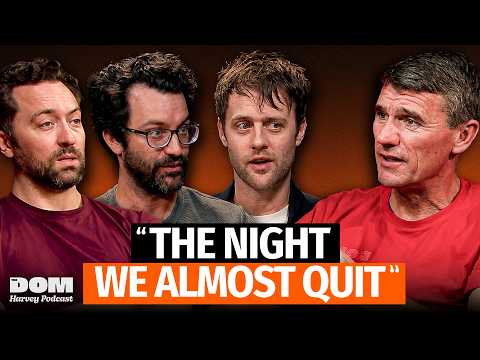
Inside the McLaren F1 Legacy with Bruce McLaren’s Daughter
Ask about Dom Harvey
Episode Description
Today’s episode is a genuine honour.
I’m joined by Amanda McLaren, the daughter and the only child of legendary Kiwi motorsport pioneer Bruce McLaren, the man whose name still sits proudly on the nose of every McLaren Formula One car.
This conversation goes far deeper than F1 racing. Amanda shares stories that only she can tell, including:
How Bruce overcame Perthes Disease as a child: bedridden for two years and told he may never walk again.
What he was really like as a husband and a father, through Amanda’s memories, her mother’s stories, and the letters he wrote home from overseas.
The day her father died, and how she slowly pieced together what had happened through books and films rather than being told directly.
The remarkable strength of her mother, Patty, who not only lost Bruce but also lost a second child in the same period.
Behind-the-scenes stories from inside the McLaren Technology Centre.
And does she cheer for Liam Lawson when no one’s watching.
This is one of those rare interviews where history, innovation, family legacy, and emotion all collide in the most beautiful way. It’s a privilege to help share the story of the Kiwi boy from Remuera who changed motorsport forever - through the daughter who carries his name.
***
Who should be on the podcast next? Message Dom Instagram: @domharveynz Email: [email protected]
***
YouTube Chapters – Amanda McLaren
00:00 – Amanda McLaren arrives fresh from Singapore 02:00 – Keeping Bruce McLaren’s legacy alive today 05:00 – The truth about the McLaren “kiwi” logo 08:00 – Bruce McLaren’s childhood illness & early resilience 12:00 – Founding McLaren Racing at 26 16:00 – Bruce’s death & Amanda’s childhood memories 20:00 – Patty McLaren’s strength and the Doghouse Club 24:00 – Famous McLaren drivers Amanda has met 28:00 – Working inside the McLaren Technology Centre 34:00 – Amanda’s favourite stories about Bruce 40:00 – The Bruce McLaren Trust & NZ engineering scholarships 48:00 – What Bruce would think of F1 today 55:00 – Amanda on resilience, legacy & feeling her father’s presence 01:01:00 – Final reflections & closing
Read the full transcriptHide the full transcript
- Amanda McLaren, welcome to my podcast. >> Thank you very much, Dom. It's a real pleasure to be here.
- >> Oh, it's wonderful. Wonderful to have you here. I I think I contacted you originally on LinkedIn about coming on
- the podcast. >> I think you did. And at that point, I think I'd just broken my foot, so I kind
- of put it off a wee bit, but great timing. We've just secured the constructor's championship in racing. So
- yeah, flew back in yesterday >> from Yeah, from Singapore. How how was that experience?
- >> Absolutely brilliant, you know, to be there when the team secured back-to-back
- championships. Um we we didn't make it through the all night party which actually began at 4:00 and finished at
- about 9 um in the morning, but we celebrated with the team and just so pleased for them. Such an amazing
- achievement. You you still I'm >> sorry. >> Oh, you're all right. You're all right.
- You're still you're still um you're still quite involved with your dad's company, aren't you?
- >> Yes, we are now. And I say we, myself and my husband. We're honorary brand ambassadors for both McLaren Automotive,
- Rogar side of the company and with McLaren Racing and also trustees of the Bruce McLaren Trust here in New Zealand.
- So, a great thing to be able to do to sort of perpetuate the legacy of dad and especially with racing and and and what
- they're achieving at the moment. Fantastic to be a part of it. M that's part of the reason why I wanted to get
- you on the podcast cuz I'm I'm I'm 52 so I'm I'm relatively old I guess on the big scheme of things and I I was sort of
- loosely aware of the connection between McLaren and Bruce McLaren and New Zealand
- but I feel like um in a way that sort of like I don't know the legacy or memory whatever you want to call it is fading a
- little bit and people younger than me may not necessarily appreciate it. Um so it's good to shine a light on this stuff
- where we can. For example, I I it was only a couple of weeks ago that I learned that the McLaren logo is like a
- kiwi. >> Um well, yes and no. It looks very very much like a kiwi, but actually it's not.
- So, if we go back, what was the Malbra chevron was created by Malbra um by Philip Moss when they were main sponsors
- of McLaren racing. Uh when Malbra stood away from sponsoring McLaren, they rounded off the chevron to create the
- sheet shape that it now is. And it's also based on the vortex that came off the rear wing of the racing car. And so
- it looks very much like a kiwi, but actually it's not. However, if New Zealanders want to believe it's a kiwi,
- [laughter] who are we to delusion disillusion them? So, um, yeah. Yeah. Yeah. And I think, you know, back to to
- to young people not knowing for quite a while there, the link between McLaren, my father, and New Zealand wasn't really
- at the forefront of what it was they did or they spoke about. Since the advent of
- McLaren Automotive and Zack Brown coming on as as CEO of racing, they've made a lot more of the history in the heritage
- and McLaren social media now, all the big anniversaries of of dad's achievements, birthday, death, they put
- something out there. >> And the Speedy Kiwi, which was actually my father's second logo, is actually on
- the Formula 1 card. took a photo of it in the pits at Singapore over the weekend. And I mean, he's hanging on
- there for grim death. The cars go a wee bit faster now than they did when when he was created.
- >> But Zach especially is very very fond of the history and the heritage and makes
- quite a lot of it. and you walk into the pits and anyone who's on my my social media or the Bruce McLaren Trust social
- media um will see pictures of dad in both the hospitality in the paddock club and in the pits at Singapore and if you
- go into the McLaren technology center now there is dad everywhere and the team say that they follow his vision and
- values very much in the team today. >> How does it make you feel? extremely proud. You know, my my father
- would what would have happened to the company had he remained alive, I don't know. But
- to see the road cars being created very much in the the same philosophy as his original prototype road car, the M6
- GT. And to see his name still in Formula 1, second oldest team on the grid next to we don't use the F word in our house.
- It's not what most people call the F-word, but I'm referring to that red Italian team. Um, [laughter]
- so they've been around quite a bit longer than we have, but for McLaren still to be called McLaren after all
- these years with all the changes in in ownership and so on, I think is just absolutely wonderful. And dad would be
- so proud of everyone there >> cuz what your dad did um was quite extraordinary. And it was only um
- researching for this chat with you today that I was sort of aware of um just what
- he achieved especially at such a young age. So he was born in Oakland in 1937. So if he if he was alive, he'd be 93
- today. Um diagnosed with a thing called Perth's disease as a child. >> Yeah. And up until that point, he wanted
- to be an all black. >> An all black. Yes. Yes. >> And and this what does this condition
- mean? Cuz I saw him bedridden for like a year. Two years. >> Two years. Two years. Yes. At the Wilson
- home in Takapuna. So basically it's a degenerative condition of the hip joint. the blood
- flow to the the the hip um ball in the ball joint in the hip is compromised and it causes necrosis or death of the hip
- joint tissue and the treatment at the time was to put the children in traction. So he was on a frame on
- traction for 2 years and was told potentially he may not walk again. He overcame that. Did walk again, albeit
- his leg remained quite a bit shorter than the other one. And so he had quite a pronounced limp, but he was told no
- contact sport. >> So that put pay to his rugby career. But his father, my grandfather, owned the
- garage in Remuera, McLaren's garage there. And so dad had grown up around cars and obviously inherited a love of
- cars and driving. and so switched his attention to cars which I'm quite delighted about because you know I'll
- admit it I am not a fan of rugby now that had dad been an all black maybe things would have changed um but I'm I'm
- certainly delighted that he chose cars as as his profession >> but what he achieved you know he was 32
- when he was killed um and after he established Bruce McLaren Motor Racing in 1963 he was running the
- He was helping design and build the cars and that was five different types of cars at the at the point that that he
- was killed. Um he was driving the cars, he was testing, he was doing work for other companies such as Ford and
- Firestone to bring in money. And so you can imagine one person doing all those jobs today. Absolutely not. Um
- sport has changed so much. It's no longer a sport multi-billion dollar business. But yeah, dad dad seemed to be
- able to just manage to do it all and the travel, you know, they didn't have private jets and helicopters, so he was
- flying commercially and yeah, managed to fit it all in. >> Yeah. So, oh no, you're right.
- >> I picked up a little bit of a laggy in Singapore, I think. >> So, um, he Yeah. moved to England at 21
- after winning a racing scholarship. Um, do you have any idea of the route he took? Like, what did aviation look like
- back then? It wouldn't have been just one stop in Singapore or Dubai, would it? >> I mean, originally he was supposed to
- sail because it was a cheaper form of transport. Now it's a sort of luxury holiday to go from New Zealand to the UK
- on on a ship. But um he got as far as Australia and then apparently they wanted him to
- fly because Koopers had a race that he was supposed to be driving in and so he did fly. Um, but yeah, it was still a
- long way in those days. I mean, even as a young child, I remember it was four stops to get to New Zealand from the UK
- where I was born. But um, you know, what an adventure for such a young man and to
- leave his home, his family, his friends to the other side of the world where, you know, you couldn't make a call on a
- phone and just talk directly to somebody. And so a lot of letters were sent home um which are now part of the
- British McLaren Trust collection and reading through those you know it it must have been very exciting but also
- you know very brave I think back then to do what he did. >> Do do the letters paint a picture of who
- your father was? >> I think they show what a close relationship he had with his father. M
- >> I think his father was very much his sounding board and often he would discuss problems with the cars or the
- handling cuz my grandfather dad's dad had been a racer himself and understood car dynamics and so on. So I I think
- that relationship remained incredibly close over the years. Dad came back a number of times to see them once I was
- around bought me back. Um and and the letters do portray that that close father-son relationship very much.
- >> Um yeah, these are these are treasures and it's something that you'd only have
- at that point in time. I'm thinking now like Liam Lawson, it's probably like short text messages to his dad.
- >> Yes. Yes. I I think technology has moved on in all walks of life and and you know
- now it's very very different for for the drivers for sure. >> Yeah. So, so your father was 26 when he
- founded McLaren Racing in 1963, which seems which seems it seems crazy like 26. He's effectively a kid.
- >> Well, well, he is. I mean, I think back to sort of how I was at 26 and and you
- know, well, I thought I knew everything. I did not for sure. Um, but you know, he's over there a you know, young man
- from Remuer in New Zealand taking on the established greats. you know what a thing to do. you know the audacity of
- him that but he had this vision he had this dream and he was the sort that once he wanted to do something he did it and
- I think that's what made things so special and and made him a a special person >> and so yes he established McLaren Motor
- Racing and you know went on to to establish himself only the second driver ever to win a Formula 1 race in a car
- that he had designed and built his own came on the nose and his great friend and mentor Jack Brabbom um was the first
- one to do it and Jack very much inspiration. My mom said that Jack had dad had rung Jack and said, you know, I
- want to set up my own team. You've done it. Any advice? And apparently Jack said, well, if I can do it, so can you.
- >> And and he did. >> It's incredible. And then uh when he was 28, you came along.
- [laughter] >> Matt is not my small point, so I'm just nodding brilliantly. 1965.
- >> Yeah. So you came along and then um uh and then in 1970 in 1970 um at the age
- of 32 he dies while testing a car. >> Mhm. >> So you're 4 years old. What do you have
- any like what memories if any do you have of your dad? >> I actually don't have any memories of
- dad unfortunately. In the March of 1970, we went to South Africa to the Kruger National Park out
- there and spent some time and I have snippets of that and hearing the animals and and being being there on holiday. I
- also remember the evening of June 2nd when he was killed because I went to a friend's house which had been the plan.
- and mom and dad were going to go out with them and I used to stay overnight with their um family.
- >> But I was given a doll set and I remember thinking wonder why I've been given a doll set. It's not Christmas and
- it's not my birthday but I was given it and I just accepted it and carry on. My mother was of the generation where
- children weren't really told what she deemed to be adult things and didn't mix in with
- adult things. So I was never actually told. My father had died and for a long time probably was unaware that something
- had changed because he was rarely at home. you know, racing Can-Am across in the States, racing in the in the um
- European circuit in Formula 1, testing cars, working for other companies. I didn't see a lot of him,
- >> but I think I mean, my mother suffered a double loss. She was carrying a child at
- the time. She lost that and a year later I was diagnosed as a type 1 diabetic, an
- autoimmune condition, possibly exacerbated by stress. >> So I think as a little four-year-old, I
- picked up on what was going on at home. I didn't know why, but I think that there was some underlying
- acknowledgement of what was happening. That must have been so difficult for your mom,
- >> Pat. >> Yeah. >> Yeah. A a very strong lady. She picked up and carried on. Um became a brand
- ambassador for Yardley a couple of years later. Never blamed motor racing. She always
- said to me, "Your father died doing what he loved." Mhm. >> She until the day she died called
- everyone that worked at McLaren's regardless of when they joined her boys. And she said, "I lost a year of my
- life." And then one of my girlfriends and all her friends, her female friends were the wives and girlfriends of the
- then racing drivers. One of them said to her, "Come on, Patty. We're going back to wherever it was." And she picked up
- and went back. And from then on, every British Grand Prix, one European Grand Prix at least a year, um, all the
- historic events at Silverstone when the Goodwood events, the Revival and Festival of Speed started up, she was
- always at those in that it was her life for so long, a life she loved, and it was her friend. So she continued to to
- be a part of motor racing, became an honorary member along with Betty Hill of the BRDC, first of the women um to be
- elected into the the organization and on an honor on an honorary basis, excuse me. Um and also um for some time
- there a senior part of the committee of what was affectionately known as the doghouse club um which was originally
- set up for the women to support each other when their husbands and and boyfriends were killed um because
- tragically back then it was so dangerous. >> The dog house club, the women's motor
- racing associates club still exists today. I am a patron um and very much now uh for raising money for charities.
- Thankfully not the benevolent fund. It was for the women of of drivers who were killed. There are still unfortunately
- the odd one. Um not so much in Formula 1 these days. The the safety measures that
- are in place are incredible. But you know it says on your ticket motor racing is dangerous and
- unfortunately it still is. Yeah, I might be missing something here, but you just
- when you say that, the last driver that I can think of that comes to mind that that died was maybe at Cena in the '90s.
- >> Um, there was Jeankei subsequently. He wasn't killed instantly at the track. Um, but he suffered massive brain damage
- and and succumbed sometime later. >> So, um, I believe he was the last Formula 1 driver. Um, there have been
- some very nasty accidents since. um um I can't think of the the gentleman's name
- and he he went to um the Indie car, but the car was absolutely engulfed in flames and he was trapped in that car
- for a wee while uh managed to get himself out and then you know back in in the days before the fireproofing and all
- the safety measures, he certainly would have been killed. >> Yeah. Yeah. Yeah. The outcomes are
- pretty good these days. Yeah. I mentioned ET and Senna just a second ago. Have you met He was a McLaren
- driver for a time. Have you met many of the drivers over the years? I've met a lot of the drivers over the years, but
- unfortunately Eden was not one of the ones that I met, but certainly possibly one of the most famous McLaren drivers.
- Um, really in a league of his own when it comes to talent and ability and certainly the one most people remember,
- but yeah, sadly I didn't get to meet him. [laughter] >> Who? Oh, yeah. I I'll throw some names
- at you and we'll see if you know them or not. Um, Elaine Prost. >> Have met Elaine a few times. Yes. Lovely
- chat. Yes. >> Um, Mika Hackinan. >> Mika Hackinan. Yes. Met Mika quite a few times. Um, and he's now an ambassador
- for McLaren. So does quite a bit with racing and automotive as well. >> Awesome. Lewis.
- >> Lewis. Met Lewis once. Um, yeah. Most of the the the latter ones up until sort of
- 2014 when we went across to automotive, I was living in New Zealand. Um, and while I went to the the Australian Grand
- Prix, um, that was more sort of the MKER and David Kard years. Um, yeah. Yeah. >> Did you ever meet Louiswis's dog?
- >> It's No. >> Oh, his dog's passed away recently. >> No, it was very sad. Um, I mean, what I
- loved was in in the F1 Grand Prix movie or the F1 movie, the dog gets a cameo part. I mean, bless it. and and you
- know, Lewis was obviously so fond of that dog and almost wasn't going to race. Um but sadly the dog did pass away
- and yeah. >> What about your dad's Kiwi mates from way back? Um Denny and Chris.
- >> Yes. So they were good family friends. Um I remember growing up especially with
- with Denny's children um until they came over back to New Zealand. Um and similarly with Chris. But the the
- children we all met a couple of months ago when they unveiled the statue of Chris um in bulls and we've made a pack
- that we will get together the children of the trio at the top Bruce Chris and Denny every year for a function or a
- dinner or a barbecue or something somewhere and just yeah it's lovely you know we're very fond of each other um
- and it it's great for us to sort of spend that time and and reminisce sing and talking about our dads.
- >> That's so special. >> Yeah. [gasps] >> Um, speaking of statues, >> we've got one here.
- >> What's this? This is very heavy, by the way. >> Yes. So, >> it's beautiful. That's your dad.
- >> It is. It is a a bronze. It's a bronze miniature of the fulls size statue which
- is on display at the McLaren Technology Center in Woking in England. So for the 60th anniversary of Bruce McLaren Motor
- Racing being formed, Mansor Roier, the late shareholder of of major shareholder of McLaren and Zack Brown commissioned
- the lifesize bronze done by the great Paul Lars, very very clever man. And when we unveiled that, we had a lot of
- plans for a huge celebration and unfortunately it was 2020 with co >> um but the full-size bronze is in
- McLaren Technology Center and I was presented with this little one which we took out to Singapore for an event that
- we were involved in and it did cause quite some interest getting it through security and then onto the plane cuz the
- case is a little bit oversized. But I have to say both Air New Zealand and Singapore Airlines were wonderful about
- us taking it on once they realized what it was. And um all the cabin crew on the
- the plane on the way over suddenly became huge McLaren fans. Um some of them definitely were cuz they knew a lot
- about the history. Some of them I think were just saying it to be nice. But >> [laughter]
- >> um yeah, it's wonderful for me to have something like this. Everything that I
- have has now been bequeathed to the Bruce McLaren Trust. Um, but this one we do pick up and take with us because it
- it's quite a talking point and so very very lifelike >> and so heavy as well. >> It is rather heavy. Imagine I I had a
- weight given to me for the the life-sized one. You can imagine how heavy that is. But yes, this is I I
- think it plus the the the book case is 10 kilos. M. >> So what do you know? What do you know
- about your mom and dad's love story? So they met in a party in Timaru, I believe.
- >> They met in a party in Timaru. So >> where's where's your mom from originally?
- >> So mom was from Christ Church and moved down to Timaro to live with an aunt and
- started working down there. And mom was really rather glamorous when she was a young lady. She I could hear what do you
- mean when I was young? She was really all through her life. She was quite a stunning woman.
- And she was at a party and the story is that my father saw her across the room and if
- you bel believe in love at first sight this was it because he turned to the person he was with and said I want to
- marry that lady. >> Uhhuh. And apparently that they were introduced and my mother sort of looked him up and
- down and and but obviously there was something there because she says they had a courtship mainly by letter because
- she was still living in New Zealand. She he went back to the UK. He followed she
- followed him to the UK um and lived with a girlfriend over there and then they got married in Christ Church, mom's
- hometown. and then moved back to the UK. Of course, being involved in Formula 1 in
- those days, you had to be based in the UK or Europe. And so they set up home there and then 1965 I came along um and
- was born and raised in the UK. But it it is a lovely story and I think for a young lady from Christ Church to
- meet the people she did and especially at Monaco after dad won. She went to the palace, met Princess Grace, Prince
- Reineier, and was at a cocktail party there. And she tells a wonderful story about they're waiting in this huge, huge
- foyer with a marble floor. And she calls them the boys, Dad and and the other two
- drivers who were on the podium got a bit bored and took their shoes off and in their socks are skating up and down on
- the the floor, whereas mom and the three ladies are sitting nice and quietly. >> Jeez. And I mean, you could probably
- imagine what's coming. The door opens and there is Princess Grace waiting to usher them through [laughter] to the
- party. And my mother said she didn't know whether to be completely emblared or what to do or she says, but this
- faint smile appeared on Princess Grace's face. And then she sort of regained her
- demeanor and said, "You please do follow me." And through they went, my mom said,
- but things like that. She said, "You know, Monaco was just spectacular." and the K's film festival was sort of the
- week before and so all the stars would go down. So, you know, she's rubbing shoulders with all the film stars and
- and just having an amazing time through until the point when my father was was killed. But yeah, she she and dad a real
- fairy tale story. >> That's wonderful. And I believe the um your childhood home in London, it was
- called Murray. >> Yeah. after Mai Beach in New Zealand. When when did you start to feel a
- connection to New Zealand? >> Um, >> how did you how did you end up back here living in Toadonga?
- >> Okay. So, to to I mean, whenever somebody you you phoned somebody and and you know, you didn't order things
- online. You phoned and you made the order or and and they'd asked for your address and I said Mai and like what?
- [laughter] M U R I W? What's that? Oh, that's New Zealand and it's a beach and um at you know whatever age I was on the
- telephone at home in England. Um we used to come across to New Zealand every couple of years to see mom's
- family and Christ Church dad's family in Oakland. Spend some time here with them.
- I then left school went training as a nurse in London um back in the the days of hospital-based training. And I'm two
- and a bit years into it and I get kicked by a horse and completely take my knee apart like I had no ligaments left. Tore
- the cartilage. Um it was a horrible mess. And unfortunately afterwards I got an infection in the joint and my whole
- knee locked solid. Um so I was a year on crutches feeling very sorry for myself and my mom and stepdad um were coming
- out to New Zealand. Mom had bought a townhouse in Christ Church. And so mom and stepdad will come back for
- as my stepfather after my stepfather retired, time got longer and longer and longer, but he was still working at that
- point and [cough] excuse me. He was still working at that point. And so they both said, "Why don't you come
- to New Zealand with us?" So I hobble onto the plane with them and we come out here and towards the end of the 6 week
- holiday I said to mom I'm going to stay for 6 months. 6 months came and went. 6 years came and went. 26 years came and
- went. In the meantime met and married a New Zealander. Um moved down to Wellington where Steven my husband was
- based at the police college and we've been here ever since. Well, I say ever since 2013, we went back to the UK
- to the Goodwood Festival of Speed and met Mike Fluitt who was the then CEO of McLaren Automotive
- and he told us of his plans to open the 50th retailer 50 years after dad established the
- company in dad's hometown in Oakland, New Zealand. And that of course is McLaren Oakland.
- >> Wow. And the interest from New Zealand, albeit a very small country with a small
- population, was so great that for the first time they held that opening over two nights, not the usual one.
- Back in the hotel after the opening, Mike and Steven are talking and Steven was being made redundant from his role
- with the New Zealand Olympic Committee and Mike offered us jobs to work for McLaren in the UK. So we thought about
- it for a little while. We'd set up a farm in Upper Hut just outside of Wellington. We had two goats called
- Lewis and Fernando after Lewis Hamilton and Fernando Alonzo who were the Mlown drivers at the time. We had horses. Um I
- had two horses and we had Grazers deliveries. Um and it was a beautiful home and we'd
- spent a lot of time and money on it. But we also thought gosh what an opportunity
- to go and work for the company that my father founded but automotive at that point only 3 years
- old um bringing to market P1 which in my mind is the most incredible achievement
- and very similar to what it was my father had achieved in such a short time. So Steven and I packed up, went to
- the UK. Back home for me, we lived very close to Won's where my mother and stepfather still were. And
- spent some amazing years there until the pandemic struck. And half our job was guests and visitors at the McLaren
- Technology Center, showing them around, telling the story. And the other half of
- our job was traveling nationally and internationally to various events and hosting guests and visitors and again
- telling dad's story. So we were at home, we were furoughed. I was able to ride my
- horse. Um, so I spent lockdown out with my horse. But Steven had children and grandchildren in New Zealand. And we had
- always maintained that once both my mother and stepfather passed away, we would come back to New Zealand. And my
- stepfather was was the last one, he died at the end of 2020. And so we told both racing and
- automotive we were going to give them a year and then come back to New Zealand. And that's when they said, "Well, okay,
- sorry to see you go, but would you like to be honorary brand ambassadors?" So, we said, "Yes, okay, we'll continue to
- do that." And then we had to apply through the MIQ process, which I know a lot of people will understand our
- suffering through that process. Um, but we got back into the country. We now live in Tapuna, just outside of Turanga,
- and absolutely loving being back. Still travel a lot. We're back to the UK twice
- before the end of the year for um a conference with McLaren Automotive and then spending some time with racing and
- then to Suzuka on the way home next year. So, love doing what we're doing. Um but it's pretty full on.
- >> I'm going to have to blow my nose. Sorry. >> Yeah. No, you go ahead. We got some
- tissues here for you. >> Oh, okay. Sorry. [laughter] >> That's cool. got the the air con and
- airplanes will do this to you. >> Oh, I I picked up a little bit of a luggy on the way out to Singapore and
- and >> it's um >> it's much better than it was. I mean, the hacking cough I had a couple of days
- I thought I thought, god, this is going to be dreadful, but it's not too bad. So that that must have been a really
- nice um opportunity to get that um that call up from McLaren to become involved because I'm guessing for a number of
- years you were just just getting along with your life sort of under the radar largely as like a a civilian just a
- nurse um with this this this you know hole in your heart you know being Bruce McLaren's daughter but you know not
- having any sort of connection to the company. >> Absolutely right. I mean my mother was a
- a original director of the company um which she retained through until the mid-70s when she was actually asked if
- she she would sell her shares which she did. Whether or not she regretted it, I think she did um subsequently. But while
- we went to to some races sort of as guests of McLaren, it was as guests. The family had nothing to do
- with with the company. So yes, I became a registered nurse. Um, and on my badge it said, "Amanda, nobody
- knew." >> And so every time we used to go back to the McLaren Technology Center, I mean,
- prior to that, we went to the the various um factories they had, but especially the McLaren Technology
- Center, I mean, just an incredible building in its own right, let alone what it is they do inside.
- But the time before we were there, before we were offered the roles, I remember walking through thinking, I
- wonder what it would be like to work here. [snorts] And then subsequently, we did. And I
- have to say, for some people that work in that building, they say that they sort of get a bit used to it.
- For Steven and I, maybe every other day on average, we'd meet a guest who'd been driven around
- the lake and then to what they called Hlocks, the big doors would open and they'd come in and you'd see their eyes
- out on stalks as they looked down the boulevard and saw this immense space full of the history and the heritage and
- the cars. And we see it through their eyes. And as we talked them through it and walked
- down the boulevard and through to McLaren Production Center, we would just realize how special it was. And for me,
- it was just the icing on the cake because dad's name's still on the building. You know, it is the McLaren
- Technology Center and every car that comes out of there has dad's name on it. And so just that little extra bit of
- pride, but it also caused some some some, you know, Matthew, you'd phone up it because it is the McLaren Technology
- Center, but we still have problems with it occasionally. And they'd say, you know, what's your name? Amanda McLaren.
- Yes. No, no, not the emails.com McLaren. What's your surname? Amanda McLaren. And there'd be this pause
- and then they'd go, "Is that a coincidence?" I'm like, "No, no, no, no, no. Dad founded the team,
- big pause." And suddenly there'd be a bit of scurrying sometimes. And then I get kind of their boss on the phone
- saying, "What can we do to help this, Amanda?" [laughter] And other times they'd be just like, "Oh my god,
- really?" And oh wow. and and you kind of hear it through their eyes again and and
- with their voice and and so yeah, working there was so special to be part of of of the company that my dad founded
- to have it. It was a really interesting cuz we were staff and we told them to treat us as staff,
- but a lot of them didn't and we got little perks and my ID card. Everyone else had the sort of passport photo
- picture on it for me. They put the picture of me in my dad's N6 GT, the prototype road car when I was four years
- old. That was my picture. And and just really sweet things like that used to happen.
- >> Um but yeah, to to see automotive grow from being a tiny little company when we
- started through to to what they were doing when we left was just a phenomenal thing to be a part of and to experience.
- Um really was special. >> Yeah. this uh technology center that you're talking about. I've seen um
- photos of that online and some uh YouTube videos. It looks impressive. >> It it it really is to the extent you
- know when some of these these films I mean it was used in in the F1 film. Um but previously there was a a sci-fi and
- sci-fi is not my thing and I apologize I cannot remember the the name of the film
- but they use that as the headquarters. Um and and it it is the most incredible piece of design and engineering and the
- Formula 1 team actually helped make some of the the structure of it, the loadbearing um parts of it because that
- is part of their expertise in terms of building a Formula 1 car and it really is quite spectacular and and it was Ron
- Dennis's baby, his concept and what what a legacy to leave. Um, he says he was a
- chapter of of of McLaren, dad the first, he really the second, Zach and and Automotive now the third. But yeah, just
- a a fantastic building. It really is. >> So cool. When did you when did you lose
- your mom? When did she pass away? >> So, I hope you weren't going to ask me that. Steven, what year did mom die?
- >> Nope. He said 2016. >> Thank you. Um, so we lost mom in 2016. Um, I was in the
- UK. I'd been there for 2 years. She'd about 5 years previously been diagnosed with stage 4 ovarian cancer and had been
- given 6 months without chemo and 18 months with chemo. And I said before a very strong, tough, feisty lady. She had
- the chemo. While she lost her hair, it didn't make her feel unwell. We still had our pub lunches and our wine. My mom
- loved her wine. For anybody that knew mom who might be listening to this, yes, she loved her wine. Um,
- and we had a very special two years knowing that she was ill, but at the time still
- still having the time of our life. And so we go out on a Monday night with what she called her Monday night girls and
- and I'm still closely in touch with them and see them every time I'm back in the
- UK. And then Tuesday I take her shopping. We have mother daughter lunch. And McLaren Automotive wanted me to talk
- to her and get the stories that only she knew. And so I was able to spend that that time and and you know actually get
- paid to talk to your mother which was was quite surreal. But we we had some lovely moments and I did learn quite a
- lot of things that previously sort of I didn't know. >> Yeah. >> And it was just wonderful to spend that
- time together. >> Um and she was great really until unfortunately she fell and broke her hip
- which is what you know is the beginning of the end for a lot of the elderly. >> Yeah. Having a fall
- >> um having a fall is is never good. And um while she was still able she she got
- around in a wheelchair after that. um and just sort of walk the short distances from the the um flat that they
- had to the car and then from the car to the pub. Um we still managed to have some amazing times and then she was
- admitted to hospital and thankfully within 4 days she'd passed. So yeah, but just so good to have been there and not
- got the phone call from my stepfather um from the UK and and had to kind of maybe
- go backwards and forwards a few times sort of thinking, god, am I going to get there in time? So, it was it was
- fantastic to be there um and spend that time with her. >> Can you remember any of those stories
- that you got from your mom that surprised you while you were curating your dad's life?
- >> Well, yes. I mean, it wasn't until then that I learned that she was carrying a
- child when she lost my dad, >> but also um the color of the house, Murray. So, it was painted white, brick
- painted white with blue front door, garage door, and blue shutters in the Georgian style. And I said to her, why?
- And she said, and and this surprised me slightly because I my mother, she was a little bit superstitious, but I didn't
- think she was was um quite as superstitious as this, but she said, I was at a party and there was a
- fortune teller there and she read my palm and she said, "You will have two children and you will live in a large
- white house with blue." and she said, "I always kind of wanted a White House with Blue." And I said,
- "Yes, but you didn't have two children." And she said, "Yes, I did." And that's when she told me that she'd lost a
- second baby. So, um, that those were sort of the two things. And I have to say, I took that afternoon off. I didn't
- go back into work >> because I I was quite sort of surprised, stunned, and very sorry for mom because
- I rise then she'd not only lost my dad, she'd lost a child as well. [snorts] >> Yeah. It must have been impossibly
- difficult for your mom at that time, right? >> Mhm. I It was I mean, she she didn't
- have any family over there in the UK. She had a lot of friends and I think they rallied around and looked after
- her, which I think was was again those women were part of the doghouse club. They'd seen so many of the husbands and
- and boyfriends killed that they kind of knew what to do for each other, I think,
- which was dreadful in one way, but at least they had each other. Um, and some some good neighbors as well
- that that certainly spent a lot of time looking after me. Um, so I remember going to Portugal um with our neighbors
- who were very very good friends I think just to give mom a break so she could have some time and then she came out to
- out here for dad's funeral um but again you know very much on her own um but you
- know the strong strong lady um very strong and you know she she she talked about it. It was always a little bit
- upsetting for her, but she'd always pick herself up and dust herself off and carry on. And yeah, very very I I think
- the pair of them were quite formidable. Um, in terms of not being frightening people, but very determined people and
- if they wanted something and I think that's what made dad so good at doing what he was doing and, you know, got mom
- through those those years. >> Yeah. What what traits do do you have that come from your mom that you'd know
- firsthand and what traits from your dad? Maybe your mom said over the years, "Oh,
- you know, your your father would say that or your father would do that." >> I think [laughter] I got my dad's short,
- stumpy little legs. Um, [snorts] >> I definitely look very much like him in in that I hadn't seen Chrison for maybe
- 15 years. and we went to visit him in balls and I walked into his lounge and he looked at me and he went white
- >> and he said, "Oh my god, it's Bruce." >> Um, I don't have my father's stamina how
- he managed to do all he did and he could sleep anywhere apparently. Now I can sleep anywhere but if I don't get 8
- hours I get very tired and when I'm tired I get grumpy. And yet people say they never heard my dad speak a short
- word to anybody. >> Wow. >> He never lost it. He never to tossed his toys out of the cot.
- >> How he managed to do that and when I'm sort of thinking I think be more dad, be
- more Bruce. >> Um, mom managed to sort of smile at everybody and carry on. And sometimes you see her
- gritting her teeth and I think, you know, I'm sure sometimes people can see me grit my teeth. Um, but I think they
- were both people people. And while I'm an introvert by nature, when I have to be sort of out there, um, I'm sort of a
- combination of Bruce and Patty. And I I draw on that sort of strength to be able
- to do things maybe you don't necessarily choose to do um or want to be doing at that moment but that I mean McLaren and
- mom's maiden name was broad um that spirit and just yeah you know mom bought me up with manners and with you know be
- nice to people and I think that's a very good lesson for kid. >> Um, >> and so I I'm grateful to both of them
- for what it was they they did. >> Was it hard for you growing up without a father?
- >> I think for quite a while because it was a gradual realization in that sense. No.
- um in that mom had a lot of male friends and and not taking this the wrong way at my age. Everybody
- who was older than me was either aunt or uncle. So, I had a number of uncles that
- that were very good to me and sort of did, you know, one put me on the back of his motorbike and and would do that sort
- of a thing and and and [snorts] um and then my mother had a long-term steady boyfriend for a long time who I
- grew up who really was quite a father figure to me. And then she remarried when I was 15. And Douglas, my
- stepfather, um for a man who hadn't had any children and kind of took on me at the age of 15, um he did incredibly well
- and over the years our relationship grew stronger and stronger. Um which is why Steven and I decided we would stay in
- the UK while he was still alive. Um and so that there were good strong male figures in my life as I grew up which I
- think certainly helped. >> Yeah. Filled the void a bit. >> It well it did. But I also think you
- know growing up without a parent and especially because of a a traumatic death that seriously affected the um the
- remaining spouse obviously has an effect on a child. And I think over the years,
- sort of looking back at the personality, maybe I developed um as a shield to some
- of my mother's trauma that I wasn't aware of. Um I've done a lot of reading about fatherless children and also mom
- tried her best, but sometimes was quite emotionally absent and that certainly has effect on children
- >> for sure. >> Can you remember? Yeah. Can you remember your mom telling you about how your
- father passed away? Like what age you were or was it something that just sort of gradually said?
- >> She never really did. She spoke about the accident, but that was sort of in general terms never about how your
- father died. >> So I was never actually told. What I what I did learn was through books and
- film. >> So you just sort of slowly pieced it together as you were old enough to
- absorb the information. >> Yes. Yes. M >> which I think you know which is better
- or worse I can't say because I was never told directly. There was never that sharp emotional shock. But sort of layer
- upon layer perhaps sort of grew upon me over the years. But what happened happened and and I've come out
- reasonably okay the other end. >> Well, it's just how how parenting was at the time. It was very secretive. E like
- >> it was very very different. you know, children should be seen and not heard. And and you know, it took me
- >> 25 years to learn to talk to somebody older than myself because it just wasn't
- how it was back then. And and you know, children didn't go to dinners. They didn't go to funerals. They didn't go to
- adult things. And that was the time they were the age they were um when they had
- me and and how they'd been brought up. And so, you know, I don't blame my mom for the way she did it. She did the best
- she could. >> You know, yes, with hindsight, some of it was definitely lacking, >> but that was she didn't have a good role
- model as she grew up. Her mother had died when she was very young, and she didn't particularly get on with her
- stepmother, and so, you know, she did the best she could with the tools she had >> and um Yeah.
- >> Yeah. So, just how parenting was at the time, even with ad adoptions back then,
- it was all closed and shroud and sort of secretive. It was just how it was. What
- What kind of stories did your mom or others share about Bruce as a husband and a father and a man as you were
- growing up? >> Well, I look back at the pictures of me and a lot of them with with them with
- him. A lot of them are quite staged in that they were often promotional shots. He was at home. They wanted the family
- photos, but he's playing with me on this. We had a little swing slide set at home in the garden at Murray and he's
- out there with me and he's always just got this beaming smile on his face and he's really engaging with me. And then
- there's other pictures of me sitting on a tree stump in in a big park outside of
- London where we used to go because I love anything with four legs. I say it's got to have four legs or four wheels.
- [laughter] And there were deer in this park and there were horses and and one of my
- first words apparently was pony. and I never grew out of of of loving ponies and horses. Um, and he'd take me there
- and just that just the look on his face when he's interacting with me. I think he was a
- really doting father and he just loved spending time with me when he could. And people say what a lovely man he was.
- >> The afternoon he was killed, everybody who was at the factory was told to take
- that day and the following day off as a mark of respect for him. and they all defied orders and went back in. They
- said, "Bruce wouldn't expect us to take the day off. We want to build cars and win races just as he was wanting to do
- and we all back here for Bruce." And there are still some alive today who worked with him. And they say, "We
- didn't actually work for Bruce, we worked with Bruce." And Hen Gandley, New Zealander, who was one
- of dad's early mechanics, great family friend, said, "You know, if Bruce had asked us to down our tools and go out to
- the desert to build a brick wall, we all would have done that. No question asked." He had this innate ability to
- inspire people and be a great leader. And I I mean, I did a master of nursing leadership. um learned some tools and
- things like that through that course, but he did it without any formal instruction or or
- people telling him what to do. It was just an incredible ability he had. And I think that's sort of the the person as I
- grew up. I wish I'd known him better >> and and learned some more of those skills and traits from him
- >> for sure. Do you remember um what age you were when you realized your dad was
- this, you know, special larger than life character, not just dad, [laughter] like
- your dad was like a VIP? >> And I do. And the reason I'm laughing, so as I growing up, we used to go to the
- British Grand Prix and I'll be honest, I would run around the pits pretending to
- be pony jumping over piles of tires. I mean that would not happen today because one you just can't get out to the into
- the pits and two it's far too dangerous for kids to be doing that sort of thing.
- But [laughter] that is what I did >> and really you know there's a few pictures of me with sort of Emerson
- Feraldi and various drivers but 1976 comes along and a driver called James Hunt signs for
- McLaren and James Hunt's quite the pinup boy. James Hunt's really rather gorgeous
- and a lot of young women had him on their bedroom wall as their pinup. Not because he was a racing driver, just
- because he was really rather good-looking. And so I go to the British Grand Prix in
- 1976 and I get to meet James and big wide eyes and like wow. Um, >> so how old are you at the time?
- >> So I'm 10. >> Yeah. So I go back to school the following morning and we're doing the
- what did you do over the weekend and I tell you if you want to go to zero from zero to hero in the popularity stakes
- you know if anyone met Oscar Orlando over the weekend and they're 10 years old and they go back to school and they
- tell their classmates similar sort of thing all these girls turn and pivot and look at me and say you did what? And I
- said, "I met James." And they said, "Because up, you was Amanda. They were Susan and Tina and
- Natasha and Sally." And again, we did. We just ignored each other's surnames cuz they weren't important.
- And so they're like, "Well, how did you get to meet James Hunt?" And I sort of drew myself up really proudly and said,
- "Well, he drives for the team that my father founded." And so they look at me and they started asking me questions and
- I couldn't answer any of the questions. Oh well your dad came from New Zealand. When did he found the team? No idea. So
- I went home and I thought mom gets motoring news every week. She gets motorsport. She
- gets these magazines. She and I kind of had a look at them but I wasn't particularly interested. And then I had
- a look at all the books in her bookshelf. They had big trophy cabinet and bookshelf underneath that had been
- made. And I'm like, Denny Holm, but that's the man's who bonfire night thing we went to. And
- Chris and and and Jackie Stewart and Graeme Hill and Jack Brabam and these are all mom's friends. So I'm like, so I
- start reading and I start asking a few questions and and then I start keeping a big scrapbook and I wish I had it. I I
- don't know what happened to it. of the rest of the season between 1976, James Hunt, Nikki Lauder, McLaren versus
- Ferrari, the good old rivalry. Um, and it was really from then on that I started reading and following Formula 1,
- following the M McLaren team. And it was a real Yeah. penny drop, light bulb moment. Um, my school friends asking me
- about James. Oh, >> that's so cute. [laughter] That's the greatest story ever. How cool. Um I've
- heard um in what I've read about your dad, he's been described as like humble and brilliant. Um yeah. How did how did
- your mom and family describe him to you? >> Similar, I think. I mean, everybody says he was just the nicest
- person. Um, you know, he just was innately nice, which I think is is a fantab fabulous
- thing for a child to have in a father. Um, and it it it still continues on to this
- day. You know, you've got men who went through the war, the Blitz, went through seeing people killed regularly
- in motor racing. And yet they all and and and boys don't cry. The stiff upper lip, especially for the British um and
- and talk about sort of, you know, parental upbringing in generations, boys do not show tears. um especially from
- that that um generation, they all cry when they talk about June 2nd, 1970. My dad had such an effect on them and his
- death still does >> and and so you just think gosh and and you try to nail it down what exactly it was and
- they're lost for words. >> They can't explain what it is that actually had that huge effect, but he did. And so
- again to see that and just think, you know, he must have been incredible. Not just what he did on paper or on the
- circuit or forming the team, but the man he was underneath that. >> Yeah. Knowing that, does that make it
- even more bittersweet for you growing up without him? You knowing that he was such a nice man?
- >> I I think it does. I mean, you know, had everyone said, "Oh, he's a grumpy old so
- and so." And you probably [laughter] it would have been maybe easier, >> but you know, you can't undo what
- happened. >> No. Um, no point looking back. The legacy lives on. You know, I'm really
- proud to sort of be a part of that, to see McLaren still out there, you know, backto-back constructive champions last
- year and this year. >> Um, so, you know, if we can't have dad, we've got the second best thing.
- >> Yeah. And you you your mom did an incredible job and now you're doing an incredible job. Um, yeah. Keeping this
- name alive, which I think it's really cool. So, not just the name on the car, but the Yeah, the Bruce part as well.
- Well, my husband and I are two of the four trustees of the Bruce McLaren Trust here in New Zealand. Um, it is a New
- Zealand based charity with the aim of perpetuating the legacy and the history of dad. We are supporting two
- scholarships for students from the faculty of engineering at Oakland University. When my father started his
- undergrad degree, he never actually finished it, but he started it. Um and they the students go to the UK every
- year, one to McLaren Automotive, one to McLaren Racing. Um we also support their
- Formula SAE team and the launch of their 2025 26 car is tonight. So we're going to that um and also the Bruce Mlan
- Intermediate School in Henderson. Um and it's a low desile school, but we would like to offer children there some
- opportunities that maybe they wouldn't have had before. So again, students from their STEM program, go to the University
- of Oakland and have a look and see what it is they do over there. >> So that that's wonderful for us and and
- despite the fact that dad didn't finish his undergrad degree, um the university,
- not last year, the year before, sorry, 2023, awarded dad its first postumous honorary
- doctorate and I accepted the award on his behalf. And so our links with the university and and what they're doing
- over there, they're working on an exciting new project which unfortunately I'm not able to um give any more
- information about yet, but something that will have dad's name attached to it, which is just going to be fantastic.
- And so we're actively sort of promoting that at the moment. And that the trust is is
- doing more work with McLaren UK. Zack Brown, CEO of Racing, is one of our patrons. And so, just making that that
- history and and and legacy stronger. As you mentioned earlier, not everybody knows that Bruce was a Kiwi boy from
- Remya. Um, so we're trying to sort of address that more with our social media presence and we put out a newsletter.
- Um, and so yeah, McLaren are are doing great and it's wonderful to be a part of that story
- >> for sure. Well, you're the perfect You're the only person that can do it. [laughter]
- It's on you. >> Other people could do it, but they just wouldn't be able to say they were the
- daughter. But, you know, yeah. Yeah. I mean, in the future, you know, I'm not going to be here forever that the trust
- will hopefully live on. We'll have new trustees coming on board. But what we're trying to do is put in place things that
- will just continue fairly easily like the scholarships and so on. Um and Longman McLaren Automotive and Racing
- last for sure. If >> if Bruce McLaren was here today, how do you think he'd feel about the team, the
- brand, and yeah, just the the state of F1 and motorsport in general? >> I think firstly, he'd be so proud that
- the team has continued on in in motor racing. As I said earlier, second oldest Formula 1 team in the history of the
- sport. >> You know, they could have had a name change over the years for a while there.
- There was a single owner of the team who could have named it after himself, but didn't um and be doing road cars now as
- well. You know, that was the next big plan for Bruce McLaren Motor Racing had he not been killed. Road cars. So,
- automotive are doing what he was would be wanting to do. Um Formula 1. I think my dad was very much an innovator.
- Created first nostrils on a a Formula 1 car. >> They use now widely across the sport.
- >> Wanted to use something lighter and stronger to build the cars off. So took Malite from the aerospace industry. Now
- they're using carbon fiber. Um he would love the technology. He'd be amazed by, I think, the the progress and
- and how quick things have changed, the access to new materials, so things like 3D printing. Um, but he would just be so
- immersed in it and just looking for the next best thing that would enable him to
- build lighter, quicker, stronger racing cars and road cars. >> Do you reckon he'd be a fan of Drive to
- Survive? Are you a fan of Drive to Survive? [laughter] I mean, it's a little bit contrived and
- and and and they did, you know, who's the goodie, who's the baddie, but I think it has been absolutely brilliant
- for the sport. Yes. >> In terms of getting young fans and especially young females interested.
- We've met so many women >> who are now following Formula 1 because of that series. I think it's done an
- absolutely brilliant job. >> What about um the F1 movie? I I had Greg Murphy on the the podcast recently and
- he refuses to watch it. He said, "No, I'm not watching the Brad Pit movie. It's ridiculous."
- [laughter] >> I I'll be honest, I went with a degree of skepticism. You know, how can you have this sort of
- 50some year old Formula 1 driver? However, I came away quite impressed. One, Brad's not bad for an old guy.
- [laughter] and two >> um they do >> make a joke about the age of him in the movie, you know, how can you be a
- Formula 1 driver at your age sort of thing. So, they address it really quite well. And I have to say some of the
- racing scenes are spectacular. The seamlessness between the real thing and Brad and and his co-driver and what
- wasn't real, you can't tell. And I actually think again in terms of fan engagements and just a a little bit of
- what's behind the scene. I mean, yes, it was probably a little bit sort of more contrived than in real life. However, um
- I really enjoyed it. I really enjoyed it. So, Greg, I mean, he's one of our patrons, too. Um go watch the movie if
- you're listening to this. He's probably not. He's doing his thing. But, um it it's worth seeing it. It It's a bit of
- fun, and it is a Hollywood. It's not a documentary. And it's the same with Ford versus Ferrari. You know, it was a
- Hollywood. It's not a documentary. So, you know, the the >> differences are there. Um, and on that
- note, we are actually going to make a Hollywood about my my father. I'm working with a company who are doing
- that. But, um, we're going to make sure it's not quite so contrived. What we're going to do is explore the relationship
- between my father and Teddy May, who was his business partner. Um, two very, very
- different characters, but one of the greatest pairings in Formula 1 history to create Bruce McLaren Motor Racing and
- and what it became. And so, um, yeah. Yeah. Hollywood films, I mean, Hollywood and inverted commas, but they're not
- always bad. >> No, no. Well, there's a bit of creative license, isn't there? >> Absolutely. Absolutely.
- >> Wow. Who's going to play your dad? >> Absolutely. We're not quite at that point yet. And the interesting thing is,
- you know, it's got to be a fairly young actor because, as you say, he was in his
- 20s when it all happened. >> So, um, yeah, we're not quite at that stage yet. >> Yeah. Um, yeah. Another guest I've had
- on the podcast, Sir Peter Beck. Um, do you know who Sir Peter Beck is from? Started a company called Rocket Lab.
- >> Rocket Lab. Yeah. >> There's actually, yeah, there's I mean, completely different sort of um things,
- but I can see parallels between them. like Sir Peter Beck, kid from Invagle, never went to university, couldn't get a
- job at NASA, so thought he'd build rockets himself. Just in terms of the um the innovation perspective and punching
- above your weight, there's um definite parallels between um Sir Peter and your dad.
- >> Absolutely. Absolutely. Yeah, I mean in terms of almost everything, New Zealand
- punches way above its weight, >> whether it be in the arts or sport or [gasps] >> but I think a lot of that comes from the
- fact that back in in the days of of Spa and my dad, >> if you wanted to do something, you kind
- of had to do it yourself. >> You couldn't get it on Amazon or eBay or the internet or get on YouTube and kind
- of see how to do it. >> Um and and that made Kiwis very ingenious. M >> and and you know the number eight piece
- of number eight fencing wire mentality but you know that that real entrepreneurial sort of spirit and that
- again is something the university's going to be working closely on um with this project that that we're involved
- with and and just creating leaders for the future um with that that Bruce Kiwi spirit.
- >> Yeah. As um the trustee, what project has meant meant the most to you personally?
- Is there a standout? >> Um, probably getting the the university students to McLaren racing. Um,
- automotive had had been set up when we were still in the UK and and was happening, but um I think racing saw
- the benefit to automotive and the trust wasn't um supporting the the scholarship at that point. But for a
- young student to have the ability to go over and and for a long time, I think everybody thought it would be a one-way
- street from racing or automotive to the student, but no. One of the last students that went over working with
- racing, they were talking about a problem that they had. And this student said, "I think I can help you with
- that." And he came up with a solution. >> And racing were just absolutely blown away by the the creative thinking. And I
- think that's the thing with young children these days or young children, young students, um the ability to not be
- constrained by sort of the ideas and the the the environment that they've been in. They think outside the square, way
- outside the square, and come up with all these ideas. And for the trust now to be
- supporting that with the New Zealand UK Link Foundation, um is I think a wonderful thing for us to be doing with
- dad's name attached to it. Um and and it's just such a a wonderful relationship and a number of the
- students who went over with the internship are now working for racing or for automotive andor some of the other
- Formula 1 teams or other similar type industries. Um so they're really having a wonderful experience and that they're
- all so thrilled to get the the internship. We've met a lot of young students who were looking at other
- universities around New Zealand and said can we have it at Wo and we're like sorry this is the University of Oakland
- because it's dad's alma m but um they choose to come to Aland >> and the school of engineering for that
- reason so that they're eligible to apply for the internship. M obviously you you
- feel a huge sense of pride when you see um your name and your family name on on cars or you see glimpse of of it in the
- F1 movie or whatever it happens to be. But do you ever um are there ever moments where you sort of feel his
- presence? Do you think? Um, [snorts] I'd like to I I think I I don't know. It's there's a hard
- question. Um, and it sometimes, you know, he's all around because you walk into McLaren Pits and there's a huge
- photo of him and you walk into the paddock and there's a huge photo of him. So, he is kind of there. So whether it's
- through the pictures or just the name or the feeling or I don't know but I I would like to think he is there sort of
- supporting everybody and giving them a little push sometimes and yeah. Yeah. Interesting question.
- >> Thanks for that answer. That's such an honest answer cuz I think anyone that's
- lost a loved one um you you'd like to you'd like to think there's something >> but maybe there just isn't. You know
- it's maybe it's just the memory. >> Yeah. Yeah. I mean, I I don't I'm not religious.
- >> Um, however, I know a lot of people do believe that spirits live on. I don't know. Um,
- but in terms of just sort of carrying forward the DNA of mom and dad and and their
- moms and dads and and their grandparents and I think that there's a little bit of
- everybody in us. >> Um, so in that sense sort of I feel there's a bit of dad with me. So he's kind of
- with us all the time. But um, yeah, it's it's It's something I I really don't know the
- answer to. >> What's been your proudest moment as his daughter? >> Oh my goodness. Um,
- proudest moment. I I think in terms of receiving something on his behalf or him being acknowledged, the honorary
- doctorate would be up there [snorts] >> in that he was recognized as an engineer. Most people think of him
- as a racing driver or the founder of the team, but for the university to recognize his contribution to
- engineering, I think was was wonderful. and for it to be the first honorary doctorate. Until that point, the
- university had never rewarded an honorary drug doctorate. And they changed the rules um for dad to be able
- to receive that. So what they did and how special they must have thought dad was to be deserving of it was incredibly
- heartwarming. Um and we had a wonderful ceremony and they gave me that. So that that's probably be one of my proudest
- moments. >> And when people think of Bruce McLaren, what's the one thing you hope they
- remember most? >> I think everybody will remember something different, >> but I think the people that knew him
- actually really knew him remember the great person he was and the lovely person he was. And they tell me stories
- of, you know, dad paid for one of his mechanics to go on honeymoon in Fiji. Team was doing well and he had the money
- and they didn't. So he he paid for that. Um just a a lovely, generous, kind-spirited sort of man. Others
- remember him as a creating the race team and and how fantastic that was winning Can-Am, you know, the the the
- five championships back to back, being so dominant, creating the cars that achieved that. Um, so different people
- remember him for different reasons, >> but yeah, I I I like to think the people that really knew him remember him for
- the sort of person he was. >> Yeah, that's so special. And what about you? When people think of Amanda
- McLaren, what do you want your legacy to [laughter] be? >> What they think of me is is probably
- something different. >> I mean, I think that that's twofold. Um, I mean, I was a registered nurse and you
- know, at times you're there at a really low point in somebody's life and if I made a difference for some people in
- that part of my life through that journey as a nurse, then that is incredibly special. Mhm.
- >> Um, completely different life now as honorary brand ambassador and trustee and sort of perpetuating dad's legacy.
- But I think the things that the trust has set up and that's not just me, that's my husband and our other two
- trustees, Michael Clark and Warick Mortimer. Um, but the things we've been able to do, I think a a great part of my
- dad's legacy and and so to be a a quarter of that. um has been incredibly special. So, it it depends what part of
- my life um we're talking about. >> Your dad never got to know the the woman that's sitting in front of me today, but
- yeah, what do you think he'd make of her? >> I hope he'd be proud. >> Um you know, I I I try to live by the
- four agreements. Um you know, and and one of them is just do your best. Mhm. >> And
- sometimes it's not as good as it could be because I'm tired or I'm not feeling well or but always just do your best. Be
- nice to people. You know, you sit in a restaurant or you sit on the plane and you hear some people being really rude
- to the staff and you know, people say, you know, the measure of a man is how he speaks to the waiting staff. And it's
- like, yeah. Um, and so I I I think, you know, I'd like to think dad would pat me on the
- shoulder and say, you know, good job. >> Yeah. >> Yeah. >> That's nice. I think that's a good place
- to end it. Oh, one more thing. If you're watching um Yeah. F1 on TV and no one else is around, do you ever like root
- for Liam Lawson? [laughter] >> He doesn't drive for McLaren. Um >> I know. I mean,
- >> but you're a Kiwi. >> I'm a Kiwi. I mean what I said before this weekend was that McLaren first and
- second so we absolutely clinch the championship and Liam can be third. [laughter] Um you know once the the
- driver championship is sorted at McLaren um you know maybe Liam can be second you
- know it is lovely to see a Kiwi driving in Formula 1 again. Um and so yeah I I wish Liam all the best and and for his
- future career um whatever happens next year. But it is lovely to see a Kiwi out there.
- >> Yeah. Well, Amanda McLaren, thank you so much for coming in and being on my podcast today. I really appreciate it.
- It's been really nice to meet you and really nice to um yeah, get these uh little insights and learn more about um
- your dad and the amazing um your man that he was. >> Well, it's been fantastic, Dom, and
- thank you for having me here. I've really enjoyed talking with you.
Brief Summary
Amanda McLaren discusses her father's legacy, her role in preserving it, and the impact of Bruce McLaren on motorsport.
Key points
- The Kiwi Connection. Amanda discusses the connection between McLaren and New Zealand, and the fading legacy.
- Amanda McLaren's Legacy. Amanda shares her pride in her father's achievements and the ongoing legacy of McLaren.
- A Father's Influence. Amanda reflects on her father's impact and the close relationship they shared.
- A Fairy Tale Love Story. A touching recount of a parent's love story that began at a party.
- Life in Monaco. A glimpse into a glamorous life in Monaco with Princess Grace.
- A Mother's Strength. Reflecting on a mother's resilience through illness and loss.
Episode highlights
- The Kiwi ConnectionAmanda discusses the connection between McLaren and New Zealand, and the fading legacy.“It's good to shine a light on this stuff where we can.”1:58Dec 2, 2025
- Amanda McLaren's LegacyAmanda shares her pride in her father's achievements and the ongoing legacy of McLaren.“To see his name still in Formula 1... is just absolutely wonderful.”5:16Dec 2, 2025
- A Father's InfluenceAmanda reflects on her father's impact and the close relationship they shared.“The letters do portray that close father-son relationship very much.”9:59Dec 2, 2025
- A Fairy Tale Love StoryA touching recount of a parent's love story that began at a party.“He turned to the person he was with and said, 'I want to marry that lady.'”22:34Dec 2, 2025
- Life in MonacoA glimpse into a glamorous life in Monaco with Princess Grace.“Monaco was just spectacular.”24:29Dec 2, 2025
- A Mother's StrengthReflecting on a mother's resilience through illness and loss.“I was quite sort of surprised, stunned, and very sorry for mom.”40:15Dec 2, 2025
- A Formidable PairShe describes her parents as strong and determined individuals who shaped her life.“The pair of them were quite formidable.”41:43Dec 2, 2025
- Growing Up Without a FatherShe reflects on the challenges and support she had growing up fatherless.“It was a gradual realization.”44:22Dec 2, 2025