Scott Donaldson: The First Man To Solo Kayak From Aus To NZ!
Ask about Dom Harvey
Episode Description
Scott Donaldson is the first person to kayak solo across the Tasman Sea- a 2,200km journey from Australia to New Zealand that took 62 days at sea.
After two failed attempts, countless setbacks, and years of preparation, Scott finally achieved his goal in 2018.
Scott’s accomplishment is a huge physical feat, but his journey is also an exploration of the mind, of what it means to push human limits, and of how resilience can be both born and built.
Strap yourself in because this podcast is one hell of a ride!
Scott opens up about everything from mental health and meditation, to reprogramming his mind after returning to normal life.
He shares practical insights on risk management, emotional stability, endurance, and what happens when you spend weeks completely alone, with only the sea, the sky, and your own thoughts for company.
This is a story of resilience, risk, preparation, and mental toughness. ***
Chapters
00:00 The Historic Kayak Journey Begins
02:15 Understanding Risk and Skill in Adventure
04:59 The Challenges of the Tasman Sea
07:30 Building the Right Equipment for Success
09:53 The Emotional Toll of Adventure
12:48 The Journey of Preparation and Training
15:21 Facing Adversity in the Tasman
17:57 The Mental Game of Long-Distance Paddling
20:32 The Importance of Safety Protocols
23:05 The 2014 Attempt: Lessons Learned
25:36 The 2018 Success: A New Approach
28:20 Training for the Tasman Challenge
30:55 The 24-Hour Cycle of Paddling
33:30 The Final Stretch: Overcoming Obstacles
36:21 Reflections on Adventure and Achievement
51:26 Facing Fears and Preparation
54:42 The Importance of Mental Resilience
57:14 Coping with Isolation and Mental Health
01:02:38 Nutrition and Physical Challenges
01:07:42 Experiencing Nature and Reflection
01:12:45 Lessons Learned and Personal Growth
01:18:00 Adjusting to Life After the Journey
01:23:45 The Nature of Resilience and Personal Satisfaction
01:28:54 The Impact of Adventure on Family Dynamics
Read the full transcriptHide the full transcript
- Scott Donaldson, welcome to my podcast. >> Thank you. Great to be here, >> man. It's It's great to have you here.
- Like, um, for anyone that's watching this, they'll they'll see you. You're just like an an an unassuming looking
- Kiwi dude and an Adidash shirt. And people that meet you in day-to-day life may not know this, but um, you you've
- done some crazy stuff. >> Yeah. Yeah. Based on on normal people's perspectives. Yeah. done done some out
- of the box stuff. >> Yeah. So, in 2018, you made history when you became the first person to kayak
- solo from Australia to New Zealand, uh, which is 2,200 km or should be. >> Um, took you 62 days and this was your
- third attempt at doing it. >> Yeah, 61 days, 10 hours, but uh, >> sorry for ramping up.
- Um, yeah, it's it's historical, but if you do know my previous history in life, then it's not kind of that outside the
- box. So, people say, "How long did you train for this for?" Well, lifetime really. Yeah.
- >> Yeah. Previous history, what do you mean? What what led you to do this? >> Uh, philosophically, I was a coach of
- many people for many things uh over a lot of years. Uh and and I coached some people to do outside the box stuff like
- uh double iron man. Um I coached the oldest woman to swim the [ __ ] straight, you know, things that were just outside
- the box and I wanted to just ramp it up. So, one night when I was pedaling with my flatty on um Lacroa
- and we were out there and it was dark and it was a good 30 knot wind and a one m chop and we were just having fun and
- it just occurred to me that I wanted to up the game and say right I know these principles work because we've been
- teaching them and I just wanted to say right how do we how do we up the game here and that was uh that's what jumped
- into my appeal box. Yeah. Some people would probably say it's like a death wash.
- >> Yeah. Yeah. >> Yeah. Have you heard that? >> Uh yeah, I have. I mean, given the
- history of the Tasmin, obviously um one paddler has has passed doing that. That wasn't
- it it wasn't too relative in terms of risk because risk is uh a long conversation actually. Risk is an
- opinion. Um Well, it is especially these days. Uh there there's a lot of ways to look at
- that. Uh one way to look at that will be if you've got the skill level to to do it, then it's relevant. Because if I
- jumped into a F1 car and said, "Okay, you know, I'm a good driver. I drive every day. I can do this. No way. The
- risk profile is ridiculous." I' I'd end up in the fence, especially if I tried to go fast. Um whereas, you know, Mr.
- Lawson, if he's doing it, it's just another day at work. >> Mhm. >> He's got the skill set for it and that's
- what he does. So, for him to go two or 300k an hour, that's that's normal. Um, and it's it applies in some ways to to
- what I did. I'm happy out there. I'm comfortable out there. I've got the skill set out there and I'm making
- decisions that I'm comfortable with. the worst case in terms of media and how you
- look at it. Most people have absolutely no idea what it's like to be in the tasine and nor should they nor do they
- have the skill set. It's like, okay, if you can't swim, then don't go and get in
- the beach at Piha. Don't do it. You haven't got the skill set. But if you're, you know, if you're Danny Loa,
- go ahead. >> You know, you've got the skills. >> Yeah. But there's that saying that the
- ocean doesn't know you're an expert. >> Correct. Correct. And there's, you know,
- it's >> variables. >> It's an environment and it's an environment. You have to respect the
- ocean's rules. It's it's not uh it's not health and safety. It's the ocean's rules. And if you get them wrong, you
- get consequences. >> Um, and sometimes they're delivered. I mean, you could jump in that kayak and
- start traveling across the Tasman given enough food, etc., etc., and you've got a probably a 20% maybe a 30% chance of
- of making it. >> Um, >> that's not great odds. >> No, it's not. But that's that's given
- you've got no C skills and no practice, you've still got a chance of making it. You know what I mean?
- um as opposed at the other end of the spectrum uh I've got a lot of chance making it because of the decisions I
- make. So for us um Nigel Lecott who was my base manager we're um we're of the same opinion when it regarding health
- and safety. That's why we called it um on the first trip. Uh basically the call was in his his uh
- purview for for the whole trip. If he wanted to call it, he called it. He always had the last say on that. And
- that's because safety is a calculation. Safety's got nothing to do with how you feel. And a lot of people get emotional.
- Even even if you comment on the fact that it's it's a death wish. That's because there's there's that's
- probably comes from a place of emotion. It doesn't come from a place of experience. And emotions have no place
- when it comes to you know all health and safety is based on calculations. That's
- where it comes from. It's history. Okay, this has happened. This has happened. Then that's what we do. It's all a
- calculation. >> So, um, you your wife Sarah, so this 2018 attempt where you did it and made
- history, um, at the time you're married and you've got your son, Zach, who's eight at the time?
- >> Yep. >> So, what does she think in terms of the chance of you making it? Like 90%
- chance, 95% chance? >> Uh, no. She's confident. and and 2018 is is uh a culmination of a of a long trip,
- you know. Um 2014 was the steep learning curve because it's never been done before. Um and and in retrospect, I
- think we did everything right. There was there was nothing I could have done planning wise to predict what was going
- to happen other than you know things are going to happen that you haven't predicted.
- >> That's the nature of the environment. >> Expect the unexpected. >> Yeah. Yeah, exactly. And be flexible.
- >> My god, there Yeah, there's so much to talk about. Um, yeah. So, so 2013, that
- was your first attempt. >> Uh, yeah, they say I've attempted it three times. Um,
- >> you seem dark about this. >> It's a media thing. I've attempted it twice. >> If you're training for a marathon and
- you put your shoes on, you run out the driveway and go, "Shit, I broke a lace." Go back in. Do you put that in your
- training training diary? No, >> exactly. So, I got out there a day and my satphone got wet in a bag that I
- didn't think was going to get wet. I bought it in order not to get wet. Um, and it just got wet. So, the satphone,
- which is your number one device, I did have backup. I had two redundancies, three redundancies of or one one option
- and two redundancies of everything was the the rule of thumb for the trip. >> But it was too early to to lose that
- kind of fundamental equipment. So, okay. Turning around, going back. >> Why don't you just go again the next day
- or the next week? >> Uh, weather. >> Oh, okay. >> Yeah. Yeah. It's it's it's complex,
- >> right? Okay. So, it's a real precise window that you're looking at. >> Yeah. Okay. Probably probably should
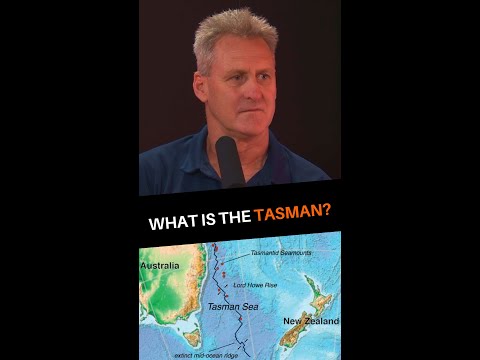
- start by explaining what the Tasman is. It's it's actually harder than it sounds. Uh way harder. Uh the Tasman is
- a pretty special piece of water. They've been crossing larger bodies of water for
- years, like the Atlantic, for example, that was pedled a long, long time ago. There's a reason for that. It exists
- with trade winds. So, you jump in a tractor, tire tube, way you go. You'll get there eventually. Um, the Tasman's
- not like that. It's because you've got a u you've got a a driving weather force across the top
- of the Tasman and across the bottom of the Tasman going in opposite directions that way. And in the Tasine, you got a
- whole lot of circles. So, you know, you think river, there's a whole lot of edies. Um, this isn't even a R river.
- It's a whole lot of eddies. The biggest, strongest Eddie, which can be up to six
- knots, is the East Australian current. You know, Nemo was actually, it was real. There is an East Australian
- current there, and it's quite strong, and it runs down the side of Aussie, but it's not like it's a river running down
- the side of Aussie. It's a whole lot of really big wagon wheels that if you know, if you're in six knots, you can't
- pedal to that. My speed's three roughly um on a daily basis. So, if I'm in a six
- knot current, I'm not I'm not I'm going to go three knots backwards if I'm pedaling into it.
- >> And then that also affects your angles, your vectors. Um you think, oh, okay, if
- I'm running at 90° to this current, I can go this speed. That's not actually the case. You know, you have to offset
- by 5 or 10 degrees to actually pick up speed. It's um that's the first thing you do when you're building a boat, but
- I guess we'll get back to that in a sec. Um, so the tasine is a bunch of circles
- which makes that body of water tricky which is why it hasn't been done till now.
- >> You know, otherwise it would distance-wise 2,200 that's that's not so much. Um, and the the Atlantic's much
- much longer, but it it's a far easier paddle. Even from uh this guy did um mainland US to Hawaii, that's a lot
- longer as well. But again, it's a it's a weather driven paddle. You're going to get there eventually.
- >> Mhm. Um, so I I would having not done that pedal, but I would view it as easier conditions wise and um and
- power-wise. So the power calculation when you go into the TASM, that's that's kind of step one. That's the tricky
- part. Uh, okay. First of all, how long it's going to take? Don't know. Um, and so how much food do I take? Don't know.
- Because how big am I going to build the boat? Don't know. I can build a bus, but
- a bus is not going to get into six knots very effectively. >> So, that's the first thing you got to do
- is figure out, okay, this is my vessel. Um, what does it do in a straight line into a headwind? What does it do into 10
- knots? What does it do into 20 knots? Okay, right, Neil, let's offset that by 45 degrees. And you end up with a wagon
- wheel of the boat's ability. That's what sailors do in their calculations. They've got, right? How much sail area
- have I got up? How fast am I going to go? Etc., etc. So, you've got to do those same calculations. It's amazing
- how many people get into this and don't start there. It's like, okay, what does what does your boat do? Uh, I don't
- know. Um, it's it's maths. It's just And you've got to do it to start with. Okay,
- now I've got a basic idea of how much speed I've got and what conditions I can combat when. Now, let's put those
- conditions into windy.com and say, "Right, okay. How how can I progress here?" um your weather's only going to
- be predictable for three days guaranteed and you know the forecasts go out longer
- than that but they're really not accurate. So uh you need to know what you're going to come up against which is
- a whole lot of circles. You're going to go backwards. It's nothing you can avoid
- out there because you cannot predict what's coming and you can't do anything about it. So there's sailing across the
- tasine is different to paddling because it's sailing. Okay, there's a big weather system coming. Maybe I can
- offset that by, you know, 100 mile. >> You can't do that in the kayak. So that's the first challenge to the Tasine
- is how big is my boat? How fast is it going to go? And then how much food and gear am I going to need to put in it? So
- what size boat do we build? >> Yeah. And and it's tiny. Um I've got a photo of it here. Um, this is the double
- Dutch. Like it's a it's a kayak. It's it's a it's a spec specially built kayak, but it's just a kayak like Lisa
- Carrington has at the Olympics. >> The the Yeah. Well, yeah, it's it's a double kayak, but yes.
- >> Yeah. The hull is actually double kayak length, >> 6.5. >> So, you can sleep in it, but it's um not
- particularly roomy. We'll we'll get into that too soon, but um Sure. >> Yeah. So, so, uh, 2013 was that false
- start. Like going back from that. Yeah. Yeah. When, when, how long was it from first
- having the idea of say of um, kayaking from Australia to New Zealand? >> Four years.
- >> Four years. >> That Olympic cycle. Yeah. >> Right. >> Yeah. >> Four years of like like like deep
- thought and >> Oh, absolutely. what I've just explained was like the starting point and you know we could
- just talk about that for the next two or three hours cuz there is a lot of detail
- to be had there you know what do we build the boat out of how robust does it really need to be you know based on on
- history clearly it's come apart for a few people um how do I want to approach this the same as this so you know go
- talk to people who's done what talk to sailors you know get as much information as you can understanding that they're
- still not doing what you're trying to achieve >> but No one had done this before though.
- >> No, exactly. >> So, yeah, that that would be my big thing. Like, how how could you be
- completely confident that the boat's not going to you be hit by a freak wave and
- snap in half? >> Yeah. Um, yeah, you you need to be you need to be. And again, it's amazing how many guys don't.
- I mean, there's a guy tried this in between my attempts and he uh he built his own boat
- and uh lasted not 48 hours and he was pulled out of the water and he didn't know why his boat sunk.
- >> Now, to me, that's a lack of preparation. Um I could have tried to build my boat in the garage as well and
- a lot of guys do this because it's way cheaper. It's vastly cheaper. Um but I I'm like, "Okay, well, that's exactly
- the consideration you need to start with. I need a boat that I can rely on and is safe and is not going to sink."
- Um, so, you know, people have had that idea before, you know, Titanic. >> Um, so I went to, you know, who's the
- best in the country that I can get to do this or or who's who's got the skills and is up there. You know, I I could
- have put a bit of, you know, carbon or or glass on over a mold and and had a crack at it and I think I would have
- done a reasonable job, but reasonable is not good enough. You want the best. >> So, you know, I went to Barracuda Kayaks
- and talked to Gordon who's got a lot of uh well, he built the Tasman, sorry, the
- Atlantic boats, the rowing boats initially um when they first had to do those. So, he's he's clearly got the
- skills in terms of production. Uh, and he's also got a kayaking history. So, it's like, okay, well, this guy's as
- close as I can get to as good as I can get. Um, so let's start there and let's start working with that.
- >> Yeah. And and you've still got the boat Double Dutch. It's in your garage at home.
- >> Yeah. Yeah. Second second iteration. Yes. >> Still in good nick. >> Oh, yeah. Yeah. I' I' I'd put it through
- a hell of a lot of testing, but I'd use it again. >> Um, it's it's a few years on now. Um, so
- >> yeah. How how do you feel when you see it now? Uh, >> is it like h happy memories or
- >> Oh, 100%. Like there's there's not one minute of this that I didn't love to bits if you said here's all the money in
- the world, you know, go and do it again. Sure. >> I I got to call [ __ ] happy place.
- >> There's We're going to get into this, but um there was a point in this uh successful crossing where
- >> you spent six days locked up in that tiny little cabin, which is like a coffin. Yep. Um maybe it's um is that
- type three fund like you look back now with the benefit of years of high sudden you think oh that was actually all right
- at the time that must have been miserable. >> It was only miserable because of the
- circumstances. I I'll get to that. >> Oh because you're being blown backwards. >> No no no. So um that's kind of a longer
- story. So in the first attempt >> Yeah. I'm literally, this is a longer story I guess, but the
- short story is I was literally going backwards in the middle of the tasine and Sarah's mom was ill and had been ill
- for a long time. Um, she was quite close with the mom and um I was at Lord How and I was talking to
- her again about, you know, how is she, where's she at and it wasn't looking great and like we' we'd blow the budget.
- It's just like I can't afford to fly to New Zealand. I said just go, you know, we'll we'll sort it out later. Um, so we
- had that discussion and I'm like, I'll I'll can this. I'll come home now. And she's like, no, no, she's still she's
- still ticking along. She's in the hospital, but she's still ticking along. No, you go. Um, little did I know, one
- day later, she passed. But she told me a few days after that and that happened to be
- uh I can't remember how long it was going backwards. I think it was three days going backwards and it just I found
- that out and then I spent three days going backwards. Now that that took some yeah that took some pounding and that
- was just because of the emotional situation. I mean the backwards part you expectations you know they're the mother
- of all you know you've got to you've got to be an expert at dismissing expectations when you're not dictating
- anything >> you know >> yeah I can't imagine the feeling of help helplessness at that point
- >> that that was fundamentally it you're just completely helpless I mean that's the only time I was upset and it wasn't
- for safety reasons or I That's what I signed up for. The the big stuff is fun and and you know, as as you've sort of
- suggested, I've got a bit of a history in sadistic type stuff. So, you know, I'm I'm type three fun all the way.
- >> Yeah. >> So, what are you feeling at that point? This the feeling of helplessness. Um are
- you feeling like guilty that you know you're you're out in the middle of the ocean bobbing around when you should be
- at home with the >> Well, I've I've put together a a very extensive psychological toolbox for
- this. So, that's that's what I I didn't A lot of people don't understand that there is effective tools for all of this
- except when you put that kind of weight on it. >> Um, but I've still got to survive. So,
- you can't you just can't lose the plot out there. Soon as you lose the plot, that's when your risk profile goes up.
- So, that was one of my main directives from the start. Yeah. So, I had to decide where am I going to go? So,
- Justin and James had had a pretty successful trip. So I thought, okay, they're the guys in terms of tracking
- that I want to replicate. Seems like a nice balance. >> See, so you leave from Coffs Harour and
- you're not sure where you're going to land. Just somewhere on the uh west coast.
- >> Yeah, >> like could be Raglin. Ended up being Tatanaki. Y >> um but yeah, anywhere in that sort of
- vicinity. >> Yeah, it's it's a bit of an ugly coast to try to land on. Um, I mean, New
- Plymouth is always the the aim, the goal. It's closest and and the water currents tend to take you there. So, the
- currents by Australia really strong, you know, up to six knots. Um, as you go across the Tasine,
- the wagon wheels get smaller, the currents get way more fickle. So, by the time you get to New Zealand, there's
- really nothing over two knots. Still significant, but way more fickle in the middle. And that's why you're going to
- go backwards because they're just not predictable. There's not enough data to predict.
- >> Yeah. >> What they're doing. >> So, um, 2014, uh, so we'll call this your first attempt cuz the one in 2013,
- you've, um, you're catching on. >> You've clarified that. >> You're dirty about that. I can tell.
- >> Well, it is like you wouldn't put that out the driveway in in your training diary. So,
- >> full start. I can I can tell it pisses you off and rightfully so. So, um, 2014,
- you're almost finished. You you're how close to land? Uh I don't know. 70 80. >> Yeah. What what happened? That's
- devastating. >> Um Yeah. Yeah. So the the first one was an adventure. The second one was a race.
- >> Um >> the first one isn't the one we're talking about where you almost finished.
- >> Yeah. Yeah. That was an adventure because you don't know anything. You don't know a thing. You really don't.
- Even though you've done all your as much planning as you can. So like rule of thumb, three things. If I've I've got
- three pedals, right? Um, you know, you've got two contingencies on everything, on your communications, on
- your paddles, on everything. So, that was >> Where are the Sorry, sorry to interrupt.
- I'm just looking at the photo. Where are the uh where are the other two paddles >> inside the top? They're strapped to the
- top, >> right? >> There's There's pictures on the internet of me inside the cabin that
- >> that'll show you that probably. >> Okay. >> Um, so what happened on the first ones? The
- first one was an adventure and that was if that was the first trip in that photo. There was a bit of intrepidation
- there because it's like what's going to happen? All I'd done is pedal out the driveway and back and that was a bit
- stressful in that uh on the way back the current's going so fast down the coast.
- I'm trying to make it into Port McQuary in the dark. never been there off GPS and I know it's a reasonably
- notorious entry to the um to the marina there. So, and I've never seen and I know the coastline's rocky. So when you
- can't see anything and you're approaching a a country that you haven't seen and so I had to on the way back in
- I had to paddle my ass off for I don't know at least 12 hours just to stop getting swept down to okay now you've
- got to pedal to Sydney. >> Um so I did that and then I came in and it was an outgoing current on the on the
- inlet. So I'm sitting there and there's it's it's quite a decent uh hall through
- there. I'm paddling into about three knots and my boat only goes three knots. So, I'm doing I'm It took me I think an
- hour and a half to get 200 mters to get in there and then get out of the current. So, I was paddling my ass off
- just to get it right because if you get it wrong, you're in the rocks. >> Your boat's getting, you know,
- everything you put your life into is getting damaged or um so that was that was kind of fun. And uh so the second
- trip uh obviously I changed the dry bag that that was supposed to contain the satphone. So um you know I'd made a
- couple of changes but I didn't have that much experience. So but that was an adventure I was really looking forward
- to because it was exactly like no one's done this. >> That just excited the hell out of me
- because I was prepared. >> Uh and in retrospect I was more I was actually prepared more prepared than
- most of the guys I see doing this. um you know because I did have good knowledge on what my boat could do, what
- could and you know so I I was happy to go out there and and and get into those conditions. Um
- >> exciting. >> But after after almost finishing and and not completing it. Um yeah, how's your
- mental health after that? >> Great. It was the right call. Um you know, >> you were so close though.
- >> Yeah. In a lot of ways, I I would think this is from someone that's never done
- anything like this in their life. Um it'd be better to bail after 10 days, you know, rather than get that far, so
- close to the finish. >> Well, yes and no. Um like I was I was super stoked with the first trip
- because, you know, these things are about the journey and all that and yes, they are. I mean, I want to win, but um
- they are about the journey and particularly in something like that, it was all about the journey and I
- literally got everything. So, I got off the boat going, "No, I'm done." Um, because I I got absolutely everything
- from the trip except the finish. And that the finish wasn't really the point to be honest. Uh, I I genuinely did did
- uh have the experience. Um, and and that was again, I enjoyed every single minute. I mean, that was the things that
- went wrong. That's kind of the dealing with it's the cool part, you know, handling yourself under pressure and
- just life's wonderfully simple out there. You know, it's just so pure. Something goes wrong, the decisions to
- me are very straightforward and very easy. Um that's that's because it's experience-based. Um so what what
- happened in the first trip? It it went pretty well. Uh and then uh the yeah, on the first trip it was
- battery. So, uh, I wasn't planning to call into Lord How, but it was there as a redundancy. And then one of the
- $6,000 batteries that I bought, lithium, um, dropped a cell. And one of the hard
- calculations, again, maths, is this boat is not big enough to have enough solar to provide you with enough power for the
- trip. So it was always like I went to um um the Brisbane University and their solar car team and um you know I went
- through all the solar options with those guys and they were pretty much worldleaning
- and you're always going to have a decaying um summary on your your solar. So it was only going to last so long.
- And um when I dropped a I dropped it was a newish battery and it was supposed to
- be you know the best >> and dropped a cell. It's just I didn't know it dropped a cell. I just knew it
- wasn't working properly because I didn't have the um uh the options to figure it out. But um
- so okay safety let's make the call. Let's go into Lord How. So I went into Lord How um and then got that had to get
- another battery from Aussie. So that took a few days. Um then got back on the road um which delayed us a bit but it
- also allowed me to restock the food supply. So left that with uh you know with a B in the bonnet and said
- let's go. I'm I'm into this. And um yeah it was really good. And then I was making great progress. Yes I got slapped
- back a bit but you have to expect that. Uh, and and it was it was pretty cool and all my safety options were working
- really well, you know, eg when do you get out and start paddling and when do you not. Um, and then I got up one
- morning and my rudders hanging off by one pin. So there's three stainless pins. The bottom pin and the top pin had
- been ripped off. I'm like, how does that happen? So they were six mill six mill pins. So pretty solid.
- But the rudder was designed to break if I hit something solid. So if you go, you
- know, everyone's like, "Oh, you'll hit a container." I never s saw a floating container. Then you're highly unlikely
- to. But um if you run into something solid for some reason, you don't want the rudder to pull the
- ass off your boat. >> So you design it so it doesn't pull the ass off your boat. So I've got these
- three pins that are technically if you hit something hard, it should break. And then you replace the pins and replace it
- with your spare rudder. and you know, three spears of everything. >> Um, and I got up and this it had just
- been rotated off. So, it was it was a big fish that flapped its gummies around and rotated it. So, probably a shark cuz
- they explore, but I didn't feel it, which is unusual. Uh, which also means it was kind of soft. So, it was it was
- just rotated off. So, uh, I'm in declining weather. So, I've got about a three three and a half meter swell. Um,
- I've got one pin flapping around like this with the rudder system on it. I've got to get in. I don't have a choice. I
- have to get in. I can't wait. It's going to get worse. And if that pin pulls the
- ass out of the boat, you know, I'm getting water in there. I'm not going to sink completely cuz it's
- compartmentalized. But, you know, it's I'm going to sink partially. So, in I got uh and this is getting quite far
- south. So, one of my main concerns is hypothermia. Um which I've had a little bit of practice at dealing with. So, you
- know, I'm straight in there. I'm like, right, I need a plan on how to get. So, I get in there, I do an assessment.
- Um then I get back in the boat, start thinking, what tools do I need? You know, and this is all straightforward
- when you're sitting here doing this. But when you're in a 3 m swell and you're in
- I don't know what it was probably 14 13 degree water uh and you're carrying no body fat and you've got to
- figure out a plan on how to fix this rudder. So I've got spare pins and I get around the back and the pins have
- actually sheared off. So I can't just pull it out and put a pin new pin in. Uh, and then I need the tools to to get
- the other pin out, which is bending and throwing around. So, I've got to get the
- rudder strings off first. So, I've got, you know, three or four tools. So, you're in a three and a half meter
- swell. You're in the boat with some tools, and then you've got to be out of the boat with some tools. So, normally
- I'm going to put a string around my wrist and make sure I can't drop the tools. I don't have time. I have to get
- this bolt out before it really does some damage. So, you know, um I've I've got this tool and I've got a backup, but
- it's a really primitive option. So, you know, I'm out there in a three and a half me swell boats going like this
- trying to get the the um the rudder off and uh succeeded. Uh and then I also, you know, I've got the watch on. I'm
- measuring exactly how long it is before I'm start starting to get symptoms of hypothermia. So my first trip was about
- 22 minutes in the water and I'm like, "Okay, no, I can't be that long." And then you you're cold, so you've got to
- go and recover, but you've actually got to get straight back in to fix the the immediate problem straight away. So
- calculate it. Probably got about 18 minutes. I certainly haven't got 22 minutes in me. So let's get back in and
- and get that rudder off. So got that rudder off and then the whole process started. Right. Okay. The danger's gone.
- Um now I've now I've got a check in the back compartment. And I've got to do all
- this before dark and then I've got to radio it in and say, "Right, get the experts on it and and let's let's see if
- we can uh get some mental power on this. See if we can fix it." >> So the experts on um Yeah. So they can
- talk you through it. >> Yeah. What What ideas have you got for the solutions for this? So I give it to
- Nigel and then the the academic process starts and I mean Nigel's about the best
- guy that you can have on this. I mean he was he he was police SARS um and he's he's very military in his
- thinking. >> Um he was armed offenders uh leader in in for many years. So he's he's used to
- dealing with life and death situations and I think that's important >> for for that role.
- >> Yeah. You you you talk about this stuff like very um like matterofactly and almost you know kind of blasze but it's
- like um you know 22 minutes in the water then you go and warm up like you there's
- no hot shower or anything like there's um and you say call in experts like no one's no one's coming out in the
- speedboat to get you. You know you were so alone and isolated. >> Yeah 100%. And but that's what that's
- what you signed up for. If if you're not prepared for that, then it's amazing how
- many people do sign up for it and are not prepared for that. It's it it blows my mind. But
- >> well, if you're doing it if you're doing it for um the cloud of the glory, like
- there's plenty of easier ways to do that, right? >> Yeah. Yeah. Sure. Yeah. Absolutely.
- >> So So after um yeah 2014 where you're almost finished and you don't um Yeah. What's what's the thought process or the
- discussion that goes on before you decide to do it again in 2018? >> Yeah. Oh, so there's actually a lot more
- to the rest of this story. Sorry. >> Um, so I'm without a rudder. Bottom line is I'm without a rudder
- >> and there's no solution. We can't put a rudder on the back. Um, because I've got
- nowhere to anchor it to. Um, so it's like got no rudder. And and so okay, sleep on it. Uh, got enough food. I'm
- healthy. I'm safe. I'm fine. Um, so you know, Nigel starts exploring the options
- of of getting a pickup. Any craft in the area? you know, how long is it going to
- take? Um, and then I'm in the cabin. And in the cabin is physically harder than out
- paddling. Like, you know, first couple hours is fine, but if you're in I would rather be paddling for 10 hours than in
- the cabin for 10 hours. It's not a comfortable place to be. Um, >> looks like a coffin.
- >> Yeah. And every time you're in there, it's generally because the weather's [ __ ] Because the weather's not [ __ ]
- you're out pedaling. So if you're in there, it's like being in a washing machine. So you there was a lot of
- habits and routines that you got into. It's all about the detail. So if I'm lying in there and I'm lying on a you
- know little sleep mat, foam sleep mat thing and if you're in a anything really in a decent chop, the boat's going like
- this all the time. So, if you're lying there for three hours and you're going like that and it's sitting your elbow's
- sitting on rubber, you're going to get an abrasion there within three hours on your elbow.
- >> So, you have to readjust your position. Um, so on the first trip, I had a a shark skin top. Uh, I just cut the arms
- off and I put the shark skin arms on because it was too hot in the you don't want to have a top on because it's
- actually quite warm inside. Uh, and but it was too hot. But I just cut them off.
- So, I had to do that. But even if you do that, you know, there's going to be something in your shoulder that rubs.
- And as soon as you get an abrasion, you can't fix it because you're wet just about all the time.
- >> So, yeah, it's I didn't want to be in the cabin. So, I got out of the cabin for a little bit exercise cuz I needed
- to just stretch out. And I'm like, I've got no rudder. So, I started edging the boat, which is where you lean your hips
- and you put a couple of stronger paddles in on this side. and I end up making about
- 7 or 8K. And then I went back in, slept on it again cuz there's no rush. There's no
- hurry. Everything's safe. And so we were, you know, that was our protocol really. We just there is no hurry. And
- I'm healthy. I'm good. I actually just made some progress. And I said to Nigel, I'm I'm going to have a crack at it
- tomorrow. And I made about 12ks the next day. And I said, just put a hold on that. and
- uh let's give it a crack. So I'm paddling around in Tasine with no rudder, which is ridiculous.
- And so I ended up teaching myself how to pedal again, which and that's probably one of the most exciting things
- personally uh from from my point of view that that I learned to do. I learned how
- to pedal again. So I made progress more and more each day. And then you know when the wind's blowing from 15, it
- hardly ever blows 15. It's usually more. when it's blowing 15 knots from your right, you're edging all day and really
- leaning on one arm um to just try and keep straight. And then it gets to the point because as
- soon as you've got something in that quarter ahead of you, you've got nothing that you can do about it. You have to be
- on the on the anchor. So, you can't really pedal on those days. So, it was just an adjustment of the mass equation
- that I had originally on your vectors. And I can do this. Look, I've still got food. Let's go. I'm just going to keep
- paddling and I'll see if I can get closer because I'm kind of very close in the middle. And so Nigel starts working
- on a whole lot of other contingencies. And I uh just kept paddling and kept paddling and then I got to the point
- where I was one day and these are the days you dream about. There's 30 knots behind me on a 5 m swell. And so I'm
- sitting there and I mean when the white water comes across you put your arms up to hold the paddle out of it and the
- white water is so heavy it just presses you into the kayak. And um I started surfing these waves and that's that's
- kind of fun at the best of times. Um but I had no rudder and it's so really easy
- to broach and I figured you're operating off your eyes and so I had to change my
- sensory input. So I started closing my eyes a lot and just using my ears. So, it's cold. So, I just put my beanie up
- and I started feeling the wind on my ears. And as soon as I felt the wind on my ear, I leaned and compensated. And
- that meant I could surf. If I waited till my eyes saw what I needed to do, I I'd broke. I couldn't do it. So, I ended
- up being able to surf 5 m waves with no rudder with, you know, a 400 kg boat. And um I've never had so much fun in my
- life. It was so good. And I never got it wrong. >> How long did that last for? How do I
- last? What the wind? >> Yeah. No, just just riding these waves in the middle of the tasine.
- >> Oh, it only lasts a day or two at the most because the tailwind because of the
- circular >> you only ever like you dream for those days, but honestly I felt robbed both
- times because it would have been less than way less than 10% >> of the time. You know, those are the
- ones you live for. I had one at the end of the the last trip >> and I made, you know, I made great
- progress really close to the mountain. That was a whole lot of fun. But I had a rudder.
- But yeah, learning a new skill in the middle of the tasine, just adapting your whole
- >> way of doing things uh was was exciting. That was that was really great for me.
- >> Yeah. Uh and then so yeah, anyway, I I was late because I wasn't making as much
- progress as I should. Um so I was going to run out of food. I was always going to run. So Nigel ended up contacting uh
- John Fenel who's a rescue pilot of fairly fairly uh well known in New Zealand and
- they started dropping drums into Lake Talpo from a great height. So they figured it out and they they
- figured out how far can we fly out and so they flew out and did a food drop. Um, the first food drop was as far as I
- could fly basically. Uh, and I think they dropped two barrels. The first one did explode, so I lost that one, but um,
- I was able to get it. But, you know, I'm sitting there in 25 knots of wind, which
- is not a lot for the Tasine, but I've got no rudder and I've got to paddle around in circles to get to this this
- little parachute thing. Uh, and then then it's like Christmas. You're getting into this barrel and there's just all
- kinds of food and it's great. And you know, like there's um Nigel Nigel's, this is the level of detail that we go
- to. So Nigel realized there's going to be pressure on impact. So um he buys a peanut slab,
- he pin pricks the wrapper, deflates it, and then tapes it because the pressure of the impact would explode the wrapper
- and explode all the food. So he he literally had done that. He he'd thought about it and because of the practice he
- he'd pin prick the wrapper, got all the air out of it and then put a bit of electrical tape on it.
- >> Wow. >> What he hadn't thought about was that my skin was so soft that when I went to
- peel the electrical tape, it would cut me, >> right? >> Yeah. Like it could literally go through
- my fingernails, >> so yeah, the the level >> Did you have a knife or a blade or whatever? I did. I did. And I So, I had
- to open the peanut slab, but like, you know, I'm I'm starving literally and these peanut slabs and stuff turn up and
- I'm like, and I want to get into this peanut slab. I don't want, you know, I don't want to wait. So, then I I figured
- out I had to get my, you know, knife out and and actually open it up with a knife.
- >> So, yeah, the the level of detail on skin integrity is probably the hardest thing on this whole trip.
- So yeah, I I got in there and then I got to 70ks off and then I was running out of power. I was running out of
- everything and I ended up in a six-day blocking storm um which the media got a hold of. It was taking roofs off in
- Oakuckland and but it was it was just kind of normal to me. But I couldn't make progress. So, I was just on anchor
- for six days in a blocking storm. And then it got to the point it's like, hey, I can't produce any more power. Um, I'm
- I'm getting low on food, but I probably can survive another couple days, but I'm
- getting low on power. If someone comes out here, they're not going to see me. I'm done. Um, and I was only 70ks off.
- And there are there are big big craft out there. Um, and if I go somewhere, I'm go I can't recharge my satphone for
- tomorrow. I can't talk to you. I'm out of power. The only thing I can let you know about is the E-B.
- >> Uh which is what you pull when you're in a in a panic. >> So that's a calculation. No, that's too
- far. We can do something about it. We did something about it. And I never had any issue with any of that decision.
- That would to me that was just straightforward. I'd do it again 100 times out of 100.
- >> Like common sense. >> No calculation. Safety is a calculation. It's like, okay, you know, if if there's
- a problem that you haven't foreseen, like Lord How, you know, I didn't have to stop at Lord How at all. I could have
- just kept going because I can manually pump water. I could have survived. Um, but I, you know, I wanted to do it
- non-stop, but that's a rule you've placed on yourself. And that's something I learned from Andrew. Don't place rules
- on yourself. >> Safety is calculated based on what you need to do and what is available. So, at
- the end, the risk profile went up. The danger was high. I was going to run out of comms, which is the biggest danger. I
- couldn't tell them whether I'm in the water or not. Um, so all I could do is pull my earb. And it's like, okay, no,
- we can do something about that. So, we will. >> It's a calculation. It's It's got
- nothing to do with how you feel or where you are or what you're trying to achieve.
- >> It's just a calculation. >> Yeah. By the way, Lord, how that you've mentioned a few times. So that's um it's
- an island in Australia waters. I think if you fly there from Sydney it's like a couple of hours flight, right?
- >> Yeah. It's um 600ks off off Port McQuary >> probably. So um yeah, how like how are we not how are we
- not depressed after 2014 after going through all that and making it so close? >> I I got the journey. The journey was
- fantastic, you know. Well, you know, if you go if you go for a marathon and then
- absolutely blow a hammy at at um 41ks, >> you did all that training, you know, you
- you got from here and you got up to there. Sure, you'd probably have another crack at a marathon. It's more
- accessible. >> Uh this is less accessible, but um >> but you don't get the finishing medal.
- >> No, you don't get the finishing medal, but it was never about that. And there
- was never going to be one. >> It's not that kind of project, you know. Um, but again, I wouldn't change that
- safety part of the part of the journey was putting together a safety protocol that was effective.
- >> Um, and it was effective and um, and you know, we're both pretty proud of how we
- operate like that. Um, and that's what does make it safe. That's why Sarah has confidence in what we're doing is
- because, >> you know, we treat it like a military operation and that's that's the best way
- to go about it. Um, >> yes. So, so after 2014, it's another four years before you have the the
- successful attempt. >> Um, >> you you've explained the safety stuff really well. Um, was it hard getting
- Sarah over the line to do it again though, just in terms of like the um >> I don't know. You're putting your lives
- on hold in a way, aren't you? Like financially as a couple or a family, you can't progress forward.
- >> And that's that's probably the main main thing. So, that's when we said because
- we thought we'll do this. we we'll take the box and then we we might it's a good
- time to go overseas and just have a bit of a you know live overseas for a bit. We were thinking maybe Europe. Um
- but then it was probably six months passed and and there was like financially there's no way we want to do
- this again. This is just crazy. Um, and then uh I came across a couple of people
- who were interested in chipping in and they were like, "Oh, why don't you do and I'm like, actually, I really do want
- to do it." You know, it's like playing the game of golf, you know? Oh, I can do it better than that. But I had all this
- information. I had this massive body of information and I'm like, I really want to do it now. So, it's like doing your
- first Iron Man. You don't know what you're in for, but once you've done one, it's like, oh yeah, I can do way better
- than that. M >> um you know your just your um comprehension of what the capacity is
- for you to go better and this is kind of more exciting than Iron Man because the
- amount of detail in it was was like I say even the safety plan wasn't boring. It was it was I think reasonably world
- leading and exciting to do and exciting to put together and get it right. And I'm like, okay. So, for example, uh we
- now don't have three P we have three pins in the back of the boat, but we also have three new holes drilled, you
- know. So, if it snaps off again, you've got other holes you can use. Um so, just
- those those learnings uh I wanted to put them in and uh we so we had a little bit
- little bit of momentum. Don't get me wrong, it's not like someone said, "Oh, you can
- >> it was certainly going to be a" and so we thought, "Right, let's kill the birds. let's go and spend our oe time in
- Aussie which was great moved to coughs um not necessarily cuz we were planning to
- start from coughs for the paddle we moved to coughs because I looked at a map and said right okay we love the salt
- water because we come from Rooua which is paradise but there's no salt water so we've got salt water we got the waves we
- got what we want but I need the mountains as well because I want to be able to ride my bike so where do the
- mountains get close to the water coughs so um you know you and go for a swim and
- jump on your mountain bike and go straight up the hills. It's like that's my idea of paradise. Um so that's kind
- of kind of why we went there and um and also met some lovely people that were keen and helpful and um you know made
- some great friends. So we had a paddle aside, we had an amazing time in coughs, which was what we went there for.
- >> And you know, the young fell got to experience some, >> you know, but a slightly different
- culture. >> Um, and but you know, in terms of the boat and the the paddle, it was all it
- was all there and and a lot handier. >> Yeah. >> So yeah. So when you take off in 2018
- from Coughs, so um your wife Sarah is there, your son Zach who's like eight at the time.
- >> Yep. Um yeah, eight's a good age. Like um they you kids can understand what's going on.
- So how do you guys communicate it to him what you're doing? Like dad's just going
- for a paddle. He'll see you in a couple of months or >> Yeah. Well, he kind of grew up with that
- because you know, dad's just going for a ride. See you 5 hours later, you know. Um so it wasn't really much out of uh
- out of the realms. And he's I mean he's a product of the lifestyle as well in that we went to coughs. So
- I've got a I don't know three four year old when we go to coughs and he's here's
- your water safety thing. So I walk out to the beach holding his hand and there's a you know half meter swell
- coming in and I let let his hand go and I let him get wiped out. You're standing
- there to pick him up when you need to but you let him get hit by the wave. So cuz he's going to be spending his life
- in the wave, you know, he's got to develop that respect for it. And so you just let him get bold and and they've
- got to I know I have taught his natural affinity to you know be able to hold his
- breath and he he'd learned to swim through me. So, um, you know, just here's the wave, belt. Boof. And, you
- know, at at age eight, we were we were I was body surfing 3 m swells with him on
- my back, you know, and I had 100% confidence he could get wiped out by a 3 m wave and pop up and be happy on the
- other side. So, yeah, it was absolutely nothing out of the ordinary for him, you
- know. He's like, "Oh, it's the sea. That's that's it's what we do." So, he was he was um communicated the
- message that there was absolutely no doubt that dad was going to make it at the other end.
- >> Yeah, it's it's a big thing and there's some risk, but you can't talk to an 8-year-old about risk.
- >> You can't even talk to a 15-year-old about risk. If >> if you if the 2018 attempt wasn't
- successful, would you have gone again? >> Uh, highly unlikely. >> Yeah, they would.
- >> Just just financially. >> Simple as that. Like, I really did enjoy every minute. I enjoyed the big stuff.
- That's what I signed up for. Um, and you know, the the the polarization of of the
- activity out there, like very few, probably two nights, maybe three in both trips. You couldn't tell um the water
- from the sky. It was just that flat and that, you know, there were stars everywhere. And then you start paddling
- and there's phosphoresence in the water. is just stunning. And then 48 hours later, you're in a 5 m swell with a
- 6-second interval that's beating the absolute crap out of you. It's just it's just beautifully polar.
- >> You were talking about this um this um crunchy stuff with a real sort of glint
- in your eye, eh? >> Yeah. Yeah. Yeah. Absolutely. Yeah. >> You love it. Okay. Um Yeah. So, so what
- about the training before you get even even in the water? Because you're paddling for say up to 16 hours a day,
- right? >> Yep. So what does training look like both physically and mentally? >> Oh well that's a really good question
- because I you know especially when it comes to endurance we we quite often train our psychology
- every time you take a step running or you take a take a pedal biking you are training your mind it's part of the same
- package and you should train whatever you're trying to train for. So mentally um there's the safety side and that's
- academic. Um but physically I've got a you know I've got a background and stuff. Um
- and it's a it's a varied background. It's it's not a or some people might call it an elite background, but it's
- kind of what I've did wrong that taught me more than what I did right. For example, I I was busy coaching one
- summer and I said, "Right, I'm going to do coast to coast." So I did coast to coast. My biggest week of training was
- five hours. >> So um >> that's shocking by the way. That is terrible. >> That is that's yeah that that is a
- shocking. So you're going into I don't know 14 hour race of 5 hour week under your belt. So I was just working and and
- I went into that and I said right I'm well I had no other default setting. I'm a racer. I'm just and that challenge
- appealed to me as much as trying to train properly and win the race. And so I'm like, "Right, here's me. Here's my
- body. What can I get out of my body today to get 100% performance? Something's going to go wrong. I'm going
- to pull something, strain something. I'm going to have to adjust. You know, I'm going to have to tape my ankles because
- they're not as trained and as strong as they should be." and you know, so that's
- just the way I I rolled and I you know, I still got I don't know, top 20. So I was just I was just I was just wired
- like that. I didn't need the others to make me go fast. I could have gone and done it on a different day and gone just
- as hard. That's just how I was wired. And I was just as happy with doing that as I was with training properly and
- trying to go top five, you know. Um and and that's what taught me a lot of things, you know, how to change muscle
- groups and and look after one muscle group and then because that happens every day when you're on the smash for
- 16 hours, sort of five or six days in a row, something's you're all you're straining things every day. And so
- you've got to figure out what pressure you can apply and what the limit is and what's pain and what's injury. And
- you've got to have a very good clear understanding of what what that is. >> Um yeah,
- >> you you must have been match fit though, like I um as in did you do some 16-hour
- days or you you did some overnights on the on the boat? >> Yep. So with if you're trading for Iron
- Man, your physical pattern is the primary objective of your plan. So, you know, I've got to get up to a certain
- amount of hours at a certain amount of intensity, and that's the primary objective of your training schedule. So,
- my primary objective was it was probably third on the scale. So, if I went out for a 24-hour paddle,
- um my main objective would be, okay, I've got a one one and a half meter swell today. Can I get inside the cabin?
- Can I sit on my legs and knees and heels for three hours while I take the water maker apart and put it back together?
- That's more important than the 24 hours of paddling. So all of my training was course specific. So it's not nec Yes, I
- paddled for 24 hours, but I spent 3 hours inside the cabin. That's physically harder because I don't know,
- especially at this age. Have you tried to sit on your ankles lately? How long have you sit on your ankles for? So, I
- literally had to train myself to do that. So, every time I'm watching TV, I'm sitting on my ankles and stretching
- them out so I can get them to the point. I mean, that boat's not very wide. I could literally turn around. So,
- training is worst case. Get it wrong, get it wrong, get it wrong, bust everything, repair it, and go again. So,
- training's objective was not the physical 24 hours because like I say, I can kind of handle that. Um, I've just
- got to know when to back off and when when not to. Uh, yes, I have to have a training volume. So,
- >> but I suppose when you when you're out in the water for that long, you're going
- to get you're going to get match fit as you go. >> Yeah. But most the the majority of my
- training was in a K1 on a river dead flat. >> And it basically was dictated by the
- weather. Every time it started getting shitty, that's when I went out on the on the sea. So, okay, you know, learning
- how to do things like replace your water maker while you're in a swell. Um, pull
- it apart, do it. Um, you know, getting in and out of the boat. So, what's what how do how do we test this boat for real
- structure? You go out in the surf. Okay, it's a 3 m swell today, right? Go out in
- the surf line where it's breaking. Anchor there. Get in the boat. Then figure out when it's safe to get in,
- when it's safe to get out, and how much of a pounding you can actually handle doing that. So then you know exactly
- when you should be going out of the boat and when you shouldn't be. It's not go out and find out when you're on the
- Tasman. It's, you know, uh what's his name? Chris the sailor, the round the world sailor. Old school. Hey, I mean
- that was his motto for Dixon. >> Dixon. That's it. >> Uh that was his motto. You know, go out,
- break the boat, sail it hard, and then fix it better. Go and break it again. Fix it. And then you're then you're
- ready to go. I I love that so much because we you know you hear the saying um failure is a stepping stone to
- success but this is an example of that in like real life terms high risk terms as well.
- >> Yeah. Exactly. And then like if you've gone out there and you know exactly what
- your threshold is for getting in and out of the boat. You don't know. You don't know how fast you can corner on a bike
- until you've actually come off. then you know then you know what your limit is and you
- know exactly where it is and you know whether you're in within 10% of it or 20% of it when you're cornering. So it's
- it's exactly like that with within the boat. You've got to find ways and if you've got 3 weeks of fairly flat water,
- you can't do it. >> You got to wait. >> So So when you're out there on the Tasine, um average 24-hour cycle, what
- did that look like? Was there such a thing as an average 24-hour cycle? So, there's a whole lot of things that
- come into a 24-hour cycle. So, basically, if you can paddle, you do paddle uh at least 16 hours a day. That
- was the objective. Um, but in order to do that, you've got to have a few things. First one, safety. Is it safe to
- get into the boat or out of the boat? I say, okay, I've got I've got a 3 m swell
- at 15 seconds, which is quite a long interval. So, there's only there's a little bit of white water around that's
- increasing over the next 24 hours. I know that it's specifically it's increasing overnight.
- Um, so am I going to get into the boat or am I going to the dangerous part I identified the dangerous part which is
- getting from the cockpit to the uh cabin and vice versa because >> you can't be attached.
- >> Okay. So you're untethered for that short moment. >> For the short moment you're untethered.
- So that is the least safe process of the of the whole thing. So you have to get that right. It's not a It's not like
- Oops, got it wrong today. >> Yeah. Yeah. But when when you get fatigued, it's so easy to make mistakes.
- E, and slip up. >> And that's just it. And that's a mental state of mind. I mean, you train your
- brain to be able to do that. So, like I used to run my swimmers to the top of a hill, swimmers to the top of a hill, get
- their heart rate, check it, and say, "Right, oh, here's a here's an algebraic equation. Who's who's going to win?" You
- know, it's it's just something you practice under pressure. It's something you practice under pressure if you you
- go in the military at the SAS end. It's it's a trainable concept. Every concept is trainable, especially when it's the
- gray matter. So, you know, uh uh claustrophobia. Most people jump in my boat don't last a minute in there
- just sitting there. Um let alone in a washing machine. So, and I got comfortable with that pretty
- quickly. I mean, I'm not particularly claustrophobic, but I wasn't also particularly comfortable. So, uh, I went
- out there and, uh, two things I did. First thing I did when I started sleeping, I was getting
- used to being seasick as well. So, I stuck my head up the pointy end of the boat. So, you got you got the air and
- it's also the part of the boat that moves the most. So, I was just working on getting used to being seasick. So,
- uh, anchored the boat and slept slept there. And then um also the claustrophobia part. So I now need if my
- head's up here. Think about that boat. If my head's at the pointy end, how do I turn around?
- Boat's about this wide. So I have to get flexible enough to be able to pull my knees and legs up to rotate round to get
- my head back up the other end inside the boat. Uh worst case, if it's on its side, it's never going to be upside down
- because of the nature of the build. All right. What's the worst case now? What if the doors open? So that's what I did.
- I I got uh my head up the pointy end. I got Sarah in there and it's one of the reasons what I got Sarah was to, you
- know, make her a little more comfortable. And I said, "Right, I push the boat down and flood the boat while I
- my head's up the other end and I've got to get out." So, you know, worst case scenario, think of it, practice it, do
- it, and then way we go. So, I'd done all of that as well. That little cabin that must have stunk
- >> apparently. So apparently I got cuz that's the first thing Zach said when he got I got off the boat. It was on TV.
- You stink dad. >> Um I'm like >> quite acclimatized. >> Um what was it what was the most
- frightening moment in that 2018 crossing? What was there any like it seems like you were very very matter of
- fact and compartmentalized but >> I mean again the whole process if you're frightened
- go back do some more homework you haven't been there if you're frightened you haven't been there you haven't done
- your homework you haven't been in rough enough conditions you know go get some practice and then turn up so you're not
- frightened so um you know u Liam Lawson doesn't drive frightened there's probably a period where he's going into
- a war going, "Oh shit." But he also knows he's got the safety gear around him to to probably take the hit.
- >> Um, and it's exactly the same. If you're frightened, again, right from the the
- McCauley thing, it's not how you should be out there. >> And if you're frightened, you're liable
- to make a poor decision. So, I really tried to make sure that didn't happen. >> So, there there was nothing that
- happened in in that 61 days. Wow. >> Yeah. >> Wow. That is uh >> well it's the same for sharks. Um you
- know people are like oh shark shark that is such a psychological and normal person thing to do. What
- what's the danger from sharks? It's where they live. So um training a um cookst straight swimmer. Don't like
- sharks. Fear of sharks. Fine. All right. Let's go to Kelly Tons or let's let's go
- and get in with them. All right. then let's get in the open water with them and then you know find a way go find a
- shark and you know make friends. Um you know get used to being in the environment. If you're not used to being
- environment and you're going to freak out then don't try and swim the cook straight
- >> you know. So it's it's all trainable stuff. It's it's gray matter. >> Um another guy uh managed to do it in
- 2023. Richard Barnes. Um do you know him? Did he speak to you? Did he contact you? What when you get a phone call like
- that? What do you What do you say? >> What do I say? Um, well, I try and go through a lot of the
- stuff we just went through. Um, you know, >> but there's Yeah, just for example, his boat was too big
- in that he did not have much control over his vectors. His boat was just too big and his power was not enough for the
- vessel that he had. I mean, he ended up several hundred ks south of New Zealand about to travel past, which is how the
- wind works down there. And he got two weeks, nearly two weeks straight of a suddly that blew him back to New
- Zealand. In my books, that's incredibly lucky because that weather doesn't happen that often down there. And the
- weather he got on the his crossing was really quite good for the Tasman. It was it was almost ideal.
- >> Um but he wasn't able to control his vectors because he had the wrong boat versus the wrong power
- >> number. But he did he did talk to me. What he took on board, I'm not sure. Um
- I actually had a hand in getting him off the water in a previous trip. >> Um yeah, the less said about that the
- better. Yeah. Yeah. Does it frustrate you when people do it and they're not as um adequately prepared as what you were?
- >> Well, I I I don't blame them for not not being prepared as as I was. And you know, I try not to apply my, you know,
- my standards to anybody else. I'm no uh I'm no authority in in some sense. Um but the basics, the the stuff that I can
- explain to you that you can understand straight away, that frustrates me. >> Yeah. what you're saying it makes makes
- perfect sense. >> Yeah. >> Makes I still wouldn't want to do it. >> No. And nor should you.
- >> But it makes a lot of sense. And there's a lot of stuff that you've said that you
- can apply to um just about anything really. >> Absolutely. Well, like I say, this all
- came from my coaching people to do stuff. >> Yeah. >> You know, so um I had swim squads for
- for many years and and it's >> there's not not a lot more honest than a black line in the pool.
- >> Yeah. >> You know, and you've got you got all of the same concepts. you don't have, you
- know, you don't have the gear arguably, but uh yeah, it's it's all fairly manageable stuff. All the information is
- out there. Um but you it's it's up to you to organize it and prioritize it. >> There was a period for you out there
- where um the storm was so bad that you were locked in that um little cabin, which we've described as like a coffin
- for six days. Um >> Yeah. How was your mental health then? >> Okay. Uh, not good. Good and not good.
- Cuz you know how on the first trip Sarah's mom died? >> Um, Sarah wasn't that close to her dad.
- They'd split up. But still, you know, they got on a right. >> And your dad's dead, right?
- >> Yeah. >> Regardless of the >> Yeah. >> closess. >> Can you guess what happened while I was
- going backwards in the middle of the tasine? >> You can. >> Yeah, >> you can. Yeah.
- >> So, you've got um you got a satellite phone. >> Yeah. >> Why Why does she Why does she tell you?
- >> Um >> did she consider not? >> That's the kind of relation she did consider not. And she actually didn't
- for a while. She knows I can cope with it. And she als That's the kind of relationship we have. You know, I'd
- rather she did. >> I I don't want her to look after me. I just want us to be open,
- >> honest. And that's >> Yeah. Not even that. Just Just keep it direct. keep it simple. Um, you know,
- let me deal with my I mean, uh, I was upset about the mom cuz I knew she had that kind of relationship and and I
- wasn't there emotionally for her. Dad was less of an emotional problem. But, you know, just she's got to organize a
- dad's funeral. Well, I'm not there, you know. Um, that's helpless. >> That is utterly helpless.
- So I, you know, I'm so good at my job out there. She knows that's not going to make me unsafe.
- And to be honest, that's a big call cuz, you know, you, like I say, you've got to
- be. But having said that, people have survived in being emotionally unstable. But
- you're you're increasing your risk factor a bit there. >> Yes. So yeah. So what's going through
- your head? Like what's your thought process at that time? So you're six days. >> Yeah.
- >> In this tiny tiny little cabin. >> Yeah. Well, >> nothing you can do. Just total help
- helplessness. >> Actually, I've had some experience here, >> you know. >> Yeah. >> Uh oh. All right. So, that's a a hard
- thing to take. One of my logistical fauxars was down the bottom of my list in terms of
- importance was music. Because people say, "What did you do?" You know, "Did you listen to music?" I'm like, "I'm
- never bored there. You're always doing something. You're always making calculations,
- uh, regoing over your safety. You're constantly calculating vectors in wind." So, I'm never chilling. There's no point
- where you're chilling. So, down the bottom of the list is the iPod. Um, chucked it in. Yeah. Oh, [ __ ] I've got
- my B iPod. What's on there? A little bit of Italian language. Okay. And um and on there is uh oh god it'll come to
- me in a minute. Even essence >> oh yeah emo an emo band from the early 2000s. >> Suicidal emo band.
- This is the only music I've and and you you know I'm lying there going nah nah. I'm just like
- you know what? Why not throw another challenge in? I'm gonna listen. What have I got?
- >> Just to make it more unbearable. >> There was a couple of days days there just on repeat eancence. I'm like,
- "Yeah, I can go." >> Yeah. Cuz you're in there day and night for for six days. Um I mean the the
- dream would be to sleep through it and just wake up when the storm's finished. It's not it's not a reality. But it is I
- mean you get very good at meditating >> very good because you you've got to otherwise you come out of the cabin just
- absolutely naked >> just rooted you just >> um it's oh you know and you asked about the blue
- plate before um >> oh yeah this is uh this is before we started recording but you were yeah
- you're defecating on a blue plate >> yes yeah it was just a dessert bowl just a blue plastic dessert
- a because of the size. So there's an art form I'll never probably use in anywhere
- else else in life. But uh I mean when you're inside the cabin trying to do that, man, that's a skill. That is a
- really dynamic skill. >> So you just have to like hoist your hips >> off the mat and
- >> Yeah. Yeah. Well, in the same way you um adapt to the the motion of the ocean, uh
- you know, when you're standing, I'm not obviously standing, but you get a very very good feel even when you can't see
- the waves, you can feel um what's happening and what's coming and what's what's going on. And so, you have to
- >> choose the moment. >> Choose the moment and be dynamic with your arms and legs while you're doing
- it. And you've got to get it right because getting it wrong is not an option. And and and when you're when
- you're doing um these these bell movements and you're locked in the cabin for six days, are you able to get rid of
- it or do you have to like zip lock put in a Ziploc bag or something or what are you doing?
- >> No, no, you can get rid of it. >> Oh yeah. Okay. >> Um but you know, no toilet paper.
- >> Yeah. >> You got to rinse and rinse and and wash. Um, yeah. I mean, I've got all
- keeping things relatively antibacterial is one of the biggest challenges of of the whole thing. But yeah, there's
- there's all sorts of bits and pieces, but yeah, basically, uh, it's all it's all free to air
- >> and and in that tiny little cabin, um, you mentioned the iPod just before. Any
- other home comforts? Like, is there is there like a like a handwritten note from your son on the wall or any any
- photos or anything? Uh, no, no, >> no. Um, they we had a a bit of a food party where we were vacuum packing some
- of the some of the food packages we put together. So we put together basically uh yeah it was it was freeze-dried fruit
- back country and uh we I had four meals a day at least four but sometimes five meals a day of uh rolled oats and those
- were split into protein type mixes with you know a whole bunch of seeds and all sorts of
- different types of stuff in it and then carbohydrate type mixes and then um and And that was also split with insure as
- well. And so I had these bags where I could just open them, pour some water in, leave it for half an hour, and then
- just spoon it out. Cuz what you don't think about is there's hardly ever tailwind.
- >> If you're paddling into even 10 knots, and you stop paddling for 10 strokes, you're going that way. It now takes you
- 20 strokes to get back around and get pointed forward again. So when you eat, you can't just sit there and chow down a
- whole pack. It's most of the time it's couple of spoonfuls, keep paddling, couple of spoonfuls, keep paddling.
- Otherwise, you're going to get your energy is just going to go backwards because you get pointed the other way.
- >> And to to reorientate the boat again is going to be too hard. Let alone if there's an offset side wind, that's even
- harder. >> My god, you really have to keep grinding, eh? >> Yeah. >> So So what's it like after six days in
- that in that locked in that cabin where there's a storm outside to find out just
- how far you've been pushed back? >> Um, well that's the thing. First couple of days you've got the GPS, got the GPS,
- got the GPS, turn it off. Turn it off. >> Just too depressing. >> Yeah. >> Yeah. Yeah. You can't have that negative
- input otherwise because if you do get depressed, for example, if you, you know, in food, this is again brain
- training. Um, you know, what about food? What do you like? It's got nothing to do
- with whatever you got to train your brain to ignore taste and just eat when you got to eat because sometimes, you
- know, feeling seasick, you got to eat. So, um, you know, adjusting how you look at food is is really important
- psychologically because if you get a craving out there, that craving can start overalling everything to the point
- where you're making poor decisions. It's like, oh, I've got this craving for a pie. Oh, I don't want to eat my my
- musli. You know what I mean? Uh, which is just standard kids stuff dayto-day means nothing. But out there it really
- can have an accumulative effect >> and and be you know reasonably consequent con consequential.
- >> So >> did you how did you develop that skill to like when negative thoughts thoughts
- are creeping in to just you know block them out and get back on >> well a lot of that's from um coaching
- people to do things and and my own you know athletic career. I mean you've got to stay positive right? any performance
- is about um you know the basic mental tools of performance which is if you've got that
- negative thought in there then that actually affects your power. >> Um if it's 100 meters if you're doing a
- 100 meter sprint race on the track, you know, you get one thing wrong and you're
- not going as fast as as you want to go. you know, um even if it's just two steps
- that aren't as powerful as they should be, that turns out to be half second at the end of the race or or splits
- depending on who you are and how fast you're going. >> Um same with Iron Man. Oh, you know, oh,
- I'm tired. As soon as you think you're tired, you are. >> End of story. >> Uh as soon as you think you're tired,
- you've lost. You've lost maximum performance level. >> You can't do it. So, as soon as that
- thought enters your head, you're in trouble. So, it's it's basic sports psychology. But like I said, I wanted to
- take it right. So there's a massive toolbox on, you know, uh, everybody knows what a little bit of uh,
- meditation does for you, but like I say, when you've got to do it under pressure
- for six days >> in order to survive and make sure that your body's in the best condition, so
- when you get out, you can actually paddle, let alone your mind. Um, yeah, you're going backwards fast. And you've
- got to, so the one thing I learned in the first trip was I'm going to go backwards. I need to modify my
- expectations. I'm looking at the from all the weather I've looked at the most I'm probably
- going to go I didn't make the call but I'm maybe four days backwards. It's like I'm going backwards for five
- days. You're starting to lose the plot in the fifth day. It's not cuz it's any difference. It's because you had
- expectations. >> You have to be able to drop those expectations. >> One thing to say it, another thing to be
- able to do it. >> Yeah. >> So you is and so I learned that from the first trip. So when I went into the the
- long six days at the in the second trip, I'm like, "No, I haven't got expectations. Take two weeks. Whatever
- you got to take, you got to take and then I'll just jump back on the horse." You know, it's
- >> uh you practiced, it's experienced. >> You're tough as nails, aren't you? >> Um
- >> yeah, I don't look at it as tough, but yes. Yeah, I agree in that. Um, you know,
- >> because I mean the the stuff that you're saying it makes perfect sense, but it is
- um easy to say it, but it's a lot harder to actually implement it in real life terms.
- >> Oh, 100%. Yeah. Yeah. There's Yeah, there's I'm I'm tough at that kind of thing because I've had some practice,
- had some experience. I mean, you put me in a boxing ring, I'm not so tough. >> You put You put a boxer in my boat,
- they're not so tough. >> Yeah. Well, I think it was Muhammad Ali that or Mike Tyson that originally said,
- "Everyone's got a plan until they get punched in the face." >> Exactly. >> Yeah. Um what about fun things that you
- saw out there like um were there any like just crazy wild sunrises or sunsets? >> Oh yeah. Well, like I said the the stars
- before that was the stars and the um fluoresence was probably the the most visually striking one that's imprinted
- in my brain. Sunsets. Yeah. Oh, you see them every every morning. You're up at sunset. So or before sunset. So you get
- to see you're living outside which is just another way of life which is really refreshing. I mean so one of the things
- I tried to do was deprogram. So I started withdrawing from a lot of conversations um and just getting used
- to my own company a bit more and just psychologically you know uh appreciating food less for a few weeks. Um and and
- and then I'm going through going in at the other end for the last couple of days. I'm going through reprogramming my
- brain. I'm starting to talk to myself on purpose because you know I I knew there
- was going to be a media storm after the second one and the first one for um but you've got to actually reprogram your
- brain to start talking. You I've been silent for two months. It is really hard to talk after you've been silent for two
- months, especially. >> Yeah, it would be. It would sound weird in your own head.
- >> Oh, 100%. So, I I literally started having conversations with myself because I knew I was going to have to step
- straight off the boat and talk to media in a reasonably it's all you feel like doing is getting off and going, "Huh,
- that was good." But, um, you know, you've got to be reasonably descriptive about it. So from an uh there was a
- whole plan from an emotional point of view. It's like okay the experience and the journey that's mine. No one's really
- going to know what this is like. Even if I explain to you what a 5 m wave like you are not going to get it.
- >> No. >> Um and I that's my trip but I also know now this has got nationwide coverage. So
- I kind of it's like this is your trip. So this is this is for you. And so I stepped out of it from that point of
- view and that's how I could sort of do all that media straight away and just changed that mindset straight into it
- because it was hours and hours of media >> and I was happy to and like I say it's
- not my natural state >> but I needed to be happy to do it otherwise it wasn't going to deliver a
- good experience >> and it and it was it was a fantastic experience but it wasn't mine anymore so
- I started talking kind of on automatic I guess I guess you'd get >> cliches or >> yeah I guess you get you get into that
- talk mode. I guess you would do it as a DJ. Um, you know, where the mouth is on,
- the brain's working at the right speed and, um, it becomes all fairly natural. >> Yeah. Like muscle memory in a way.
- >> Yeah, a little bit. Yeah. >> Um, yeah. Yeah. We'll get to that um that um epic moment shortly where you
- finished, but um yeah, a couple of other things like ever surprised by any container ships or anything? Any you see
- anyone else out there? >> No. um on the first basically 200ks beside land. Yeah, heaps. And then
- maybe 150 by New Zealand a little bit. But um you know it's just it's a highway outside Australia. So one of the tricks
- to paddling the Tasman is you need to get your first five days rate right because you're going across the East
- Australian current. is quite a few guys have tried this kind of thing and it's like you have to get across the East
- Australian current and they're like oh yeah oh yeah they haven't figured out this their vectors 90 degrees to the
- current and so that the only predictable weather you have is when you leave so that's why you have to wait for a window
- to get across the current to get into the right wagon wheel to flick you on to because that's the strongest currents
- where you have the least say in what's going on. So, you've really got to cover that first couple hundredk
- as best you can, which is why you wait for the right weather window. Pretty straightforward, but like I say, a lot
- of guys just don't get that right. So, yeah, you've got to you've got to stay awake for a start cuz container ships,
- they you know, you're going to come second. >> They're not stopping for you. >> You're going to come second. You get on
- the radio. Yeah. >> Most of them pretty talkative and pretty good. Um, and you put a light up and
- they can see you and and 90 90% of them are fine. Some of them, you know, Russian or something, don't want to talk
- to you, can't talk to you, and it's like, so you just have to be basically you got to be awake for the first couple
- days. >> Uh, which is a good way to start the trip anyway. You got to get at it.
- >> And, um, once you get further on, so pods of dolphins, massive pods of dolphins, do
- >> 45 minutes. Potter dolphin spinners. They're called spinner dolphins. They just literally spend half their time out
- of the water. Just fantastic. I mean, I've had some experiences coastally, but in the open
- water, it's very cool cuz they're I guess they're kind of bored. There's not much to see, but um they come, so they
- actually come and have a look. Um yeah, just amazing uh stuff like that. But once you start
- getting out that outside that 250k zone, there's there's nothing. There is absolutely nothing. Um, there was a
- there was a right in the middle there was a bunch of fishing boats of Asian descent. I'm not sure that they were
- supposed to be there or not, but they weren't up to good. I just figured my uh my pocket knife and getaway boat wasn't
- fast enough. But anyway, >> as like drugs or something or >> Oh, no. They they they were flee. They
- were net absolutely hauling nets in >> right >> everywhere and they wouldn't talk to me.
- >> So um yeah I was like you [ __ ] So anyway I paddled off um >> not your circus not your monkeys.
- >> Yeah. Yeah. So yeah nothing absolutely nothing in the in the middle like you know there there were nights where oh
- I'm going to sleep for four hours. I'm not even going to turn my light off on. Sorry.
- >> There's just nothing out here and there's nothing, you know. >> I knew where the the the ship um the
- ships would cross, but um yeah. So, and when you've got a horizon, you can see three or four hours ahead if anyone's
- got a light. >> Um then nothing. Then yeah, I saw Russo's dolphin. I didn't I thought it
- was a whale. thought I knew my dolphins pretty well, but a Russo's dolphin's like almost as big as an orca orca.
- >> It's a massive sort of narwhal gray colored. So, I saw a few of those, which was a cool experience. Um, there's
- always two birds with you. There's always an albatross in a turn. And, you know, albatrosses when they sit
- there, they're big. So, they're kind of cool to have around, but you don't want them pecking at your [ __ ] So,
- um, there's always, yeah, an albatross or a turn. very few days without them. Um, but a lot of days with absolutely
- nothing in the middle. Um, there's when the uh when the flying fish come across,
- oh, you know, it's can't believe I wasn't hit in the face. They just come across, they hit your boat, they and you
- don't uh, one of the things with skin integrity is you don't want any oil. So, people say, "Did did you fish?" No, I
- didn't fish. Because you don't want the oil on your hands because your hands are
- already So if you hold the paddle too tight when your hands are that wet, you can rip your skin. So if you got fish
- oil on your hands, you're going to have to hold the pedal too tight. And so you don't want fish oil anywhere in the boat
- apart from the uh um bacterial side of it as well. >> So >> what about the biggest lessons about
- yourself? >> Oh, that's a hard one now. having disappeared down the business hole and
- done nothing for uh a few few years. Um I you know I slipped back into all the habits. So I I think
- that's one of the reasons I can probably teach quite well is uh I' I've got the front end of the spectrum and the back
- end of the spectrum in terms of doing it right and doing it wrong. Um it feels like a bit of an experience that's a
- long way away from where I am now. M >> uh what did I learn about myself? I really validated a lot about what I
- was teaching people and I was really happy to that with that. I kind of expected that. Um
- I learned a bit I learned that I had a higher capacity than I already had and I already thought my capacity for
- punishment was pretty high. Um but my best athletic performance was out there ever and I've done a few things. So, you
- know, what I thought going was going hard was not. >> Um, so my best athletic performance was
- Lord How the first time I'd paddled for 16 hours. Didn't know Lord How even Well, I knew it existed, but I didn't
- know anything about Lord How when we decided to go to it. So, was it surrounded by rocks? What kind of
- currents are there? And I'm approaching it in the day to night. So, I've been paddling 14 hours. So, I did uh and then
- I got there and the wind had turned and I thought, "Oh, yep. Bit of a tailwind. No problem. We'll roll right in there."
- And it ended up being like a three and a half knot current. So, I had to sprint for eight hours after after a 14 16 hour
- paddle. So, I had a 26-hour day and that included an 8hour sprint. And the current was so much that literally if I
- had more than one spoonful of food, I went there and it took me two minutes to get back to pointing front. So I I
- literally was sprinting for eight hours. Um I've never gone that hard in anything
- in my life. And um because you because if you miss the island, you miss the island, you know, and I was I was kind
- of desperate to make it >> um because we needed to get that battery replaced. So yeah, that was that's my
- best ever physical performance. No medal, no finish line, no time, but it's by far my uh best.
- >> Well, I mean the funny thing is even when you finished in 2018, like there's no participation medal or finish medal
- anyway, is there? No. >> So that um I I remember this. So yeah, 2018 um there was some news stories
- coming up that you were sort of in New Zealand waters. Um I think um your support boat had come out to to see you.
- So we were sort of getting updates in the media um that you were approaching land. So did you you knew you were safe
- at that point? You knew you'd made it? >> No. >> No. >> Well, based on the last trip, never say
- >> Yeah. Never, never, another psychological, you know, athletic >> um primary directive, never ever drop
- your performance until you're across the finish line. >> Yes, the last trip taught me that
- >> and but so is you know how many how many times has that been proven in sport.
- >> Um it's just it's just a and I didn't really drop the ball in terms of expectation, but you know, that one's
- ingrained in me from way back. No, no, you don't. You don't switch off until you're actually on land. Even, you know,
- you can be hit by a a tourist boater >> in the last couple of KS, you know, on a
- jet ski. >> Yeah. Yeah. >> So, no, no, I definitely didn't fall into that trap. I was never going to.
- >> Yeah. >> So, you mentioned before you started to train yourself to talk again um for the
- anticipation of the finish line. What were you saying? Did you think of a a quote like a we knocked the bastard off
- or >> No. What was your line? >> No. No. I wasn't thinking about what to say to the media. I was just all my
- thought processes about people. I just started expressing. It's like, you know, oh, it's going to be great to see Z say
- again. You know, we're going to go and do this. Stuff that your mind does. But I actually just started verbalizing it
- because the connection between your mouth and the brain had >> been severed essentially.
- >> Yeah. >> So, I just talked. I didn't I I'm reasonably relaxed in front of a camera.
- I guess I got feel like I've got nothing to hide and I'm also kind of direct. Um
- and from the first experience I I was kind of relaxed as well. So I'm I don't kind of lack information. Maybe I lack
- expression sometimes, but I'm not I'm not uncomfortable in front of a crowd or a camera. So that's kind of handy. Um,
- but the the first one was interesting because I thought there was because you know the media can really get on the
- horse regarding safety and failure and you know all of that kind of thing. I thought they were going to get on the
- horse after that first one. >> Um, but uh they were it was amazing. So I they flew me into the hospital. I was
- fine but um they wanted to check me out. Um and so I had a shave and and the media sat there quietly waiting while I
- was you know I kept them all waiting for 2 hours which is absolutely rare for the
- media >> and um yeah they were really respectful. They were like well done. I was
- expecting a bit of a barrage. >> Um >> oh yeah they tend to look for a negative angle.
- >> They do look for a negative angle and I was kind of thinking oh yeah here we go.
- Um, and so it was probably that trip that I was thinking of things to say, >> right?
- >> But, uh, not not not in the second trip. Um, I knew it was going to be busy. The
- the guys had already said there's a lot of people here. So, >> yeah. Yeah. I mean, I've watched that
- online the last couple of days and it's amazing. So, you arrive at Tanaki late at late at night. Um, there's like th
- literally thousands of people waiting. There's fireworks going off. Um it's like a real it's a it's a media scrum
- around you like there's lots of lots of cameras, lots of civilians with phones. Um yeah. How was that? Is that
- overwhelming? >> Well, again, I prepared for it. Um so, no, it wasn't overwhelming. I mean, it
- was just great to see the guys and uh I I was stoked, you know, I was wrapped. It was really good. And I kind of felt
- guilty because what I wanted to do was talk to the people, but I ended up talking to the media and then I did get
- Zach off to hospital with his asthma. So, um, you know, cuz they came out there. It was cold, shitty weather. And
- they had been there because they didn't know when I was arriving really. Um, they'd been there ages and and it was
- just so, you know, I I so appreciated that. >> Um, and you know, I wasn't sure if I
- could walk. I I thought I could because I did squats every day in the boat to make sure I could walk.
- >> How? In the cockpit. >> Yeah, I'll go back to that in a sec. Okay. Um, so yeah, I I I was wrapped
- with everybody being there and they were all really enthusiastic about it because
- there is kind of something in this trip and it's been a while since New Zealand's had a bit of a an adventure
- >> thing to to get their head around and it was just amazing and I really wanted to
- give back to those, you know, people that had put the time in to turn up. >> Um, but I was kind of rushed off to the
- media and and did that and everyone stayed out civil. A lot of people stayed outside. So, but I felt like I should
- have talked to them more than the media. >> Um, but then, you know, uh, we had to
- get Zack off cuz he ran around and got asthma. So, >> still have the limelight off. Yeah.
- >> Oh, yeah. So, so the squats. >> Yeah. >> So, just just so your your muscles don't
- don't um wither away too much, leaving you unable to walk. physically there's a there's a whole again we can talk about
- the the physiological and physical aspects of this are massive. I mean I've dismissed it a little bit because I've
- got a history in being fit >> but it's not necessarily about being fit. The first priority in terms of your
- fitness is actually muscle and tendon and ligament integrity because if you can't paddle then you got nothing. So
- what's the most important thing for the day? Being able to keep paddling. It's not how hard can I perform. Although
- that's where I was certainly on the second trip. Um, so yeah, you're you sit on your ass for two weeks in a kayak,
- you won't be able to walk. I mean, some people if they literally do 48 hours of paddling, can't walk. I mean, you watch
- the coast to coast, people struggle to get out of their boats and walk after that.
- >> So, yeah, a couple of weeks on your ass and and you're you're dead. So, like,
- how do we get the seat to work in an effective fashion because what's one of the areas you really need to look at
- skin integrity on your ass, right? So, I've got a seat that first of all rotates. So, what that does is when you
- biomechanically push through a stroke, it allows your whole body to work through a stroke a bit more effectively.
- Like in the Olympics, they they they use rotating seats sometimes. Uh, and then when you put your paddle in, uh, and you
- you pull it back, how much friction is going to be put into your backside? Uh, and when you do get an abrasion on your
- backside, is there anything you can do about it? So, you're going to get abrasions. Can you paddle through them?
- Not for two months, not really. >> Um, so I've got three layers of rubber, soft, harder, harder. And when it when I
- do get an abrasion, I just scoop out a little bit of where my abrasion is. And then Yeah. And then then you've got
- frictional forces. What material have you got in there? And what uh pulling ability does it have to pull the salt
- away from your backside. You know, all all that research into materials and friction and all of that did all of
- that, too. So, >> uh really scientific in terms of that side of things. maybe less exciting, but
- I you know, it's part of the part of the game for me. >> Yeah. And that first um hot shower,
- what's that like? >> Interesting because it was in the club rooms at the surf club and um
- there were just people, it was like an open shower and there were people walking around and Sarah's like, "Can I
- see your ass?" And it was just >> she's such a creep. >> She wasn't the only one in there. there
- just people around and there you're still talking kind of doing interviews you know not on camera but
- >> um yeah it was a very social shower um so you know in in terms of uh privacy no
- um but you it just didn't matter you know >> was your was what was your body like
- your upper body must have been um ripped >> yeah incredible >> I was so healthy like I got nutrition
- nailed nutrition is a beautiful thing when you get it right >> um that's that's a whole another
- discussion Um, yeah. I honestly I I wanted to go and run or ride up some hills because I would have done it
- faster than I've ever done in my life because of my body fat was spot on. My health was spot on. My fitness I could
- go out and pedal 16 hours hard in a row days on end. >> Yeah, I was I was fit. I was healthy. I
- was really good. >> And what about adjusting back to normal life, like sleep and stuff like that?
- Did it happen immediately or? >> No. No, it did. I mean, it wasn't normal life because of the media and the, you
- know, that lasted for weeks, not just a couple of days. So, life was very different. Um,
- yeah, polar opposite. So, you know, you're getting up, having a shower, making sure you look you've had a shave,
- you know, for a start, you're lying in a bed that doesn't move. Uh my adaptation
- there was really good because a lot of people get off those and they're still swaying for two or three days but I it
- was pretty good because of my training. >> Um adaptation. Yeah, it was yeah it was
- just a whirlwind I guess and and you just dealt with what was in front of you which was kind of but good because life
- was so simple out there >> and then you're dealing with the media which is also kind of it at least gives
- you a job. >> You know what I mean? um narrows things down so you don't really have a lot of
- time to reflect. >> And did did the achievement bring you the kind of personal satisfaction that
- you imagined it would? >> Yeah. Second time, yes, because I knew exactly what I was in for. I mean, it
- did the first time. >> It gave me all the personal satisfaction except the scratch
- to scratch the itch of winning >> and and you know, that's to me that's doing Yeah.
- >> Yeah. >> Yeah. That's the point. You got to got to at least have a crack at winning.
- >> Yeah. And what about um adjusting back to um civilian life after being on a like a crazy huge adventure like that?
- >> Yeah, different. Very, very different. I mean, it's it took a bit of adjustment
- because things, you know, they come and you react to stuff you're not in control
- of, which is kind of a little bit like life, but it's >> you're not in control of anything. your
- boss is the weather and that's that's wonderfully simple >> and it's it's it's not negotiable.
- It's very simple and and uh it's it's a great life. Um it's it's just adjusting back to life.
- That's I'll I'll give you an idea from a physical point of view. Uh before I left, I was close to needing reading
- glasses. Um I've done pretty well to stay stay away. Uh, and I kind of, you know, oh yeah, I can read that.
- >> Um, when I got over, didn't need them. Just didn't need them. That adjustment
- had been made. The eyes were just, my health was just fantastic and the eyes were better. Like when you paddle it,
- you're so because your senses have been >> um not assaulted by anything screenwise
- or otherwise and general life-wise. you've been out there like I'm I'm smelling different types of firewood
- burning on the mountain when I'm paddling in. I'm smelling the the the ashfelt that's been laid the day before
- and I'm 10ks away. You know, just your senses are so heightened and because you haven't had that screen input and that
- dulling down of things like sitting in a car having to wait, you know, none of that. Um, everything like that was I
- knew it was coming, but it it just it was it took a bit of adjusting. >> You couldn't recognize that your own
- cabin stunk, though. >> Couldn't recognize my own cabin stunk. Yeah. Yeah. Yeah. I think the boys from
- um from customs. Way to go. Way to go. See you. >> We're good. You're just looking at it
- from with binoculars from 30 m away. >> Exactly. >> No bananas in there. You're all right.
- >> Yeah. Wow. What are your thoughts on resilience? Are you born resilient or do
- you build it? >> Both. >> Yeah, definitely both. >> I mean, it's like um competitiveness,
- you know, there's there's some people that are just born >> with that dog. >> Um but it's also it's also trainable to
- an extent. >> So, yeah, it's it's like talent, you know, there's there's talent. You can
- train it. Definitely train talent. Um but, you know, there's If you don't have the innate talent,
- you're not going to make an Olympic final. >> You got to have the innate talent there.
- And that's, you know, there's different ways to go about that in terms of attitude and uh dog and resilience and
- things like that. >> You know, you've got you got people with a lot of dog but no resilience.
- >> That's not a good thing. That's that's out of balance. Um whereas you've got people with
- >> huge resilience but not a lot of talent. And those people tend to train themselves more at resilience because
- they do have to be resilient, >> you know. And again, and that's that's that's why I let Zach get bowled by the
- surf. >> That's that's exactly where it start, you know, a get some respect, but b get
- the resilience to to cop a mouthful of water and get up and and cope with it. And until you've done that, you're not
- actually safe. Doesn't matter how good a swimmer you are. >> Yeah. I I think a lot of parents these
- days, and I mean, everyone's entitled to raise their kids the way they want, but
- they want to they they have this unrealistic expectation that their kids should be happy all the time, and they
- want to protect them from absolutely everything. >> Yum. And therefore, they're depriving
- them the opportunity to build resilience. Just a thought. >> Yeah. Oh, it's the old school thing. Oh,
- no. Don't climb that tree. It's dangerous. >> Yeah. >> Climb a tree, fall out, and learn the
- lesson for life. >> Yeah. >> Um Yeah. Has life seemed boring since since then or what's the biggest sort of
- challenges or obstacles you've had since? >> Well, it's expectations, but the short
- answer would be yes. >> It's I mean it's it's an appreciation for what I don't have, which is the simplicity of life
- out there. >> And um that's yeah, I can I can go and get it. I can go and jump in the boat
- and go for a paddle for, you know, a weekend, whatever. That's that's fine. And I should do that more.
- >> I really should. and and I probably will. Um yeah, I've just got to make sure I'm fit
- enough not not to break myself when I do it. >> And when when people talk to you about
- the journey, um what do you wish that they'd ask you or you know what part of the story is the part that gets most
- often overlooked? >> Uh overlooked it's I kind of break it down into sections, right? You've got psychology,
- you've got technology like the, you know, some people are into the the maths equations of the vectors and the solar
- and, you know, that kind of stuff. You've got the health side of things, skin integrity. Um, you know, bacterial
- issues. Um, you know, what did you do about antibiotics? What did you have to do um medically? Like you have to be
- able to put stitches in, all kinds of stuff. U inject yourself, all of that kind of stuff.
- Um, >> did you need to do that? >> Um, >> stitches. >> I didn't need to do stitches. No,
- >> you got it wrong if you did. But you need to be able to do it. >> I've actually done it previously on
- myself. So >> that's that that was not an issue. But um >> yeah, again, you just have to be really
- careful. Like if you're out of getting in and out of the boat, you just can't scratch yourself on something.
- >> Um yeah, so there's there's a category for everyone and that's how I see it. There's a there's a you know what's
- really boring to someone which might be the technology is >> you know there's there's an area for
- someone everywhere and that's like I said when I came in I sort of gave the trip over to the general public and it's
- it's it's theirs now so it's whatever they want to take out of it so I have no expectations on what anyone wants. Um
- the blue bowl will be one of the top three questions out of any school group. What though?
- >> One of the first three questions out of any school group will be the blue bowl.
- >> That's a guarantee. >> Do you do you take it as like a show and tell for Oh god.
- >> Yeah. Yeah. Yeah. It's it's always going to happen. Um and and like I say, I I
- could try and explain to you what it feels like to sit on a 5 m wave, you know? Uh but you're never really going
- to know if if you've done a few things similar like sailors are really interested in this uh that because of
- the you know the sea activity but they're not going to know what it's like to be at sea level when
- >> when a 3 m swell comes across and caps and dumps a couple of tons of water on
- you. you know, around the world ocean races, they will get closer to knowing, but even then they've got gear they can
- adjust for the conditions. Whereas in a kayak, you just here it comes, >> hold on.
- >> How I mean, we've been talking about this for almost two hours now. How And I'm I'm I'm guessing this is quite rare
- for you these days. How often do you even think about it or talk about it? >> Um, yeah, more and more rarely in the in
- the last few years because I've I've had a focus. Um, but I've sort of got my head above water now. So, I'm, you know,
- trying to get back on the horse physically a little bit and um, you know, just just get healthy really.
- >> And, uh, that gives me the that that includes physically, but it that includes the head space as well.
- >> Yeah. >> So, no, I' I've spent quite a few years not even talking about it and thinking I
- really need to give the boat some attention and do a few things to it and yeah, so we've taken the cover off. So,
- that's a start. >> Are you getting itchy feet? >> Never say never. Never say that
- >> what what you what do you want to do? Blue sky thinking like what are you >> Well, like I said, I' I'd go tomorrow if
- someone came to me and said, "Here's all the finance you need to do this." Um, I'd go tomorrow and do the South Route
- because I know I can. And I'm comfortable in those conditions and, you know, there's there's other there's
- other bits and pieces. But on the other side of the coin, I'm old, >> you know, in terms of trying to bite
- that big. >> So, you're 56 now. >> Yep. So you're how old when you did it? >> Seven years ago. Oh yeah. 49.
- >> Yeah. 48. Yeah. >> Yeah. Even that's inspiring because a lot of people depending on what what age
- you are, a lot of people think that's old to be doing. >> Just to get the flexibility to operate
- inside the boat at 48 was quite >> quite an achievement in it itself in and of itself. It's um you know getting
- flexibility at 48 years old. That's that's tricky. M >> it's interesting to me that you'd say
- you'd do it again in a in a heartbeat if money was no option because it's like um
- if if you're doing it again, you're doing it like just for you. Like you've you've got nothing to prove to anybody,
- right? >> It's my happy place. I like I I love it out there. Yep. Definitely happy place.
- Um, >> did you find it weird during CO how everyone was all triggered about being
- at home and getting cabin fever and the isolation and >> Yeah, it's just that just shake your
- head, nod. Yeah. Yeah. Good on you. >> Okay. Future go future goals. >> Future goals.
- >> Yeah. No, none at the moment. Just just get it back on the back on the horse physically because I haven't felt
- healthy. um you know just just and I've started that ball rolling like I had a whole lot
- of sinus issues and stuff like that. So I had the surgeon you know drill me a couple of new holes a few months ago and
- and now I'm breathing like a teenager. I can go for a run and nose breathe which
- is that's just exciting to me you know it's just like oh that's exciting. So, uh, yeah, just getting back on the
- horse. Like I went for a I went for a 60k ride a couple of weeks ago, you know, just just doing stuff like that.
- Um, and and just being able to, you know, I my young fella's 15. We're going to we're going to go skiing
- in two or three weeks. I I need to I need to do some squats. I'm just not going to be able to pound
- the hill all day. I'm going to want to go into the cafe. Well, I'm not going to want to come in the cafe, but um
- >> Oh, you think it's expensive to cross the tasine in a kayak? >> Try buying a bread roll at the cafe on
- the mountain. >> Exactly. But, you know, just just I want to be able to handle that all day with a
- young fell and and and and have fun, you know. >> Yeah. >> Um and and say, "Right, mate, there's a
- mountain. We need to go up it now >> uh on the way down." Or, you know, just just do stuff like that. Live live how
- I've lived most of my life and and show them that that's that's the way to do it. If you see a mountain, go do it. But
- don't, you know, go get the map first, figure out your plan, get some redundancy, then go do it. Don't just go
- do it. >> Yeah. >> So, yeah. >> It's really good to hear that there's um stuff that you're excited by cuz Yeah.
- Part of me wondered if you go go through something like this, which you've been through, which you can't it's not an
- experience that you can really share with anyone. I I wondered if there'd be um it'd be hard to find that sort of
- excitement threshold in anything in life again. Um, yeah. Yeah, it that's true. But, you
- know, I could go bush for a week and and get the get the philosophical side again. Or I
- could go go out on the sea. But there's there's always bits and pieces, you know, like running up to the top of a
- mountain. When you've run to the top of a mountain and you're standing on top, that sensation is is really good. Um,
- and that's kind of some of the sensation you get out there. Yeah, it was a little
- more, but you can find it in other ways. M >> yeah, for sure. Like I I'm amping to get
- back to Europe. I want to go up those, you know, I want to bike up 20ks worth of mountain, you know, or or go running
- up, you know, some some really big mountains. Um but we've got them in the South Island, so you know,
- >> um you know, we're going to be doing that in a few weeks. >> Jeez, you you you're built different,
- aren't you? >> Yeah, I know. Is is um is Zach, your son, proud of you? Does he sort of have
- an appreciation for what you've done? >> Uh, you'd have to ask him. Kind of a I mean, he's he's t teenage boy,
- >> whatever, that. >> Yeah. Um, I I I think he is proud. It's he's still he still hasn't read the
- book. Um, I don't want him to read the book until he feels like reading the book.
- >> Um, not that that's really going to change a lot for him. Um, yeah. Yeah, he certainly feels the pressure of not just
- the pedal, but my past. So, you know, he hates the fact I can get on a bike and still beat him. I shouldn't I'm old. I
- shouldn't be able to do that. Um, so he's just like, "Oh, I should." And he's he can swim faster than me now,
- which is he's, >> you know, is great. Those those are really good milestones, you know, and um
- >> it's great, but also a humbling day when it happens. >> Well, yeah. Yeah. Yeah. I mean, I did I
- did nothing to stop it. I didn't get back in the pool for 5 minutes to try and stretch it out, although I would
- probably have if I had time. >> Um, but you know, he's going great. He's starting to realize himself. And it it's
- it's kind of good that I didn't have the media profile and that that possibly would have more overshadowed it, but
- he's he's his own person. He's nothing like me. Um, I mean, he's got a few traits and whatnot, but um, yeah,
- hopefully there's there's not a lot of pressure there. be a good good question for someone else to ask him.
- >> Yeah, I'm I'm sure he's inspired because to your you know, dad's just add. But
- but he because he knows you as just a human being, it just goes to show that whatever he puts his mind to regardless
- of how huge it is, it can be done. >> Yeah, I think he's he's getting there on that. And because I'm trying to have him
- live like that, it's like, okay, what do you want to do, you know, academically or or whatever. Um, but in terms of him
- being inspired, I I think it's more of a case of cuz when he was, you know, when
- he was six and we had a 20 m race across the beach, I only let him win on occasion.
- And he's like, he's like, "Oh, no, dad can just kick my ass at everything, so I'm not going to
- bother." >> Um, but he's starting, you know, he's starting to give me a bump on the way
- past now, which is really cool. So, maybe that's changed a bit. I don't know whether it's inspiration.
- >> You You got to keep them humble when they're young, don't you? You just remind them of who who's the top dog.
- >> Yeah. Well, yeah. I mean, learning to lose is better than learning to win, right?
- >> Yeah. >> Um, you know, so and and actually that four, five, six age is the best age, I
- believe, to learn that, >> you know, get >> get your get your ass kicked a couple of
- times in in some way or another. It's a good thing because you've got to get up >> and you learn that it's not a good
- feeling and that you should do something about it if you don't want to experience
- that as much. >> Yeah. Yeah. >> Are you proud of yourself? >> Uh, yes. I mean, are there things I could
- have done better? Absolutely. Um, not just from a campaign point of view, but you know, I'm like everyone else with
- relationships and problems and stress and all of that. I mean, that's that's one of the things that was beautiful out
- there. didn't stress me. Not not in the least. >> Uh because it's all very very predictable. But you know, once you're
- back in real life, there are other >> stresses in life. So, >> uh from that side of things, I've I've
- got just as much to to work on as everybody else. I'm no no better or worse. Um proud of it, absolutely. Um
- but proud of it because you think it's cool? Not really. I'm I'm proud of it because it I did what I I set out to to
- do journey-wise >> and um you know I it was my experience. I pushed myself. I I learned things and
- that's that was just Yeah. Yeah. Absolutely. >> I I I just think it's cool because um
- like physically and mentally it's just something that I couldn't fathom doing you myself. It just seems crazy to me.
- >> Yeah. Yeah. And the fact that you demystified it today and you know talked about it so sort of methodically um
- about how it wasn't Yeah. I wondered if it was like when you took off if it was like a 50-50 chance you're going to make
- it or not but >> Yeah. No, it's I mean it's absolutely empirical. Everything is empirical. The
- way we operate, how we did things empirical and to the point where you know it's like a runner. You get I put
- everybody on a spectrum. It's like being a sound mixer. Um, you get a runner. You've got the runner who goes for a
- two-hour run and gets back at 155 and goes, "No, I've got to go for two hours." And they run around in circles
- in front of their driveway. And then you get the runner that goes out without a watch and goes, "Oh,
- couple hours will be good today. Hour and a half, I'm done." >> Yeah. So, everyone's on a spectrum in
- between there. And so, I say always when you when you pick a coach, if you're here on the spectrum, try and pick a
- coach that's slightly different. So, if you're on the more relaxed end, you need
- to be taught how to be more empirical, uh, more scientific. If you're on the if you're on the rigid end, you need to be
- taught how to, you know, >> ride the bike in a beautiful way. Um, get those sensations. So, uh, that's
- that's a balance that I had to constantly remind myself to do, you know, stop, smell the roses, actually
- look again at the sunset. soak it in. Um really really enjoy every single part and I tried to also do that with you
- know even the media which was not my thing. So your strongest ability in life is your ability to change your attitude
- to something. >> You know if if you don't like maths at school you're not going to do well.
- You're not going to do as well as your capacity enables you to do. So if you have the ability to change your attitude
- to that then yeah. So, in that respect, you know, I'm uh I'm I'm I've got a lot of work to do as same as everybody else,
- but >> I want to I I want to get back on the horse in terms of those sensations.
- >> Um but yeah, I'm I'm not perfect at it either, but I definitely was out there.
- Yeah. >> Yeah. You've done it. You've done something amazing. It's incredible. Hey,
- Scott Donaldson, thank you so much for coming on the podcast today. Um, I've really enjoyed it. You you you hate you
- hate media stuff. How's this been for you? >> Has this been okay? >> Oh, refreshing. It's been a long time.
- So, it's been, you know, it's been nice and and the the no format. Like, if I was sitting there listening to this, I I
- would probably think it's quite boring. I don't I don't know. I don't know how I
- sound, but um yeah, it's it's been kind of fun to just remember it a bit. >> Yeah. I know. I like this about long
- form podcast. Like, someone can listen to it and if they get bored, they can it's like a book. You pick it up. If if
- you're not enjoying it, put it down. If you're enjoying it, you can pause it, get back to it or or read it all slash
- listen to it in one go. >> Yeah. It was like when I wrote the process of writing the book, which was
- good process, but you know, they were they were like the publishers, you've got to put some of your history and I'm
- I get bored when I read someone's history. I want to get to the guts of it. But I had to do the history bit, you
- know. So, yeah, it's it's good. We didn't go into too much history. >> Yeah. Yeah. I I tried to Yeah. You wrote
- a book called Relentless with um an old mate of mine, Steve Kgallan. >> Yes. >> Um I tried to track it down um but I
- couldn't couldn't track down a copy, but um >> Well, I'll get you one. >> Yeah. Yeah. Well, your son's not going
- to read it. Give me that. >> Yeah, I will give you that copy. Yeah. >> Hey, Scott, thank you so much for coming
- on the podcast, mate. >> Yeah. Great to be here. Appreciate it.
Brief Summary
Scott Donaldson shares his journey kayaking solo from Australia to New Zealand, discussing challenges, mental resilience, and lessons learned along the way.
Key points
- The Risks of the Tasman Sea. Scott discusses the dangers of crossing the Tasman Sea, emphasizing the importance of skill and preparation. "The ocean doesn’t know you’re an expert."
- Emotional Challenges During the Journey. Scott recounts a moment of emotional turmoil when he learned about his mother-in-law's passing while kayaking. "I was literally going backwards in the middle of the Tasman."
- Mental Resilience. The speaker discusses their mental health after a close call during an adventure.
- Adapting to the Elements. Learning to surf without sight led to unexpected joy and freedom.
- The Importance of Safety Protocols. Establishing effective safety measures became crucial for future attempts.
- Training for the Sea. Learning to handle a boat in rough conditions is all about practice and preparation.
Episode highlights
- The Risks of the Tasman SeaScott discusses the dangers of crossing the Tasman Sea, emphasizing the importance of skill and preparation. "The ocean doesn’t know you’re an expert."“The ocean doesn’t know you’re an expert.”3:56Oct 14, 2025
- Emotional Challenges During the JourneyScott recounts a moment of emotional turmoil when he learned about his mother-in-law's passing while kayaking. "I was literally going backwards in the middle of the Tasman."“I was literally going backwards in the middle of the Tasman.”16:20Oct 14, 2025
- Mental ResilienceThe speaker discusses their mental health after a close call during an adventure.“In a lot of ways, I would think it’s better to bail after 10 days than get that far.”23:36Oct 14, 2025
- Adapting to the ElementsLearning to surf without sight led to unexpected joy and freedom.“I ended up being able to surf 5 m waves with no rudder.”36:59Oct 14, 2025
- The Importance of Safety ProtocolsEstablishing effective safety measures became crucial for future attempts.“We treat it like a military operation.”43:30Oct 14, 2025
- Training for the SeaLearning to handle a boat in rough conditions is all about practice and preparation.“Go out, break the boat, sail it hard, and then fix it better.”55:20Oct 14, 2025
- Mental Challenges at SeaBeing locked in a cabin during a storm tests mental resilience and adaptability.“You can’t have that negative input otherwise you get depressed.”1:12:13Oct 14, 2025
- The Power of Positive ThinkingMaintaining a positive mindset is crucial for performance, especially in high-stakes situations.“You’ve got to stay positive, right?”1:13:17Oct 14, 2025