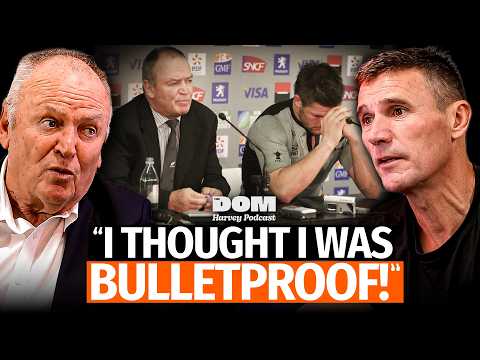
Warren Gatland FIRES BACK at Media, Wales Exit & Why He’ll Never Coach All Blacks
Ask about Dom Harvey
Episode Description
Warren Gatland joins us for his first ever New Zealand podcast, and he doesn’t hold back!
Warren is one of the true greats of New Zealand rugby and one of the game’s most respected coaches worldwide.
But his story is as much (if not more) about family, resilience, and perspective as it is about rugby.
In this podcast exclusive Warren opens up about:
+ Why he walked away from Wales earlier this year and what life looks like now.
+ The importance of family and the heartbreaking story of losing his first child at 4 months old.
+ The toughest conversations of his coaching career
+ What he’s most proud of, what keeps him grounded, and how he defines happiness today. And why he doubts he will ever coach the All Blacks.
This is Warren Gatland as you’ve never heard him before: thoughtful, funny, emotional, and deeply honest.
***
Massive thanks to my long-term podcast sponsors, Generate.
Generate is an award-winning KiwiSaver provider with a track record of delivering strong long-term returns for their clients- you can see their latest returns for yourself on their website.
I became a client when they came on board as the show sponsor and it’s been a gamechanger for me personally- I’m kicking myself for not doing it years earlier.
You can book a no obligation chat with one of their awesome KiwiSaver advisers at generatekiwisaver.co.nz/dom
The issuer of the scheme is Generate Investment Management Limited. To see their Product disclosure statement see generatekiwisaver.co.nz/pds
Past performance does not guarantee future returns.
And just a reminder — I’m a podcast host, not a financial adviser, so this is just general advice. I recommend getting expert advice before making any financial decisions.
***
Who should be on the podcast next? Message Dom Instagram: @domharveynz Email: [email protected]
If you enjoyed the podcast and would like for your business to sponsor an episode, please email [email protected]
***
00:00 Warren Gatland’s first NZ podcast 👀 01:20 Life after Wales: “I don’t need this in my life” 02:15 Fiji dives & family bliss 03:20 The Lions “shopping bet” with Gabby 04:35 Bryn’s pranks & Dad naps 😂 06:43 “Big Much”: the Gatland family code 09:09 Secret family phrases (and what they mean) 10:45 How Warren met Trudy (and why he’d be canceled today) 13:40 Sacrifices of a rugby life 15:32 When Gabby defended Dad on socials 17:57 Bachelor life in Wales & Sunday loneliness 20:21 Shawna: the loss that reshaped his coaching 25:16 Grief, healing, and perspective 29:56 A hugging family in a tough sport 32:18 Christmas in Japan (and bidet chat) 33:12 The ultra-competitive kid who loved cricket 35:55 Waikato years: glory, grit, legends 39:29 Why Waikato fans are different 41:50 Why Lions Tours must never be shrunk 44:14 Becoming an All Black (old-school announcement vibes) 46:38 Not picked? How to respond like a pro 48:47 Lessons from Fitzpatrick (rivals & respect) 51:10 Three coaches who shaped him 53:10 Proudest All Black moments 55:11 “Dirty Dirties” explained 🍻 57:38 From player instincts to coach IQ 59:57 Why he walked from Wales (media vs. reality) 62:35 Welsh rugby’s deeper problems 64:33 Steve Hansen, the 2017 draw & that photo 66:17 No agent. No CV. Still winning. 70:35 Uruguay cameo: giving back to the game 72:59 Hardest chat ever: dropping Brian O’Driscoll 75:18 Controlling the narrative (and when it backfires) 77:30 2011 final take that angered Kiwis 79:55 Media then vs now: what changed 82:03 The Herald clown nose saga 🤡 86:25 When criticism hits the family 90:20 The romance of the Lions (bigger than winning) 92:25 Wales love story: 12 years & “Gatland’s Gate” 94:09 What he’s proudest of with Wales 96:30 World Cups: luck, lessons, and timing 99:14 Turning chaos into an edge 101:40 Legacy: the straight-up coach 104:20 Reconnecting with mates (post-grind life) 107:07 Still too competitive? (Ping-pong & golf) 110:35 Happiness now: simple days, fewer worries 113:07 Chef Gatland’s prawn linguine 🍝 115:47 Grandad mode: obsessed with milestones 119:15 How he wants the grandkids to see him 121:20 Public perception vs private reality 123:53 Last time he cried (and why) 125:20 What he fears—and hopes—next 127:18 Regrets? Not really. 129:47 Three words his family would use 131:18 Is Warren Gatland proud of himself? 134:00 Final reflections & thanks
Read the full transcriptHide the full transcript
- Yeah, it was tough uh finishing up at Wales. Results and performances weren't good enough and I understand that and
- there was just a huge amount of negativity out there and I kind of woke up one day went actually I don't need
- this in my life. Probably a lot of people don't realize is that the success that we had over a period and we're
- there we knew we were papering over the cracks that were that were there and when we said when the dam bursts which
- it has it's going to take a while to fix it up. I have this romantic view of the
- Lions. I see the Lions as being an opportunity to celebrate the game. Probably 217 221 was the first time I
- kind of went winning. It was more important than anything else. >> Do you do you load the media?
- >> It's one organization that I'd never deal with again. >> Can you say what organization or no?
- >> New Zealand Hero. >> Oh, right. On the Hero. Yeah. So, what's the story about that? What's the whole
- backstory with the clown nose? The clown thing. What's the closest you've you've
- come to being involved with the All Blacks? Have there been like phone calls or people reaching out over the years?
- Oh, I've had um >> Oh, good. You're here. Come on. This is the center of performance. Whenever
- there's a top performance in New Zealand, it all comes from here. That's Lisa Carrington. She's been doing that
- for days. That's the boys who got the Holland one in To. >> He did it again. Hey Finn, how's the
- performance going? >> Top tier. >> Nice. This is our generate room. In here, you'll find our top performers
- helping Kiwis maximize their Kiwi Saver investments. Get in here, Finn. Maximize, generate, putting performance
- first. >> Warren Gatland, welcome to my podcast. >> Thanks, Dom. >> Mate, it's great to have you here. This
- was um sort of liazed um through through your daughter. >> Yeah, it was. I think you messaged her
- and then and then she passed the message on to me and I said, "Yeah, I said, "Yeah, look, get him to contact me and
- uh I'll I'll see what happens." From what I can gather, this is your very first NZ podcast.
- >> Probably. Yeah. Yeah. I've done a few of them. A lot of them overseas, but uh not
- really in in New Zealand. Yeah. >> Yeah. Well, it's an honor to have you here. One of the one of the greats of
- New Zealand rugby, a great Mulu man and a coaching great. Yeah. Um, how does life look for you this year?
- >> Uh, I'm loving life at the moment. Really enjoying things. So, yeah, it was tough uh finishing up at Wales. Um but
- I'm I I kind of made the right decision for myself. Um kind of looked at it there was um it was
- as a challenge and you know results and performances weren't good enough and I understand that uh and there was just a
- huge amount of negativity out there and I kind of woke up one day went actually I don't need this in my life. M
- >> uh I've been through a lot, been successful. Um and I felt was you know it was it was a challenge. So kind of
- said um you know that's enough for me for the moment and I will have a break and there's a few other things on the
- horizon and few other opportunities but just really enjoyed uh like having that time and and myself and family had a bit
- of time in Spain and Portugal and and France and then we come back just come back from Fiji for a few week a few
- weeks and uh yeah and just um just going with the flow. >> Yeah. on your your daughter's Instagram.
- I saw some uh footage from Dinerell of you diving into the pool. It's not a bad dive for a man in his 60s.
- >> Yeah. Uh yeah, just having we went out to one of the islands got um Paradise Cove which was we flew out there which
- was beautiful and then in into Sopel in Denal and uh my son and um his girlfriend were
- there and my daughter and son-in-law and two grandkids. Yeah, we had a great time. It was it was really good to have
- some some quality family time. >> Yeah. Yeah. You seem real family ccentric. So there's your wife Trudy who
- you've been with for um decades now. And it's her birthday today by the way. >> Yeah. She's uh she she turns the same
- age as me today. So only for a couple of weeks for my birthday in a couple of weeks. So
- >> and and two adult kids um Gabby and Brin. And uh yeah, it was Gabby who who set this up. Um
- yeah. Uh I read about Gabby. There was a bet that you guys had during the 2017 Lions tour. It wasn't so much a bet. Uh
- I can remember um after the second test, so the the test series was one all and the Lions uh it was the second time I've
- been involved and obviously coming to New Zealand and playing the All Blacks at home. Two test matches
- at Eden Park. Uh obviously with a record has been fairly fantastic for the All Blacks. Um
- the people in charge of the Lions I suppose never thought that we had any chance of winning a series. So they
- offered me a huge bonus for uh winning a Lion series in New Zealand. But um stupidly I never uh
- uh sort of uh negotiated for a drawn series. I remember on the Friday night before the third test, uh saying to
- Gabby, I said, "Gabs, um if we win tomorrow, uh you can go shopping on Sunday and buy whatever you want." So,
- she was pretty excited about about that. And obviously, we we drew the third test
- and I get a text from her about 15 20 minutes later saying, "Dad, are we still going shopping tomorrow?" So, you know,
- you can understand young uh teenage girls or young young women in in terms of um you know, what their priorities
- are. >> Well, I I asked her what she would have bought um if you handed over the card.
- Yeah. By the way, 15 all draw in that third game. E Lions versus Blacks. Um she said I would have bought myself a
- nice new wardrobe. Well, this is going to make me sound like a brat. >> So, I don't know how extensive the
- wardrobe is. She's >> talking she's got she's um uh two lucky I got two great kids. They they are
- >> fantastic. They've done well. Um and the most important thing is they're good
- people and um that's what I like and the relationship that Gabby and Brenn have is has been amazing just how incredibly
- close they are. So you know look we're very very lucky as as parents in terms of uh the two kids we have. And Brun on
- Instagram, there's like a series of videos of um like you having a like an old man nap in the middle of the day and
- he he sneaks up and kisses you on the on the mouth. >> Oh, >> how many times does he get you?
- >> He's a recidivist. >> Oh, I know. He's a he loves scaring people, you know. So, that's kind of one
- of his things, you know, hiding behind covers. He's got some mates who do that sort of thing. I remember driving
- through the tunnels at um on a bike ride one day at why he and so he's biked ahead and it's pitch black and he's
- hidden in one of the corners and come out and scared me and stuff. So he loves doing a bit of that sort of stuff and
- and and catching me out. So uh yeah, it's probably probably about time I got him back I think.
- >> Oh 100%. Yeah, it's um yeah what it's like 10 nil at the moment I think to him
- according to Instagram. Um and what is the big match philosophy in the Gatland household? The big much. Oh. Um,
- >> that's an interesting one. Um, so if we say just each, you know, how much it's big much and it means uh how
- much do I love you? And it's big much. So I really started with Brin and used to um read, you know, um I said, "How
- much do I love you for big hair?" The the rabbit story, the big hair story. So it goes on, you know, just, you know,
- how much I love you to to the gate and back and to the park and back and up to the road. I I can't remember the story.
- So I used to get to the end of it and, you know, they used to finish off I loved you to the moon and back and
- everyone's sort of heard that and then so I'd finish off that and Brin say well I love you the sun back and then I'd go
- I loved you the stars and back and then I love you the stars back hundred times then a thousand times then million
- times. So this would this would go on and on. He loved the story and one day I said to him, um, "Bren, I love you big
- much and there's nothing bigger than that." And he went, "Oh, okay." So he never asked me again. So, so it kind of
- just became a saying in the family say just say how much and it's sort of kind of like big much. And I don't know if
- you ever saw me in games. Sometimes they'd be in you put your hands out because that's what the the hair does
- and you reach out as far as you can and that sort of like symbolizes what big match and a lot of times in games seen
- the family and Brin does it as well. you see u family up in in the stands and you
- just might do that and just you know we know exactly what we're saying to each other so you know just how important
- each other is and and how important our relationship is. >> It's so cool something you still say and
- do to this day. >> Yeah. My granddaughter so I'd say she's she's three and a half. She'll be Oh,
- she'll be four in October. So if I say to her how much she'll go big much. Yeah. So, um, yeah, it's kind of we
- we've got a we've got a a few of those sort of little saying, you know, I'd say my daughter, um, she got me some some
- shirts for for Christmas last year. One's uh called uh u my second favorite because I, you know, I'd say to all the
- kids all the time, "Oh, you're my second favorite or you're my second favorite. Who's your first?" And I'd just say, "I
- don't know." you know, so that that came a bit of a bit of a joke. And uh uh another shirt she she got made for me
- was any chance. And people So when we say to each other in the family, so is there any chance? We know exactly what
- we're saying because I coached a guy in in Wasps called Fraser Waters and came from very posh family from family from
- Jersey and uh well educated. He wasn't playing rugby for the money. He didn't need the didn't need the money. He was
- playing because he loved the game and he was such a competitor. And when you get
- those sort of play, they're gold dust. They're absolutely gold in terms of um the UK because it's not it's not trying
- to think about your future because they want they're competitive and want to win. And we were doing something one day
- and I and the boys used to take the mickey out of him and they used to call him faqua very posh you know Fraser
- waters you know play had a few caps for England Fqua you know so one day Fraser said excuse me is there any chance and I
- went what is there any chance and I and I went what do you mean is there any chance and he I said what does that mean
- he said that's just a polite way of saying would you hurry the [ __ ] up excuse my excuse my language.
- So anytime we're with the family and one of us and no one knows you're saying you
- say is any chance and the others know exactly what they're saying. So we got a few few little quirky things like that
- with within the family a big much and any chance and you know you're my second favorite and a few other things there.
- >> It's really cool. It's like your own little sort of language or >> Yeah, I suppose. Yeah, I suppose when
- you, you know, when you're away from home so much and you're in a lot of different people's companies, you know,
- you need a few things to keep you entertained, but also uh as a reminder to tell someone to hurry up if they need
- to to get on with it as well. >> Oh, how good's that? And what about Trudy and yourself? When you guys met at
- Teachers College? >> Met at Teachers College. >> What age? >> Uh was our third year at Teachers
- College. So, uh 20ish 20. Yeah. 21, I think. Yeah. Um, >> what were you like? Were you a rugby
- head at the time? >> Yeah, I was I was I had I hadn't played I think that year I sat on the bench at
- the end of the year for White Cat. It was it was the we knew who each other were um cuz we were in the same year,
- but we hadn't really connected or or spoken and you you'd probably get kicked out of
- doing this today, but it was the first day of the semester or the term of of the year and she was standing in front
- of me looking at the notice board and looking at the schedule and what was going on and I came behind, I knew who
- she was and I I pinched her backside and she turned around and smiled and then uh
- kind of we connected after that. And I was thinking this kind of not the thing you do these in canceled for that.
- >> Yeah, absolutely. Yeah. Kicked out and banned and forever, but um yeah, so >> that was in 85. So yeah, sort of 40
- years really. Yeah. >> Wow. >> Yeah, >> that's an amazing uh Yeah, amazing time frame. And and it seems like you still
- really like each other's company. Yeah, I think um we've been uh done a lot of traveling. You know, we've
- lived in a number of countries and with Ireland and and obviously in London and and uh time at Wasps and Wales and then
- back back home. Uh I don't know how many how many houses we've lived in over the
- years. And I think in all that time, I think I've only been there for about two of the shifts, but she's done mo she's
- done most of them. Yeah. So, yeah, it's uh it it's worked. I mean, we went to Ireland when the the kids were
- very young. Um BR hadn't really learned to to speak at that time. So, um they both picked up Irish accents and then we
- sort of six years living in Ireland. We moved back to um or we moved to London and uh Brinn kept his Irish accent till
- he was sort of 12 or 13. And then Gabby picked up an English accent. And I remember Trudy coming home one day. She
- taken the kids out shopping and stuff and um she was having a coffee and sitting down. The kids were having
- something to eat and drink and woman in the table next door said, "Excuse me, I don't mean to be rude, but how does it
- work that you have a son who has an Irish accent, a daughter's got an English accent, you've got a New Zealand
- accent. How does that kind of work?" So um but after the time at was we came back um kids were kind of ready getting
- Gabby was getting ready for high school and and Bren as well and then I I did the whales sing and um sort of travel
- back and forwards between campaigns and they came over and yeah it kind of it kind of worked. Um the thing about
- international rugby is that it's it's full on in those periods but you do get a little bit of respite in terms of a
- break in between campaigns. How hard has your career been on um Trudy and the kids?
- >> How has >> How hard has it been? >> Has it been hard on them or >> I think it's been challenging. We you
- know we've made sacrifices um being apart and stuff and >> missing sort of um you know important
- events and things but it's given us that opportunity. It's given us um security and and and
- you know had that chance to be able to set ourselves up financially and probably the f for the future of my
- family and stuff and and I kind of um and that that for me was kind of has been or was a motivating factor you know
- sort of coming from I wouldn't say a privileged upbringing and you know pretty tough times and so to have those
- opportunities uh given to you in terms of playing rugby when the game professional get involved and coaching
- and and being able to earn a a good living. Yeah, it's it's challenging because there's a lot of um
- there can be criticism and negativity out there and those are kind of you get to sort of put up with that and um
- almost sometimes it I think times are change where it's kind of almost like water off a duck's back in terms of a
- lot of the stuff that's I'm not on social media. um a couple of little accounts where the
- family family family know about which is if we need to contact each other. So um
- and I think that helps that you know I don't you always hear about the stuff that's going on and and you know sort of
- what people are saying if there's negativity but I just I' definitely try and stay away from it.
- >> You there was a a post Gabby did um some ex players were coming at you and she
- had to go on social media. Um, so obviously like it it hurt her deeply like seeing the old man
- >> um having a having a rough go. Like when that happens to you say Gabby don't even
- get involved or does it like make your heart burst with pride? Oh, I think I think the piece that she wrote was was
- um when I saw that I thought it was pretty amazing. You know, it's kind of like she was
- I could understand look there were some players in the media and they they had been a bit critical of um myself and
- some of the performance and that's understandable. That's that was their job and that's what they get paid for.
- But she kind of the point she was kind of make was that you know if it have it hadn't been for the success of uh your
- rugby careers in Wales and and that then you probably wouldn't be in those jobs or in those positions or being asked to
- do those sorts of things and um and it's like everything that sort of it's sensational and news for for a few
- minutes but the amount of responses that she got from people in terms of and even
- the messages that I got from people saying, "Oh, you must be really proud of >> your daughter and you know what she
- said." And I think she was pretty eloquent in in terms of her response and and I suppose having a you know I
- haven't I didn't really say anything but you know her wanting to have a bit of a
- crack back at them and and and protect her dad and uh because you know we are in really an incredibly close family.
- >> Yeah. Oh, it's touching. It's really nice. Yeah. Um, and yeah. So, so the the
- last week while you've been in Wales on like on on your own, the family's back here. Um, yeah. How is bachelor life?
- Did you pick up any bad habits? >> Have you found it hard like to go go back to living in a in a house with your
- wife? >> Um, no. I think I've been good. So, yeah, I do most of the cooking and try
- and help out around around home and stuff. So, um, yeah, I think, um, I've never minded my own company and
- I've kind of been busier and so when you're back and you you're sort of coaching, you are you are really busy.
- Probably the hardest I found Sundays the hardest day. It's kind of like it's almost like
- >> it's your rest day and your family day and kind of um yeah, that was for me sometimes being on my own on Sundays was
- the most challenging thing. But um like I said when you're involved in campaigns
- and you know particularly rugby it's it's almost 24/7. It's fully on for that sort of two month period or couple of
- months and as um you know people involved in the the rugby championship will know exactly
- what I'm talking about. Um but I say you do get that bit of respite in terms of a break you know in between
- campaigns. M you'd imagine the homesickness is um pretty fierce when there's like a birthday or something
- back home or maybe when you know you're getting a hammering over there and you're on a losing streak. That's when
- you want your tribe around you. >> Yeah, I think so. Yeah. And uh the thing was that um I know it's Father's Day um
- on on Sunday, but um I get uh I I never I never seem to have Father's Day because it was a different time of the
- year and my wife seemed to get always get two two Mother's Days, which is kind of a uh was a was a bit ironic. So um
- yeah, I think when you miss birthday parties and um you know significant events and you know you miss a lot of
- family functions and weddings and different but I it's not really indifferent to when
- you were playing growing up. You know I I played a lot of cricket as a youngster
- growing up so you know missed a lot of family stuff in there and those are kind of the sacrifices you make if you want
- to be successful and you want to get to try and get to the top of your sport. M >> Well, you're in the country this year
- for Father's Day. What What are you having to get for Father's Day? The Fuzzy book's pretty good, I believe.
- >> Oh, apparently. Yeah. Yeah. Um Yeah. I don't uh uh not sure what I'm getting for Father's Day. Yeah. I spoke
- to my daughter. I think she's she was talking about getting me some sunglasses or something like that. So, I think
- >> her and her son might go might go halves in that. So, I'll have to wait and see.
- >> Yeah. I like hearing this family stuff. It's really cool. It's really cool to
- see the side of you. And I've actually got a card here. And I don't know if you want to talk about this marcher at all.
- Um but this card's called Shauna. >> All right. Yeah. >> Yeah. Which is not something that's
- widely known I guess about Warren Gatlin. You you talk about this in your book. >> Yeah.
- >> Um Yeah. So who who's Shauna? >> So she was our first born. Um and she unfortunately lived for about 4 months.
- U she was born in spobifida and we and times we even we had a couple of scans and things just did not know. Um she was
- born in in Ireland in in Gway. Um and kind of um what happened then had a really significant impact on me. Um what
- wasn't in the short term but was what I thought about uh on my coaching career sort of later on. Um just the importance
- of you know we're all involved in a sport that we love and we make a lot of commitment a lot of sacrifice. But I
- kind of went a bit further than that. So any teams that I've been involved in, I've spoken about just um you know how
- lucky we are and often you know people are are well paid and you get those opportunities but the most important
- thing in your life is your family. And I kind of went if things are right at home
- if um you've got support from your family then as a as a coach you get a much better product on the field. And
- often a player comes to me and says, "Oh, my partner's got a scan. Uh, can I miss training?" Yeah. Or something, you
- know, something's wrong with one of the kids at home or um the misses, you know,
- there's some relationship issues and, you know, they need to spend a bit of time together. I I've never had a
- problem with giving players some time or missing some stuff because I know by doing that that um I get so much
- >> more in return from from those players when I when I ask for um something from
- them. Um and kind of like so when I'd we'd been in uh going backwards and forwards to Ireland for a few years. So
- I' we'd spend uh five or six months in Ireland and I was sort of player coach there with a club called Goreians and
- I'd come back to New Zealand and pick up a relief teaching job if um and lucky enough and play club
- rugby play for WA and hopefully get selected for an all day tour at the end of the year and then stay on an island.
- The downside of that we had eight winters in a row but um u so but when we were there um
- obviously you know Shauna was born and we were this the club that I was involved with had been their whole goal
- was to get promoted to the all island league and the first year I went there they weren't um in a position where they
- could get promoted the next year um just missed out on promotion and we got promoted um that
- third year or the third or fourth year. And when Shauna was born, we were right in the middle of the the playoffs for
- promotion and they'd spent a significant amount of money having us over there um
- playing paying for accommodation, giving us some expenses and and those things over over that period. And
- um when Sean was born, they said to you you got to go home. and I just said, "Look, we're in the middle of um
- playoffs, you know, the next few weeks are incredibly important." And they they wouldn't have it. And so we we flew back
- to New Zealand. Um I I think I'd played the first game where we drew and we'd been back in back
- in New Zealand for a few weeks and we got things settled back home in terms of um having things um you know pretty calm
- in terms of Shauna coming back home and I ran the club and I said was there's another game. Do you want me to come
- back for the the playoff which was important having drawn the first game and they said would you do that? So I I
- flew back to to Ireland. We played this game in Limmerch, won the game and I flew back to New Zealand again. We we
- got promoted to the all league. So and I kind of felt and that that to me was a massive lesson. They had made a massive
- sec a huge sacrifice in giving me something and it was easy for me to give it back and I kind of knew, you know,
- you know the same with the players. You know, people say, "Oh yeah, but what if they're missing training?" I so I treat
- it like you know they're carrying an injury and they can't train and that happens all the time and things and like
- I said you you kind of get things right off the field as much as you possibly can and then hopefully you can get
- things right on the field. >> What were those four months like? >> That they were challenging. Yeah. So um
- >> cuz you're quite young at the time late 20s maybe 30. >> Uh no it wasn't that. Uh
- so Gabby was born when I was 30. So it's 30 years difference. So I think um 28 27
- 28. Yeah. Um it was tough you know sort of um I can remember um when she was born in hospital in in
- Goreway and and I and I didn't realize but the obviously the the midwife and the nurses and that and they started
- they were sort of crying with tears and stuff and sort of what was on and then all of a sudden there was a bit of a um
- you know the the sort of everyone running around and stuff and and then we got specialists involved and and I can
- remember talking to the specialists, you know, a few days later and saying, you know, out of terms of spinobipida, you
- know, out of out of 10, how bad is she? He said, oh, probably nine out of 10. And so, you
- imagine a a little um, you know, a little infant being born with, you know, a significant sort of
- hole on on uh on on the sort of lower half of their back. And but the thing for me is Trudy Trudy was amazing, you
- know, just before Shauna passed away that um the the lesion over on her back had
- healed and they said, you know, with a lesion that size, there's a good chance that um she'll get an infection and that
- that'll go to the brain and it it'll probably probably end up sort of um killing her as well. But but that never
- happened. And I mean she was, you know, Trudy was amazing. Um, but it was, you know, it was challenging afterwards as
- well because I'd kind of, we would go and see the doctor every now and again. Um,
- I'd actually gone on a rugby trip to Australia and um, sort of set her up and she
- passed away while I was over over in Australia. So I sort of flew back. Um, and you know that was um
- that to that took me a number of years to sort of get over that because you I wasn't when I was there and Trudy rang
- me and there um and that was the sort of the days before mobile phones really sort of had come in and so you know I
- was teaching back in New Zealand and sometimes I'd get um a phone call from the office say oh Trudy's run can you
- give her a call back when and my heart would just start pounding you know, kind of like thinking, oh,
- >> worst case. >> Yeah. Worst case something's happened to the kids, you know, and that and that um
- yeah, so you don't realize sort of the impact that those sort of things have on you, not short term, but long term, you
- know, and how long sometimes it takes a while to to recover from those things. So yeah, it's it's um I often talk to
- the kids and go, you know, we talk about Shauna a lot and say, you know, you you
- were here probably because of her because we wouldn't have had Gabby quite, you know, as soon as we did after
- Shauna had passed away and then obviously having Brin. So, um, I kind of look at it as a, you know, it was really
- challenging times, but we've ended up with two amazing kids and and, you know, that's, you know, sometimes you you've
- got to look at your the things that are difficult in your life and and but also try and transfer them into the
- positives. >> Do you do you ever get over the grief or or does it just sort of sit with you
- sort of permanently? Oh, I think that, you know, we always light a um sort of a candle um for a birthday in
- January and January 17th and then and one of May as well, you know. Um and often
- it's like everything. It's kind of it's always there, but and you know people say, you know, time
- is a great healer and but you you never forget it. It's your own personal thing that um as a family um you're conscious
- of and and you go through and you know it's something that Trudy and I always um find significant and remember um
- uh and you know had a had a massive impact um you know both challenging but in a way positively positively in in our
- lives as well. M >> I wonder if in a way it it changed or shaped the way that you raise um Gabby
- and Brun and that you know what's on the line and what you can lose and just you
- know what I mean? >> Yeah. Yeah. I don't know. Yeah. Um you I suppose that you know you say
- something and things that I'd said to my kids that you know I met I you know said
- to Gabby and Bren I said I don't care where you are in the world what what's happened you know if you get yourself in
- trouble whatever you get on the phone you ring me and I'll be there >> and I kind of said and I meant it but
- they they know that I meant that as well you know in terms of they know how um important they uh to to myself and Trudy
- as a family uh how close we are and you know just said um you even even now you see Bin you know might not see each
- other we're going we're going to Japan for Christmas which I really looking forward to and the first thing you know
- give him a hug and maybe a kiss and how much and he'll say big much you know so um and those things are pretty cool
- >> that's a you're you're a kissing couple a kissing family >> um yeah I think a hugging family Yeah.
- Yeah. >> It's cool. It's cool. >> Oh, it's it's amazing. And um uh you know I can I can I can never
- remember uh I know my dad was really proud of me but I can never remember my dad saying to me love me or or hugging
- me you know and even when we got old you know we shook hands and stuff and when we greeted each other but um
- I think the thing is that uh it was kind of like different and and probably the fact that um you know I had
- been I didn't worry what other people thought and had been successful. It gives you kind of a little bit more of a
- license to be able to do things. And I can remember um when Brim was at school at Hamilton Boys and um our food bowl
- used to be absolutely massive every week cuz he'd have all his mates around and we were close to town. We had a swimming
- pool and stuff and Trudy would be looking after them and you know and guys like Tomati Martin who plays for the
- Warriors you know he just bowl in the front door and Bren him good mates and you know we had so many people sort of
- staying and things and you I'd be there coming home and Bren come out and I just
- give him a big hug in front of his mates and it was kind of like you know those you're talking sort of um you know 2013
- sort of 11 and there those days sort of in teenage boys soo you know, it's kind of been seen as maybe not the thing to
- do, but >> when Bren and I were doing, they went, "Oh, people sort of, oh, that's normal.
- That's pretty cool." >> And being able to show affection. And I kind of thought it's a really trying to
- set an example to people, not being afraid to >> to do those sort of things. the first
- day when he when he came into to the Chiefs there, they were in the gym and I went and saw him and I just go and just
- gave a big hug in front of all the players and it just, you know, it wasn't uh it was just something that was normal
- for us, you know, and and and I think you're trying to you're trying to sort of kind of, you know, you're not being
- stoic. There's nothing wrong with showing emotion and um you know, particularly with family members and and
- I think, you know, like you said, you're trying to set a good example for other people as well.
- >> That's cool. Yeah, >> thanks so much for sharing all that family stuff, especially the the Shauna
- stuff. I'm sure it's not not that easy to talk about. >> Yeah, it was, you know, definitely tough
- at the time, but um I said, you know, time is a great healer, but >> you kind of, you know,
- >> it never goes away anyway. >> You live with it. >> Yeah. >> Yeah. And the um the family trip to
- Japan at Christmas, are are you doing some doornocking? Looking for some jobs? >> No, no, no. We're uh we were going to go
- for a couple of weeks and then we said we can get there for three. I think we're going over on about the 12th of
- >> December. We get to see um they they start just before Christmas, so I think the 13th or something. So,
- >> get to see that game and then a game on the 20th and one on the 27th or 28th and
- then fly back um get back just before um New Year's. So, um yeah, looking forward
- to that. It's going to be bloody cold over there. It does get, you know, really extremes in weather. You know,
- it's really, really hot in the summer and really, really cold in the winter. So, um, but, you know, looking forward
- to spending a little bit of time with him, um, over there. >> Great place to visit, especially with a
- with a bid a on every toilet. You go to a toilet in Starbucks and there's a bidet there.
- >> Your butt's never been so clean. >> I know. Yeah. Yeah. >> All right. Let's go back and talk about
- some of the early years. Um, so I've got this photo here of a young um a young Warren Gatland. How are you the same and
- how are you the man sitting in front of me now? How is he the same? And how is he different to that kid there?
- >> Oh, >> how old were you there? 15, 16? >> No, that was 15. I would have been 18,
- 17, 18. Um, oh, I I look I loved my sport. Um, and that's what drove me. I was incredibly competitive as a as a kid.
- Um, and I don't think I don't think that's a bad thing. I I always kind of challenge I think there was a
- period and a time where um with kids growing up in New Zealand, you everything was about participation
- involved and there's nothing wrong with that, but there are times where, you know, life is about competition. life is
- um you know things it's about winning and losing at at times and and trying to be successful. So as growing up as a kid
- you know I was always uh wanted to be on the winning team or wanting to do things. So um and I found
- myself um you know if we were playing a game growing up and the score wasn't being kept or a teacher would just
- saying I I lost interest you know I kind of and so yeah I don't know where that came from
- but you know definitely very very competitive in anything that I did in terms of sport and
- >> um >> and you know I was lucky enough from a very early age to to go and play for
- teams that were pretty successful, you know, from even from the early age of five sort of, you
- know, happened to play in club sides that were really successful and um playing Gwen Shield and Rolling Mills
- and then sort of um through um secondary school and first of secondary schools and and that um
- yeah and so Um, I was kind of driven and and I had, you know, a big appetite for at the time
- wasn't just wasn't just rugby. I loved my cricket and kind of there was a period where I was making a decision
- which way I was going to go. Was it going to be the rugby route or the or the cricket route and um probably rugby
- the opportunities in rugby just came along just a little bit sooner than they than they would have done in cricket.
- God, you're another one of those e like a a Jordy Barrett or a Jeff Wilson or there's so many so many of you guys e
- that are like just fantastic at both these games. >> Well, I think that in those days you
- were able to do both. You know, it's very difficult for >> even for kids nowadays and you know the
- sort of the the environments to to play um at a high level in both those sports and you still you still see some pretty
- talented kids in terms of >> doing those things. But yeah, still still enjoy my cricket and watch my
- cricket and and stuff. And >> still roll an arm over. Okay. >> Uh not anymore. No, no, not uh not not
- really. But you know, still still do enjoy watching it. Yeah. >> I' I've got a quote here from Andrew
- Strawbridge, who you've known since you were 7 years old. >> Um he was a pretty talented bloke. He
- was a very good cricketer opening the batting, keeping wicket, and bowling fast. If he had the same passion for
- cricket as he did rugby, I'm sure he could have made it in that. Oh yeah. Oh okay.
- >> Yeah. He was a pretty talented sportsman himself. Um straws in terms of uh cricket and cricket and rugby. Yeah.
- >> But the rugby ended up all right. Um the fourth most capped wet player ever with
- 140. Uh number one on that list Fuzzy with 148. Yeah. >> It's a hell of a career. Uh yeah. So you
- guys were teammates for nine seasons. Won the NPC together in 1992. Is that the greatest WA rugby team of all time?
- The 1992 team. >> Oh, I think it would have to be up there. 1992, 1993. I think we won the the Shield. But I
- remember I remember winning the but we played Oakland in the semi-final Eden Park and I think the most 92 93 probably
- two significant years that you know playing Oakland uh in a semi-final in ' 92 in Eden Park and then uh for the
- Shield in in 93 and they never scored a try in both those games and and uh remember talking to Zen Zanbrook and
- when we won the semi-final in 92 and he said you know if it had been his Shield game you wouldn't have won and I kind
- kept that in the back of my mind for for another another 12 months. But but also
- uh got to recognize that what a great Oakland team that was. And I can remember my first game
- um playing against Oakland for the Shield uh I think it would have been about 87
- or something like that. And and we were a young team and we knew that um potentially if we stayed together that
- team was going to get better and and Oakland put 30 odd points on us and and and beat us comfortably at Eden Park.
- And but for me as a person, you know, I I just learned so much and I kind of went after the game went, "Oh my god, I
- want to play them next week." And because that was my I had an insatiable appetite for knowledge, but also for
- wanting to improve and how did we improve and you know, I learned so much there. and then kind of like
- um whether it was Kings uh or Queen's birthday weekend used to you know play Oakland and in those days and maybe and
- then obviously in the NPC and so you get to play them a couple of times and was was all about just closing that gap and
- trying to trying to learn and and gain more experience and then obviously um you know we had a we had some pretty
- good years in those those sort of early 90s. Mhm. God, you must have been like a
- rock star in Hamilton at the time. I spent a bit of time living in Hamilton and you know, you see the the the rugby
- guys go out with their blazers on a Saturday to the outback or the bank or whatever. Um, yeah, you must have been
- like a like a god and white at the time. >> Oh, I don't know. I think um uh what I loved about
- sort of the the white cattle was just how passionate uh they were as you know supporters and fans and even the even um
- uh playing playing the Lions and um you know in terms of um um yeah we played them 93 um and and won
- comfortably But probably it was a Wednesday afternoon before the third test u for the Lions tour and we're
- probably the only place in in the country at the time that on a Wednesday afternoon help us too could could fill a
- stadium you know because of the support and the obviously the farming community and and the people used to get in behind
- us. So, um, yeah, look, they were always very passionate supporters and and incredibly loyal and, um, you know, I
- think as you as you get a little bit older and as you sort of go through those stages in terms of your playing
- and and coaching and stuff, you you you recognize and you appreciate that the game that you've played and have been
- involved in their love is is there there are bigger parts to it and And sometimes
- um there's bigger things in the game and then and often the fans and the supporters, they need to be recognized.
- And we we're going through some pretty challenging times at the moment about, you know, how do you how do you promote
- the game? How do you make it more exciting? What sort of things can you do to to um to make sure people people are
- involved? and and uh you I was lucky enough to spend three weeks in Australia with the the uh the Lions there and you
- know to see the the Lion supporters and the fans and stuff and and and I just read a few days ago that
- basically it's cleared the debt for um for Australian rug rugby you know that's how important the Lions tours are
- to the New Zealand uh to the to the southern hemis we need to do from a rugby perspect everything we can to to
- support it and and people in Australia and South Africa and New Zealand, they appreciate, they understand how
- important it is. But there are certain people um who I was involved with the Lions when uh I think there were 12 or
- 14 games and then that went down to 10 and I think it's now it's eight games and there there are people who would you
- know like that to like to see that down to five or six games and I think it would completely destroy what a Lions
- tour is all about where you know you get the kind of five warm-up games and and the three tests and you end up with
- about eight games and then maybe there's a warm-up game and and and and and I think about 10 games on a tour tour is
- about right. It's it's kind of like it is long enough. Um but the impact that uh Alliance Tour can have on supporters,
- promoting the game, creating interest, creating superstars and and you know both the home country and and you know
- potentially in um the UK and Ireland um and and financially um being a a stimulus for
- the country that's hosting the uh those tours. you know, it it's it can be really important.
- >> Yeah. We'll um we'll we'll get into your involvement with um the Lions shortly,
- but um yeah, you made the All Blacks from uh WCO after playing a game against Wales of all teams.
- >> Yeah, I think >> having a blinder for WCO against Wales. Is that correct? >> Yeah, I think we were a young team at
- the time and Wales had just won um actually won the Triple Crown. So they've beaten um
- uh England um Ireland and Scotland. Um yeah, so I think that was the first game of tour. I actually kept that day and um
- um yeah, it was um you know it was a it was good. I remember Glenn Webb the the black um Welsh winger and it was you
- know it was a coldish day in in Hamilton. not, you know, probably not as cold as you normally get in uh in Wales
- and he was wearing these white gloves and stuff and I kind of went, "Oh, hell, what's going on here?" But uh that was a
- little bit different for me. Um yeah, but we were lucky enough to win that game. In fairness,
- I I think um probably our record for a record against touring teams, you know, was pretty good
- over the years. Yeah. >> So, how do you do did you get a phone call from Grizz Wy? Were you were you in
- the sort of all black sort of sphere at the time? Were you in the frame or were you like a surprise pick? How do you how
- do you find out about it? Do you hear about on the radio or do you get a phone call?
- >> Um no, it's kind of the on the radio. Yeah, it's kind of like um in those days, you know, you never really got
- phone calls and and um I I enjoy that. One of the things that I introduced um when I became sort of Lions coach and
- even with Wales with World Cups is kind of how do you how do you make this how do you create sort of attention? How do
- you make this uh occasion sort of something really special and um and that's what happened. you you
- either heard an all black team announced on live on TV or you heard it on on the
- radio and that was kind of and that was what created that sort of that jeopardy almost in terms of that creating that
- excitement. Um so yeah, look had a um orbit troll in in ' 88 and um I I I think I was reasonably
- close at the after the World Cup in 87 to to going to Japan and and wasn't selected and then in ' 88 um you know
- had an allback trial went pretty well and got selected for tour of Australia and you think about how things have
- changed. I think we went there. Uh 13 games, 26 players. >> Um Alex Wally is coach. Um
- John Sturgeon is manager. And then you've got you um doctor and physio, you know. So um
- >> it's a compact team. >> Yeah. Yeah. Basically four, you know. Um and John May actually was the um the
- doctor. He's unfortunately passed away now. He was brilliant. Um um yeah and then you think um John
- Gallagher who was the fullback I think he played 12 of the 13 matches on tour and so yeah those are you know
- definitely a lot different to and I was lucky enough to sort of you know have four years and um you know be involved
- in on a few tours but you know never got on the um on the pitch set behind Footsie for for a lot of test matches
- but um And I and I think and people say, "Oh, you are you disappointed with that?" And I've never been disappointed.
- I I kind of am really proud and honored for the the opportunities I had and experiences I had. Um, and it kind of
- made me uh when the coaching opportunities come, I think it made me a better coach. It
- made me understand, you know, a player could never turn around to me and say, "Oh, you
- don't know what it's like not to be selected to be in there." Hang on a minute. I
- I know exactly what it's like to to miss out. But then it's kind of then it's that learning experience, you know, how
- do you respond to that disappointment? You got to be disappointed because and I expect players that I've coached in
- volunte, you know, pissed off and I expect them to be disappointed they haven't been
- selected in um in teams. But then the thing is then it's how you respond to that. you know, someone who throws the
- toys out of the cot and mopes around and it's got the head down for three or four
- days, you know, they they're in serious trouble of not being involved in the future. But a player who's yeah,
- disappointed, you know, he's disappointed, but then he goes, "Okay, right. I'm going to I'm going to respond
- really really positively in terms of doing everything I can to help this team prepare for uh the weekend and get get
- the team in the best possible shape to perform on on that weekend. Um players don't realize that that not just coaches
- but management teams they they see that and and it does have a can have a really
- significant impact on on future selections. you know, particularly if you ever ever in a, you know, 50/50
- situation where you're not quite sure, but you've got someone who's a a really good team man and really really positive
- around the environment, really supportive and does lots of things, you know, those they're the people you want
- in your teams. >> Yeah. Just sort of attitude. >> Absolutely. >> Yeah. Yeah. There's a quote from you
- that I read. Um, being behind Fitzy was the biggest education of my career. Is that sort of what you mean?
- >> Yeah. Absolutely. Yeah. Yeah. No, it was um and you know he was a fantastic player,
- unbelievable all black, you know, great all black captain as well in terms of the success he had. But, you know, I
- learned a huge amount playing against him. And I was probably, you know, I'm pretty proud. I probably played um had
- more wins against him as a as a hooker than probably anyone else in in in world rugby you know over over that period of
- my rugby career you know in terms of white kid in Oakuckland and other games and all black trials and stuff and um
- you know he was tough and physical and you know made me >> made me better as a player and and I
- hope at the time I made him better as a player as well. >> What was he what was he like to you? He
- was ruthlessly competitive. Was he was he supportive or did he >> So was I. Yeah.
- >> But but did he was he supportive and nurturing or did he see you as a threat?
- And >> Oh, and I think there was I think there was mutual respect. You know, we >> um you know, we got on well enough, but
- I I find times are times are changed, you know. I I see um the relationship between players now and teams, you know,
- been players who are competing in the same position. you see how matey they are and they're all civil. Probably in
- our day was a little bit more cutthroat. You know, if you were in the same position, you'd be uh civil to each
- other, but you were, you know, you'd want to um you'd want to be taking someone's position. But in saying that,
- you know, I never wished uh an an injury on anyone. And the All Blacks is probably the hardest environment to be
- involved in because I was involved in a period where I think we went 50 there was 50 odd matches undefeated. Um it's
- just when which is amazing when you think of sort of 87 to 1990 you know the hadn't lost a
- >> lost a match a test match or or a game on tour and then kind of thinking you know the way for me at the time was you
- know how do I become number one well either the player that um I'm up against um gets injured or the All Blacks lose
- and you don't want to be involved in an All Black situation or you know it's going to be, you know, fairly difficult
- and and quite challenging to um, you know, to get selected for yourself. So, yeah, like a a real learning experience
- over a long period for me. >> What was Grizz like? Was he terrifying? >> He was tough. Yeah. Yeah. Yeah. He was
- uh Yeah, I can remember. Uh, he trained us incredibly hard, you Hey, like I I kind
- of I probably had three coaches who who had had the most significant impact on me in
- terms of my one one was definitely Grizz cuz Grizz was uncompromising. If he saw
- a weakness, he would um push you to the limit where he almost tried to break you and but he it was me
- it was a mental toughness. It was kind of like, you know, he he understood um trying to get the best out of you. You
- go away on an all black tour and you would train early on that tour. He he'd push your train and then when it
- come towards the test matches, he'd ease up and he'd freshen guys up and things and he he you know, he definitely
- understood that, but it was important you didn't show any weaknesses. he wanted he wanted people
- that were mentally tough and um so I learned a huge amount from that and then the other two were um Kevin Green uh who
- coached way and I I thought his man management skills were excellent the way that he got the best out of people um
- and the way he kind of motivated and and the environment that he created was outstanding and Glenn Ross was another
- one who coached me at first 15 at Hamilton boys and Hamilton all boys and also with Wetto and probably he was the
- first guy that I saw was uh the most professional you teaching background but incredibly well prepared
- in training sessions. you go into, you knew exactly how long the training session was going to be, you know, what
- the what the drills were were going to be. And that to me was that organization kind of had like had a kind of a big
- impact because we'd come through a period where you'd go to training, you never really even with Grizz, you never
- really knew how long the training session was going to be for and how hard he was going to do and then how long
- each drill was going to be. Um and so yeah those you know definitely he was was tough um had had a lot of respect
- for him in terms of you know what he had done in the game and what he achieved and and definitely learned a lot from
- him from from my main coaching career. >> What what what's your proudest moment as
- an all black? Is there anything that springs to mind? Oh. Um, I've never been asked that question
- before. >> Yeah. Uh, yeah. I think I think just being being selected. I think I can remember um
- once once being on sitting on the bus in all black bus and there was all these um
- supporters around and and they're wanting autographs and photos and stuff and I can remember sitting there and
- just going, you know, just don't take this for granted. Uh you have, you know, how
- lucky you are to be in this situation. And I used to kind of remind me myself of of those sorts of things, you know,
- just um yeah, so probably just that opportunity to be involved to to put that jersey on
- to to to call yourself an all black, you know, that those are my proudest moments. Yeah.
- >> I had um you um a guy on the podcast the other day who's your your career crossed
- paths with, Freno Bodica. Yeah. Um, and he what was the he was called something?
- Um, and I'm guessing you were the same. Like a guy that a guy that was in the team but not playing.
- >> Yeah. >> What were you called? There's a name for it. >> Dirty dirty. >> Dirty dirty. Yeah. Dirty dirty. And I
- said, "Why? What's a dirty dirty?" And he had never really thought about it, but he said, "I think it's because we're
- lower than the dirt." >> But I don't know. What? What is a dirty dirty? >> I don't know what the dirty I don't know
- where that came from. Just the dirty Yeah. dirty duties. Yeah. But it sounds like you guys were just pissed all the
- time like going out casing out what bars to go to for the test guys on the weekend.
- >> Well, sometimes those you did those things. Yeah. Kind of like uh or if you weren't involved. It didn't matter if
- you you know you had midweek games. The guys that weren't involved the next day tended to go out on the night before.
- you know that that never happens nowadays because we see so many occasion where someone wakes up sick or someone's
- uh you know hasn't quite recovered from an injury or something like that but um yeah it was kind of like you went out
- yeah I mean it kind of those days was it was a little bit um um this was a bit of the grizz of
- philosophy and some of the you know you trained hard, you played hard, and you sort of kind of drank hard. That was
- kind of like um and then you fronted up the next day and you trained every day. And that was kind of like that was the
- almost that mental toughness and you you knew you knew the pressures of being an all
- black, what it meant, you knew the responsibilities putting that jersey on, um and the history and those sorts of
- things. Um probably today some you know the people aren't quite as aware as as aware of the
- past and you know what went before them and um you but definitely during that period you knew um yeah and as a dirty
- dirty you you sometimes went out there and had to yeah you had to make different sacrifices
- >> to for the team. um on on reflection like do you think you were you've been a
- better player or a coach? >> Uh I think my experience has made me a better coach, you know, definitely. Um
- >> and I've played with some some great players and some great All Blacks who um
- went into the went into coaching but never made it as coaches. And and I think a part of that was that they never
- knew why they were great players. And um and I I found I found that. I mean, I started kind of at a really young age,
- you know, like I said, that time in Ireland. I was a player coach at 25, 24, 25.
- And and that for me was really um significant because there was a lot of things that I was doing that I didn't
- not say so I didn't understand I was just doing instinctively or naturally because I did and I kind of had to take
- myself and go oh why am I running that line why am I doing that why why have I done that and that that to me was really
- was quite significant in terms of uh coaching and understanding and um you know teaching players things because
- I really had to take myself back in terms of uh asking myself a lot of those a lot of those things. So yeah look um
- yeah I was a better player than Fitzy I've got to believe that you see >> let it go.
- Um, yeah. So, at the time we're recording this, it's only been um seven months. Seven months since you finished
- with Wales. >> Yeah. Beginning of the year. >> Yeah. Yeah. >> Yeah. How does it feel to suddenly wake
- up without responsibility or pressure? >> Oh, it feels good. >> Yeah. >> Yeah. Yeah. Um
- >> like a relief weight off your shoulders. >> Oh, I kind of I I I love the pressure. I
- love the um the responsibility and stuff and I I thrive on that and I thrive on being
- involved with teams that have been underdogs and stuff. Um what I what I struggled with um
- was I struggle with the negativity in the end and I kind of went and >> Is that from the media or the public?
- >> Yeah, it was definitely the media. Um, and I kind of went there there's a there's a guy who's taken a guy called
- Steve Tandy and and I think that um he'll do a good job. He but he needs some time and I hope they give him the
- time. And it's not that the rugby people won't give him the time. It's not the union won't give them. I just hope the
- media given that time because um and I think that when I first went back so finished in two 2019 we made the
- semi-final in the World Cup being beaten in the last sort of >> minute with a with a penalty goal from
- um Paula um you know lost in the last couple of minutes to the semi-final >> and
- so I finished and when I've come back um into 2022 two and start 23. I went, "Oh,
- we're in a little bit of trouble here." >> And we haven't had a great Six Nation,
- poor Six Nations. So, everyone's writing us off for the World Cup. And what I've
- loved about the World Cup and I'm proud of um times that I had involved with with club sides is that three months
- together, sort of two or three months together preparation that time and we've ended up winning our group in the World
- Cup um quarterfinal. we should have beaten Argentina in the the quarterfinal. Um,
- and but I didn't get a lot of credit for that. And then we've gone we've lost 18
- players after the World Cup. They have either retired or finished or or gone and played overseas. And and I've just
- said this is going to take a little bit of time. And um some of the some of the well journalists who were criticizing us
- before the World Cup and said we wouldn't get out of a group kind of didn't really give us any credit. And
- then you go on a little bit of a losing streak cuz you know it's going to take some time and there's a few games yeah
- we were in a position to win and we didn't get over the line and um and I just after the the negativity and I
- thought I need to take some pressure off the players and maybe some pressure off
- the union and I just wake up you one day I went actually I don't need this in my
- life anymore. You know I kind of I've been through enough. Uh I love coaching. I love being involved. Um, and
- the game has been brilliant to me, but there's a there's a time where you got to actually make a decide for yourself,
- you know, in terms of do you need to, it wasn't just about me. It was kind of I was I felt I was making the decision for
- the best thing for Welsh Rugby as well at the time. And >> um, and haven't regretted it, you know,
- I just kind of um um, yeah, so they're going through a rebuilding phase. And what probably a
- lot of people don't realize is that the issues that they're there now they're talking about you are they going to
- reduce the four professional teams down to two and you know what's going to happen with themies and there was a
- national academy that we had that had been disbanded for a number of years and that had been successful.
- Um so um but the success that we had over a period we're there we knew we knew we were papering over
- the cracks that were that were there and and >> when we said when things when the dam
- bursts which it has uh it's going to take a while to to fix it up and and I think that's
- they've been through this thing in the past where they had unbelievable able success um in the late 60s and the 70s
- and and then they had um teacher strike in Wales which really impacted the the the the game it's school boy level um
- and that had a quite a negative impact on the game in the 80s and 90s and I think it was you know from having been
- amazingly successful in the late 60s and 70s I mean they didn't win a six nations
- until 200 2005, you know, when um Steve Hansen was there. Um so, um yeah, it'll be actually Steve
- Hansen had already finished him. I think Mike Ruddic had won that um the Six Nations in 2005. So, yeah, you know,
- they it might take them a little bit of time again. >> Are um Yeah, you mentioned Steve Hansen
- there. Are you guys friends? I found a photo of um you and him on on online. Is is that after the 15 all Is that after
- the 15 all draw? >> I'm not sure of it. Uh >> looks like a very awkward passing handshake.
- >> Was probably just the uh you know someone >> the angle or the moment. Yeah. >> Yeah. I can remember um Yeah, that could
- mean just us walking away or something like that. I don't think >> Yeah. or you know I don't know if you
- know what it like I mean I see so many photos myself and I think photographers they take every single reaction or photo
- whatever and depending on the story that they want to write they'll you know they'll they'll try and match up the
- match up the photo. So I remember talking to Steve after after um the Lions and 217 and he you know he said to
- me afterwards he said um how you feeling? I said I don't know what I said. What are yourself? And he said it
- feels a bit like kissing your sister, doesn't it? I kind of went not sure about that, but uh um you know, in terms
- of uh yeah, you know, a drawn series for the Lions. But I think um the the the thing about that drawn
- series in in 217 is that again um I think the most amazing thing about that thing is is
- the photo at the end of the third test >> and you've got Sam Wland and Kieran Reed
- holding the trophy where the Lions players and the All Blacks intermingle and to me that to me is a is going to be
- a rugby photograph for the ages. It's an iconic picture and if if the Lions had have won or the All Blacks had have won,
- we we never would have seen that um that image, we never would have seen that picture of the two teams um on stage
- together and and and that kind of like I I spoke before about >> you know things are better bigger than
- the game and to me that's that that's an unbelievable um picture that represents
- what the game's all about. M would you still like to be in involved in the All Blacks in some capacity or is that that
- has that ship sailed? >> Yeah, I think it's it's it sailed. I get asked a lot about um
- about um um being involved in the I'm I'm a great believer in what will be um I don't I
- don't think ahead. I don't sort of plan ahead. There are there are I know there are people who have you know kind of
- have had the goals and trying to planned out their what their journey is going to
- be what their their coaching. I haven't never done that. I kind of thought if you've been successful um somewhere then
- opportunities will come along. Um I'm probably the only person who's been involved in
- the game as long as I who's never had a rugby agent. >> Wow. >> Yeah. You've done all your own
- negotiations. >> All my own negotiations. >> How do you know you're not getting screwed over?
- >> Don't know. >> Kind of know. I think I know what I'm worth and Yeah. And then sort of
- negotiate that. >> Yeah. Like you talk to a lot of people. Everyone sort of >> You got a fair idea.
- >> Yeah. You got an idea what what you're worth. Um >> [ __ ] You're saving a lot on agents fe.
- >> Yeah. Um >> good for you. >> So I've never had an agent. uh and I've um haven't got a CV. I've never
- applied for a job and kind of so I've been incredibly lucky. And so um like I said, you know, great
- believer in what will be will be and and not planning too far ahead. And if you're successful, opportunities come
- your way. And if you're not um and I'm lucky enough I've had great experiences, have been successful. you know, had
- challenging times, but rugby has been a big part of myself and my family's life, and it's given us those those
- opportunities to have security, to be able to travel around the world, and um and you know, have have opportunities in
- the future. And so if I don't do anything again, um but I'm sure I will. Um you I might spend the next uh few years
- spending as much time with the grandkids, doing as much travel as I can with myself and Trudy and and making
- sure my kids are in the best possible space, you know, space possible >> because you're still very young on the
- big scheme of things. I think you're the same age now as what Sir Graham Henry was when he finished with the All
- Blacks, >> right? >> Yeah. >> Yeah. I don't Yeah. What's what's the closest you've you've
- come to being um involved with the All Blacks? Have there been like phone calls or people reaching out over the years?
- Oh, I've had um I've had uh I think there there have been times when uh they've been looking
- for all the coaches where they've been contacting all the all the coaches in the world and um but a lot of people
- would didn't put their names forward in things and um I think they've changed their philosophy on that thinking at the
- time I you know they might contact myself I might contact eight or 10 other people you We want you to put your name
- forward for the All Blacks position. But it's one of those there that if anyone finds out that you've put your
- name forward for the All Blacks and then you don't get the role and then you go somewhere else, I well
- the All Black's my first choice. You're only my second choice. >> It's a really delicate Yeah. delicate
- sort of situation that so I think you know I think they've changed their philosophy where they may target just
- one or two people in terms of the roles um going forward because I was involved in a situation where as contact I never
- put my name forward and I know a number of other coaches because of that scenario I was talking about you know
- never put their names forward in terms of uh applying for an all black coaching position. M.
- >> So, never say never to anything involved with coaching. >> No, I think you've always got to keep
- your options open. You know, that's that's the um the thing, you know, it's um you know, I finished with Wales. I
- was going to come back home. Um we had some time as a family planned. Um we were going to spend some time in Spain
- and France. Um, Brun had some mates that he went to school with. Um, and they were all over there with a girlfriend.
- So, we had good friend of mine's got had a shadow in the south of France. So, yeah. So, there was 17 of us there
- >> um sort of celebrating all these boys 30th birthday which was which was unbelievable actually. So um
- yeah uh so we'll just yeah see what happens in terms of um that um yeah so had you know had that time and
- then you know we bit of time in in Fiji and stuff and just doing lots of travel and things.
- Yeah. >> Well maybe you need to make yourself more available. Get a LinkedIn page or
- something. I had to track you down by going through your daughter. >> Yeah. Yeah. I know. I I don't know.
- Yeah, look, I I was Yeah, we're going to three weeks in Uruguay doing a doing a bit of bit of coaching there as uh
- >> um you that was headlines in there in in the papers in Wales and in terms of that
- where I was asked by someone involved in World Rugby um you know, would you be interested to go into to Uruguay for
- three weeks just to help with some of their their national academy and one of their club sites? And I kind of looked
- at and went, you know, the game has been brilliant for me and here's an opportunity for me to give a little bit
- back. And all of a sudden headlines in in um Wales online Gatlin take shock new position. I went, "Oh my god, I'm just
- going over there as a consultant for three weeks, you know, to help have a look at their
- academy and and uh team called Penroll who was playing in Super Rugby South America. They ended up winning the
- competition. So I was there for the last game of semi-final and final was you know great experience great experience
- for me in terms of uh looking at something different looking at a different culture uh and I loved you see
- uh Argentina when they the celebrations when they win a match and I was lucky enough to be in the change room with
- this team from Uruguay from um Monte Video um afterwards where they jumping up and down and sharing the sort of
- Latin temperament and stuff, you know, incredible experience. So, um yeah, so we'll just we'll just see what happens.
- >> Yeah. How good. I mentioned on Instagram you're coming. I've got a couple of random questions here. Um hardest
- conversation you've ever had with a player. >> Oh, Brian O'Driscoll. >> Really? >> Yeah. Um
- >> you love like I've I've heard you say like he's one of your your top five goats.
- >> Oh yeah, absolutely. Uh I I look I gave him uh his first international cap as I
- think as a 19 year old 18 or 19 year old and then for to be involved with the Lions to be the first person that um
- uh didn't select him when he was fit and available um in Australia in 2013 for in
- the third test. You know that was a really really tough and challenging um conversation. But like I said, the way
- that he conducted himself, way he handled himself, I got a huge amount of respect from him
- >> um as a player and as a person. But I, you know, I learned a I learned a lot from that situation. And the thing
- about, you know, even you've been around the game for a long time and you getting
- I I think you're always learning. You always got to keep an open mind. It's always u life's always about learning
- experiences and and you know I continue to learn all the time and don't know everything about the game and you know
- things happen and and you know that was a a moment for me an experience for me that you know I learned a lot but it was
- you know difficult and challenging >> like what what did you learn from that situation? Um
- I learned that um probably afterwards after the second we'd won the first test we' close we' lost the second test um
- and probably should have said to the um the media team they they we never had a conversation about who the cuz I used to
- kind of allow people to have their own autonomy in doing lots of things and and they made they genuinely made really
- good decisions. Sam Wbertton had been injured after the second test and um we put Brian O'Driscoll up on the
- Sunday after the second test for for media and if they asked me um I probably said it's not the best
- choice to >> to put him up because would have given us a little bit of breathing space and
- um I knew there was going to be potentially a discussion because we had had um other players coming back fit
- from injury and we'd lost that second test and by doing by Brian being up uh in the media then people just assumed
- that oh he's he's going to be selected for the third test there's a good chance with he's going to be selected as
- captain and so they kind of went on that >> um narrative >> that narrative in that road by the time
- the team got announced on the Wednesday um you know so uh and that's something that I've always tried
- I've prided myself how do you control the narrative, you know, and control the narrative is always get out on the front
- foot, you know, get out there first, try and control the story. Um because once you get um leaks and stuff and things go
- out then um you're always playing catchup >> and so you know that I learned a lot
- from that. Um and probably there was so much negativity around that uh selection as well in terms of leaving
- Brian out. Um I can remember on the Friday so we trained we have had a couple of days of trained had a couple
- two training sessions on the Wednesday and another training session on Thursday and a captain's run on the Friday and we
- just took the 23 to the the training ground on the on the Friday for the captain's run and and I I should have
- taken everybody I should have made everyone feel um how important it was that they were involved on on that
- Friday and it was something that because Brian wasn't in the 23, you know, he did
- say he said to me afterwards, he said, you know, was the first time I didn't feel a part of it by not being involved
- in that 23. And I kind of took that on board and going, you know, just how important everyone is where I kind of
- looked at it from a different angle and saying, look, there's so much negativity
- about this selection and leaving Brian out. >> Was it better just to focus on the 23 in
- terms of their preparation? Uh you again I didn't get it right and in terms even
- though we you know we won the game comfortably and then the first question I get in the press conference afterwards
- oh Warren you must feel justified in leaving Brian and Driscoll out >> if I'd said yes that would have been the
- headlines the next day and I went no not at all you know it's it's the hardest thing I've ever had to do as a coach it
- doesn't mean that it was still the right decision doesn't mean I don't question myself was that the the right call and
- the right decision so you always you always trying to play a little bit of catchup, you know, people trying to
- catch you out, trying to look for a headline and stuff. And in the past, the times I got myself in trouble because I
- have prided myself in trying to be as honest as I can. Um, I don't think there's ever been an agenda. If you ask
- me a question, I will, uh, you know, hopefully tell you the truth or give you an honest opinion. Um and but and
- sometimes people don't always like that, you know, and that's kind of way spin away. Like I give you a really good
- example of that is in World Cup in 2011, I thought um the All Blacks deserve to win the World
- Cup in 2011 because they were the best team in the World Cup. I thought France were fairly hard done by with um a few
- decisions in that final, you know, and it went right down to the wire and I got absolutely
- [Laughter] bollocked by social media for saying that, you know, going well cuz I cuz I
- can remember at the time uh Brit and I were uh I had a couple of tickets for the final and you know the semi-final
- and we played France and Sam Orbin had been sent off And uh so I gave um my two tickets to the final to to Sam Orbit and
- his dad and we were watching the game at the beach and at Halime Brin was only only young at the at the time. Um and I
- said to him, "Why don't you watch this game a little bit differently in the second half?" And he said, "What's
- that?" And I said, "Um, let's watch it from how I might sometimes look at that. Let's watch it
- from, you know, a French perspective, thinking we're French supporters." And Bring goes, "Okay." So in the second
- half goes, "Oh, that should have been a penalty against Richard Mcc." And I Yeah. Oh, that should be a penalty
- against all black. Yeah. Oh, that should have been Yeah. So, um it's Yeah. You kind of uh
- Yeah. You You always learn lessons in life, don't you? Kind of. You know, as a Kiwi, sometimes
- >> you know your audience. >> Yeah. Know your audience. Sometimes you go, you know, the All Black deserve to
- win the World Cup, but thought France were a bit unlucky. Well, maybe don't say that at home in New Zealand, you
- know, kind of cuz we are as as Kiwis. There's there's our strength is is our isolation and being involved and, you
- know, the success we've had in not just rugby, but all sports and lots of different things. But it it it's also a
- weakness as well, you know, kind of that isolation and that naivity and not understanding things. But it's probably
- not the right time to get into that sort of conversation. Yeah. >> Do you do you do you load the media?
- >> I mean, it's it's a necessary e evil with your job, isn't it? But you Yeah. What are your views on them?
- >> Oh, uh, it's it's the hardest thing in in the game to be involved with at the
- moment. kind of and I I don't know what the answer is here because the with the media at times
- you get um you hear them being critical of players who are you know trained in media. They
- don't say anything. very um neutral kind of like very you know in terms of the the responses they get and
- and and they're looking for some color and they're looking for people to make but then that opens the players up to
- criticism you know social media criticism the players you've read a lot of this thing and you feel for the
- players sometimes and you go look I don't know what the balance is but you know kind of like you can't have it both
- ways you can't kind of have where You can be critical of players or you write a story and social media critical of
- players and and then players sort of clam up and don't give >> honest answers and look I don't know I
- don't know what the answer is there but it's it's it's it's different um and probably you go back a number of years
- where you could have had um a relationship a really good relationship with journalists that you
- you trusted and respected and you could talk off the record and know that they wouldn't stitch you up, but they're kind
- of few and far between now in terms of that. And look, it's I think if you spoke to all,
- >> not just not just in rugby, but a lot of people involved in in the high profile
- sport and say, you know, what's the most challenging thing that you find, they'll
- say it's the media and kind media or social media and dealing with all those sorts of things.
- They've got this cartoon here from um is it Rod Emerson? Is that the cartoonist >> from uh
- >> from the New Zealand Herald? Yeah. Yeah. So, this is um during the the Lions tour. Is this the 2015 Lions tour? The
- one >> 2017. >> 2017. That was a drawn a drawn series. Is that that one or >> Yeah.
- >> Yeah. So, what's the story about that? What's the What's the What's the whole
- backstory with the clown nose? The clown thing. >> It's a It's a very mean cartoon, isn't
- it? >> It's not the greatest in the world. Yeah. Well, I kind of it goes back to where uh
- there was an all uh before Australia played the All Blacks and Michael Checker was the New Zealand Herald did a
- thing with Michael Checker um being portrayed as a clown and I was asked about that and I just thought look
- I I I just thought and at the time I don't remember the the um New Zealand fans were booing Quaid
- Cooper and and obviously Michael Checker and I just thought as as a as a fan of rugby I just thought
- it was a little bit o over the top and so I made some comment I just thought you know that wasn't acceptable that
- that people were booing sort of Quay Cooper and and I thought the the Michael Checker uh clown thing that was done
- before that and so obviously New Zealand Herald didn't like me criticizing them and decided to
- portray me uh in the same vein I suppose. Yeah. >> And when when when you open the paper
- and see that or someone in your team shows that to you how do you feel? Is it is it hurtful? Is it embarrassing?
- >> Does it piss you off? >> Yeah. Absolutely. Yeah. Yeah. Um yeah, and I I think that that
- there's there's no doubt in my mind um having spoken to people that I know and and and trust and and and whatever that
- that um journalists in New Zealand her were given some in inside information on the
- All Blacks. Um, and which is, you know, it's probably the way sport's gone. And part of the re and part of the
- the the deal for that was to try and um put me off my stride and upset me, you know.
- >> Um, and be critical of myself and that. Yeah. >> Did it work? >> No, it just made me more determined. It
- kind of I didn't enjoy the tour, you know. Well, I didn't enjoy the tour, but I was really conscious that um the the
- interesting thing is that all the stuff that happens, like the New Zealand Herald stuff, um the staff would have
- seen that, but the players had no idea that sort of stuff's going on really. They don't really take much notice in
- terms of reading that. But, um >> yeah, but I did wear I I was I I did wear a clown nose.
- >> You do a pre press conference after that. Oh, that was after that. Whose whose idea was that?
- >> It was mine actually. Yeah, >> I was going to do I was going to do it in Wellington after the second test when
- we won the the second test. Um but it wasn't it wasn't the right time cuz it was the game where Sunny Bill Williams
- had been sent off and he kind of like I didn't want to be disrespectful >> to to him and what had happened in that
- occasion. But I decided to put it on for the third test anyway. So um you know it's
- was it Yeah. And I think if I think uh a few of the photographers were weren't happy because they they missed it, you
- know, they missed the Kashmir wearing the clown nose into the press conference and I I only I walked in with this clown
- nose on and sat down and then basically took it off and so I don't think many people got a photo of me doing that. But
- look, I don't know what they were, you know, what they were trying to do. Yeah, it was definitely it was a um concerted
- effort by some people to try and put me off my stride and upset me um during that during that tour.
- >> Yeah. I'm probably projecting here, but if that was me, if I was in your shoes and
- I' I'd played 140 games for my province and made the All Blacks and been in the All Blacks for four years and um was
- playing my trade overseas and doing it very well. Um I think I'd be [ __ ] off. >> Yeah.
- >> Yeah. And and I I can't imagine how it would be for your family as well, like
- your kids. >> Well, I think it was a there was a journalist People were not that happy.
- there's a journalist that um had written a lot of stuff on that on that there but never asked a question in
- a press conference. Um and you know it's one I I would I one organization that I
- would never deal with again. >> Yeah. I'd never do a sorry for them for for whatever reason. So um
- but >> what or can you say what organization or no? >> New Zealand Herald. >> All right. On the Herald. Yeah. Yeah, I
- never I'd never ever do a story with them again. I just think they're trash. And
- >> where I thought Sky were great in terms of way they covered stuff, I thought they were fair. And there were other
- outlets I thought were pretty good. Um >> it's quite I've had um Steve Williams on
- the podcast. Tiger Woods, old candy had him on a couple of times and he um >> he he he he won't do anything with stuff
- because of some stories they wrote when Tigers and Fidelity came to light basically accusing him of being
- involved. >> And people at Stuff are like, "Oh no, those people aren't there anymore." He
- doesn't care. >> Yeah. >> It's the organization. >> Yeah. Yeah. >> Yeah. That stuff I don't think these
- journalists necessarily have um they don't necessarily realize or give much thought into how deep this stuff can cut
- because you're dealing with people. >> Yeah. Yeah. And I think you got to be careful and you got to be it's not just
- um I'm I'm a little bit got thicker skin than probably than most people and and you know like pretty strong but it's the
- impact it has on I see it I've seen it with players. I've seen it with the players keep quite strong but it's their
- it's also in their partner and then their mom and dad and brother and sisters and wider sort of groups you
- know they kind of um they can take that sort of stuff more to heart. I mean, I know that um
- with that clown stuff there, you know, and there are times where my son and daughter wanted to say, "Dad, we need we
- want to go on and say just look." I said, "Just let it be. It'll it'll be there." But um
- yeah, I can understand where where people won't deal with certain journalists or um outlets because of um
- what's happened. And and I I fully understand that and respect that. and you know have been in that same
- situation myself. Yeah. >> Yeah. >> Well, thanks for sharing that and revisiting it.
- >> Yeah. >> Yeah. >> No. Yeah. It was um Yeah. I look it was it was it was it was tough. It was
- probably >> probably two 217 uh 221. It's kind of the first time from the I have this different view of the Lions.
- I I have this romantic view of the Lions. I I see the Lions as being an opportunity to celebrate the game.
- >> Uh because you bring the players together from from four nations and you're playing away from home normally
- against one of the best teams in the world. And I think three of the four tours I was involved was against world
- champions and you realize that there's this chance to to to do something special in the
- game. and probably 217 221 was the first time I kind of went um it's almost something that the winning
- was more important than anything else. Winning was more important the game and I just think that when you look at the
- bigger picture and you look at what the Alliance series or Lions tour can do, it
- can do some magical things that are that I think are bigger than just just winning. and and I and I would really
- encourage people to be involved in that and think about that um and and and be a
- part of that and yeah look winning is really really important and but I was kind of I thought we'd gone a certain
- way you know and that's a good example where um yeah even like the the very first game the headliner New Zealand
- Herald we're playing against New Zealand Barbarians and Fungare for a my son's plane and I
- had a coffee with him the the day I went to press conference it was you know tough for us we just arrived New Zealand
- on the Wednesday we had a training session on the Thursday we we fly to sorry we drive to Fong on the on the
- Friday we're playing New Zealand barians on the Saturday so really limited preparation and I said to him
- they said you was a conversation with Bren and I just said oh look we had a cup of coffee and I just
- Um, we didn't really talk much about the game. I just said, "Oh, mate, good luck
- tomorrow." I said, "You you might have to make a few tackles." That's all I said. Headline the next day in New
- Zealand herald Gatland to target Barbarian's weakness dash his son. I said, "Wow,
- >> two for the price of one." >> I said, "Where the hell did that come out of?" Yeah. You know, Warren Gatlin
- will the head the first paragraph something like Warren Gatlin will instruct Ben Tio to run on an angle at
- his at his son because that's the way the Lions are going to play on tour. And I'm going okay,
- you know, right from day one, I knew exactly what I'm dealing with and and and that that continued right right
- through um right through the whole tour. M >> and but like I said, you kind of, you
- know, you you you um you put up walls a little bit and you you you learn to expect that sort of
- stuff and and deal with it. >> Was that hard on Brin? It's a pretty mean thing to write. It's pretty shitty,
- isn't it? >> Yeah, I think it was. He was he was okay. I think it was my my wife and
- daughter were the ones who >> were a little bit more animated about it. Yeah. >> And Trudy's a redhead, isn't she? You
- know, don't mess with a fiery redhead. >> I know. The only thing I'm scared of is
- she's about, you know, 5'2 with red hair. Yeah. So, um yeah, she she can be um Yeah.
- >> Yeah. >> Fairly tough. >> We haven't talked much about your time in Wales. Um it's incredible. So your
- your first stint there uh 12 years finished in 2019. Um longest serving Wales coach ever. And then there's um
- they named a gate a g a a gate after you. >> Yeah. >> Gatland's gate at Principality Stadium.
- >> Yeah. >> That's a massive honor. >> Yeah. Look, I loved my time there. Um it was um made some great friends, some
- some great had some great experiences. Uh >> yeah, and kind of Yeah. um I suppose um being involved with a team
- that there weren't a lot of expectations and we kind of everyone grew um as a team and we you when you're dealing with
- a a nation like Wales with such a small playing base, you're going you're going to have the ups and downs. you're going
- to have um you know smallest playing base of any t tier one nation in terms of the numbers and stuff and you got
- four professional sides but still a lot of with a lot of foreign uh input in terms of number of foreign players
- and um yeah we I think I think over that period we punched massively above our weight you know in terms of the success
- that we had but um you know it was always always tough and really proud of what we achieved, you know, particularly
- uh the cycles that we had and in particularly in World Cups anyway. >> Oh yeah, some of those achievements,
- four Six Nations titles, three Grand Slams. Um yeah, what are you proudest of from your time in Wales?
- >> Um yeah, probably probably that that sort of t Yeah, >> the titles. Yeah, I the the first you I
- went there in 2008 and won won a grand slam and and that was a little with a bit of luck you
- know you always need in all sport you need some some luck but the first game was against England away way way away
- way away from home we hadn't won there in Twickenham in 20 odd years and um and I can remember in the first half we
- talked about being smart playing a bit of territory but we we kicked poorly in the first half and kept a lot of ball
- away and at Halime we were down 196 at Halime and we held uh an the English wing um
- Paul Saki we held him up over over the line and if he had scored 100% England would have won the game
- >> because it would have been 25 we got it we held on we got into halftime and we
- changed uh a little bit tactically where we wanted to attack through the 13 channel
- kept a bit more ball in hand and we dominated the second half I think territory 75% territory in possession he
- ended up winning 2619 and coming down the stairs at twigum and a Welsh reporter walks what Graham Henry
- was known as the great redeemer what are you going to be known as and I looked at
- I went the lucky bastard so that was my first So yeah, um we had a couple of good wins against England at
- Twickerland which were always uh good some some good success against France and obviously
- >> I I I loved I loved my um time in in the in the World Cup. It's kind of international was rugby is is is really
- challenging from the limited preparation time and there's a huge amount of expectation and you got um and you're
- really under under scrutiny under the spotlight in terms of u performance and results. Uh, and what I love about the
- World Cup is having that time together where you it's it's the one time in in a cycle where you feel like you're almost
- like going back to a club side where you've got like pre-season warm-up games and stuff and you could
- >> prepare a team properly. And so I kind of, you know, for me maybe um that's something I'd like to potentially be
- involved with is, you know, maybe the next challenge is be involved with a team um building leading up to a World
- Cup. I think um the experiences that I've had in terms of um with Wales and um and probably like I said punching
- hugely above the expectations and above our weight is something that I'd like to
- bring some of that experience in and helping >> maybe another another country involved
- in the World Cup in 27. >> Brilliant. Yeah. Is there anything that keeps you awake at night or that you
- still ruminate on? Like you I've had Lori Mains on the podcast and he he said he still thinks about the 95 World Cup
- often. It's 30 30 years ago. anything for you like close misses or missed opportunities
- >> or you sort of at peace with how everything >> uh I think um the World Cup in 2011 and Sam Wolverton
- being sent off I thought it was you know whether it was the right decision but when you got a couple of
- million couple of billion people watching a game you know in sort of 17 minutes >> Mhm. You know, you could argue, you
- know, should that been a yellow card or should have that been >> Yeah, I thought that was was a little
- bit tough and um I thought I thought we would have made a made the final. So, kind of probably um
- it's probably been a couple of those those situations, but >> you don't dwell too much.
- >> No, I think you can't dwell too much. You got to you kind of got to look forward, you know, you kind of
- >> you can't change things. You can't change the past. And um yeah, you just and you got to somehow
- try and create your own luck and and and do things as well. So um yeah, if you if
- you if you dwell too much and you start, you know, keep looking back too often, you know, it's going to it's going to um
- eat you up, I think. >> Well, it's it's not it's not helpful. And you can't change anything anyway,
- can you? >> No. No. And I remember um I give you talk about not changing anything. um
- sitting in the uh in the bus with Andy Irvine in 2013. We're playing the Barbarians in Hong Kong
- and we'd booked time to go to um the match and we had allowed an hour and a an hour 20. So we were meeting something
- like as a a team meeting like an hour and a two hours or two and a half hours before before kickoff. The analyst had
- gone to the game um earlier and one analyst rang me and said, "It's only taken us 15 minutes to
- get from the hotel to the ground. We've allowed for an hour or 3/4 an hour, something like that." And I've gone,
- "Oh, okay." So, I've put the meeting back, the team meeting back half an hour or 45 minutes or something. And um so we
- do that, get on the bus to go to the game and we are stuck in um traffic, aren't we?
- And we arrive we arrive about 20 25 minutes before kickoff. It was a it was a it was a brilliant experience. Andy
- Ivine's sitting next to me going the bus driver, "Go there. Go there. Trying to get us there quicker." and he
- turns around to me and he goes, "I can't believe how come you are, Andy, I can't change it." You know, we
- it is what it is, you know. Why why am I getting upset about something that I can't can't really change, you know? So,
- um and we went there. Uh the boys were brilliant. We had physios working on the bus, got changed on the bus, taped up on
- the bus. We went out there uh and we end up winning the game by about 70 points.
- It was one of those things that you know sometimes from adversity it comes comes
- a positive out of it and using using that to say um you know whatever anyone throws at us um you know um you're able
- to deal with it so I kind of try to turn it was a plan thing I completely cocked up in terms of
- timings for that >> well there's all sorts of sayings like control the controllables you know
- >> um when people look back on Warren Gatlin and say 50 years what do What do you hope they'll say?
- >> Oh, >> suppose this is in regard to your coaching, correct? >> Yeah, I don't know. I
- I've prided myself and I'm trying to be uh straight up and as honest as I could be. Um like I said, that sometimes
- doesn't always go down with people in in terms of that. Um and then people would
- term me as being stubborn, you know. Um but I kind of like I don't know just um I'd like to
- think that someone who's punched you know have taken teams have punched above their
- weight in terms of you know when I was first involved when the game went professional in conict and Ireland and
- um you know we we did a a lot better than people expected and then with Ireland. I'd like to think that I was
- involved with a period where it started of the, you know, a reign of sort of making Ireland more professional
- and success. I went to Wasp when they were bottom of the premiership and we won three premierships in a row and
- Europe and stuff and and Wales. So, you know, some someone who's involved with teams that was able to get hopefully the
- best out of teams and and um and you know, make them make them better than what they were
- >> character-wise. What are you still working on as a man? >> Oh, always trying to work on being
- better. Um yeah, just um yeah, you know, there's there's always things that you can be better with and
- and be um yeah, I I I think that u one of the things that I've got to do um since I've since I've been away and
- come back is is making sure you that um back and just making sure that I make more more connections more often with
- with with friends and family. You know, probably when you're away, you it's easy
- when you come back and you catch up with people in there, but you know, it's definitely something that that I'm
- conscious of making sure that I, you know, ring ring some friends a little um more often, you know, catch up with them
- for a drink or a coffee or around a golf or something like that. I've got to be more conscious of doing that because
- that's >> that that that is important. >> How are you with the golf? Are you still
- like extremely competitive with everything you do or have you managed to sort of um compartmentalize it and
- >> Yeah. Yeah. I don't play I don't play. I live when I lived in Wales, I lived on
- uh it was two golf courses where we lived and I hardly ever played them. So I play more when I come back. Um
- >> in terms of the the competitives, say you're playing, I don't know, Connect Four with your kids or something. Are
- are you are you able to control the competitiveness? >> Yeah. >> Yeah. >> No, not really.
- >> Yeah. Brin's we had a table tennis table at home and for some reason all the way
- grown. I still couldn't let Brin beat me until he was able to actually beat me. I
- think it was about he was about 13 at the time. Um, you know, I used to just muck around with him and then I'd get
- competitive at the end and beat him like 2119 or something like 2120 and he used
- to go absolutely mad. But, uh, and then once he once he started beating me, I couldn't beat him. So, uh, yeah, he's
- he's probably worse than me actually. So, uh, >> doesn't fall far from the tree.
- >> I know. Yeah, he's he's he's competitive and he's got a group of mates and they
- they get pissed off with him because he seems to be able to beat them in everything whe they're playing beer ping
- pong or or whatever they're doing, you know, in terms of uh competitions and that. So, um
- >> you guys are a different breed, I've had um both um Grant and Ryan Fox on the
- podcast and their their stories both match up. Um Ryan said the the first time he bet Grant off the stick in golf
- like Grant didn't talk to him for a couple of days. >> What is it with you guys? You just like
- competitive to the point where it's like almost an issue. >> Yeah. Yeah. >> Um how do you how do you personally
- define happiness now? >> What's happiness for Warren Gatlin? Um, I suppose waking up every day and not
- having to worry about things, you know, not worry about um, yeah, I I I I need to,
- like I said, I'm there are things I'm doing at the moment in terms of um, keeping me busy, but then making sure
- that, you know, there's a focus and in terms of going forward, I'm going to be doing a little bit of doing a little bit
- of stuff with world rugby over the next six months, which will cool to be involved in that. And then um
- yeah, whatever that is, you know, I'm kind of I'm not people say, oh, you know, you need to I don't find it
- difficult to make myself busy during the day and and uh like whether that's going
- to be playing a little bit more golf or doing a bit more fishing or doing things
- like catching up with some mates and stuff. Um and maybe, you know, having something that um I'll need to do. So I
- I yeah I just I don't find it difficult to make myself happy at the moment. Yeah.
- >> What's it's only been a very short time since you've taken your your foot off
- the gas. Um so at the moment what is like a perfect day for you? >> What's a perfect day?
- >> Yeah. >> Uh perfect day is wake up. The perfect day has to be good weather at the beach.
- You know uh I'm trying to do a bit of exercise at the moment and doing some stuff. So I kind of I've been I didn't
- go for a walk this morning but been getting up about sort of 5 half past 5 going for a couple of hours walk along
- >> half past 5 >> you wake up naturally at half past 5 or >> I haven't been going to bed uh too late
- so um yeah just try and do a couple of hours in the morning as the sun comes up and
- then get on with the day. Um, and then been been busy. You know, there's always emails and stuff and bits and pieces to
- do and uh just getting things organized. We've been looking after the grandkids a
- little bit, spending some time up in here in Oakuckland. Um, and then yeah, perfect day and make make sure it's
- after 5:00 in terms of, you know, I might have a beer or a glass of wine and and and I've been doing a lot of cooking
- as well. So, Trudy loves tidying up. She's an unbelievable house cleaner in terms of keeping the place tidy and
- doing the dishes and stuff, but she does she doesn't particularly enjoy cooking.
- So, I've kind of been taking on a bit more of that responsibility and been enjoying it. And
- >> what's the signature dish? >> Uh been doing a prawn linguini. Um >> yum. >> Yeah. So, that pretty good. Um I love I
- love cooking a good roast as well and stuff. Um, yeah, there's, you know, I'm still looking at recipes and stuff and
- things, so but I'm I'm not I'm not too bad anyway. Yeah. >> Yes. You seem to be enjoying this um
- this chapter of your life. What What are What are you like as a granddad? How how
- are you different as a granddad to a parent? >> You spoil them rotten. >> Yeah. Yeah.
- >> Ignore the parents instructions. >> Uh I try not to. Yeah. So, uh yeah, try try not to. But
- yeah, my my granddaughter's kind of got me twisted around a little finger at the
- moment. So, um yeah, they enjoy enjoy spending a lot of time with them and um and seeing them grow. The biggest thing
- that I found myself doing was um as a parent you kind of don't you're not you're not conscious well I wasn't
- conscious of the stages that they were going through you know kind of all of a sudden they can do everything and and I
- could could never remember back you know >> when did they first start walking when
- was their first talking but grandkids you're kind of obsessed with you know every little development every little
- >> the milestones >> yeah the milestones and the stages you know just walking, talking, smiling, you
- know, recognizing their hands and all those sorts of things and uh >> yeah, so um been enjoying uh spending as
- much time with with the grandkids and >> Yeah. Yeah. >> How do you hope they see you as a man?
- >> Uh I don't I don't know. I I I I hope they see me as someone who is um you know can have a have a bit of fun
- with them. I probably tease him a little bit too much and stuff but things chasing around. So my grandson's a bit,
- you know, he loves to wrestle and that my my they love chasing, you know, um myself and my my wife around and uh uh
- yeah, so yeah, the the sporting thing I hope they'll just see me as someone who's a
- um as a as a good person and and um >> who's uh kind and and gentle. um but also can be firm when they when they
- need to be as well. Um and caring. I mean this the sporting thing that that that to me doesn't matter at all. It's
- got no real impact on um how my grandkids see me. I just want to be someone who's you know sets a really
- good example um to them. I think I think treating myself hopefully done that with
- with our kids and then hopefully we can continue to do that with our grandkids as well.
- >> Are you good at being firm? Are you scary when you're firm? >> Oh, no. Trudy is
- Trudy is a scary one. Um, yeah. Look, I can Yeah, and I can definitely be firm and um um hopefully
- in the right way. Yeah. without being, you know, um despite what people um in Wales would
- say about me, the the thing is the thing I the thing I love is that there is a perception that people have over you,
- you know, because people in Wales would see me as this uncaring um sort of um cranky sort of you miserable bastard
- sort of thing. And I I don't have a problem with people that perception of me because the the only people that
- matter are your your friends and your family and um and you and people involved in in your teams and so you
- know, excuse me. Um I'm not I'm not sort of um too worried what other people what the
- impressions other people have of me. >> Yeah. Well, they don't even know you. It's almost based on a based on a
- snapshot or yeah, a perception. >> Perception or Yeah. I might say you uh just, you know, potentially showing
- very little or no emotion, you know, as you're watching games, but that's a time when the the cameras are
- on you, but you know, there's definitely emotion in between in and other circumstances. So they the perception is
- that you know you're emotionless in terms of um not displaying a lot of stuff but
- and that can be people's opinion and that and that's fine with me you know kind of like that doesn't bother me you
- know like I said it's the your friends and family are the ones and and teammates are the ones that really
- matter >> well they know if they come to you and they they say you you know you being
- grumpy or contankerous or whatever then you probably have to do something about about it. Absolutely.
- >> So, it comes from a good place as well. When was the last time you cried? >> Um,
- oh, probably a year ago. >> Um, uh, yeah, it' be a year ago. And, uh, I know I know the day actually. Um, St.
- Patrick's Day. Um, good friend of um, Britain's probably one of his best mates was hit by a car and killed in Sydney.
- And um so I kind of knew the day after that and my wife told me. So yeah, it was yeah it was it was tough and it was
- really really tough on Brenn as well because >> he got the phone call and um from uh
- good mate of his Mitch's partner and uh you know Brinn was the one who then had to make the phone calls to all his
- mates. And so for someone of that age to have to uh deal with and um give tragic news to you know it was
- one it was it was really really tough on him. So yeah probably that's the last time I've cried. Yeah.
- >> Have you got got more emotional as you got older? >> Yeah I've always been emotional. Yeah.
- I've always been >> um there's always been a tear in my sad movies and stuff and things. I I've
- >> I that's what's driven me, you know. I kind of um um I you know you see something and then
- you I always I have a bit of a tear in my I hate scary movies. Always been terrified and [ __ ] myself at scary
- movies but you know emotionally I I um you know I've always been quite emotional.
- >> What what are you most afraid of apart from horror movies? Uh, don't know. Not not not afraid too too
- many things, you know. I kind of want to what I'm afraid of. Like I said, I've made lots of sacrifices in in in my
- life. And I want to make sure that um hopefully the next 15 or 20 years I get to really enjoy and do the things that I
- want to do and and travel and spoil the grandkids and and spoil my two kids as as much as possible because we
- like I said we've made those sacrifices. So, you know, it's the opportunity to enjoy that part of our lives.
- >> Yeah. The fruits of your labor sort of thing. >> Yeah. Absolutely. Yeah. >> Just kick back and enjoy it a bit.
- >> Yeah. >> Um any regrets? Um, no, nothing that nothing that springs to mind. You know, there's always games
- where you might have done something a little bit differently or but like I said, I
- don't dwell too much on on the past. I'm I'm always someone who's sort of um focused on on looking forward and and
- and you can't change things, you know, so it's kind of you learn from experiences and things that you do
- slightly different, but no no real regrets. >> And if um Gabby, Bren, Trudy, and and
- the grandkids were all in the room now, what three words would you like them to use to describe you?
- Um, oh, generous. I think that's something that uh uh caring and um generous, caring, and um
- hopefully fun. Yeah. Yeah. >> Oh, great words. >> Yeah. >> Gabby may disagree since you got the
- draw and you didn't give her the card. And last one, Warren Gatland, are you proud of yourself?
- >> Uh, yeah. Yeah, definitely. Yeah, I've uh yeah, kind of been I've been lucky. Um,
- you know, I come up I was um I probably have had a a bit of a different focus. you know, sport's given
- me so many great opportunities and um and I was lucky enough in terms of my upbringing in terms of the
- support I had, but you know, definitely came from a very modest family background in terms of didn't have a lot
- and um and I think, you know, a big part of my motivation is is trying to produce
- and have a couple of kids who I think um are really good kids. if if they any way I felt that they were spoiled or
- rude or whatever, you know, I wouldn't I'd be disappointed with them. I think they're they're two good kids and and
- hopefully um being able to provide for them and give them those opportunities in life that I didn't really have, but
- but for also them to appreciate and respect that those opportunities that they've had and and hopefully for them
- to to continue to be able to do that with their own kids as well. >> Yeah. That that's the best team you've
- coached, eh? >> Absolutely. Yeah. >> Yeah. >> Yeah. Definitely. Yeah. M >> um then the big match thing that we
- talked about earlier says it all I reckon. >> Yeah. >> About the family dynamic and what you
- guys have got. >> Yeah. And it was only it was only recent when Brenn and I were talking about it
- and um you read read the story. Um how much I love you back here or something. I can't remember. Yeah. Um
- BR was Brenn thought that those those words were actually in the book. >> I didn't realize you went wrong.
- >> Yeah. >> It wasn't that. >> Yeah. He said, "I thought that was in the book. Didn't realize you made that
- up." I was >> flicking through the pages. Where is it? >> Yeah. Oh, this has been fun. How How is
- this for you? Like, do you are you uncomfortable reflecting on your life and achievements or do you do you enjoy
- it? You find it quite >> Yeah. I I I Yeah, I think it's a reminder of um it's a reminder and a reflection of uh
- you know what you've done and and and um you know potentially achieve, but it's also a reminder of what you've
- learned and what you what you continually need to learn. you know, we need to keep always evaluating ourselves
- and things that we can do better and what we, like I said, I've always tried to think about, you know, how I do that
- differently and what I've learned and and making sure that, you know, you continue to learn that that that to me
- is that to me is the important thing. It's um and um but you know, I've enjoyed it. Yeah.
- >> Yeah. Wonderful. Hey, well, thank you so much for agreeing to come here today.
- I've really enjoyed it and I can't thank you enough. >> Thanks. Cheers. Cheers. Thank you.
Brief Summary
Warren Gatland discusses his coaching career, family life, and the impact of loss on his perspective.
Key points
- Family Connections. Gatland shares heartwarming family moments and the unique language they share.
- The Sacrifices of Sport. Warren Gatland reflects on the personal sacrifices made for success in sports.
- The Impact of Loss. Gatland shares the profound impact of losing his firstborn, Shauna, on his life and coaching.
- The Greatest WA Rugby Team. Reflecting on the 1992 rugby team’s achievements and legacy.
- The Importance of Lions Tours. Discussing the significance of Lions tours for rugby and its fans.
- Proudest Moment as an All Black. Reflecting on the honor of being selected for the All Blacks.
Episode highlights
- Family ConnectionsGatland shares heartwarming family moments and the unique language they share.“I love you big much and there’s nothing bigger than that.”8:06Sep 27, 2025
- The Sacrifices of SportWarren Gatland reflects on the personal sacrifices made for success in sports.“You miss a lot of family stuff in there.”19:41Sep 27, 2025
- The Impact of LossGatland shares the profound impact of losing his firstborn, Shauna, on his life and coaching.“You know, time is a great healer, but you never forget it.”29:04Sep 27, 2025
- The Greatest WA Rugby TeamReflecting on the 1992 rugby team’s achievements and legacy.“I think it would have to be up there.”38:15Sep 27, 2025
- The Importance of Lions ToursDiscussing the significance of Lions tours for rugby and its fans.“The impact that a Lions Tour can have on supporters is really important.”43:52Sep 27, 2025
- Proudest Moment as an All BlackReflecting on the honor of being selected for the All Blacks.“Probably just that opportunity to be involved to put that jersey on.”55:24Sep 27, 2025
- Rebuilding Welsh RugbyDiscussing the current state and future of Welsh Rugby amidst challenges.“They’re going through a rebuilding phase.”1:02:52Sep 27, 2025
- The Importance of Narrative ControlGatland reflects on the significance of controlling media narratives in coaching.“You’ve got to control the narrative.”1:16:24Sep 27, 2025