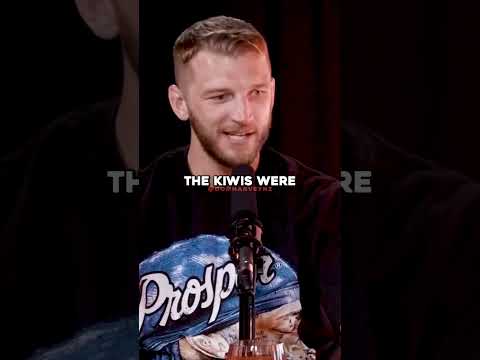
Warriors Coach Andrew Webster On NRL Premierships, Leadership And Never Lowering The Bar
Ask about Dom Harvey
Episode Description
Andrew Webster (aka Webby) is the coach of the One.NZ Warriors.
This podcast first came out in January 2024. I thought I’d reshare it in case you missed it because the Warriors, under Andrew Webster, have just completed their best season in 15 years.
Since arriving at Mount Smart to coach the Warriors three years ago, this guy has given fans plenty to get excited about.
But I wanted to find out who he is away from the game.
We talk about his wife Emily, becoming a dad, and the years he spent doing whatever work he could to keep chasing a coaching career.
Webby explains why he left Ivan Clary and the Penrith Panthers to coach the Warriors and what he learnt from Ivan, why he’s comfortable telling his players he loves them, the up the Wahs movement which started during his tenure, how long he plans to stay in New Zealand, his reason for making the players walk past his office every day and much more.
This podcast is a pretty good insight into the mind of one of rugby leagues truly great coaches. And beyond sport, just a very nice guy.
CHAPTERS: 0:00 Introduction and Podcast Invitation 1:46 How Webster Decides on Podcast Invites 2:42 Who is Andrew Webster? 3:17 The Identity Confusion with the Sports Writer 3:42 Early Life and Playing Career 5:06 Childhood Coaching and Siblings 6:07 Passion for Horse Racing 7:11 Food and Favorite Dining Spots 7:36 Emily and Life in New Zealand 10:11 The Birth of Sean and Kayla's Baby 11:22 Meeting Emily and Her Role at the Club 13:19 Winning the Dally M Coach of the Year 15:24 Keeping Speeches Authentic 19:26 Coaching Philosophy and Influences 20:26 Simplifying Attack and Coaching Focus 21:29 The Role of a Head Coach as a Counselor 23:25 The "Open Door" Policy 25:29 Empowering Leadership Groups 26:38 Can a League Coach Switch to Rugby Union? 27:55 The Influence of Ted Lasso 30:38 Emotional Intelligence and Family Upbringing 32:23 Coaching Players with Flair 33:31 Revitalizing Sean Johnson 35:59 Why He Joined the Warriors 36:39 Strategic Rebuilding and KPIs 40:15 Handling Pressure and Wayne Bennett 43:26 The Importance of Reflecting and Having Fun 44:09 An Average Workday for the Coaching Staff 46:29 Implementing Penrith Panthers IP 47:34 Early Career as a Player-Coach in the USA 49:35 Understanding Extreme Ownership 51:06 Cornerstones of the Warriors Culture 52:33 The Team Pranksters and Competitive Spirit 53:07 Tohu Harris and Body Management 53:48 Thoughts on the Bunker and Refereeing 55:16 Jason Paris and Fan Passion 56:15 Cultural Impact and Fan Support 59:50 Building Personal Resilience 1:00:43 Long-term Goals and Contract Extension 1:03:52 Team Welfare and Psychological Support 1:05:11 The "Shoey" Challenge and Closing Thoughts
Read the full transcriptHide the full transcript
- Our goal is to win the comp like every other club in the NL. There's not one club in the NL doesn't want to win the
- comp. Our whole thing is about winning. So winning is our business. We understand
- that. But you got to make sure you're proud of the way you play. I'm going to win as many grand finals as we can. I
- mean, people might laugh and say you won't get one of those, but I don't care like what they think. I just I want us
- to go after it. Have a real crack at it. Win as many games as we can and make our
- fans constantly proud of us. There was three good teams. We came home here and we came home to a sellout crowd against
- Red Cliff Dolphins and I I just I couldn't believe off the back of three losses in a row that the crowd was still
- supporting us. The love was unbelievable. I think it's our best crowds for the whole season since since
- 95 which is the first year. So we played um in AP like I said we played in Wellington and I played at Troll in
- Christ Church and just the support was unbelievable. Would you ultimately like to spend your entire career here?
- Andrew Webster, welcome to my podcast. >> Thanks for having me. >> Oh, my dog just jumped up. Just about
- missed it. Um, wow. First of all, up the W. >> Yeah, up the [laughter] W, mate. What
- are you? >> Oh, good. Hey, um, mate, I'm sorry. I'm probably going to fanboy a little bit
- because I can't believe you know, you were over at my place doing this podcast. Um, it's a real sort of pinch
- myself moment. Um, >> uh, I think it says a lot about you. Like, I just me I got your number off a
- mate. I messaged you and you just said, "Yep, I'll do it." But messaged me in a month. And then sure enough, trigger
- your word. Here you are. >> Yeah. No. Well, yeah, it's it was a busy busy period, particularly towards the
- end of the year. So, I said no to lots of people trying to focus on the finals and yeah, I wanted to get it done. So,
- I'm glad I'm here. >> Yeah. Do you you must get a lot of invites to go on podcast and things. How
- do you decide what you're going to do and how you what you're not going to do? >> Oh, I don't I don't really know. I just
- I work it out from time to time. Probably depending on the schedule. Now is a pretty good time of the year. So um
- but yeah, no I um you were very polite. So if people are polite and ask nicely and they're patient, then you're often
- willing to do things for [laughter] people, aren't you? >> Oh, that's nice. Yeah, you were like
- messaged me in a month. So exactly a month later I messaged you then like give me another couple of weeks.
- >> Alarm went and then you So [laughter] it was good. >> I've tried the same with um I don't know
- if you're familiar with um Scott Razer Robertson. >> Yeah, of course. >> Yeah. I messaged him like about a year
- ago and said, "Oh, do you want to come on my podcast?" And he's like, "I've got a rule. I only do one a year." So, I
- messaged him New Year's Day, New Year's Day the next year, and he was like, "I'm
- not ready just yet. Message me. Message me in a couple of months." I messaged him like 1st of March. Um, but no, he's
- a no-go. >> Oh, yeah. Okay. >> But, um, there is so much to discuss with you and I mean, the impact that
- you've had in the NRL, uh, the impact that you've had on New Zealand culture since you've been here. But first of
- all, very, very tough question. Who is Andrew Webster? [laughter] >> Uh, he's a knockabout guy, I suppose. He
- loves his family, loves his friends, loves socializing, loves all sport really. Um, obviously particularly rugby
- league and yeah, just love helping people get better. And that's probably why I love coaching. And um, yeah, I
- like a good time, I suppose, >> cuz I I I u I research these things as much as what I can. And uh, there's
- there's a lot of like podcasts that you've been involved with online, but it's generally just focused on like
- league chat. Y >> so it's hard to scratch beneath the surface and figure out who Andrew
- Webster the person is. Oh, there is a league sports writer with the same name though. That must get tricky.
- >> Yeah, it used to get a lot more tricky when I was probably in more of an assistant coach. Uh people would have my
- number and his number and they would text me pretending to be him like meaning they wanted to speak to him or
- they would text him u when they should have been talking to me. So it got a bit tricky there for a bit but all all
- smooth sail. >> Yeah. So you're you're from um you're from like a like a a league obsessed
- family. >> Yes, >> that's one thing I can get. So you were a pretty decent player.
- >> I was average at best, but you know I played lower grades for for junior reps
- for the Tigers and Paramed Eels. So at that stage I thought I was doing all right, but um that's the thing that all
- these young players will find out and only they say to you only probably one or two get through from each age group.
- and I thought I was tracking all right and probably got a rude shock when I uh as the standards started to rise that I
- just wasn't athletically gifted enough. So, but I always thought I understood the game. So, um I thought I'd have a
- have a crack at coaching and I loved it and wanted to stay involved in the game.
- So, I got involved in coaching early. >> Yeah, it was Do you think it was sort of
- your destiny in a way? Your brother's a coach as well, right? >> Yeah. Yeah, he's a coach, too. Yeah. And
- I I heard I don't know if this is um this is fake news, but I heard your sister as well, like when you were
- little growing up. Um you know, you get a lot of people that pretend to to be the players. They pretend to be Nathan
- Clearary or Sean Johnson, whatever. She pretended to be like a a coach. She pretended to be like a coach/commentator
- and she'd radio down on the phone [laughter] >> and she'd tell them what they're doing
- wrong and then she'd go sideline Andrew Webster and then I'd have to say my comments. We'd sit there and watch
- Friday Night Footy and like three idiots and but we love She's the eldest. My brother James, so oldest Katherine,
- James is the middle brother and then I'm the youngest. So I'm no doubt I was getting the crap job, whatever I had to
- do. >> Bunker bunker bunker. Yeah. [laughter] Yeah. You wouldn't have one then, but
- the job I would have got it. >> So what what sort of age are we talking when you're pretending to be coaching?
- >> Uh I'm sure my sister would have been like 10. I would have been I would have
- been So that means I would have been five and a half, I suppose. >> That's unreal.
- >> Yeah. So yeah, >> but who like who [clears throat] seriously who does that? >> I think I don't I think kids all love
- imagination, don't they? And love >> But but you want to be the the star. You want to be the man in the arena.
- >> Yeah. Well, I like I said, I was the youngest, so whatever my sister and brother told me I was doing. [snorts] I
- think I'm guessing my brother would have been least more most excited about doing
- it cuz James is >> he probably like you say would have been thinking about being in the arena. And
- then my sister, she was she was slcom commentator/coach. She was given lots of advice. [laughter]
- Remember Benny Lias needed to go to the short side. remember that one about >> does does she still message you now with
- thoughts on games and >> No, she's the opposite. She's a she's a good coach in her own right at Nipple.
- Um but she's No, she's more more supportive than advice. >> Um one other thing I um picked up that
- you said in an interview or somewhere you're a fan of horse racing? >> Yes. >> Is it like a punter or
- >> No, more just love the the game. I mean I my my pop my uncle's horse trainers
- and then um but more harness racing and then um I've always loved the gallops but then I decided to buy a gallop
- galloper two years ago and put all my friends and family into it and just had like a small share. We're going to race
- some picnic races and um we got lucky enough that it became a really good racehorse. So I've got become a bit of a
- hobby. I think everyone's got outside. Yeah. So I mean I could sit there and not have a bet on a race and watch it
- and love it and enjoy it. Um so it's not it's not about the gambling. It's it's about the actual thrill of racing.
- >> So, you're not looking on your phone just having a couple of bucks on whatever's going on at Mooney Valley in
- the middle of the week. [laughter] >> Not at this stage. No. >> And what about in your spare time? What
- do you do? >> Um, I've just had a son, so I've had Max. Um, he's only 6 months. Um,
- obviously my wife's made a huge sacrifice coming over here and um, we live here. So, yeah, you know, the most
- important thing is spending time with Max at the moment and them. >> And then the other thing would be just
- friends and family. Love socializing, love getting around, love going out for dinner. That'd be my favorite thing, I'd
- say, is going out for dinner. >> Where do where do you go? What does that look like for you?
- >> Uh, anywhere in Oakland. Oakland's got great food. Yeah, I could be It could be
- a pub. We're going to go up the road to a pub tonight and have dinner after this. And then or it could be
- >> [snorts] >> uh fine restaurant, but steak's my favorite and seafood. So, um, if you got
- that, I'm I'm keen. >> Oh, mate. Have you Have you been to Duvo Steakhouse? >> Yes. Love it.
- >> Yeah. Need to go again. Yeah. >> Um, so your wife Emma >> Emily. >> Oh, sorry. M.
- >> Yeah. She'll shoot me if you say. >> Oh, really? Why did I think it was Emma?
- Um, so has you just signed like signed an extension on your contract? So you're here for like another 5 years,
- >> correct? Yeah. >> So, um, how's she has she made friends here? Has she got friends here?
- >> Yeah, she's got friends here. I mean, >> how did she make them like like antiatal
- class or? No, I think it's been more well one was actually through one of those classes, but um most of it's been
- obviously through football and we were here before too. So we prior so and she was here with me for the second year of
- that of that time. So >> um yeah, I don't know. We just get out there and meet people. Um we're probably
- going to make some more friends, I suppose, with they always say when you have young kids, you make more friends.
- So >> yeah, but no, she's she's super dependent woman. Um she loves being a mom right now. That's probably her main
- focus. And uh yeah, we're having fun. >> Yeah. >> Love New Zealand. Love being here. Love
- Aland. >> I've heard you say that you're such a good ambassador for this country. Yeah.
- >> Um and yeah, you were here as assistant coach for was it Andrew McFaden? Yeah.
- >> Yeah. So 2015, 2016. >> Yeah, correct. >> Yeah. And where did you live then? What
- area? >> I just lived across the road here. Across the road Vic near Vic Vicky Park
- in the Bowmont section. >> Vicky Park. By the way, that's the most Australian abbreviation ever. I've never
- heard it called Vicky Park. >> All right. Victoria Park Vicky Park there. Loved it. Could walk everywhere.
- So, yeah. Found Aland amazing city and Yeah. >> Yeah. It was when I got the opportunity,
- I was keen to come back. >> Yeah. Cuz I mean, you you're here, you've got a busy job and you're doing
- very well. But I mean, if if home life's not good, it's never going to work, is it? If she if she's homesick, it's deal
- done. >> No, that's right. I think like it's clear for any player that if they're
- happy off the field, then they're going to play their best football. So, it's always most important that you're happy.
- And yeah, we got a good balance in our life. >> Yeah. So, so your son Max, he must have
- been born like smack bang in the middle of the Warrior. >> Yeah, we played the Broncos in Napia.
- Born the day before the game. I literally left her at the hospital. She drove herself to uh to birth care
- afterwards and uh went to the game. That's how rock sol. And she had a um I don't know if I'm
- allowed to say this, but as a zerian, too. So, I don't know if we meant to do that.
- >> Oh, was it like an elected one? So, that No, it was just >> like a scheduled one. No, it was last
- minute. >> Would would would you have missed the game if the need be or >> Well, for the birth, I was always going
- to miss the game if I Yeah, the birth was >> I'd never miss uh him being born. So,
- >> um but yeah, there was a deal once uh >> once the if it didn't clash um then I
- was off. >> You managed to do everything. Actually, yeah, that so Sean and um Sean and
- Kayla, they must have had their baby around about the same time. Yeah. So, well, Sean had a milestone game due to
- play uh in Paramea and we didn't think that it was going to happen. And then Kayla felt like she was going to be
- fine. So, she said, "Get on your bike and go." And obviously her being a professional sport of swimmer herself
- knows what it's what it's like and how much she want to win. So, she sent him on his way and had full support and
- lucky enough that nothing happened while he was away and got to get back for the
- birth. >> Cuz you did it. I can't remember exactly what the line was, but you did a like a
- media standup thing and you had a very funny line about that. Can you remember what was that? Something like if the
- baby if you got the call that the baby was coming on on game day, what was what was your joke?
- >> I said if the baby's coming in the morning of the game, he can leave. If it comes at halftime, then he's staying. So
- [laughter] that was a joke. But yeah, >> it was it was very funny. >> Yeah, we're trying to trying to think a
- way what was his last cut off to get back on a plane that night. What was the last flight? So I think it was like 7:30
- and I think he would have to have left around half time for him to get there [laughter] if he got
- >> you thought it all out. >> No, we thought about everything. >> So Oh yeah. So how did you and him meet?
- >> Uh we met at work actually. She worked at the paramedels. I was uh assistant coach/20's coach then. Um and she rolled
- up and was in the office next to me. So she was very shy. Um I was bit outgoing.
- So slowly got to meet. We were friends. I left the club and then um kept in contact and then yeah we started dating
- just before I left to come to the Warriors and then we just put it on ice for 12 months and then I said come on
- come over and so she got to experience New Zealand 2016. Oh, how good. Well, I when you did your your Delium speech um
- for coach of the year, you said she she's not interested in league, knows nothing about league.
- >> No, not interested. >> But she worked at the club, she must know. >> Well, it's quite funny cuz she actually
- worked in really important roles. She was in charge of typing up players contracts. Um like she could sit there
- and tell you what every person's salary was on, like stuff that people in the press and media would love to know, her
- friends would know. And she couldn't even tell you what number they were on their back. So, she didn't she didn't
- care anything about it. She just enjoyed her job, enjoyed the people. Um, yeah, had zero interest in what actually was
- happening on the field. >> Has she she got an understanding of it now? More of an understanding?
- >> No, I wouldn't say no. But >> what does she do for the games? Does she watch?
- >> She goes, she when people cheers, she cheers. She understands and drive. [laughter]
- Um, but I like her like that. Like it's like I think if I asked M to get involved and learn it and understand it,
- she would. I I like coming home and she just says, "Good, well done or bad luck," you know, and she's so neutral
- all the time. She changes the subject when I've had a bad day at work into something else and we start talking
- about something else. Instead of coming home and going, "Oh, he was bad." And giving me all this advice, telling me
- what everyone was doing wrong or right, she I come home and she's so neutral about it and supportive. Um, really
- cares when we win and cares when we lose, but she doesn't care about the detail of the game or how it happened or
- give advice. So, >> suppose that's your job in your business. >> Yeah, she's a trooper.
- >> Yeah. >> And there was um a hell of a speech you made. So the DELM coach of the year, did
- you feel like you were going to you were going to win? I feel like it sort of had
- to be you arrive in that one really. >> Oh, I think Kevin Wers, too. I mean, >> I feel I feel the coach of the year is
- hard because um there's two coaches that are in the grand final and that was Kevin Walders and and Ivan Clearary and
- the award gets given that week. So, um I feel like they're probably the two best
- coaches of the year if you ask me. >> Um so, they've done a great job, but I was privileged to win it. Um I wouldn't
- say it was a goal of mine, but to actually um Minga to present me coach of the year was a huge honor, you know,
- like that was that was amazing. So he's an idol of mine growing up as a kid. So yeah, it was a he was the captain of
- Australia when I was a kid supporting. >> My sister was probably ringing him telling what to do down the sideline.
- [laughter] >> But no, it it was a great honor, but yeah, I I didn't think I was going to
- win. I wasn't sure. Everyone told me I was going to. Um but yeah, I didn't I didn't want to get ahead of myself
- there. It was it was a great speech. And um yeah, you you started off by giving a
- shout out to Em, your wife. You called her um a good sort, a champ, and the most uh beautiful woman in the room.
- >> Um it was a it was a great speech. Was she um she looked like she looked embarrassed, but embarrassed in a good
- way. What did she say when you sat back down? >> Oh, no. She Yeah, she was she was
- definitely embarrassed. I mean, M doesn't like attention. Um doesn't like to be the limelight. she likes to be
- there in the backgrounds, but um I think she was she was grateful that I I thanked her for everything she'd done
- cuz I wouldn't be here without her. So, >> I think she was really appreciative of
- that. Um but probably didn't need to do it on the on the [snorts] national stage. [laughter]
- >> Oh, and I'm sure she I mean it's a lot of sacrifices the um the partners make.
- So, to give them that acknowledgement, I think that's really cool. >> Yeah. No, definitely. I mean,
- >> I remember we got the job um was a big decision. we we knew we were pregnant with Max or just or we were we were
- trying to one or the other and to go away from your your family or your first child. Um particularly when your
- husband's away every second week. She's done a great job. >> And you had um no notes and it it felt
- like you said all the all the right things. You acknowledged all the right people, said all the right things. Did
- you sort of plan in your how do you how do you do your speeches? You sort of plan in your head what you were going to
- say. >> If I plan, I'm hopeless. I would I'd fall over and wouldn't know what to say.
- So, but I mean I think it's pretty obvious. You think the people you love, you think the players because you're not
- there about the players and you think the people who gave you the opportunity and that was Cameron and Mark Robinson.
- So, um you know the players this year, I'm a reflection of them. So, and when they do well, um I get praised, but at
- the end of the day, they're the ones making the tackles and scoring the tries. So,
- >> I I didn't think it was going to be complicated. I was from the heart. That's what I felt, you know, trying not
- to complicate things and >> Yeah. Oh, that worked well. I thought it was a phenomenal speech. Yeah. I just
- wondered if any sort of thought went into it. >> No, no, not so much. No. >> Yeah. Um and yeah, one thing you did say
- is um you said um to your team, I love you boys so much, which um I I thought that was really significant. I thought
- that was a like a to like to me that um almost seems like a real sort of like culture shift or
- >> Yeah. You know, like you you mentioned Melmaninga before and players that you
- watch growing up. There's no way like Wayne Bennett in the 1990s would would tell tell his team he loves them. Like
- probably not. >> I mean it's it's only it's only a word. It's not that big a deal. But I think
- the fact that you said on that stage I was like, "Oh shit." >> Yeah. Well, anyone knows me. I'm scared
- to show my show my emotions or what I think. Um I don't know. I generally do that. We got a great group of players,
- but they're a great group of people. You know, they they work hard. They get along. you could sit down and have a
- one-on-one conversation with any of them and then actually enjoy it. They're um going through lots of things off the
- field like good and bad and you sort of ride the roller coaster with them. Like if I could tell you which I wouldn't um
- so many conversations of the um just some bad times and hardships that they all go through. Um and then obviously
- there's some real celebration. So I do I generally built relationships these guys
- and I love them so scared to say it. No, >> it's really cool. It was it was really
- cool. And uh yeah, have you always been quite sort of um you like vulnerable >> and goody showing um sort of
- vulnerability? >> I think more so around myself. Yeah, like around my own performance. I'm
- pretty honest about myself and willing to show if I make a mistake for example, I would admit it, you know. Um, I feel
- I'm okay with that. I I suppose there was a stage in my life where, like you say, showing showing people how much you
- uh care for them is not always the manly thing to do. >> No, especially with Australian and New
- Zealand males, I [laughter] think. >> Yeah, that's true. >> But, um, yeah, I'm just real comfortable
- in my skin right now. So, I don't doesn't worry me to say that, but I'm I don't think I'm not sure I would have
- been like that all all the time. >> Yeah. So, yes. So, so, so the Warriors um phenomenal year this year. You first
- came here 2015 for two years. That was your first NRL job. >> The assistant coach.
- >> Yeah. >> First assistant coach. Yeah. I worked in the NRL prior Tigers Paramea as under
- 20s and I was like what you call like the transition coach where I'd help those 20s guys to transfer into NRL. So
- but I that yeah he was my first assistant coach job in the NRL and I was in charge of the attack and yeah I can
- still remember it it feelings like such a huge responsibility at the time. M. >> So, how did the team how did the team do
- then? >> Um, we missed the playoffs both years. Um, first year we were top four halfway
- through the year and I don't know if you remember Sean broke his leg against Manley. So, um, I know it's it sucks
- relying on one on one player, but he is your halfback and we crashed and burned at that time. And then
- >> the next year we were one game away from the top eight again and failed unfortunately. Uh I had two great years
- here like um learned a lot about myself and about New Zealand culture. There is actually I feel there's a difference. Um
- and yeah it was just it was an amazing time. Met so many friends and I I feel like I got miles better at my job and
- still really grateful for Andrew McFad and what he taught me and the responsibility he gave me.
- >> Yeah. So the um the the coach I have sitting in front of me now like do you how how much of it is like parts of um
- people that you've worked with along the way like Andy McFaten, Ivan Clear? >> Yeah, heaps. I think the the the best
- thing I've always learned from probably Ivan particularly the last coach I worked with is always be yourself and
- you can't copy and paste everything. And you got to take the best pieces and the
- worst parts from wherever you've been. You got to implement them. And why I bring up the worst parts is because you
- learn lots of lessons when you see things done the way you wouldn't do them or the way you don't think they should
- be done. And then you get really excited when you see a coach that reassures you
- that this is actually the way to do it. Um but yeah, you got to have your own style cuz if it's not authentic and it's
- not you, then the players read that from a mile away and they think, "Oh, this guy's not being himself." And
- >> the moment that happens, you're gone. But you you got to make sure you're yourself and you got your own ideas and
- your own style. Um, yeah. I feel like I'm real comfortable with that at the moment.
- >> Yeah. What What makes you so good? >> I wouldn't I don't know. >> Oh, come on. Oh, come on. Be honest. Um,
- yeah. What did I read about you? Someone talked about just how good at attacking
- you are. Like what the Yeah, you've been called an attacking whiz or a mastermind. [laughter] So, what what
- does that mean exactly? Like I'm I I know probably as much as your wife does about league.
- >> I don't know. I think I think I've learned to simplify things. Um, so we got a great um coaching staff. Uh, and
- they're all got their own roles and capacity. Um, my last job with the Panthers, I was an attacking coach, but
- I got to work with probably some of the best attacking players in the world. So,
- that always helps. But I feel like you can complicate defense and attack and rugby league in general. And if you have
- some real small focuses instead of being a jack of all trades and you and and you're not a master of none, then that's
- never going to get you where you need to know. So, I don't try and cover every facet of attack and defense or the game
- of rugby league. just try and focus on what's the most important things and instead of being just okay at it, um we
- want to be the world's best at it and that's what we're trying to achieve. >> So, so as as head coach, you've got
- other coaches um beneath you. >> So, so yes. So, what's your job exactly? I'm guessing a lot of it is like you
- mentioned before about the intimate conversations you have with some of the players. I'm guessing a lot of it is
- like being almost like a counselor in a way. >> Yeah, it I definitely think it is. I
- mean, you you have so many one-on-one conversations. you close the door, talk to the individual, making sure
- everything's going well about their football and about their home life. Um, I think my role is I've certainly got a
- real understanding and idea and how I think we should play, but I make sure that our coaches believe the same thing
- and I want to hear their ideas and I want to make sure they're empowered and they're in charge of different different
- elements of our game and u and actually trust them and I do. I trust them because they're so good at their job.
- So, >> um, that enables me to free me up and, um, have those one-on-one conversations,
- but I always still feel like I've I've got my eye on the football and I got the my eye on the detail, I should say, on
- what we're doing every day. >> Yeah. I'm not sure where I heard this. It may have been in a in a podcast that
- one of the players did or I may have read it somewhere, but um, a kind of kind of a biggest deal, I guess, has
- been made of the fact that um, players have to walk past your open office door when they arrive and when they leave.
- Yep. >> Is that a thing or >> Yeah. Yeah. So, we got a door in, one door in, one door out our policy. It's
- just just the way our facility is really built. Really? [laughter] >> It's just a design thing.
- >> Well, it's just a design field thing that like uh if there's five or six doors in that facility that could get
- you to their sheds and if they had a bad bad night and they wanted to avoid you cuz they, you know, looked a bit tired
- or bad night sleep, they could they could go in the back door easy to their sheds and you wouldn't even know. you
- wouldn't be able to read their body language, but you wouldn't be able to check in and just build that
- relationship anyway. Just a simple hi, how are you? Um, and then on the flip side, let's say things haven't gone
- well, they haven't trained great, and then they just want to leave in the back door. They're going home unhappy, aren't
- they? So, >> they're not feeling good about themselves. As if they walk past you and
- sit down, they can clear it up. >> Uh, you can say, "Can I see you for a second?" They can check in with the
- coaches, then they leave feeling really good about it. they feel like they got things off their chest and they want to
- come back the next day. Because if you think about anyone's job, if they want to come back the next day, they're going
- to give you everything they've got. As if they don't want to come back and not enjoying it, they're just going to give
- you a half halfass effort up. So that door is very much about the facility, but what it gives us is make sure it
- creates a bond between the coaches and the players and make sure we we clear things up and we just yeah create those
- relationships. So, so, so the players like you and they want to play for you. >> Well, is that paddle?
- >> Well, you'd have to ask them. But I'm not I'm not >> I'm not trying to get them to like me.
- >> I just hope that Yeah. >> I hope that happens naturally. >> So, I'm not >> Yeah, cuz it's a
- >> I'm not saying I'm not saying you have to like me or I'll do whatever. Because
- if I just want to please them >> Yeah. >> and be a pleaser, then they're going to
- see straight through that. >> Yeah. And you can't be everyone's mate, can you? >> You can't be everyone's mate. But if it
- organically happens and I'm honest and I can show I care about them and I listen
- to them, >> then I think we're going to get that anyway. So, um yeah, I'm yeah, I'm not
- trying to be a pleaser, but I'm I I would rather be friends of every single one of them.
- >> And um in Rugby Union, uh the All Blacks in particular that springs to mind for
- this one, they have like um a senior um leadership group y >> which uh yeah makes a lot of the
- decisions and is sort of involved in the process. Do you have the same sort of thing there?
- >> No. No, we uh we don't have a senior players group. We believe in everyone should lead and can lead and should feel
- comfortable. There's guys who are more experienced players and so therefore they've been around for longer and
- they've got stronger opinions and understand things a bit better. So they gradually will um promote their opinions
- and their ideas and they'll drive accountability naturally. So we don't sit in a room and go okay what do you
- guys think as like a leadership group what do you think how this week worked or how do you think that happened and
- then we we yeah we just don't do that >> if I feel like I need someone's idea from a leader like Toy Harris is a great
- captain always have conversations I'll call them in I'll ask them their opinion I I'll get five or six guys with their
- opinion or I might even throw it to the whole team so don't sit there in a leadership group every week and and
- discuss things. Yeah, that's a good way of looking at it. So, it sort of removes
- that us versus them potential mentality. >> Well, sometimes leaders lead from a from
- a way where they think that's only what they think is best and they probably don't ask the group enough. And some
- great leaders do and I've worked with some great leadership groups and and got to sit there and be a part of and watch
- how well they lead. Uh I'm not saying it's not the best thing for every group, but we just found last year it wasn't
- the best thing for us. We needed to all all take some responsibility. um take some ownership of uh our
- performance together and um if you're a young 20-year-old and you want to lead respectfully, then you can lead. So, if
- you're a a 30-year-old player that's had 200 games experience, well, I'm I certainly hope you are going to lead
- because >> you got so many experiences in your rugby league life. >> Yeah. Um this might be a dumb question,
- probably one of many dumb questions. As I said, I know le less about rugby league than than your [laughter] wife
- does. Um could you could you could you coach Rugby Union? you know, there's players that make the switch with
- varying degrees of success. Oh, you've got Roger to Vasa. Uh he he's done very well at rugby. Could, you know, feels
- like a lot of what you're doing is is like managing people, which is surely transferable between codes. Could you
- coach rugby union? >> No, certainly not. No. >> Well, lots of lots of league coaches
- transfer to rugby union and become say defensive coach or whatever. Um, but I I I think it's such a specialist game and
- I would never undermine or what's the word disrespect uh rugby union and and all those great
- coaches to just suggest that I could go and do it. >> Um, would I could I help and be a part
- of a small part of it and and kind of look and and give advice, but certainly not on the X's and the O's and the
- details cuz I just don't understand it. But you know, we have great rubber union
- coaches that come to our training and we go to their training because there there
- are parts of the game that are similar. We can learn off it. But >> certainly not arrogant enough or cocky
- enough to think that I could jump in their shoes and and do what they do. >> Well, Ted Leo went from went from
- American football to soccer. By the way, are you a fan of that show? Have you watched that show?
- >> That show. Love it. >> How do our whole team watches that show? >> Yeah. It's so it's how how much of that
- is sort of you know I that sounds like a dumb thing to say but how much of it is
- sort of realistic? >> Uh I think I think um the the relationships are realistic. I don't
- know some of the stuff certainly not. You wouldn't get away with um just how relaxed Ted is about some issues but
- >> he doesn't sweat the uh >> the small stuff does he? you know, and um he he really has this big focus on
- making sure the players believe in themselves, which I've got a >> I got a huge belief in that, too. So, um
- yeah, this part are pretty cool. And they certainly have fun, and that's what we want to do. We have fun. So,
- >> last time, [laughter] >> I can't believe I bought that. I'm sorry. >> The boys bring it up.
- >> Okay. A hypothetical question. Say you had like a Jamie Tart in your team, like
- a precocious player, but star player, like gifted talent or whatever, but was an absolute [ __ ] pain in the ass to
- be around, disruptive to the team. What would you do? You you Oh, I wouldn't I wouldn't throw him away straight away,
- that's for sure. I wouldn't I'm not like, let's just get rid of that guy. I'd work with them. um probably try and
- break down why why they're acting like that and why they think they're better than someone else or why they're not
- willing to do certain things. I mean, Jamie [ __ ] in that show was super talented, but he felt like you didn't
- need to connect with the group at all. >> And not every player likes each other,
- but you should you should respect each other enough that you're willing to just show each other respect and connect. So,
- um, I'd probably just work with him, break break those walls down, communicate with him, and just say,
- "Look, the team's going this direction, you're going the opposite." So, I'm going to work. You're going to have to
- work on this or it's see you later. But, um, if cuz everyone's not rowing in the
- same direction, you're in trouble. You can't. >> And then shows it in that show.
- >> That just sounds like so much work getting everyone rowing in the same direction. Like, there's so many
- different You talk about like breaking down the personality type and working out what's what's going wrong with them
- or whatever it happens to be. But, you know, do that with one or two people. That's fine. But when you're talking a
- whole squad, that's a lot of work. >> Yeah, it's a lot of work. But, yeah, it's good. We got 35 players. I mean,
- I'm not the only one that helps your relationships. Like I said, our assistant coaches do, but yeah, I I'd
- like to like to think I'm across it as much as I can be. And >> it's hard cuz um you know, you you're
- not a mind reader and I'm not I'm not a trained psychologist. So, I'm trying to be. I just try and be a friend and
- listen and and make sure we're all good. >> Where does this um like emotional intelligence that you've got come from?
- >> I think it's probably the way I've been brought up. Yeah. >> Yeah. I think >> I think we could sit around the dinner
- table and we could probably talk about most things. Um >> yeah, I I don't know. I just been lucky.
- I think being the youngest in my family, I've always been around older people and
- um I'm extremely immature and extremely mature. Um probably my whole life. So when I'm a kid, I could be the silliest
- man in the room and or silliest kid in the room and I could also have a conversation with an adult. I think just
- being the youngest can remember my mom would drag me to restaurants and cafes with her uh with her friends when I was
- um still not ready for school. So, I'm sure I've just been around older people and
- >> and just learned it naturally. I think no one's sat me down and >> and given me a lesson in it, that's for
- sure. >> Yeah. How old are you? 41. >> 41. Yeah. >> Yeah. So, I'm I'm 50. And for like for
- guys our age, you know, 40s or 50s, it's like it's it it wasn't the way we were raised, was it? To like to show
- vulnerability and to >> Yeah. You know, sort of show emotion and Yeah. Tell people you love them. Back to
- that thing again. >> Yeah. Well, yeah. My family certainly told each other they loved them. Yeah. I
- can can remember I wasn't allowed to get out of the car. My mate was in the car next to me and not [laughter] say I
- loved you and get shot. So um but you're right like just the more manly you got um probably in your teenage lives you
- weren't meant to be like that but >> but yeah it's a lot of love in our family and a lot of love in our house.
- So >> um yeah, like I said I was getting back to it. I think I felt we felt comfortable we could be like that in our
- house. >> Now I think it's something you you touched upon earlier. It's you're you're
- comfortable in your own skin and with who you are. And I think the more the more comfortable you are in your own
- skin, the more the less you give a [ __ ] about that stuff and about the image you're portraying.
- >> Yeah, definitely. >> Yeah. Um, how do you how do you coach someone with um flare and brilliance
- like like a a Nathan Clary or a Shawn Johnson. >> Don't get in their way. [laughter]
- Let >> just make sure they're happy. >> Let them let them be them. Yeah. Let them
- >> um what do you say? Let a let an artist what's the word? um feel like they can
- be as flarey and as enjoy let them express themselves. That's the best way to say. So someone who's that brilliant
- if they can't express themselves >> that I don't think you're going to get good results as long as it's in with the
- team dynamic go for it. I mean >> I think Nathan if you'd say was works so hard to wear Nathan clear he's he's his
- flare has come from hard work as he's probably not naturally flaring someone like Shan who uh has been extremely
- flare his whole career is actually still got that a part of him but he's got more
- control about him. So it's funny how the flare can leave you and come back and and you can you can work out what when
- you should use it and when you shouldn't. And >> I think those two boys have got it down
- part at the moment. >> Yeah. Like a lot of a lot of coaches would come along and see, how old is
- Shawn now? What is he 30? >> 33. >> 33. So, yeah. So, you came along last year, he was 32. A lot of coaches would
- come along, want to stamp their mark, think, you know, his best days are behind him potentially cuz he hadn't
- been that awesome the years leading up to that. >> Um, >> but you but you I mean it looks like
- Shawn Johnson from 10 years ago. It's like he he looks so happy out here and he's done such a phenomenal job.
- >> Yeah. I think being back in New Zealand, being with his families made him so happy. Um I think he had a real ambition
- that he was like, I'm not going to finish this way. Um so he went after it. Um did I have faith in Sean? Yes, I did.
- I told him, I said, look, this is the end. Um don't let it be this way. I think you got more in you. And I told
- him that. Um I want you to stay and play. Um but you're going to have to earn everything. it's not going to be
- given or guaranteed and I've never seen a more motivated guy go after it and >> the way he trained in preseason. Um then
- he grew in confidence and then what he did for the team was amazing. >> So um let's wind back the clock and go
- to um getting the job. So did you apply for it or were you like shoulder tapped?
- >> No, I got a phone call about it. I didn't apply. Yeah, I've got a phone call saying, "Look,
- >> we're um Nathan Brown's just resigned. Um and if you want the job, let us know.
- Um and if you do, we're going to come back and have a chat to you." So said, "Yes, I want the job." And then the CEO
- come and join said, "Right, well, next time I talk to you, it's going to be yours to lose." So I knew I was a pretty
- good shop. And you um you you were assistant coach at the time at the Penri Panthers under Ivan Clearary. Um you
- must have had people saying, "What the [ __ ] are you doing, Webby?" Yes. [laughter]
- Like what's happening in um Penri at the moment. It's like they're creating a dynasty, right?
- >> Yeah. >> It's like a phenomenal setup and uh you you could have been cushy there for
- however many years and then eventually Ivan will leave and it'll roll over to you.
- >> I look I I don't think it ever would have rolled on to me. I mean that there's a lot of good coaches at the
- Panthers so I'd never suggest that. But um the thing for me was I didn't want to
- be a coach at any club. There was a few that I wanted to be a coach at and the Warriors is one of those. Um
- >> why? >> Well, I've worked here, feel connected to the club. >> I felt like I I knew the culture of New
- Zealand and I love the people and you got to like love living where you're you know going to work and I like I
- mentioned before, I love this place. So, um yeah, it was a no-brainer for me. And
- um did I have thoughts about gez we're doing we're a good thing here at Panthers I could be a part of this for a
- long time? Of course I did. But I literally never been happier in my life. Like we had great friends.
- >> Um football was going great, really connected to the community. But um I also was like, you know what, I want to
- be a head coach. I love New Zealand. I love the Warriors. I feel like I can have an impact. Um I felt that Cameron
- George and Mark Robinson really sold the ambition of what was going to happen in
- this place and I wanted to be a part of it. So >> in the end, it was a no-brainer, but
- yeah, there was I had to still do my checklist. >> Yeah. So, so you come up with um with
- some sort of like a a game plan or a strategy, I'm guessing. What were the sort of um KPIs? Like like I'm from an
- outsers's perspective, again, I'm a I'm a bandwagon jumper and I'll I'll jump on
- a bandwagon that's traveling very very fast. I'll wait. Um, but like it's it it seemed like there was going to be like
- potentially years of rebuilding, you know, if especially if you think back to like use a parallels between like the
- Penri Panthers, like there's a couple of [ __ ] years before they started making
- playoffs, right? >> Yeah. I think um people telling me I was mad. I was I didn't want to come out in
- the media and say this is a rebuild. I didn't want to try and I felt like people do that to buy themselves time.
- They want to lower expectation of the board members. They want to lower expectations of the fans, but whilst
- they're lowering these expectations, they're constantly telling the players through the public eye that they're not
- good enough. So, they're saying, "This is a rebuild. We don't have the time to do it yet. Give us three years." So, if
- you're one of those players, how do how do you feel when you hear your coach say
- that about [laughter] time? So, I'm I'm chips all in. Like, I don't care what people thinks. I don't care if they hold
- it against me and they say, "You said Webbby this." I was like, we're going to get that confident as a group. Um, then
- we feel like we can actually do something. So, there was no rebuilding for me. I didn't have a KPI around top
- eight or anything like that. Our goal was to win the comp like every other club in the N. There's not one club in
- the NAL doesn't want to win the comp. >> So, our KPI was the exact same. We weren't going to lower it by say top
- eight. We weren't going to say let's make sure it's top four or let's just not come last. There was nothing stupid
- like that. We were just going after them. Let's [laughter] not come last. >> Let's not come last.
- >> Let's not come last. >> Let's not get the wooden spoon again. >> So, there's none of that. [laughter] Our
- whole thing was let's win as many games as we can. >> Let's not come last. Let's crack up. Um
- but I mean like previous years it's the Warriors have been one of those teams where midway through the season, you
- always look at mathematical chances like, oh, if the if the Titans win this weekend and such and such, then we've
- got a chance of making the top eight. There was none of that was even needed this year. Like it just it was like a
- hot knife going through butter. Or we we want to be consistent. Like >> um want to be consistent in our
- performance alone results. Like I I say this all the time, but I think we lost three in a row. I think we lost three
- good teams. Um we came home here and we came home to a sellout crowd against Redcliff Dolphins. And I I just I
- couldn't believe off the back of three losses in a row that the crowd was still supporting us. So I know there's a loyal
- core fan wherever you go. >> Um but I felt like the Warriors were the fans were something different like like
- they were proud of the way we were playing. >> So whilst we didn't win during that
- period, we >> we really were that the fans were proud and so was I. I was like boys look
- you're playing really good football here. Um, and then as a result, we went out and had a cracker night that and we
- went on a run and won lots of games of football. So, our big thing was even when we lost we'll be consistent and
- when we won we'll be consistent cuz there was games we won and we weren't happy about the way we played.
- >> Yeah. >> Even though the scoreboard looked good um in our four walls at work we were
- like no that's not that's not how we want to be. That's not our standard. So, >> without boring everyone like as long as
- we're proud of our performance like our whole thing is about winning. So, winning is our business. We understand
- that. But you got to make sure you're proud of the way you play. >> Yeah. When you lose those three games in
- a row, is there I mean, do you feel the heat? >> Well, I've only had one crack at it and
- there was that that three times I didn't. No, I didn't feel I felt like we're playing good football. I thought
- the group was happy, >> but like we could see light at the tunnel. Um >> yeah, I mean,
- you know, three three in a row is not fun. Like I I didn't enjoy [laughter] it. I didn't enjoy it, but um I
- certainly didn't feel any pressure at that stage, man. >> Yeah. And then um so then yeah, the home
- game against the Dolphins, is that the Wayne Bennett team? >> Yep. >> Yeah. Are you intimidated by him? What
- are you What's your relationship like with Wayne Bennett? Do you look up to him?
- >> No, I look up to him. >> Yeah. Yeah. Yeah. He's incredible, right? >> Yeah. Great coach. Lucky enough to spend
- a bit of time um watching him coach um when he was at the Newcastle Night. So um
- >> yeah. What what what can you take from him? Like it's been an outstanding career. What's made him so good? Well, I
- think Wayne's so dry in the media and stuff like that, but I think he's the best at putting his arm around a player
- that I like he's very very good at that. He's very good at making I think the players feel like it's their idea. So,
- I've seen him take drills and then he say to a player going you take this and then he manipulates the drill, but then
- everyone thinks the players come up with it. Like he's just >> he's very smart and classy like that. Um
- >> yeah, and generally obviously looks like he cares about his players. for that.
- He's about in the time I spend with him, I couldn't believe how many times he asked them how their family were or
- their mom and dad or someone like that. So, uh yeah, he's amazing. But I don't get intimidated by those guys cuz I'm
- not tackling them, you know what I mean? Like we're coaches, so he sits on the other side of the field, I sit on this
- side of the field, >> and there's no intimidation factor. [gasps] >> Yeah. Also, you've got the uh the DELM
- award for coach of the year, which you you carry around with you everywhere, I'm guessing. No.
- >> What do you get for that? Is an a medal, a trophy. What is it? >> Uh just a big trophy of obviously it's
- the DM night is after Dale Messenger which is a famous player a long time ago. So um everyone gets a like a a
- trophy of him and it's big and heavy and yeah I gave it to my mom and dad to put
- on their uh their mental piece at home just to say thank you for having that done.
- >> Yeah. So, you've got no sort of um trophies or memorabilia or anything at your own
- place? >> Uh yeah, got a Warriors my Warriors jersey from from round one, you've got
- that on the wall. I was lucky enough the club gifted that to me which >> I was really grateful for cuz I never
- thought that would come or expect that to come. Um >> and how do you mean you never as in you
- being a head coach of an INL team? >> Well, there things that happen for players. They get jerseys. I've never
- seen a head coach a debuton jersey. So, that was that was really nice. I love that. It actually meant a lot to me. Um,
- yeah, got that on on a wall upstairs, but no, I got if you walked into our house, you wouldn't see much football
- stuff at all. >> Um, hence why my my wife likes that cuz she's not she's not into football, but
- um I don't know. I just I just Yeah, I like It's not to say that I won't have a man shed one day with things in it, but
- yeah, right now I don't throw them out or throw them away. It's just um I don't have them on display anyway. Yeah, you I
- suppose you're at that point of your career where you're just too busy focusing on what's next that it's not
- time to pause and reflect. Although, did you do that at the end of the last season?
- >> Yeah. No, definitely. I'm Yeah, I definitely did. I mean, I'm not I'm not one of those guys who has to move on
- straight away. Um I like to just pause and celebrate or pause and reflect. Um cuz I I want this to be fun. I want to
- enjoy it. don't want it to be so stressful that I I don't even get to enjoy with the good times.
- >> And people say, "Oh, that's not a successful mindset." Well, >> they can go and get stuff. That's That's
- not how I am. I I like to enjoy it. And okay, well done. Now get over yourself. Let's go win the next one. But I had
- that moment. >> Yeah. It's like, what would Ted do? [laughter] >> Ted, you enjoy it.
- >> He's having fun. Okay. So, what does an average day look like? You You guys start pretty early, eh? Yeah.
- >> Yeah. Um, >> everyone's got to be there by 7:45. Um, >> we got our first meeting at 7:45. Yeah.
- Um, but they're they're in way before that. I think the players would be there from sort of 6:45 onwards, stretching,
- getting ready for the day, getting physio treatment, whatever they got to do. Us coaches, we arrive probably
- between 5:30 and 6:00, I'd say. >> Yeah. So, >> you [ __ ] me. >> Yeah. No, early start the day. Yeah.
- >> Really? >> Yeah. >> That seems unnecessarily early. >> No, it's not. Well, it's like this. You
- got to prepare for the day ahead. And >> what do you mean exactly? >> Well, we have a coaches meeting at 7
- o'clock. So, there's a huge amount of cutting of clips. So, you got to probably work back from the day before.
- Does that make sense? So, let's say Monday's happen, there's a field session. So, we've gone out and trained
- and come off uh and we got a drone that films our whole training. And then we cut what the boys did really well, what
- they didn't. The boys cut their own vision downstairs. Then we come upstairs and we have have one-on-one video with
- the players. And then the next day, we got to take some of those clips and put them into unit groups. So, backs and
- forwards, attack, defense, last players, which is special teams like Stacy Jones
- is in charge of. So, there's lots of stuff we do and you got all that information that you've just you've just
- um put together from the day before. So, what are you going to do with it now? So, we make sure we get in, we get
- organized, we know how we're going to do it. Players are in different teams for training. So, yeah, there's lots that go
- into it. So, I think you're looking at from sort of arriving that time to leaving between sort of 4:30 and 6:00.
- That's probably an average day. Yeah. >> I think that'll surprise a lot of people.
- >> Yeah. I think but which which is fair enough. I think people think you turn up
- um you go out, you throw some cones on the field, you train, and you leave. And >> you go to the gym a couple of times,
- >> go to the gym and that's not how it works. No. Like a player a players got a full full schedule. They go home
- exhausted like today. Um, and no one's, trust me, they're all grateful for their
- jobs. They're not feeling sorry for themselves. It's like >> they've got it good. But, uh, they work
- hard, mate. Yeah, they work bloody hard. And our coaches work really hard, too. And so do our like conditioners and so
- do our physios. And >> there's so many people in the organization that work really hard.
- >> Long hours. H >> how much of um what you've implemented since you've been here is is like Penri
- Panther's IP? >> I reckon there's definitely parts of it. >> Yeah. Yeah. >> Well, there has to be. It's part of you.
- >> I couldn't give you a percentage of it, but um I mean I refuse to copy and paste
- the whole Penri program because it doesn't necessarily suit >> players, but there's things that I've
- learned for Penri that I'd be an absolute idiot not to not to use at the Warrior.
- >> It's a winning team. Why not? >> Yeah, that's it. So, there's so many things there
- >> that we use, but I made a mistake a long time ago. I I worked at one team, had a
- lot of success, took that same philosophy and that same ideas to another team, and it was terrible. So,
- >> you got to make sure it works for your team. There's things that the Panthers,
- there's things that the Broncos, there's things that all these really good teams
- do that will work at every single NL team >> if you implement them right and you know
- why you're doing them and you can coach it properly. So, you'd be mad not to do those things, but there's also things
- that just wouldn't suit our voice. Yeah. Yeah. And you've you've you've done the
- work, eh? Like you've you've really done the work. Like if if you look into your
- your backstory, you were player coach in the States for a while. >> Yeah. >> Uh was that your first coaching job?
- >> Yeah. Yeah. Yeah. So I Yeah. You don't I don't know if there's much of a rugby
- league culture in [laughter] >> So where were you? >> I was in Connecticut Wildat place just
- outside of Manhattan. And I think there was 10 teams at the time and I was 23. I
- had long hair. I got the job. >> Did you like a surfy? >> Yeah. like a surfy, but I couldn't surf.
- [laughter] Um, and I was like, I'm going to travel with football. I'm going to have some fun, but I've realized that
- I'm not going to make it. Um, I'm going to go and have fun. I got got a job as a
- captain coach. He gave me a job, uh, a house and a car. So, that was pretty cool. And then I went and did that for 6
- months. And now I was like, I want to give this a crack. So, then I moved to England and got an opportunity over
- there. >> Yeah. So, so you've done the uh you've done the apprenticeship. >> Yep. Um, and I'm guessing they weren't
- they weren't big paying jobs or anything. So, how long did you give yourself? >> Uh, I didn't give a number. Like I have
- a different stages. I'm going I'm going to go after this and do that. And I quickly learned that's not the way to do
- it. So, >> um, coaching's very patient game and I hadn't played an elite level. I didn't
- have a reputation as this great player that was going to automatically transition as a player when and
- >> those guys kind of deserve that because they >> they played for Origin, they played for
- Australia, they played for New Zealand, they deserve that that faster transition. Um, so I knew I was going to
- have to work hard at it. But my whole thing was I just wanted to get paid for something that I love doing and I was
- like, what am I going to do now? Once I knew I wasn't going to make I was like, I have to coach cuz I still love rugby
- league. I actually think I really know it. think I could be good at this. So instead of just chasing and doing
- something I didn't like, doesn't mean I didn't have to do lots of other little jobs I hated to get there. But um yeah,
- I was I was going to go after it and didn't matter how long it took. >> That's amazing. Um I've heard uh in
- interviews um the players talk about a thing called extreme ownership. >> Yep. >> Extreme What's that exactly? What does
- that mean? Is that a Navy Seal thing? Yeah. It's not a big piece of our It's not a big piece of our puzzle. Like it's
- not a >> I think I've in a few places though. >> Yeah. Yeah. No, it is. So, it's it's
- something we did and we did an exercise one day where I just didn't feel like we
- were owning what um we weren't owning our good stuff and we weren't owning the bad stuff. So, uh if people made a
- mistake, I didn't think there was any there was really any ownership around their mistake or what was happening. I
- didn't think there was any ownership around their performance. So they were getting everything handed on a platter
- and they weren't actually going and digging and watching their own own training sessions or their own games. Um
- they basically expecting everyone else to do it for them. So yeah, I just there was a video that I watched online and
- was around extreme ownership. I thought that's unbelievably relevant to where we
- are right now and I felt there was a lot of blame on others rather than themselves. Thought there was a lot of
- denial like that didn't happen. And I just wanted to just wanted to sort a few boys out and say some of you guys are
- this right now in the room and some of you guys are aren't. So yeah, we just did a little exercise and watched the
- video and yeah, we just just said who who can start living this a little bit more than
- >> than being the other way. >> So >> yeah. So you you say that's not a big part of the the puzzle. What what are
- some of the big pieces of the warriors puzzle? What like what are some of the sort of um like pillars or cornerstones?
- Yeah, I think I think the biggest thing is we got to have fun. We go home tired every day, but we have fun and fun's not
- um fun's not always laughter. So laughing is a huge part of being fun. But like if you want to laugh, you can
- laugh. That's fine. But the best biggest thing is if you enjoy something and you've had a great day and it's been
- like I said the word fun, then you probably feel a part of it. Feel like you've had had a say in what's happened.
- Feel like you've got better so you've grown a little bit. feel like you belong at the place. So actually everyone likes
- you being there and you feel safe to be yourself. And if you're all those things, then that equals fun. And then
- if you laugh a little bit more and then we can make it an enjoyable environment,
- then people going to, like I said, come back to work. So, >> but they'll go home tired cuz we're
- going to work bloody hard. If if there was someone that was um like a good laugh and really popular and
- fitted into the team really well and wasn't necessarily the best player in that position, would you still keep them
- around? >> Uh yeah, for the balance I would. So salary cap, there's a price, there's
- money, >> uh if that player fits into that that bracket and >> um we got enough enough depth and I feel
- like he's going to I feel like you need guys like that. They might not be the best players in the world, but they add
- so much to your culture. um you know, laughter of fun. Um and they're really good humans and yeah, you
- want them around. >> Who who who is it in the uh the current warrior squad? Like who are the who are
- the pranksters or the jokers or >> Oh, the prankster is Dylan Well, he's not a prankster. He's just he's just
- funny. He's Dylan Walker. He says that how it is. Bailey Syrian was certainly that last year. He's certainly popular
- guy and a and a terrific human. Unfortunately, he's left because of salary cap is we would love to catch
- him. But yeah, there's a few there's a few like that. I mean, Dylan's got this amazing um skill where he can be really
- immature and have fun and and then the moment football comes be real serious and switch on cuz he's super competitive
- and he wants to win. So, yeah, there's a few like that. >> And Tou Harris, your your captain, how's
- his body? He seemed to have like every game I watched last year, he had extra bandages on each game.
- >> Yeah. No, he is he hanging on by a thread? >> No, he's fine. Yeah. To's going great.
- His body's good. He He just He's played for a long time, you know. He's and he plays tough. He plays 80 minutes most
- times and um I feel like he just understands his body and he's got little bits of strapping that help him and
- there's probably probably looks like there's a lot more and [laughter] sure he'd rather get a rid of a bit of it.
- But um yeah, he just knows what works for him, what he needs to needs to tape up. So one I think it's some of
- precaution >> and some of it he he needs it. So but yeah, everyone asks him that all the
- time he's fine. >> Yeah. And what what um what are your thoughts on the the bunker situation?
- Because again, as I said before, I'm a bandwagon jumper, but the games I watched last year, it just seems
- alarming. There does seem to be a definite sort of bias against the Warriors. It's like every single
- decision sort of gets questioned. >> Yeah. Look, I I don't see any bias. Not at all. Like I don't see anyone
- questioning the Warriors or I don't think any reference No, not at all. No, just I'm not that guy. I don't I don't
- think there's any excuses if we lose that the referee, the bunkers got it wrong. Just I just don't believe in
- that. So, do they make mistakes and frustrate the hell out of me? Yes, of course they do. Um, have they got some
- real big ones wrong? Yes. But so have we. We made some big mistakes this year, too. So, um, I'm not saying it's okay,
- but I'm not going to use it as an excuse. And I certainly don't think there's any bias against the Warriors.
- If anything, I think the whole um the whole of the rugby league have fallen in love with the Warriors. So, I think they
- want us to do well, but it doesn't mean they're not going to get things right. >> You You get Do you get fined if you if
- you speak to the media afterwards and you [ __ ] about Yeah. What's a fine? What is it?
- >> I don't know. I think it's 5 10k. >> Oh, yeah. Does the club pay for that or >> No, you pay for it.
- >> Oh, [laughter] yeah. I wouldn't be saying anything about the bunker riff either.
- >> No. Well, >> there's safe space here. >> I I I just wouldn't I just Yeah. Yeah.
- I'll get done eventually, but I'm trying my hardest. >> Okay. But when when um do you know Jason
- Paris like personally when he he put a tweet out last year. >> Do you are you familiar with this? You
- must be familiar with this. >> Yeah, of course. >> Yeah. Yeah. Um I was doing a public
- speaking thing uh the next day and there were all these marketing executives there and they were like, "Oh yeah, it's
- fine what he said, but the optics the optics aren't good." Sort of marketing speak. But um as coach Yeah. First of
- all, he he just showed how passionate he was about the Warriors. Yeah, it wasn't as as one NZ CEO
- >> loves loves us, you know. So, he's frustrated and um yeah, just probably the heat of the moment. I can't speak
- for Jason, but yeah, like he's >> But as a as a coach, were you secretly pleased when he did it? Like
- >> no, like I stayed out of it like you know, Jace, you know, he's had his opinion and yeah, I just can't be like
- that. So yeah, I I just I love all our fiends and our sponsors how passionate about us and
- >> yeah um in the heat of the m battle things get said and done but yeah as the coach I I just got I can't be like that.
- >> Yeah. Yes. Speaking of the fans and I suppose in particular from a like a cultural phenomenon of what what's
- happened the past year. I mean this afternoon I went to Rebel Sport cuz I I thought I'll buy a couple of caps and
- get you to sign them. >> No merch available. There was like one one supported singlet left which was
- like a 4XL and that was it. Like I mean the the the support from last season that's going to carry on to this season.
- It's just it's just massive. >> Yeah. >> When when did you first hear um up the wires? Where does that come from? Do you
- know anything about that? >> Yeah. I I can remember someone was asking me is it should it be up the or
- should be um gone gone you know >> Oh go you aware of that one? That was >> of course it were. Yeah. So [laughter] I
- was like and [snorts] I said well I'm hearing up the ws is taking over. I think up the wires you walk down the
- street someone just turns around and goes up the wires. Like it's a way of like connecting quickly and go how good.
- And then I think um I think the other one is more of a chant you know. So yeah I when I first heard it like that and
- then I just couldn't believe how quickly and then there was a song and then everyone was like just everywhere you
- went was up the wild. So I was even at a wedding in Australia and there was no Warriors fans there and they were they
- were um cheersing each other after each speech saying up the wires. So >> well for for your benefit no just up the
- was just it just become a thing where if it's good then it's [laughter] >> so you've got you don't know where it
- started or the origin. I saw some thread online. Someone was saying uh it was um
- created by some New Zealanders that live in Australia a few a few years ago and it mean it's an acronym. It means we are
- home soon for the Warriors. But I don't know that seems apparently but >> there you go.
- >> I don't know. I I I suspect there's probably a few stories like that. >> Yeah.
- >> But it's it's great though. And you you and the the the team must have felt it
- and must have felt the love and the support of the nation but also the weight of the nation.
- >> Yeah. The the love was unbelievable. the support. Like I said, we s I think we
- sold out the stadium 10 times this year, which is unbelievable. I think it's our
- best crowds for the whole season since since 95, which is the first year. So, um everywhere we went cuz we played a
- few games. We played um in April, like I said, we played in Wellington, I played
- a trial in Christ Church. Just the support was unbelievable. So, um it it's humbling.
- >> It's Yeah, it's it's humbling. It felt like a real responsibility. people stop
- me on the street and say, "Think for what you've done for our country." I mean, I'm an Australian. Like, that
- blows me away. So, yeah, it's it's really cool. Um, we just want to make sure we can stay consistent and keep
- them happy. >> Yeah. And and it was overlapping uh with a Rugby World Cup as well.
- >> Yeah, it was. >> Which makes it even more remarkable. >> Yeah, it was. Yeah. >> Um I But how do you how do you cope with
- the pressure like how like cuz the expectation is, you know, you go a step further or even two steps further? Yeah.
- in the next season. But it's like success isn't always linear like that, is it? >> No. I mean, I think the only pressure I
- I have is the pressure I put on myself. I mean, at the end of the day, I if I know we can prepare well and we've
- worked hard and we've given them every chance, the players, and the players are buying in, then we're going to give
- ourselves a chance to win. And um it is a nerve-wracking 80 minutes. But that's probably the only time I feel the
- pressure is during the game. I I don't Everyone thinks I'm really calm, but I'm not as calm as people
- think. But um the leadup games I don't get nervous. Um I haven't felt the pressure. But let's be honest, we the
- worst we did was lose three in a row this year. So I'm sure there's going to be times in my career where it's at five
- or six and you're really going to really going to find out what I'm what I'm like
- under pressure. But right now I feel comfortable with it. Yeah. >> Yeah. What are you like? No one gets to
- 41 years old without sort of facing um some sort of adversity. What what does it what is it for you? Where does your
- resilience come from? What are some of the >> I think my adversity has been the fact
- that it hasn't been easy for me. Like I wasn't um and and didn't play NRL. I just
- wasn't one of the best players. I had to work hard. I I had to clean rugby league
- football stands. I had to, you know, be security jobs. I had to do everything to
- get here. So, um I've had to volunteer. So, I think my resilience comes from the
- fact that um you know, it hasn't been my path hasn't been easy and I've had to work hard to get here and I I don't want
- to lose it. I'm here now and I want to be a part of winning cultures for the rest of my coaching career. So,
- >> yeah, I think that's very concerning. >> Yeah. And and so you were here on a three-year deal and it's been extended.
- Well, you were here on a two-year deal and it's been extended for five years. >> Three year deal. So obviously done one
- of them now and now I've got a a three-year extension on top of the two remain. So five years in total from now.
- >> Yeah. What's what's the um Oh, this is a dumb question. The ultimate goal in that
- time is to like win a premiership. >> Yeah. It's like sustained success. So I'm going to win as many grand finals as
- we can. I mean people might laugh and say you won't get one of those, but I don't care like what they think. I just
- I want to say go after it and have a real crack at it. Um, but you know, have sustained success. You know, win win win
- as many games as we can and make our fans constantly proud of us so that we're not constantly down the bottom.
- We're constantly up the top and give ourselves a chance to win. >> Oh, that's so good. Would you would you
- ultimately like to spend your entire career here? >> Yeah, I'm happy to. Yeah, I love New
- Zealand. I love the Warriors. I mean, the only way I'm going to leave is if one, the club thinks my time's up, or I
- think I can't give any more to the club, meaning I feel like they need someone new. So,
- >> some fresh ideas. >> Some fresh ideas. But I I' think there's two or three coaches in the game that
- have really stayed at a club for a long period of time, like Wayne Bennett did at the Broncos for a long time. Craig
- Bellamy and Fred Robinson's doing at the roosters. I haven't started to do it at
- the Panthers. So, uh, it's definitely possible to do cuz it's not easy. Not many do it. Um, but if I was good
- enough, um, to do that, that'd be that'd be great. And while I'm enjoying it here, I don't want to go anywhere. So,
- >> yeah. >> Oh, and we we love you here. I speak on behalf of the whole nation. Yeah. It's
- phenomenal what's happened in the past year. Um, that's incredible. Yeah. It's just it's Yeah, it's great to have you
- in New Zealand as a New Zealander. >> Yeah. Cool. No, thank you. Yeah, it's great to be
- >> um one thing I I do like to ask all my guests about their um their mental health. How's your mental health?
- Because I feel like by asking this question, it just sort of normalizes the the conversation. Your mental health
- been good over the years or >> I've been really lucky. I'm >> Lots of friends and family have
- obviously struggled with it and I mean it's pretty common now, isn't it? I think
- people are more willing to talk about it. Um >> yeah, my mental health's really good. Um
- I don't know. I've got a good balance in my life. I'm not suggesting it's going to be like that all the time. I'm not
- arrogant enough to think that everything's going to be rosy. I've spoken to real strong people that have
- gone through had nervous breakdowns, had tough times, uh, and they would have laughed if you ever told them that that
- was going to happen to them. So, >> I don't think we're all bulletproof. Um, but yeah, no, I'm I'm lucky right now.
- I'm good. And um the biggest thing is I think it's the bravest bravest thing you
- can do if you're struggling with mental health or things aren't going to actually say something as um I think it
- used to be you were weak if you said something. So it's gone from weak to being brave which
- >> I think is awesome. >> Yeah. Well I had um I don't know if you're familiar with the uh the old All
- Black coach John Hart. >> Yep. >> Uh know John well. >> Yeah. Oh dear. On a personal Oh. Yeah.
- He was connected with the club. So he was on the podcast and he he talked about um he was actually I was really
- surprised he talked this way. So he got back from the 1999 Rugby World Cup where
- the All Blacks got [clears throat] excuse me beaten by France and knocked out early.
- >> He came back and yeah there were he went to a horse race meet and someone spat on
- him in a bathroom and people were throwing beer cans at his horse homes DG. Um and he he said he didn't
- recognize it at the time but he was in a like deep depression for two years where
- couldn't leave the house some days. Yeah. Um, and he was like a grown ass man. He was in his 50s at the time and
- [sighs] you know that's >> very successful man. >> Very successful. >> Yeah. >> I just knocked him knocked him to his
- core. >> There you go. Can happen to anyone. So >> yeah. Do you guys have um like a team
- psych sport psychologist or >> Yeah, we got um four welfare managers. So we got we got um that I wouldn't say
- the word covered is wrong because you never got it covered. You always got to be ready for be across it.
- Um, we've got four guys that are in that in that line of work that that's their role to make sure that everyone's spent
- a space as is as good as it possibly can be. And if they if they've got some stuff going on in their lives, they can
- help them with it. Um, and it's also my responsibility to help with that, too. So, um, but yeah, and we got a we got a
- really good team of people who care about these boys. So, yeah, it's awesome. >> Yeah. Brilliant. All right. Hey, well,
- Wibby, can I call you Wibby? You can. >> I feel like we're mates now. >> Go. [laughter] We're mates. Oh, should
- we do a Shuy together? >> Not Not yet. We're going to win the Grand. >> Have you Have you ever done a Shuy?
- >> I'm I'm sure I've done plenty. >> What? What do you mean? You sure you've done plenty? Yes or no?
- >> Yes. I'm I gather I have, but >> What do you mean you gather you have? >> When I was younger, mate, I would have
- um I would have given it a crack. >> How long's been a thing? >> Sh been a thing for a long time that I
- know of. Yeah. >> Right. Right. Yeah. I feel like that the origins are rooted in Australia and it's
- just sort of become international. Um, so if you win if you win a a grand final, you do a Shuy
- >> for sure. >> Yeah, I'll do [laughter] one. >> Out of Sean Johnson's boot, >> if you like.
- >> All right. Hey, um, mate, it's been a pleasure to sit down with you today. Thank you so much. Um, I've got a lot
- out of this and I hope the um the people that listen or watch this um take some learnings from this as well. You're an
- inspirational inspirational guy. >> No, thank you. Thank you so much, Evan. It's a pleasure to be here and um I hope
- everyone listens to your podcast, mate. It's a beauty. >> Let's go on. >> Let's go on. Go the wife. Go the wise.
- Love the wife. [music] >> [music]
Brief Summary
Andrew Webster discusses his coaching philosophy, family life, and commitment to the Warriors' success.
Key points
- Family and Coaching. Andrew Webster shares insights about his family and coaching journey.
- A Unique Childhood Game. Webster reminisces about a childhood game where his sister pretended to be a coach.
- A Heartfelt Speech. Webster's emotional speech at the coach of the year award acknowledged his wife.
- Authenticity in Leadership. The coach emphasizes the importance of being oneself to earn players' respect.
- Building Relationships. The coach discusses the significance of one-on-one conversations with players to foster trust.
- Coaching Brilliance. Letting players express themselves is key to coaching brilliance. 'Don't get in their way.'
Episode highlights
- Family and CoachingAndrew Webster shares insights about his family and coaching journey.“I love helping people get better.”2:57Sep 15, 2026
- A Unique Childhood GameWebster reminisces about a childhood game where his sister pretended to be a coach.“Who seriously does that?”5:20Sep 15, 2026
- A Heartfelt SpeechWebster's emotional speech at the coach of the year award acknowledged his wife.“I wouldn't be here without her.”14:52Sep 15, 2026
- Authenticity in LeadershipThe coach emphasizes the importance of being oneself to earn players' respect.“You can't copy and paste everything.”19:46Sep 15, 2026
- Building RelationshipsThe coach discusses the significance of one-on-one conversations with players to foster trust.“If you're not enjoying it, you're just going to give a half-ass effort.”23:44Sep 15, 2026
- Coaching BrillianceLetting players express themselves is key to coaching brilliance. 'Don't get in their way.'“Don't get in their way. [laughter]”32:31Sep 15, 2026
- No Rebuilding HereThe coach refuses to label the team's journey as a rebuild, aiming for the championship instead.“We're going to get that confident as a group.”37:54Sep 15, 2026
- The Importance of ConsistencyEven in losses, the focus is on consistent performance and pride in play.“Even when we lost, we were consistent.”39:46Sep 15, 2026